New York’s Medical Aid in Dying Act: How Hochul’s Decision Could Redefine Death in America

Sarah Johnson
December 18, 2025
Brief
New York’s Medical Aid in Dying Act is more than a blue-state policy shift. This analysis unpacks its ethical tradeoffs, global context, equity risks, and how it may reshape American end-of-life care.
New York’s ‘Aid in Dying’ Law: Why Hochul’s Decision Is a Turning Point in America’s End‑of‑Life Debate
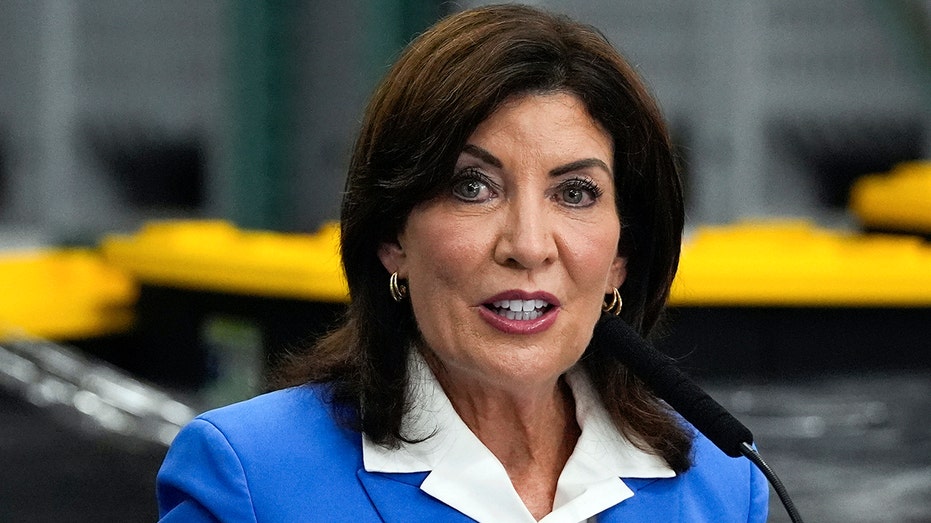
New York’s move to legalize physician-assisted suicide under the Medical Aid in Dying Act is far more than a blue-state policy tweak. It’s a structural shift in how one of the country’s most influential states defines autonomy, vulnerability, and the role of medicine at the end of life. In a nation already deeply divided over abortion, gender-affirming care, and health-care rationing, Gov. Kathy Hochul’s decision positions New York at the center of a new front in the culture wars: the politics of death itself.
New York will become one of the largest and most diverse jurisdictions in the world to authorize medically assisted death. That matters because the policy is arriving not in an abstract ethical vacuum, but amid rising health-care costs, persistent racial inequities in care, and mounting pressure on families and public budgets. How the state implements its “guardrails” will shape whether this law is remembered as an expansion of compassionate choice—or a dangerous opening for subtle coercion and economic incentives to let people die rather than support them.
The bigger picture: From Kevorkian to Hochul
To understand how consequential this is, it helps to see New York’s law as the latest chapter in a decades-long evolution in American attitudes toward dying.
- 1990s: The Kevorkian shock. Dr. Jack Kevorkian’s headline-grabbing assisted suicides forced the country to confront the idea of physician involvement in death. He was convicted in 1999, but the cases catalyzed public debate and laid the groundwork for more regulated models.
- 1994–2000s: The Oregon model. Oregon’s Death with Dignity Act (approved in 1994, implemented in 1997) became the template: limited to terminally ill adults expected to die within six months, multiple requests, physician verification, and the patient self-administering the medication. Courts left states free to decide, and other Western states slowly followed.
- 2010s–2020s: Normalization and expansion. As states like California, Colorado, New Jersey, and now Delaware and Illinois adopted similar statutes, physician-assisted death moved from taboo to structured policy, often framed as an extension of hospice and palliative care rather than its competitor.
Globally, jurisdictions like the Netherlands, Belgium, and Canada went much further, extending eligibility beyond terminal illness in some cases to chronic suffering and, controversially, some mental-health conditions. That international backdrop is part of why New York’s “six months to live” requirement and psychiatric review are being framed as critical guardrails: lawmakers are consciously trying to avoid drifting toward those broader, more controversial models.
Historically, New York has been a laggard on this issue despite its liberal reputation. The bill has circulated since 2016 and repeatedly stalled, largely due to intense opposition from religious groups and disability advocates. That it is now poised to become law reflects not just changed politics in Albany, but a broader shift in how Americans think about bodily autonomy and suffering at the end of life.
What’s really at stake in Hochul’s decision
Hochul’s framing—“Who am I to deny you?”—casts the debate as a question of personal liberty. But the deeper stakes are more complex:
1. Redefining medical responsibility
New York’s law requires:
- a terminal diagnosis with a life expectancy under six months,
- approval by both an attending physician and a consulting physician,
- confirmation by a psychologist or psychiatrist that the patient has decision-making capacity and is not acting under duress,
- a written request with two witnesses, plus a recorded oral request,
- a mandatory five-day waiting period.
These features echo Oregon-style statutes but add a more formal psychiatric safeguard. On paper, they establish a clear threshold between respecting autonomy and protecting the vulnerable. In practice, they shift the physician’s role from solely “healer” to gatekeeper of life-ending options.
This is a profound identity shift for medicine. The American Medical Association still maintains that physician-assisted suicide is “fundamentally incompatible with the physician’s role as healer,” even as many individual doctors and state medical societies have moved toward neutrality or support. New York now compels its medical institutions to reconcile these competing ethical frameworks inside their own walls.
2. Religion, conscience, and political risk
Hochul, a Catholic governor, is openly defying the position of her church hierarchy. Cardinal Timothy Dolan and New York’s bishops frame the law as a betrayal of the state’s most vulnerable, arguing it signals that “suicide in their case is not only acceptable, but is encouraged by our elected leaders.”
That clash is more than symbolic. It highlights a deep split within American Catholicism and other faith communities between official doctrine and lay opinion. Surveys by the Pew Research Center have consistently found that majorities of U.S. adults—including many Catholics—support allowing terminally ill patients to end their lives with doctor assistance under strict conditions. Hochul is effectively betting that voters’ lived experience with suffering relatives will outweigh institutional religious messaging.
The bill’s carve-out allowing religiously affiliated outpatient facilities to opt out is a pragmatic attempt to manage this conflict. But it may also create geographic inequities in access—particularly in regions where religious systems dominate hospital networks, often in poorer or rural areas.
3. Equity and the hidden question of “choice”
Supporters frame the law as expanding choice, but choice in health care is always structured by resources. In a state where Black and Latino patients already experience higher pain levels, lower access to high-quality palliative care, and more aggressive end-of-life interventions they may not want, the question becomes: who will feel truly free to choose?
Evidence from Oregon and Washington offers a mixed picture:
- Typically, only a small fraction of deaths—around 0.3% to 0.6%—are via physician-assisted death.
- Patients who use these laws tend to be disproportionately white, college-educated, and insured—suggesting that, at least so far, this is a “privilege of the well-informed,” not a tool primarily affecting the poor.
- Top reasons cited for requesting life-ending medication include loss of autonomy and dignity more than uncontrolled pain.
New York’s demographics are very different from early-adopter states: more racial diversity, deeper inequality, a larger undocumented population, and immense pressure on Medicaid-financed care. If public or private insurers ever subtly signal that aid in dying is the “efficient” option, the moral landscape changes. The law’s guardrails must be strong enough to resist economic nudges masquerading as choice.
4. Cross-border ethics and residency walls
New York plans to restrict access to state residents only, mirroring New Jersey after a federal appeals court upheld that state’s residency requirement. This is legally defensible but ethically awkward: it entrenches a patchwork where the legality of controlling your own dying depends on your ZIP code.
Without residency restrictions, states with permissive laws could quickly become end-of-life destinations—as some Swiss clinics already are for Europeans. By erecting residency walls, New York is trying to avoid becoming a medical “death tourism” hub. But it also underscores how fragmented U.S. health rights have become, just as we’ve seen with abortion access after the Dobbs decision.
What experts are watching: lessons and warning signs
Bioethicists, disability advocates, and palliative-care physicians will be scrutinizing New York not just on whether the law is used, but how and by whom.
Key questions they’re asking include:
- Accuracy of six-month prognoses: Prognostic estimates are notoriously imprecise. Studies show that doctors often overestimate survival, but underestimation—declaring someone “terminal” when they might live longer—is also a risk. New York’s requirement that a medical doctor affirm the prognosis adds formality, not precision.
- Quality of mental-health assessment: Requiring a psychologist or psychiatrist to confirm capacity is a stronger safeguard than some states use. But capacity evaluations can be influenced by clinicians’ own biases, cultural misunderstandings, and time pressures. The availability of qualified specialists in underserved areas will matter greatly.
- Impact on palliative care: In Oregon, the expansion of palliative-care services occurred alongside the law, and many terminally ill patients who request the drugs never actually use them, finding peace in simply having the option. New York’s trajectory—whether aid in dying complements or substitutes for palliative investment—will be telling.
International experience offers both reassurance and caution. In the Netherlands and Belgium, systems began with narrow criteria for terminal illness but gradually expanded to include non-terminal conditions and, controversially, some psychiatric disorders. Canada’s evolving MAiD program is now under intense scrutiny for extending eligibility beyond terminal patients, with critics pointing to cases where people sought MAiD due to poverty or lack of social supports.
New York lawmakers are clearly aware of these trajectories. Their insistence on terminal diagnosis, psychiatric confirmation, and residency requirements is—as much as anything—an attempt to say: this is as far as we’re willing to go. Whether those lines hold over time will likely be contested in courts, legislatures, and public opinion.
Data, demographics, and what might change in New York
Based on patterns in other states, several trends are plausible for New York:
- Initial uptake will be modest. In the first years after implementation, states typically see a small number of prescriptions and even fewer ingestions. New York’s population is much larger than Oregon’s; even a small percentage could mean hundreds of cases annually.
- Cancer patients will likely dominate use. In Oregon, around two-thirds of patients using the law have terminal cancer; other common diagnoses include ALS and advanced heart or lung disease. New York’s epidemiological profile suggests similar patterns.
- Geographic clustering is likely. Access will depend on local medical culture. Some institutions and clinicians will refuse to participate; others will become known referral points. Urban centers, especially in downstate New York, may see higher utilization than rural or heavily religious regions.
- Race and class disparities will be important indicators. If data show that usage is heavily skewed toward privileged groups, that may ease some fears about economic coercion—but could fuel criticism that the law does little for those with the worst suffering and fewest supports. If, conversely, uptake concentrates among poorer, disabled, or minority communities, concerns about subtle pressure will escalate quickly.
New York’s reporting system—the quality, transparency, and frequency of public data releases—will determine how quickly these patterns can be identified and addressed.
Looking ahead: the next front in the culture wars
Politically, Hochul’s decision may resonate far beyond Albany. Here’s what to watch in the coming years:
- National partisan alignment. So far, aid-in-dying laws have not split neatly along party lines in the way abortion has, though they pass more often in Democratic-controlled states. As New York and other large states adopt these laws, national party platforms may harden around support or opposition, particularly if activists succeed in framing the issue as either an extension of reproductive autonomy or a threat to disability rights.
- Potential Supreme Court involvement. In 1997, the Supreme Court held that there is no federal constitutional right to physician-assisted suicide but left room for states to experiment. Later courts could be asked to revisit aspects like residency restrictions or conscience protections for institutions and clinicians, especially as the post-Dobbs Court weighs state interests against individual liberty in other medical contexts.
- Intersection with economic austerity. As health-care costs and long-term care needs balloon with an aging population, there will be growing scrutiny of whether aid in dying quietly becomes part of cost-containment strategies, even if never acknowledged as such.
- Shifts in cultural narratives of “a good death.” Hochul’s imagery—sunlight instead of hospital lights, grandkids’ laughter instead of machines’ hum—is powerful. If more families witness planned, medically assisted deaths, social expectations about what dying should look like may change, with ripple effects on hospital practices, hospice usage, and family caregiving norms.
The bottom line
New York’s Medical Aid in Dying Act marks a watershed moment in U.S. end-of-life policy. It codifies an intensely personal choice in one of the country’s most influential states, under guardrails explicitly designed to avoid the perceived excesses seen abroad. But it also embeds that choice in a health-care system already riddled with inequities and financial pressures.
Whether this law ultimately stands as an act of compassion, a slippery slope, or something in between will depend less on the moral rhetoric around it and more on the mundane details of implementation: who gets informed, who gets access, who gets pressured, and who gets truly supported to live—and die—on their own terms.
Topics
Editor's Comments
One overlooked dimension in the debate over New York’s Medical Aid in Dying Act is how it intersects with the state’s long-term care crisis. Policymakers are largely discussing the law in moral and religious terms—sanctity of life versus autonomy—but beneath that moral frame is a harsh economic reality: New York is facing growing costs for nursing homes, home health aides, and chronic disease management amid an aging population. Families often shoulder enormous financial and emotional burdens, particularly when insurance coverage for home-based support is limited or inconsistent. In that context, any policy that makes an earlier death legally and medically straightforward carries a quiet but undeniable fiscal appeal for both private insurers and public payers like Medicaid. That doesn’t mean legislators or clinicians are consciously promoting death to save money, but it does mean watchdogs should be alert to how reimbursement rules, benefit designs, and hospital incentives evolve around this law. If we begin to see insurers more willing to fund lethal prescriptions than extended home care, or if hospitals subtly nudge families toward aid in dying when beds are scarce, the narrative of pure “choice” will ring hollow. The real test of New York’s commitment to autonomy will be whether the state is willing to invest equally—if not more—in the supports that make choosing to live with dignity as viable as choosing to die with it.
Like this article? Share it with your friends!
If you find this article interesting, feel free to share it with your friends!
Thank you for your support! Sharing is the greatest encouragement for us.