Ozzy Osbourne’s Final Goodbye: What His Last Days Reveal About Fame, Aging, and How We Mourn Icons

Sarah Johnson
December 16, 2025
Brief
Ozzy Osbourne’s final words to Sharon reveal more than a private goodbye. This analysis unpacks what his death exposes about aging icons, public grief, and the entertainment industry’s demands.
Ozzy Osbourne’s Final Words and the Cultural Reckoning With How We Let Icons Die
Ozzy Osbourne’s death at 76 and Sharon Osbourne’s raw account of his final moments are being covered as a heartbreaking celebrity story. But beneath the intimate details lies a deeper set of questions about how we treat aging cultural icons, how we talk about death, and the emotional labor demanded of families whose grief unfolds in public.
When Sharon recounts Ozzy saying, “Kiss me…hug me tight,” then going downstairs to work out for 20 minutes before collapsing, it’s more than a sentimental anecdote. It’s a collision between myth and mortality: the Prince of Darkness dying in an ordinary domestic morning, still trying to live as an active performer against explicit medical advice. That tension—between the spectacle we expect and the vulnerable human reality—sits at the center of this story.
Ozzy as a Generational Mirror: From ‘Madman’ to Mortality
Ozzy’s trajectory maps almost perfectly onto the arc of late 20th-century popular culture. In the 1970s, he epitomized the rise of heavy metal as a countercultural force—Black Sabbath’s dark, riff-heavy sound helped define a genre that frightened parents and thrilled teenagers. In the 1980s, his solo career, managed and reshaped by Sharon, refined that persona into something commercially powerful: a “madman” whose substance abuse, wild antics, and transgressive imagery were central to his appeal.
By the early 2000s, The Osbournes reality show flipped that image again, turning one of rock’s most notorious frontmen into a stumbling, affable, sometimes confused dad and husband, wandering around a chaotic house filled with dogs and bleeped-out arguments. That series didn’t just humanize Ozzy; it pioneered the template for modern celebrity reality television, where the domestic lives of stars themselves became the product. The Osbournes helped mainstream a culture in which fame and private life are fused—and that’s crucial for understanding why Sharon is now recounting his final words on a talk show.
Ozzy’s public journey—from dangerous outsider to lovable, frail patriarch—is the story of how the counterculture aged. The kids who bought Paranoid are now grandparents themselves. His death forces a generation to confront not only the loss of an icon, but the reality that its own youth, rebellion, and supposed invincibility ended long ago.
Death on Camera: When Grief Becomes Part of the Brand
Sharon Osbourne crying on a TV set as she describes the moment she saw medics trying to resuscitate her husband is deeply personal. But the platform—high-audience, confrontational television—turns that intimacy into content. This is not unique to the Osbournes; it’s become a structural feature of modern fame.
For two decades, the Osbourne family has monetized access: access to their home, their arguments, their addictions, their health crises. That model helped normalize something we now take for granted: that the audience is entitled not only to the performance, but to the breakdown, the rehab, the relapse, the hospital bed, and finally, the deathbed memories.
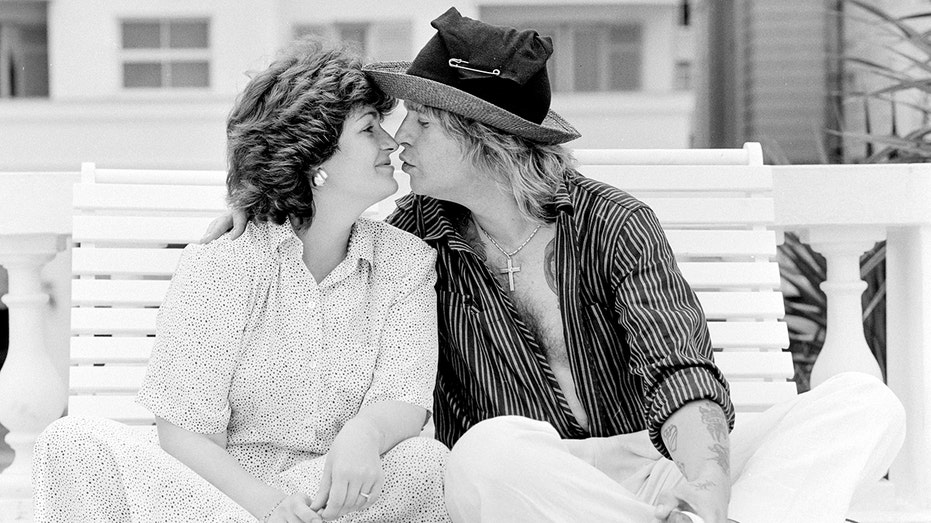
In that context, Sharon’s decision to recount Ozzy’s last words—“Kiss me. Hug me tight.”—is both authentic and strategic. It preserves a narrative of deep marital devotion, reinforces the mythology of their 55-year bond, and provides closure to fans who feel they’ve been “inside” this relationship for decades. It also reflects a hard reality: for many public figures, grief itself has become part of the professional obligation.
There’s also a gendered dimension. Sharon is not just a widow; she’s the manager, producer, and protector of Ozzy’s legacy. She is being asked to curate his memory in real time while still actively grieving. The emotional labor of public mourning—answering questions like “Could you ever marry again?” on camera—falls disproportionately on women in celebrity partnerships, who are expected to both suffer and explain.
‘I’m Doing It’: Autonomy, Risk, and the Right to a Final Show
One of the most striking revelations in Sharon’s account is that doctors warned Ozzy: “If you do this show, that’s it. You’re not going to get through it.” He went ahead anyway, performing a farewell concert in England with Black Sabbath two weeks before his death, in pain, seated on a throne.
This raises a hard ethical question that goes far beyond entertainment: how do we balance respect for personal autonomy with our instinct to protect someone we love—or someone whose art we value—from self-destructive choices?
Sports medicine has grappled with this for years. Elite athletes often insist on playing through injuries that could cripple them for life. Aging boxers, football players, and MMA fighters frequently want “one more fight,” even when neurologists warn that another blow could be catastrophic. Medical ethicists sometimes talk about these as “dignity versus safety” decisions: for some individuals, the ability to do what gives life meaning is worth accepting higher risks of death.
Ozzy’s situation fits that pattern. For him, the stage wasn’t just a job; it was his identity. After multiple health crises—three bouts of pneumonia, sepsis, spine issues—he was already living with significant pain and diminished mobility. If your life has been built around the adrenaline, connection, and affirmation of performing, the prospect of dying quietly offstage can feel like a worse fate than dying because you performed.
Sharon’s recollection—that he was “so, so happy” for the two weeks after the show, like “every day was sunshine”—suggests that, from his perspective, the risk was justified. That doesn’t erase the trauma for his family. But it complicates any simple narrative of tragedy. In a sense, he got what many performers privately dream of and rarely achieve: a triumphant, intentional farewell, not a slow, unseen decline.
Visions, Dreams, and the Stories We Tell at the Edge of Life
Sharon’s description of Ozzy’s “vivid dreams”—walking among “different people” who stare at him silently—touches a less discussed but increasingly studied phenomenon: end-of-life dreams and visions.
Hospice researchers have documented that it’s common for people in their final weeks to report dreams or waking visions involving unknown figures, deceased relatives, or journeys. A 2014 study in the Journal of Palliative Medicine found that 88% of terminally ill patients experienced such dreams in the weeks before death, and many described them as meaningful and often comforting, even when thematically strange.
We can’t know whether Ozzy’s dreams were neurological artifacts, psychological processing, spiritual experiences, or some combination of all three. What matters is how he and Sharon interpreted them: she believes “He knew. He was ready.” For families, these narratives can be a crucial part of making sense of sudden loss, especially when death is medically framed as a heart attack, something abrupt and mechanical.
In a culture that is often death-avoidant and medicalized, such stories reclaim a more human vocabulary around dying—one that includes mystery, symbolism, and agency, rather than just metrics and diagnoses.
The Uneasy Line Between Rock Mythology and Health Reality
Ozzy’s death also underscores a longstanding tension between rock mythology and the physical toll of that mythology. He built a brand around excess: alcohol, drugs, all-night touring, stunts that blurred the line between horror theater and self-harm. For decades, part of his appeal was the sense that he was “indestructible.” The more he survived, the more invincible the persona seemed.
That narrative comes with a cost. For younger artists and fans, the stories of survival can mask how many don’t survive—and how much damage accumulates in those who do. Chronic respiratory illness, infections like pneumonia and sepsis, neurological issues, orthopedic damage from years of touring and falls: these are the downstream effects of a lifestyle the industry once celebrated and marketed.
There’s a broader industry question here. Do labels, managers, and promoters have a duty of care for aging artists who physically cannot perform at the level they once did, but whose livelihoods and identities depend on touring? In recent years we’ve watched a growing list of icons tour into their 70s and 80s. Some, like Elton John, carefully stage final tours with built-in health precautions. Others push themselves far past what their physicians recommend, often out of financial necessity or fear of irrelevance.
Ozzy’s trajectory—final show against medical advice, followed by death from a heart attack—will likely intensify the conversation about how the business of nostalgia touring intersects with the health of the artists it relies on.
Fans, Parasitic Intimacy, and the Demand for Closure
Sharon’s regrets—“If only I’d have told him I loved him more. If only I’d have held him tighter”—are deeply familiar to anyone who has lost someone suddenly. That universal element is exactly why the story resonates so widely. Yet in the celebrity context, it also functions as a form of emotional access extended to millions of strangers.
Digital culture has intensified what psychologists call “parasocial relationships”: one-sided emotional attachments audiences form with public figures. The Osbournes cultivated those ties for decades, inviting viewers into their home and framing fans as an extended family. That makes Ozzy’s death feel, to many, like a family loss. Fans want details, final words, signs he was “ready.” They want to be reassured he died surrounded by love, that he knew he was adored.
Sharon’s interviews fulfill that need, but at a cost. They blur the line between legitimate memorialization and a kind of public emotional extraction. The more details she shares, the more the audience may feel entitled to know—not just what he said, but what she regrets, how she’s coping, whether she’ll ever love again. It’s a feedback loop: authentic grief drives engagement; engagement incentivizes more public grief.
The Osbourne Legacy: Beyond the Bat and the Bleeps
Ozzy will be remembered, of course, for the theatrics—biting a bat, the onstage chaos, the slurred one-liners on reality TV. But his deeper legacy is more structural.
- Musically, he helped codify heavy metal’s themes and aesthetics: doom, darkness, and moral ambiguity as serious artistic territory rather than mere shock.
- In media, the Osbournes helped legitimize the idea that family dysfunction and vulnerability could be serialized and sold—laying groundwork for today’s influencer culture and reality franchises.
- In public health terms, his long, uneven struggle with addiction—and multiple comebacks—gave millions a reference point for the idea that recovery is messy, nonlinear, and often public.
Sharon’s current role is to translate all of that into a coherent story that can endure: the wildness, the pain, the love, the final act of defiant performance, and the quiet last words in a dark bedroom at 4:30 a.m. How she tells that story over the next year—through interviews, potential documentaries, box sets, or memoirs—will shape not just his memory, but how future artists and families navigate similar public losses.
Looking Ahead: What This Moment Signals
Ozzy Osbourne’s death and Sharon’s public mourning point toward several larger shifts to watch:
- Aging icons in the content economy: As more 1970s–1990s stars reach their 70s and 80s, we will repeatedly see the collision of streaming-era content demand with private end-of-life realities. Families will face pressure to “share” grief in real time.
- Industry responsibility: Expect renewed calls for health standards around touring, particularly for older artists with significant medical histories.
- Death literacy: Stories like Ozzy’s dreams and Sharon’s frank descriptions may slowly normalize more open public conversation about dying, regret, and the limits of medicine.
- Legacy as narrative work: Widows, children, and bandmates are increasingly functioning as curators and narrators of cultural history, not just inheritors. That role is labor—and power.
The Bottom Line
Ozzy’s final words to Sharon—“Kiss me…hug me tight”—cut through decades of pyrotechnics and headlines to reveal something simple: behind the myths we build around our icons are fragile, ordinary human relationships. The way Sharon is now asked to relive and narrate those final moments tells us as much about our media age as it does about their marriage.
This isn’t just a story about how a rock legend died. It’s a story about how we, as a culture, demand to watch, interpret, and emotionally participate in that death—and about the families left to carry both the grief and the narrative.
Topics
Editor's Comments
What stands out in Sharon Osbourne’s account is not only the personal tragedy but the almost ritualized way in which we now process the deaths of cultural icons. There’s a pattern: a last performance, a haunting detail (in this case, the vivid dreams), a final phrase that becomes shorthand for a complex life—“Kiss me…hug me tight.” Media then distills a sprawling, contradictory human story into a handful of emotionally potent moments. That simplification helps fans grieve, but it can obscure systemic questions: Who profits from the final tours of visibly unwell artists? What support do families have when private loss is instantly public property? And how much agency do performers truly have when their financial and emotional ecosystems are built on perpetual visibility? The Osbourne story sits at the intersection of love, commerce, and myth-making. We should resist the temptation to view it only as a romantic farewell; it’s also a case study in how an entire industry—and its audience—handles the frailty of the people it once treated as indestructible.
Like this article? Share it with your friends!
If you find this article interesting, feel free to share it with your friends!
Thank you for your support! Sharing is the greatest encouragement for us.