Beyond the ‘Civil War’ Narrative: What Progressive Senate Bids Reveal About a Changing Democratic Party

Sarah Johnson
December 18, 2025
Brief
Analysis of Jasmine Crockett’s Texas Senate bid and 2026 progressive primaries as a test of Democratic strategy, party control, and electability in an era of weakened institutions and viral candidates.
Progressives vs. Centrists: What the 2026 Senate ‘Civil War’ Really Reveals About a Party in Transition
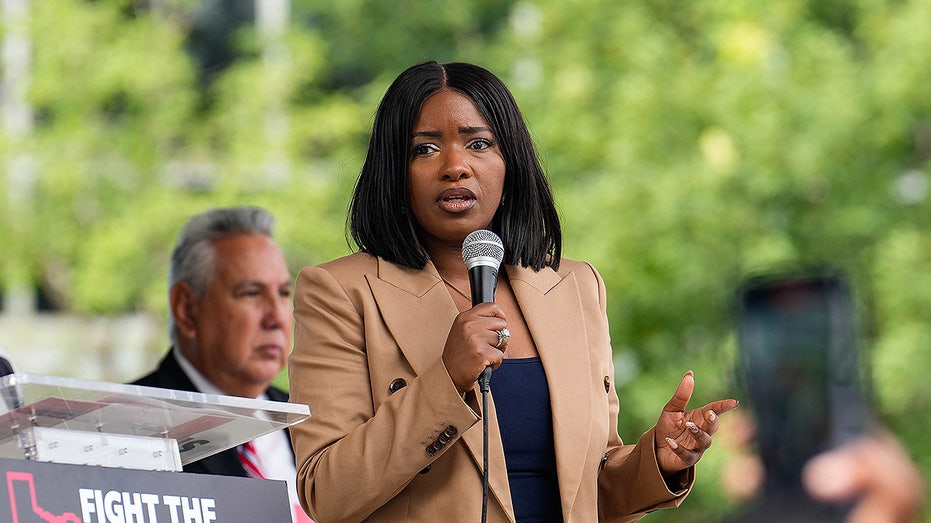
Republicans are framing Jasmine Crockett’s Texas Senate run and other progressive bids as proof that Democrats are “in shambles.” That’s a politically useful narrative—but it misses a deeper story. The real battle here isn’t just over 2026; it’s over what kind of party Democrats will be in the 2030s, who gets to define “electability,” and whether traditional party structures can still discipline candidates in the age of TikTok, small-dollar fundraising, and polarized primaries.
What looks like chaos from the outside is, in many ways, a delayed reckoning. Democrats have tried to be a coalition of suburban moderates, diverse urban progressives, and working-class voters who feel increasingly alienated by both parties. The Crockett campaign and similar progressive insurgencies in Michigan and New York show that the party can no longer paper over those tensions with carefully curated Senate recruits from Washington.
The bigger picture: This fight has been building for decades
The current moment is better understood as the third major phase of an internal Democratic struggle that began in the 1990s:
- The Clinton era (1990s–early 2000s): The party embraced “Third Way” centrism—tough-on-crime, pro-free-trade, fiscally cautious. This was sold as the only path to win in the South and Midwest.
- The Obama-era hangover (2008–2016): Barack Obama’s victories masked deep structural problems. Democrats lost over 1,000 state legislative seats nationwide during his tenure. National brand: charismatic and aspirational. Local reality: hollowed-out party infrastructure.
- The Sanders–AOC era (2016–present): Bernie Sanders’s 2016 primary run and Alexandria Ocasio-Cortez’s 2018 upset normalized the idea that Democrats could run explicitly left-wing campaigns—and win—by mobilizing disaffected voters rather than just persuading swing voters.
The Crockett moment in Texas is a direct descendant of that last phase. She’s not just another “gaffe-prone progressive.” She is a candidate built for a media ecosystem where outrage clips, viral insults, and authentic—sometimes undisciplined—personality can be more valuable than a carefully poll-tested message backed by the DSCC.
Republicans are correct about one thing: the national party’s ability to control its own image is eroding. But that’s not uniquely a Democratic problem; it’s a bipartisan symptom of weakened party institutions and empowered individual brands.
Why Texas matters far beyond Texas
Texas Senate races have become the Democratic Party’s recurring experiment in how far they can stretch a red state:
- 2018: Beto O’Rourke lost to Ted Cruz by 2.6 points, running a charismatic, mostly progressive campaign that galvanized younger and urban voters but fell short with rural and older Texans.
- 2020–2022: Democrats repeatedly underperformed in statewide races, reinforcing a “Texas is fools’ gold” narrative among national strategists.
- Now, 2026: Crockett is testing a harder-edged, social-media-driven progressive profile in a state where Democrats’ path to victory already demands razor-thin margins and unusual turnout.
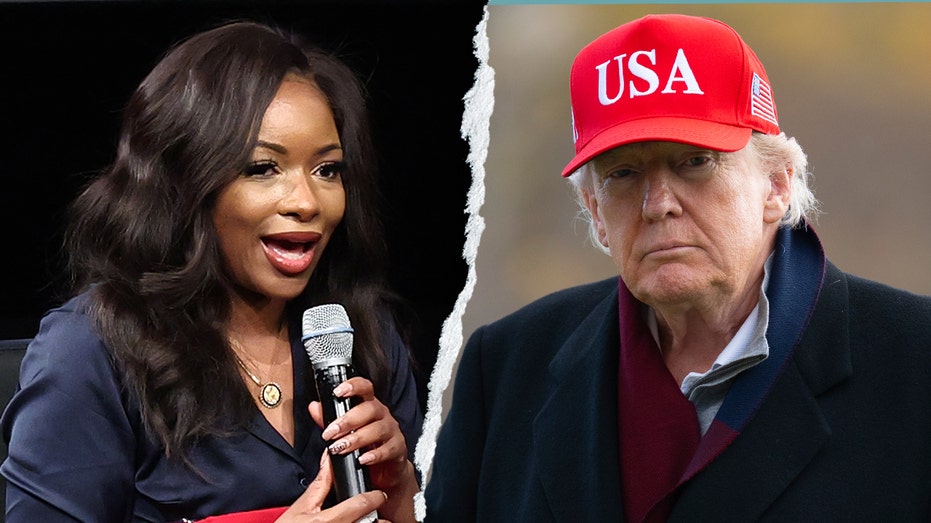
Moderate strategists like Liam Kerr warn that running a candidate who explicitly says she doesn’t need Trump voters in Texas isn’t just about this seat—it’s about cementing the GOP’s framing of Democrats as uninterested in persuasion. Even if that’s an oversimplification, it matters because perceptions about a party’s intentions influence how swing voters view every down-ballot race.
In other words, Crockett’s rhetoric isn’t just a Texas problem. It becomes raw material for Republican messaging in Arizona, Pennsylvania, Wisconsin, and Georgia—states where a few thousand votes can flip the Senate.
What this really means: Three overlapping battles inside the Democratic Party
The coverage tends to describe this as a left-vs-center ideological war. That’s only partly right. There are actually three fights happening at once.
1. Ideology: Redistribution vs. reassurance
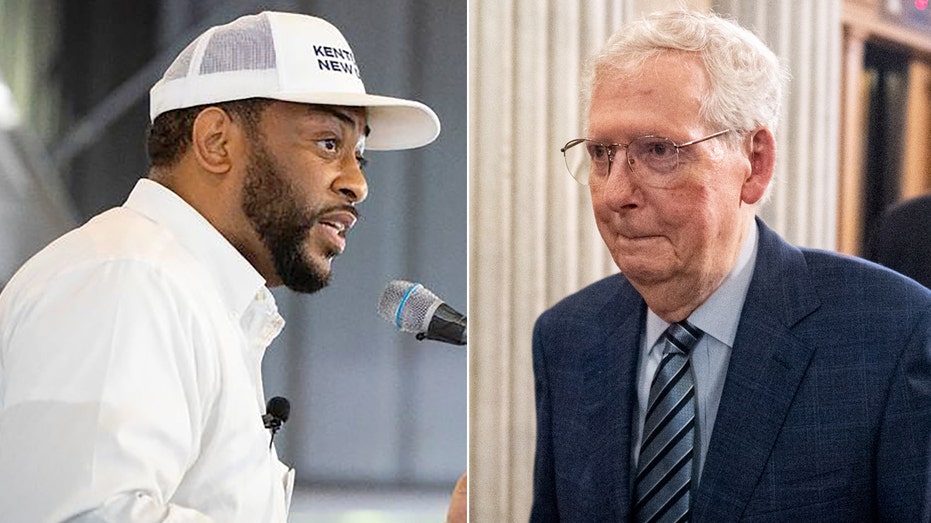
Progressives like Crockett, Mallory McMorrow, and Abdul El-Sayed represent a politics centered on aggressive redistribution, expansive social programs, and confronting structural racism and inequality head-on. Their bet: mobilizing younger, more diverse, and disaffected voters can change the composition of the electorate.
Moderates and “Biden-style” Democrats focus on reassurance—projecting stability, competence, and incremental change to suburban and older voters nervous about rapid disruption. Their bet: swing voters still decide close races, and anything that smells like “socialism” is poison in red and purple states.
The problem for Democrats is that both factions are partially right—and they need each other. Energizing the base without reassuring the middle can lose statewide races. Reassuring the middle without energizing the base can depress turnout and lose by a different route.
2. Strategy: Mobilization vs. persuasion
Behind the ideological fight is a methodological one. Progressive campaigns emphasize turning out nonvoters and sporadic voters; centrists obsess over “double-haters” and swing suburbanites. The line in the article about “we don’t need Trump voters” is less a throwaway quote than a window into this strategic divide.
Data from recent cycles complicates both sides’ assumptions:
- In 2020, turnout surged to about 66% of the voting-eligible population, with both parties benefiting from mobilization—and Biden still needed to win a significant slice of 2016 Trump voters to carry key states.
- In 2022, Democrats outperformed expectations in several states, in part because they overperformed with independents and controlled losses with working-class voters, while abortion and democracy concerns energized parts of their base.
There is no clean path where Democrats can entirely abandon persuasion or entirely rely on it. The Crockett candidacy, and Republican glee around it, highlights the cost of talking as if one half of that equation is expendable.
3. Power: Parties vs. personalities
Sen. John Cornyn and Liam Kerr both point to a less-discussed structural shift: the collapse of party gatekeeping.
Super PACs, online small-dollar fundraising platforms, and massive social media followings allow candidates to bypass traditional party structures. The DSCC can recruit “formidable candidates,” but it can’t easily prevent a Jasmine Crockett or an Abdul El-Sayed from jumping in and instantly commanding national attention and money.
This mirrors what Republicans have struggled with since 2010: Tea Party and later MAGA-aligned candidates winning primaries only to prove toxic in general elections (think Todd Akin in Missouri, Herschel Walker in Georgia, Kari Lake in Arizona). Democrats are now facing their own version of that dilemma, though with different ideological content.
Expert perspectives: Why both sides are gaming the same optics
Republicans are explicit about their playbook: amplify the most controversial progressive voices to define the whole party. As Kerr notes, they’ve built a durable frame of Democrats as “elite, out-of-touch, and extreme.” That framing doesn’t depend on policy details; it depends on packaging high-profile Democrats as walking exhibits for the prosecution.
At the same time, some Democratic strategists see hidden advantages in these high-profile primaries:
- They build local infrastructure—volunteers, email lists, donor networks—that can outlast a single race.
- They force debates on issues that establishment candidates might otherwise dodge, which can help refine the party’s message.
- They can produce stars who, even if they lose statewide, become influential national messengers or future candidates in bluer seats.
Kaivan Shroff’s warning is crucial here: primaries are healthy only if they are issue-focused rather than conspiratorial or nihilistically anti-“establishment.” The Democratic Party’s risk is not merely a left-wing candidate winning; it’s a primary so bitter and delegitimizing that the eventual nominee inherits a fractured coalition and a cynical base.
Data and what’s being overlooked
Much of the commentary frames progressives as inherently unelectable in red and purple states. The empirical record is more mixed:
- In Pennsylvania (2022), John Fetterman, who embraced a populist-progressive economic message and a non-traditional image, won a Senate seat that many thought required a cautious centrist.
- In Florida (2018) and Georgia (2018), Andrew Gillum and Stacey Abrams ran unapologetically progressive campaigns and came within a few points in historically tough environments.
- In New York and California, progressive primaries have produced candidates who both win general elections easily and reshape the policy conversation (e.g., AOC’s climate and labor agenda).
What often matters more than the ideological label is the fit between the candidate’s persona and the state’s political culture. The open question in Texas is whether Crockett’s confrontational, social-media-forward style can connect beyond the Democratic base in a state still dominated by older, more conservative voters—particularly if Republicans succeed in making her the face of the national party.
The other overlooked factor is demographic and generational change. Texas has been steadily urbanizing and diversifying; younger Texans are more Democratic-leaning, but turnout among 18–29-year-olds remains volatile. A candidate like Crockett may be a poor fit for today’s median Texas voter—but closer to the median voter of 2032 or 2036. Parties often struggle when they pick candidates for the coalition they have now instead of the coalition they’re trying to build—or vice versa.
Looking ahead: What to watch between now and 2026
A few key dynamics will determine whether Republicans’ “Dem civil war” narrative becomes self-fulfilling or overblown.
- How far primaries go into personal destruction. If Crockett and her opponents in Texas, or progressives in Michigan, frame their opponents as illegitimate, corrupt, or indistinguishable from Republicans, that’s fuel for GOP turnout and Democratic disillusionment in November 2026.
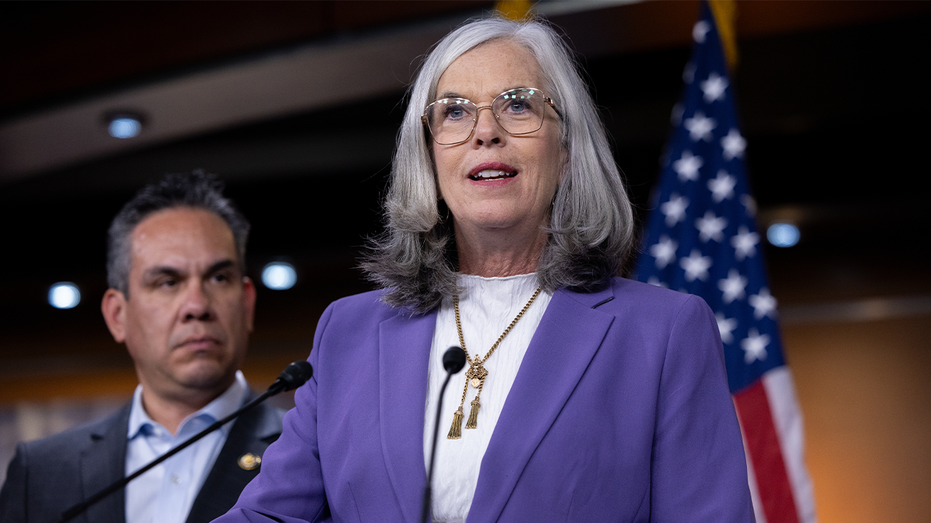
- Whether Democrats can articulate a unified general-election frame. Can Schumer and the DSCC (or whoever emerges as a de facto national leader) set a broad narrative—on the economy, democracy, abortion, and rights—that unites progressives and centrists under one story? Nancy Pelosi managed this balancing act with the Squad; the current leadership has not yet demonstrated comparable skill.
- Republican candidate quality. GOP leaders assume Democrats will self-sabotage with “unelectable” nominees. But Republicans have their own history of nominating incendiary figures who repel moderate voters. If 2026 features head-to-heads between polarizing candidates in both parties, the fight may be less about ideology and more about which side seems marginally more stable.
- Turnout patterns in off-year midterms. Historically, the president’s party struggles in midterms. However, recent cycles show that abortion rights, democracy, and backlash against extremism can scramble that pattern. If Republicans overplay the “socialist” line while running candidates who appear anti-democratic or extreme on abortion, the backlash could mirror 2022.
The bottom line
Republican strategists are not wrong to see opportunity in messy Democratic primaries and provocative progressive candidates like Jasmine Crockett. But framing this as a simple story of a “party in shambles” obscures a more complex reality.
Democrats are navigating a painful but predictable transition: weakening party control, rising individual brands, and unresolved tension between a mobilization-first progressive strategy and a persuasion-first centrist one. How they manage this transition in 2026 will shape not only the Senate map, but the long-term identity of the party.
The real test isn’t whether progressives run. It’s whether the party can turn internal competition into ideological and strategic refinement—rather than a circular firing squad that hands Republicans the Senate and cements a caricature of Democrats as both extreme and disorganized.
Topics
Editor's Comments
What’s striking in this episode is how familiar it feels when you step back from the partisan framing. Republicans spent the last decade wrestling with insurgent candidates who thrilled the base but scared general-election voters; Democrats mocked that turmoil while quietly relying on relatively disciplined Senate recruitment. Now the roles are partially reversed. Progressives are increasingly unwilling to defer to Washington’s definition of electability, and party leaders lack both the carrots and sticks to reassert control. The real question is whether Democrats can learn from the GOP’s experience: the cost of indulging every viral star is that you may win the internal war and lose the winnable race. Yet there’s also a risk to suppressing insurgents: you can smother the energy and ideas that keep a party relevant. The 2026 primaries are less a meltdown than an open experiment in how to balance those competing imperatives under 21st-century campaign conditions.
Like this article? Share it with your friends!
If you find this article interesting, feel free to share it with your friends!
Thank you for your support! Sharing is the greatest encouragement for us.