
Why the Latest Putin-Witkoff-Kushner Meeting Failed to Unlock a Ukraine Peace Deal

Sarah Johnson
December 3, 2025
Brief
In-depth analysis of the recent Putin-Witkoff-Kushner Moscow meeting reveals why territorial disputes and geopolitical complexities continue to obstruct Ukraine peace efforts, despite constructive dialogue.
Opening Analysis
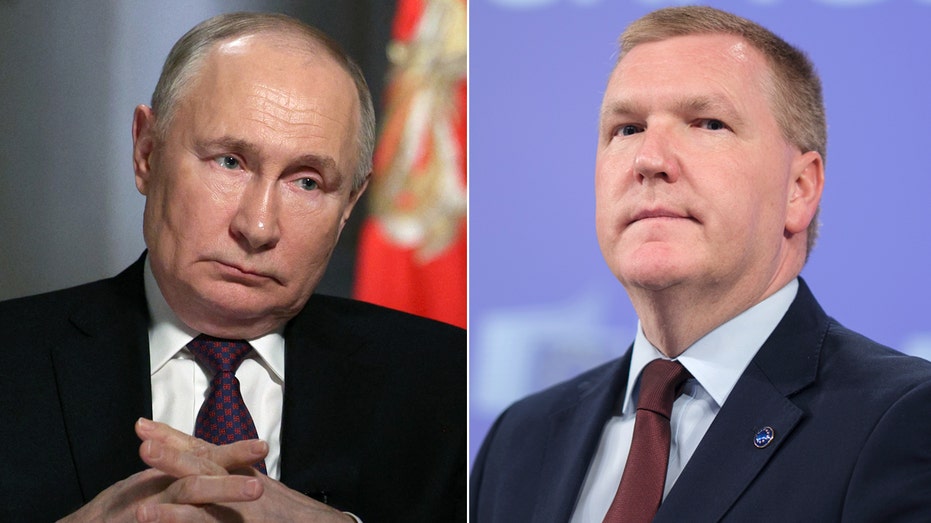
The recent five-hour meeting in Moscow between Russian President Vladimir Putin, U.S. Special Envoy Steve Witkoff, and former White House senior adviser Jared Kushner aimed at brokering a peace deal in Ukraine ended with no breakthrough. While hailed as constructive by Kremlin officials, the talks underscored the deep fault lines over territorial sovereignty, revealing the profound challenges in resolving a war that has already reshaped global geopolitics. This engagement reflects ongoing diplomatic efforts outside traditional channels, highlighting the complex interplay of political interests that continue to complicate the pursuit of peace in Eastern Europe.
The Bigger Picture
The conflict in Ukraine has its roots in long-standing historical tensions exacerbated by Russia’s annexation of Crimea in 2014 and the subsequent war in Donbas. Moscow’s demands for Ukrainian territorial concessions, particularly over Donbas, remain the pivotal stumbling block in negotiations. Previous peace efforts, including the Minsk agreements, have largely failed to halt fighting or lead to durable resolution due to mutually incompatible red lines.
This latest meeting is notable for involving Steve Witkoff and Jared Kushner, figures outside official diplomatic channels, signaling a parallel track that coexists with formal Western diplomatic efforts. Such track-two diplomacy has occurred before in protracted conflicts but risks sending mixed messages to Kyiv and Moscow alike. Historical precedent shows that peace processes dependent on ambiguous or unofficial envoys often struggle to achieve lasting progress when fundamental issues—such as territorial sovereignty, security guarantees, and political recognition—are off the table or only partially addressed.
What This Really Means
At its core, the failure to reach a compromise highlights the entrenched strategic imperatives driving each side. Russia’s insistence on retaining control over the entire Donbas region, including areas currently not held militarily, reflects a broader objective to secure a buffer zone and leverage over Ukraine’s political and economic independence. Ukraine’s reluctance to cede any sovereign territory demonstrates its commitment to national integrity and resistance to perceived coercion.
The discussion of a revised 27-point peace plan, while detailed, apparently failed to bridge this fundamental territorial divide. Moreover, the inclusion of economic cooperation in talks signals Russia’s attempt to secure long-term influence over Ukraine beyond immediate military conflicts. Meanwhile, Ukraine’s positioning to brief European national security advisers and coordinate with Western partners after the meeting emphasizes Kyiv’s continuing reliance on multilateral support, contrasting with the bilateral nature of the Moscow talks.
Expert Perspectives
Dr. Fiona Hill, former National Security Council Russia expert: "The problem is not just the public positions but the deeply divergent strategic vision for Ukraine’s future. Moscow views Ukraine as a Russian sphere of influence; Kyiv insists on sovereignty and Western integration. Any peace plan ignoring these fundamentals risks being rejected or worse, sidelined.
Mark Galeotti, Moscow-based security analyst: "This meeting underscores the Kremlin’s interest in demonstrating diplomatic openness while maintaining firm politico-military objectives. It’s very much a show of willingness to talk, but no readiness to compromise essential territorial claims."
Data & Evidence
- According to the Institute for the Study of War, Russian forces have recently made territorial gains in Sumy Oblast and areas near Kostiantynivka, Pokrovsk, and Huliaipole, demonstrating ongoing conflict intensity despite diplomatic overtures.
- Ukrainian forces reportedly maintain control of most of Kupiansk city, with Russian forces holding isolated pockets, highlighting fluid frontlines.
- The leaked 28-point peace plan initially proposed was widely criticized by European leaders for being overly favorable to Moscow, indicating European skepticism towards bilateral Russian-American mediated deals.
- Ukraine's National Security and Defense Council preparing to brief European leaders reflects a coordinated Western approach to peace negotiations, centered on multilateral consensus.
Looking Ahead
The continuation of this dialogue without immediate breakthroughs suggests that sustained diplomatic engagement will be necessary but insufficient on its own to resolve the war. Key future developments to watch include:
- Whether Ukraine’s coordination with European security advisors translates into unified Western leverage in negotiations.
- The impact of Russia’s territorial demands on Ukraine’s willingness to negotiate, especially under military pressure and with shifting frontlines.
- Potential shifts in U.S. and European policies on peace facilitation—whether informal envoys like Witkoff and Kushner gain traction or whether official diplomatic channels will dominate.
- Broader geopolitical ripple effects, including Russia’s relations with Europe and the prospects for future economic cooperation discussed in the talks.
The Bottom Line
This marathon negotiation session did not resolve the fundamental impasse: Russia’s desire for territorial control in the Donbas versus Ukraine’s demand for sovereignty. Although described as constructive, the talks reveal the complexities behind diplomacy in protracted conflicts where historical grievances, national identity, and external geopolitical rivalries intersect. With frontline gains occurring alongside talks, the war in Ukraine remains a deeply contested and unstable situation. Sustainable peace will require addressing core strategic contradictions and building multilateral support that balances security concerns with respect for sovereignty.
Topics
Editor's Comments
This extended Moscow meeting between Putin, Kushner, and Witkoff reveals more about the challenges of conflict resolution than many mainstream reports acknowledge. The involvement of unofficial envoys underscores a nuanced diplomatic landscape where traditional state actors sometimes step aside to allow alternative backchannels. Yet, the persistent territorial disputes underscore how deeply national identity and geopolitical strategy remain bound up in this conflict. What’s striking is the duality of rhetoric—Russian officials speak of constructive talks but maintain unyielding territorial demands, suggesting this round is as much about signaling and testing Western responses as actual compromise. As the war continues to evolve militarily, the diplomatic maneuvering seems a parallel battlefield where symbolism often trumps substance. The question remains: will these efforts open a pathway to peace, or merely prolong a stalemate under the guise of dialogue?
Like this article? Share it with your friends!
If you find this article interesting, feel free to share it with your friends!
Thank you for your support! Sharing is the greatest encouragement for us.