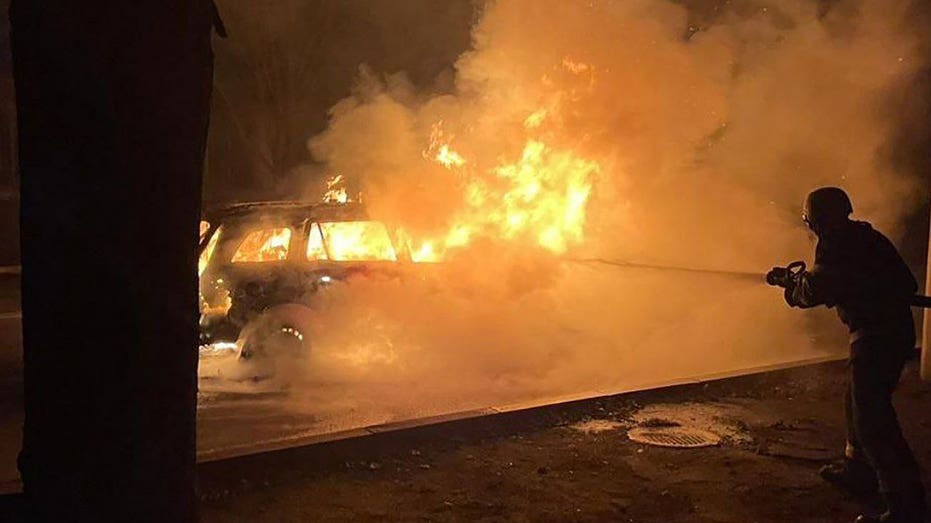
Putin’s Rejection of US Peace Plan: Escalating Risks and the Future of the Ukraine Conflict

Sarah Johnson
December 4, 2025
Brief
An in-depth analysis of Putin's rejection of the US peace plan for Ukraine, exploring historical context, geopolitical stakes, expert insights, and the rising risk of broader European conflict.
Why Putin’s Rejection of the US Peace Plan Marks a Turning Point in the Ukraine Conflict
The recent rejection by Russian President Vladimir Putin of critical components of the US-backed peace proposal comes at a precarious moment in an already brutal and protracted conflict. While peace plans and diplomatic overtures have occasionally surfaced over the nearly three-year war, the Kremlin’s outright dismissal of demands to withdraw from occupied Ukrainian territories signals a deepening impasse. Coupled with stark warnings from senior Russian officials about potential new conflicts in Europe if Russian assets are seized, this development underscores rising tensions not only on the battlefield but also across diplomatic and economic arenas.
The Bigger Picture: Historical and Geopolitical Context
To understand the full weight of Putin’s rejection, it helps to revisit the conflict's origins and the strategic motivations at play. Since Russia’s invasion of Ukraine in 2022, Moscow’s official narrative has framed the war as a necessary "special military operation" aimed at protecting Russian speakers and countering NATO expansion. The annexation of Crimea in 2014 and support for separatists in eastern Ukraine set a precedent for territorial ambition under the guise of security interests.
However, territorial withdrawal is fundamental to restoring Ukraine’s sovereignty. The US-backed peace plan’s demand for Russia’s pullback from occupied zones resonates with international law and broad global consensus but contradicts Russia’s declared war objectives. Historically, Russia’s leadership has viewed concessions on territorial integrity as a sign of weakness threatening regime survival.
What This Really Means: Implications Amid Diplomatic and Military Escalation
Putin’s refusal to accept conditions tied to withdrawal embeds both military and diplomatic deadlock. On the one hand, it forecasts continued or even intensified fighting, as Moscow refuses to compromise on territorial gains while Kyiv, backed by Western allies, pushes for restoration of full sovereignty.
Simultaneously, the warning from Dmitry Medvedev about treating any EU seizure of frozen Russian assets—as part of Ukraine’s funding—as a "casus belli" (justification for war) highlights the Kremlin’s calculation that economic warfare can trigger military responses beyond Ukraine’s borders. This introduces a risk that the conflict could expand geographically or escalate unpredictably, affecting European security at large.
The harsh rhetoric is not mere posturing; Russia’s linkage of economic sanctions with military threat underscores Moscow’s strategic approach of integrating military, economic, and diplomatic tools to exert maximum pressure.
Expert Perspectives: Interpreting Putin’s Calculus and European Responses
Experts analyzing the conflict suggest Putin’s rejection reflects a strategy to maintain a position of maximal leverage. Dr. Fiona Hill, former senior US Russia advisor, characterizes Putin’s intransigence as reflecting a zero-sum worldview: "For Russia’s leadership, territorial control is non-negotiable because it symbolizes national strength and regime legitimacy."
European security analyst Michael Kofman points out that Medvedev’s warnings should be seen as part of a tactic to deter asset seizures and force concessions through economic intimidation. "Russia is testing the limits of European unity," Kofman notes, "trying to fracture support for Ukraine by raising fears of wider conflict."
Data and Evidence: Economic Stakes and Military Realities
The stakes involved are enormous. The EU currently holds around €190 billion in frozen Russian sovereign assets. The possibility of unlocking even a portion of these to aid Ukraine’s military and budgetary needs reflects the increasing financial commitment to sustain Kyiv’s defense capability, projected at approximately €90 billion over two years.
On the military front, reported strikes illustrate continued Russian aggression and Ukrainian retaliatory operations—manifesting a war of attrition. The targeting of civilian areas alongside strategic infrastructure such as explosive plants signals an ongoing effort to degrade Ukraine’s defense potential. Ukraine’s public insistence on coupling diplomatic dialogue with pressure highlights a recognition that military strength remains key to negotiation leverage.
Looking Ahead: What to Watch in the Conflict’s Trajectory
The coming months will be critical. The firm Kremlin stance suggests no imminent breakthrough, preparing the ground for prolonged conflict. Ukraine’s sustained resistance, coupled with Western financial and military support, may keep Moscow on the defensive, but risks remain of further escalation, especially if economic warfare tips into kinetic responses.
Diplomatic channels will likely remain strained. International actors must anticipate potential new flashpoints in Europe given Russia’s explicit threats. How the EU navigates frozen asset utilization will be pivotal—balancing support for Ukraine with minimizing risks of broader confrontation.
The Bottom Line
Putin’s rejection of the US peace plan is a significant indicator that the Ukraine conflict remains far from resolution. The intertwining of military resolve, economic warfare, and aggressive diplomacy portrays a multifront struggle where stakes extend beyond Ukraine’s borders. While international efforts persist, the prognosis demands sober reckoning with the complexities ahead—where peace requires not only negotiation but also managing the volatile interplay of power, pride, and survival on the European stage.
Topics
Editor's Comments
Putin's explicit rejection of withdrawal from Ukrainian territory fundamentally reshapes the diplomatic landscape. This stance reveals a Kremlin leadership that views territorial concessions as existential threats, suggesting peace negotiations will be protracted and fraught. Medvedev's warnings further complicate matters, as they sharply increase the stakes for European countries considering economic measures against Russia. Analysts should watch carefully whether this rhetoric materializes into military action beyond Ukraine, potentially destabilizing European security frameworks established post-Cold War. The unfolding scenario demands nuanced strategies that combine sustained pressure with diplomatic innovation — a delicate balance with no easy answers in sight.
Like this article? Share it with your friends!
If you find this article interesting, feel free to share it with your friends!
Thank you for your support! Sharing is the greatest encouragement for us.