
Somali Fraud in Minnesota: Fraud Scandal, Remittances, and the Real Terror Risk

Sarah Johnson
December 15, 2025
Brief
Beyond the headlines on Somali fraud in Minnesota, this analysis unpacks how welfare oversight failures, remittance systems, and security fears collide—and what it really means for refugee policy and terror finance.
Somali Fraud, Remittances, and Terror Fears: What the Minnesota Case Really Tells Us
The Minnesota Somali fraud investigation has quickly become a political flashpoint: a story about welfare fraud, immigrant communities, and possible ties to jihadist groups. But beneath the headlines is a much more complex struggle over how the U.S. manages remittances, refugee integration, and national security in an era where financial crime and terrorism increasingly overlap.
At its core, this case is not just about whether some stolen welfare funds reached extremists in Somalia. It’s about whether Western governments can protect both their financial systems and their social contracts without criminalizing entire diasporas that are often the most important partners in stabilizing fragile states like Somalia.
How We Got Here: From Refugee Resettlement to National Security Flashpoint
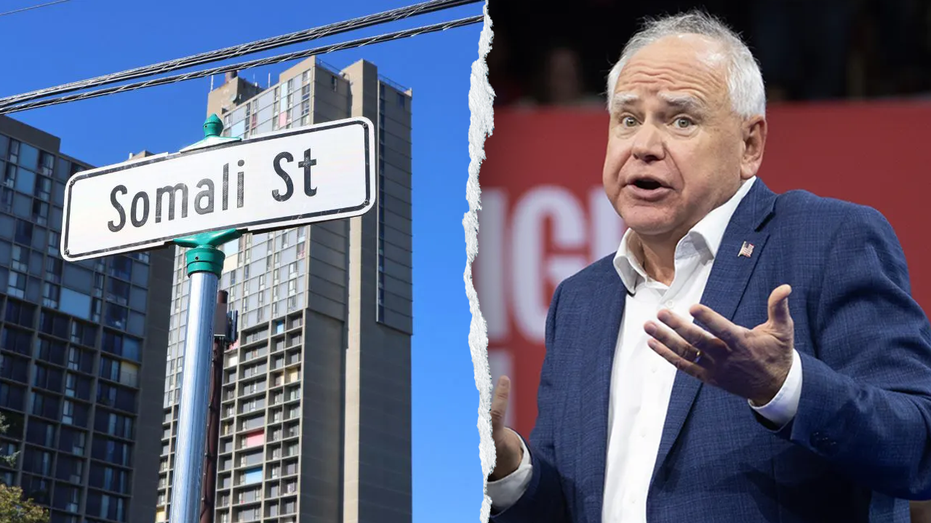
Minnesota’s Somali community is the largest in the United States, built over three decades of refugee resettlement following Somalia’s state collapse in 1991. From the 1990s onward, U.S. policy framed Somali resettlement as both a humanitarian obligation and a soft-power investment: provide safety and opportunity in America, and you weaken the appeal of militancy, piracy, and extremism abroad.
By the late 2000s, however, a different narrative began competing with this idealistic story. A small number of Somali Americans from Minnesota traveled to join al-Shabaab in Somalia. Congressional hearings, FBI investigations, and high-profile cases reframed the community in security terms, even though the overwhelming majority were law-abiding residents working in low-wage jobs, driving taxis, or running small businesses.
At the same time, remittances became central to Somalia’s survival. After the state collapsed, the traditional hawala system—informal money-transfer networks based on trust and family ties—became the primary way Somalis abroad supported relatives back home. Today, the World Bank estimates remittances to Somalia hover around $1.3–1.5 billion annually, dwarfing official development assistance and making up a large share of household income for urban families.
That dependency created a recurring policy dilemma: Western governments know these flows are a lifeline for civilians, but they also know these same channels can be exploited by terrorist financiers, criminal syndicates, and corrupt elites. The Minnesota fraud case is the latest, and perhaps most visible, collision between those two realities.
What’s Actually New in the Minnesota Case
Several elements set the Minnesota scandal apart from past concerns about remittances and terrorism:
- Source of funds: This isn’t just money pooled from diaspora earnings. The alleged fraud involved large-scale theft of taxpayer funds—specifically COVID-era child nutrition programs—on a scale exceeding $250 million.
- Scale and timing: The fraud coincided with the massive emergency spending surge during the pandemic, when oversight was weakened in the rush to get aid out the door. This created a “perfect storm”: large pools of poorly monitored public money intersecting with existing informal transfer channels.
- Explicit terrorism concern: Unlike many traditional fraud cases, Treasury and federal prosecutors are openly asking whether any of these funds may have flowed—directly or indirectly—to groups like al-Shabaab or ISIS-linked networks in Somalia.
Treasury officials have publicly acknowledged tracking significant overseas transfers linked to individuals implicated in the fraud. What’s missing so far is hard, publicly available evidence that a measurable portion of that money actually ended up in jihadist coffers rather than simply in private hands, real estate, or business interests abroad.
This evidentiary gap matters. It’s one thing to prove large-scale fraud—prosecutors have already done so in several cases. It’s another to show that welfare theft meaningfully financed terrorism. That distinction will shape whether this remains a story about pandemic-era corruption or becomes an enduring reference point for tightening refugee and asylum policy.
Remittances, Hawala, and the Terror Finance Problem
The article cites $215 million sent from the U.S. to Somalia last year against a Somali GDP of about $12 billion. That number, while significant, is only a slice of total remittances once Europe, the Gulf, and other regions are included.
Western security services have struggled for two decades to regulate hawala without shutting it down completely. Earlier crackdowns, especially after 9/11, led major banks to “de-risk” and terminate accounts for Somali money-transfer operators, often over compliance fears rather than concrete proof of wrongdoing. Humanitarian agencies and Somali diaspora groups warned repeatedly that these actions pushed transfers further underground, making them harder to monitor while punishing ordinary families.
The Minnesota case reopens this unresolved debate in a new form: what happens when the “dirty” money entering these channels comes from Western welfare exploitation rather than crime in Somalia itself? And do current U.S. laws and enforcement tools distinguish between remittances that reflect genuine familial support and those that may be diversion of public funds?
What’s Being Overlooked: Governance, Oversight, and Domestic Vulnerabilities
Much of the commentary quickly jumps from “Somali fraud in Minnesota” to “immigration and terrorism” without dwelling on the domestic systems that made such fraud possible. Two deeper issues are being sidelined:
- Oversight failure in U.S. welfare and emergency aid systems. The Feeding Our Future scandal and related cases exposed glaring weaknesses in how pandemic food programs and other aid were verified, monitored, and audited. Fraud wasn’t confined to one ethnicity or state; it was a systemic vulnerability that different groups exploited in different ways. Focusing narrowly on one community risks obscuring the larger public finance problem: how quickly expanded government spending can be siphoned off when controls lag behind.
- Integration and social infrastructure in receiving communities. Both Minnesota and Sweden—also highlighted in the article—have large refugee populations concentrated in segregated neighborhoods with uneven access to education, employment, and political power. Such conditions are fertile ground not only for petty crime but for the emergence of tight-knit patronage networks that can morph into organized welfare fraud. These networks are as much about local governance gaps as they are about ideology.
In other words, the scandal is at least as much a story about American (and Swedish) institutions failing to design fraud-resistant welfare systems as it is about radicalization. If policymakers use this moment only to tighten borders, they will miss a critical opportunity to modernize oversight, data-sharing, and community-level accountability.
Radicalization: Signal, Noise, and Scale
The article links the Minnesota fraud context to ISIS recruitment cases in Sweden and the U.S., creating an implicit narrative arc: welfare fraud, extremist networks, and terrorist travel are all part of the same phenomenon. There is some connective tissue here, but it’s thinner than the political rhetoric suggests.
Research on radicalization among Western Muslims—including Somalis—points to a complex mix of factors: identity crises, discrimination, online propaganda, personal trauma, and grievances over foreign policy. Financial crime and welfare fraud can sometimes intersect with this ecosystem, but they are not its primary drivers.
Moreover, the scale matters. In Sweden, the 300 individuals who joined jihadist groups from a population of roughly 10 million was deeply alarming, but still a microscopic fraction of the country’s Muslim and immigrant population. Similarly, in Minnesota, a relatively small number of individuals have appeared in terrorism cases over a period of years, out of tens of thousands of Somali residents.
None of this minimizes the threat—U.S. law enforcement rightly treats even a small recruitment pipeline as a serious concern. But conflating large-scale financial fraud with terrorism without robust evidence risks stigmatizing entire communities and undermining the very cooperation law enforcement needs to detect genuine threats.
From Counterterrorism to Migration Control: A Strategic Shift
The story is framed around a broader shift in U.S. national security thinking: from a post-9/11 focus on Middle Eastern terrorism to a mix of mass migration, great-power competition, and hybrid threats. The Minnesota scandal is being used as a cautionary tale about the risks of “waves of refugees” and the need to align asylum policy with national interests.
This reflects a deeper tension in U.S. strategy:
- Humanitarian commitments vs. perceived security risk: Refugee and asylum programs have long been justified both morally and strategically (e.g., welcoming dissidents from the Soviet bloc). But in the post-ISIS, post-syrian-war era, public perception has tilted toward seeing migration as a security and cultural threat, especially when high-profile crimes or terror plots are involved.
- Short-term risk vs. long-term stability: Restricting Somali or other refugee flows might reduce immediate political risk at home. Yet cutting off resettlement and remittance channels can worsen instability in origin countries, potentially generating more extremism and irregular migration over time.
The Minnesota case, in that sense, is being positioned as evidence that the costs of generous asylum and welfare policies are unsustainable. The more nuanced reality is that poorly supervised emergency programs, fragmented financial regulation, and weak integration policies are what made this particular scandal possible—not refugee status per se.
What Needs to Change: Policy Implications Beyond the Headlines
A serious response to the risks highlighted by this case would focus on five areas:
- Modernizing welfare program oversight. Pandemic-era programs revealed how easy it was to fabricate beneficiaries, inflate service numbers, or create shell entities. Better real-time data analytics, cross-agency verification, and transparent public reporting of high-risk contracts are key. Fraud detection should be race-neutral but risk-aware: focusing on patterns, not ethnicities.
- Regulating remittances without shutting them down. Instead of bluntly targeting hawala or diaspora remittances, regulators can expand licensing, require more granular reporting for large transfers, and build partnerships with trusted community-based financial intermediaries. The goal is visibility, not paralysis.
- Building community-based guardrails. Somali community organizations, mosques, and youth groups are often the first to see signs of both radicalization and financial exploitation. Giving them a formal role in prevention—through funding, liaison programs, and shared early-warning channels—can help distinguish between normal cross-border support and suspicious financial activity.
- Targeted counter-radicalization efforts. The handful of individuals drawn to ISIS or al-Shabaab often pass through local social networks. Programs that address identity, belonging, and economic opportunity—while offering off-ramps for those flirting with extremism—are far more effective than blanket suspicion.
- Transparent communication about risk. U.S. officials need to be forthright about what is known and unknown regarding terrorism linkages. If investigations ultimately show that only a tiny fraction of fraud proceeds reached extremist actors, that must be communicated as clearly as any early warnings that raised the possibility.
Looking Ahead: What to Watch
Several developments will signal how this story evolves from scandal to policy:
- Indictments with explicit terrorism finance charges. If future cases link specific transfers from Minnesota fraud directly to designated groups, terrorism financing laws will move to the center of the narrative.
- Changes to refugee and asylum quotas. Watch for whether this case is repeatedly cited in debates over refugee caps, country-of-origin bars, or new background screening measures.
- Banking and remittance policy shifts. Renewed pressure on banks dealing with Somali-focused money transfer operators could revive the post-9/11 “de-risking” trend, with major implications for Somali households dependent on overseas support.
- Community backlash and political realignment. Somali Americans in Minnesota have become increasingly politically organized. If they perceive that the entire community is being blamed for the crimes of a few, expect a sharper, more vocal pushback that could reshape local and state politics.
The Bottom Line
The Minnesota Somali fraud investigation is a genuine scandal with serious implications for public trust and, potentially, national security. But it is not simply a story about “refugees and terrorism.” It’s about how modern welfare systems, global money flows, and fragile states intersect with diaspora politics and anxieties about immigration.
If policymakers respond by collapsing all these threads into a single narrative—immigration equals fraud equals terrorism—they will miss the more urgent lesson: the need to build resilient financial and social systems that can withstand exploitation without demonizing the communities that depend on them most.
Topics
Editor's Comments
One of the most troubling dynamics in the coverage of the Minnesota Somali fraud scandal is how quickly the conversation jumps from individual criminality to collective blame. The fact that some Somalis in Minnesota engaged in serious welfare fraud is not in dispute, and the public outrage is justified. But using those cases to indict refugee policy as a whole risks ignoring two uncomfortable realities that implicate the host society as much as the newcomers. First, U.S. and state agencies designed and implemented relief programs with glaring structural vulnerabilities—few safeguards, weak verification, and political pressure to spend quickly—that invited exploitation by anyone with the savvy to do so. Second, the same communities now under suspicion have often been warning for years about local gatekeepers and informal power brokers who manipulate both migrants and institutions. Yet those warnings rarely make it into policymaking circles. A contrarian but necessary question is whether politicians are focusing on “foreign” fraud partly because it distracts from deeper failures in domestic governance and oversight. Until we address those, changing who we admit will do far less than advertised to solve the underlying problems.
Like this article? Share it with your friends!
If you find this article interesting, feel free to share it with your friends!
Thank you for your support! Sharing is the greatest encouragement for us.