
Why Minnesota’s $2 Billion Fraud Scandal Was ‘Shockingly Easy’—And What It Reveals About U.S. Social Spending

Sarah Johnson
December 11, 2025
Brief
An in-depth analysis of Minnesota’s Feeding Our Future scandal, showing how emergency spending, weak oversight, and political incentives made COVID-era fraud ‘shockingly easy’—and what it means for national social programs.
Minnesota’s $2 Billion Fraud Scandal: A Case Study in How Modern Government Fails
What’s emerging in Minnesota is not just a COVID-era crime story about a rogue nonprofit called Feeding Our Future. It’s a systemic failure case study: how well-intentioned social programs, rushed emergency spending, weak oversight, and political incentives combined to create what may be one of the largest domestic aid frauds in modern U.S. history.
Former federal prosecutor Joe Teirab’s description of the scandal as “shockingly easy” to pull off should alarm anyone who cares about the integrity of public spending, regardless of ideology. His central allegation is not just that criminals lied, but that the system practically invited them to.
The Bigger Picture: How We Got Here
To understand Minnesota’s scandal, you have to place it within three overlapping historical arcs:
1. The evolution of federal nutrition programs
The Feeding Our Future case centers on federal child nutrition dollars, mainly the Child and Adult Care Food Program (CACFP) and the Summer Food Service Program (SFSP). These programs reimburse organizations for serving meals to low-income children, often through “sponsors” that oversee multiple sites.
Over decades, Washington increasingly pushed implementation down to states and private intermediaries—nonprofits, churches, community groups—on the assumption that local actors know their communities best. But that decentralization often outpaced the creation of equally strong oversight frameworks.
- In 2010, the Healthy, Hunger-Free Kids Act expanded access and sought to ease barriers to participation.
- Administrative simplification—fewer hoops, more trust—was seen as a way to reach more kids quickly.
The same features that make these programs flexible and responsive also make them structurally vulnerable to fraud when controls are weak: sponsors certify their own sites, attendance is self-reported, and documentation is often digital and easily fabricated.
2. The COVID-19 emergency spending paradigm
COVID layered on a second vulnerability: unprecedented speed and scale. Between 2020 and 2022, the federal government pushed out trillions of dollars in relief. Across programs—PPP loans, expanded unemployment, emergency rental assistance—oversight often came after the fact. The political pressure was to get money out, not to slow it down with verification.
The Minnesota case fits this pattern:
- Meal claims skyrocketed during the pandemic as sites asserted massive increases in children served.
- State officials faced legal and political pressure not to “discriminate” against providers, especially after at least one discrimination lawsuit challenged tighter oversight of a sponsor.
- In that context, aggressive scrutiny was often framed as potential bias, especially when providers were tied to immigrant or minority communities.
This is not unique to Minnesota; it’s a broader structural tension in anti-fraud policy: how to protect taxpayer dollars without reinforcing systemic bias or bureaucratic barriers that keep legitimate providers out.
3. Longstanding weaknesses in state-level oversight
Even before COVID, Minnesota’s Department of Human Services and Department of Education had red flags raised about internal controls. State auditors had, for years, cited:
- Weak segregation of duties in payment processing
- Inconsistent documentation standards across programs
- Reliance on self-reported data with limited onsite verification
What COVID did was stress-test a system that was already fragile. When the volume of claims surged, the system didn’t just bend—it snapped.
What This Really Means: System Design Made Fraud “Shockingly Easy”
Teirab’s most important point is not about any one politician; it's about architecture. A system built on trust, front-end automation, and back-end audits is very efficient when everyone plays by the rules—and extraordinarily fragile when they don’t.
Several structural choices made the fraud easier:
1. Outsourced watchdogs who became foxes
Sponsors like Feeding Our Future were supposed to function as intermediaries and watchdogs. In theory, they:
- Enroll and vet local food sites
- Ensure compliance with federal requirements
- Verify that meals are actually served to eligible children
In practice, according to federal indictments and Teirab’s commentary, at least one sponsor allegedly turned the model upside down: instead of policing sites, it cultivated them, inflated their numbers, and allegedly collected kickbacks while reporting fictional meals.
That is a textbook oversight failure: when the entity designed to be your eyes and ears on the ground becomes financially incentivized to exaggerate and is left largely unmonitored.
2. Data that looked plausible but was barely checked
The mechanics Teirab describes—fabricated PDFs, Excel sheets with fake names, claims of thousands of children supposedly fed daily—highlight a deeper problem: verification was minimal, often delayed, and sometimes discouraged.
In most modern payment systems, anomaly detection is standard. In the private sector, if a small vendor suddenly bills 1,000 times their normal volume, algorithms flag it within hours. The question is: why didn’t comparable controls exist here?
Policy decisions partly explain it:
- Fear of being sued for discrimination if certain providers—often ethnic or immigrant-led—were singled out for audits
- Institutional culture that prioritized service expansion over fraud risk
- Understaffed audit and compliance units relative to the volume of funds disbursed
3. Political incentives misaligned with fraud prevention
Fraud prevention is politically unattractive: success is invisible (fraud that never happens), while crackdowns can look like harassment of community providers. Elected officials are more likely to be judged on how much aid flows than on how clean the pipeline is.
In Minnesota, that played out in partisan blame games focused on Gov. Tim Walz, Attorney General Keith Ellison, and federal members of Congress like Rep. Ilhan Omar. But the underlying problem is broader: no one has strong incentives to be the person who slows down funding in the name of integrity—until after a scandal breaks.
Beyond Minnesota: What This Says About U.S. Social Spending
The Minnesota fraud scandal is not a one-off; it’s a concentrated example of challenges all over the country.
1. The trade-off between access and accountability
Modern social programs are moving toward frictionless access—online applications, rapid approvals, and presumptions of eligibility. That’s good for people who legitimately need help. But every removed friction point is also a removed control point.
The core policy question isn’t “How did criminals lie?” but “Why was it so easy to get paid for those lies?” That leads to uncomfortable answers:
- Oversight units are systematically underfunded compared to program expansion.
- Data systems are often outdated, siloed, and not designed for real-time fraud analytics.
- Fear of being accused of bias can chill necessary risk-based targeting of audits.
2. The risk of stigmatizing entire communities
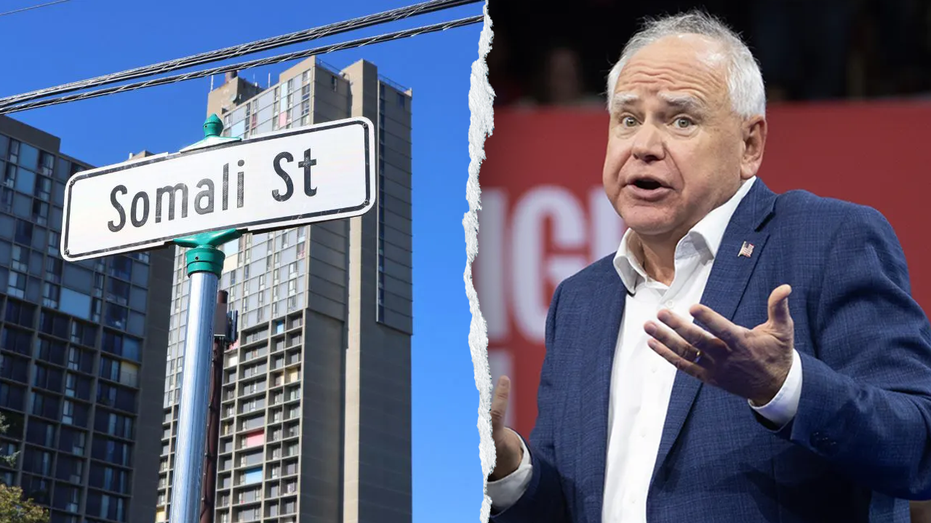
The reporting notes that many alleged fraudsters were part of Minneapolis’s Somali community. This is a sensitive and critical point. Fraud networks often grow along lines of trust—family, ethnic, religious, or professional ties—because people trust those they know. That does not implicate entire communities.
Historically, similar patterns emerged:
- Medicare fraud rings centered in specific professional or ethnic communities in Florida and Texas
- Mortgage fraud in the mid-2000s linked to tight-knit real estate circles
The policy challenge is to target fraud networks without tarring every legitimate provider in those same communities, many of whom are doing exactly what the programs were designed to support.
3. The erosion of public trust in government competence
When taxpayers see headlines suggesting $250 million to $2 billion may have been siphoned off for luxury cars and properties instead of feeding hungry children, it corrodes confidence far beyond one program or one state.
There’s a historical parallel here to the waste-and-fraud narrative that plagued some Great Society and early welfare programs in the 1970s and 1980s. That perception—even when exaggerated—helped drive major policy shifts toward stricter eligibility, work requirements, and block grants.
Minnesota’s scandal could become a similar touchstone for skeptics of large-scale social spending and emergency aid programs nationwide.
Data & Evidence: How Big Is This Really?
While precise numbers are still contested, the dimensions are striking:
- Feeding Our Future alone is alleged to have misappropriated roughly $250 million in federal funds.
- Teirab and other officials suggest total Minnesota fraud across related programs during this period could exceed $1–2 billion.
- Nationally, the Government Accountability Office has estimated that improper payments across major federal programs regularly exceed $200 billion annually, even outside crisis periods.
These figures suggest the Minnesota case is an extreme but not isolated manifestation of a national problem: a federal-state spending system where the error-and-fraud rate would be unacceptable in any private business of comparable size.
Expert Perspectives: What Went Wrong in the System
Experts in fraud prevention, public administration, and ethics highlight recurring themes when analyzing cases like this.
On structural risk: Program-integrity specialists emphasize the danger of relying on self-reported data without robust pre-payment checks and automated anomaly detection. The simplicity of the alleged fraud—fake spreadsheets, inflated headcounts—suggests the system lacked even basic “does this make sense?” filters.
On political and legal constraints: Civil-rights and administrative-law scholars note that agencies increasingly navigate a minefield: aggressive oversight can be framed as discriminatory; insufficient oversight can lead to multi-billion-dollar scandals. After a discrimination lawsuit, oversight staff may become risk-averse about flagging certain providers, even when anomalies appear.
On ethics and culture: Ethicists point to the normalization of rationalizations among perpetrators. When fraud spreads through social networks, participants often tell themselves “everyone is doing it,” particularly if they view government funds as abstract or mismanaged. The larger the perceived distance between taxpayers and disbursers, the easier it becomes to morally disengage.
Looking Ahead: What to Watch in Minnesota and Beyond
The political and policy aftermath is just beginning. Key questions:
- Will accountability reach beyond the fraudsters? Criminal prosecutions of those who fabricated claims are the easy part. The harder question is whether senior state officials, agency leaders, or federal overseers will face professional or political consequences for systemic failures.
- Will reforms prioritize real-time oversight? Walz’s office points to hiring more auditors, bringing in outside firms, and creating specialized fraud units. Those steps matter—but whether they’re transformative depends on whether Minnesota invests in modern data systems that can flag impossible claims before money goes out.
- Will this trigger national policy changes? Congress could respond with tighter guardrails on federal nutrition funds: standardized national risk models, required anomaly detection, mandatory pre-payment checks for high-risk claims, and clearer authority for states to suspend suspect providers without immediately triggering discrimination claims.
- How will this reshape debates about emergency spending? Future crises—from pandemics to climate disasters—will again require massive, rapid aid. The Minnesota scandal will likely be cited by those arguing that “never again” should trillions be pushed out without parallel investment in fraud controls.
The Bottom Line
Minnesota’s fraud scandal is not just about a nonprofit that allegedly lied about feeding children. It’s about how 21st-century government—fragmented, rushed, and politically constrained—created a system in which lying at scale became low-risk and high-reward.
If the response is limited to jailing a few dozen fraudsters and trading partisan accusations, very little will change. The real test is whether policymakers use this as a catalyst to rebuild program integrity from the ground up—so that next time, fraud of this magnitude is not “shockingly easy,” but structurally difficult.
Topics
Editor's Comments
One underexplored dimension of the Minnesota scandal is how legal and cultural pressures around discrimination may have unintentionally weakened oversight. After civil rights complaints and lawsuits in various states, agencies received a clear message: targeting certain providers for extra scrutiny—especially those led by immigrants or minority groups—could trigger costly litigation and reputational damage. In practice, that pushed some oversight offices toward a posture of formal equality: treat everyone the same, apply only generic checks, and avoid aggressive, risk-based targeting. Yet fraud risk is rarely evenly distributed; it clusters around particular networks and business models. When the law and political rhetoric discourage differential scrutiny, they can inadvertently protect the very networks exploiting the system most aggressively. The challenge going forward is to design oversight rules that are both anti-discriminatory and risk-sensitive—transparent criteria, published algorithms, and independent review—so that agencies can act decisively on red flags without reverting to profiling or arbitrary crackdowns. That will require more than new software; it demands a cultural shift in how we think about equity and accountability in public spending.
Like this article? Share it with your friends!
If you find this article interesting, feel free to share it with your friends!
Thank you for your support! Sharing is the greatest encouragement for us.