Taylor Swift’s Ocean House Wedding: The Intersection of Celebrity, Luxury, and Cultural Legacy

Sarah Johnson
December 6, 2025
Brief
An in-depth analysis of Taylor Swift and Travis Kelce’s rumored Ocean House wedding reveals insights into luxury hospitality, celebrity culture, and the broader implications for society and economy.
Why Taylor Swift's Wedding Plans at Ocean House Signal More Than Just a Celebrity Affair
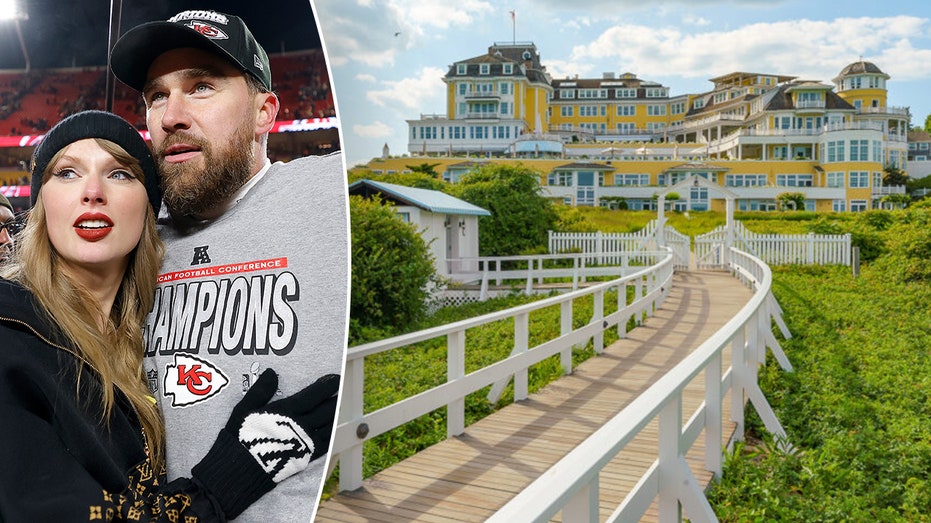
Taylor Swift and Travis Kelce’s rumored choice of the prestigious Ocean House resort for their wedding in 2026 is not simply a tale of two stars planning their nuptials—it offers a lens into evolving celebrity culture, luxury branding, and the intersection of private life and public spectacle. This prospective event highlights how high-profile weddings have become complex productions with broader implications for hospitality, local economies, and fan engagement.
The Bigger Picture: The Tradition and Transformation of Celebrity Weddings
Historically, celebrity weddings have served dual functions: intimate personal milestones and public cultural moments. From Elizabeth Taylor to Beyoncé and Jay-Z, weddings have reflected shifts in celebrity image management, media interaction, and luxury consumption.
Ocean House itself, an emblem of New England’s Gilded Age legacy, embodies this tradition of opulence and exclusivity. Its AAA Five Diamond, triple Forbes Five-Star distinction situates it among only fourteen resorts worldwide that have achieved this rare accolade. The resort’s historic Victorian architecture, coupled with cutting-edge luxury amenities, connects the past’s grandeur to contemporary prestige hospitality.
In this sense, Swift and Kelce’s choice taps into an evolving symbolic vocabulary of elite spaces that emphasize privacy, intimacy, and curated experience—counterbalancing the hyperpublic nature of celebrity life.
What This Really Means: Beyond the Fairytale
The narrative about Swift allegedly paying off another bride to secure June 13, 2026, at Ocean House—although denied by the resort—reveals the growing market dynamics influencing private celebrations. It raises questions about how high demand and exclusivity affect accessibility and the commodification of personal milestones.
Such moves underscore a larger pattern where venues are not just physical locations but branded stages for meticulously crafted narratives. The involvement of high-profile bridesmaids like Selena Gomez and Gigi Hadid speaks to celebrity networks leveraging weddings as social capital, reinforcing alliances and fan engagement.
Moreover, the scale of resources involved—from $10,000 per night penthouse suites to $42,000 "land and sea" packages including historic yacht cruises—illustrates how luxury hospitality integrates storytelling, history, and experience into escapism for the ultra-wealthy.
Expert Perspectives
Dr. Alison Pruitt, Cultural Anthropologist: "Celebrity weddings today function as extended performances, blurring the lines between private joy and public spectacle. The choice of a venue like Ocean House signals an intentional nod to heritage and exclusivity, while also capitalizing on place branding to elevate narrative authenticity."
Mark Lieberman, Luxury Hospitality Consultant: "Venues like Ocean House are no longer passive backdrops; they actively shape the client’s personal brand. The economic implications for the local market can be significant, with ripple effects in tourism, employment, and service innovation."
Data & Evidence
- Ocean House’s room rates range from $660 for standard rooms to $10,000 for its penthouse suite per night, reflecting the resort’s ultra-luxury status.
- The resort is among only 14 worldwide to hold the triple Forbes Five-Star award, highlighting its exceptional service and quality.
- Luxury weddings in the U.S. have seen an average spend increase of 20% over the last decade, with VIP events often exceeding seven figures in total cost.
Looking Ahead: Trends and Potential Impact
Taylor Swift and Travis Kelce’s wedding will likely set a benchmark in celebrity events—underscoring growing consumer appetite for immersive, historically rich luxury experiences rather than just grandiosity.
This could push other venues to invest in heritage preservation combined with modern amenities to capture this lucrative niche. It may also spur debates about the exclusivity of such spaces vis-à-vis community access and equitable use.
On a socio-cultural level, the event may further deepen the phenomena of weddings as branded media moments, influencing fan communities, fashion, and experiential marketing on a global scale.
The Bottom Line
The speculation surrounding Swift’s wedding at Ocean House is more than celebrity gossip—it highlights the evolving intersection of luxury hospitality, cultural symbolism, and celebrity influence. It showcases how personal milestones for the famous now resonate widely, shaping economic, cultural, and media landscapes in ways that ripple beyond their immediate circle.
Topics
Editor's Comments
This story about Taylor Swift’s potential wedding at Ocean House opens a window onto much deeper dynamics at play in celebrity culture and luxury hospitality. It’s fascinating to see how venues become active participants in shaping celebrity narratives rather than passive settings, and how this in turn drives economic and cultural consequences far beyond the individuals involved. As fans and observers, we must ask how sustainable such exclusivity is, and what it means for the communities tied to these historic venues. This moment signals evolving expectations for privacy, spectacle, and legacy that merit careful reflection as celebrity influence continues to grow.
Like this article? Share it with your friends!
If you find this article interesting, feel free to share it with your friends!
Thank you for your support! Sharing is the greatest encouragement for us.