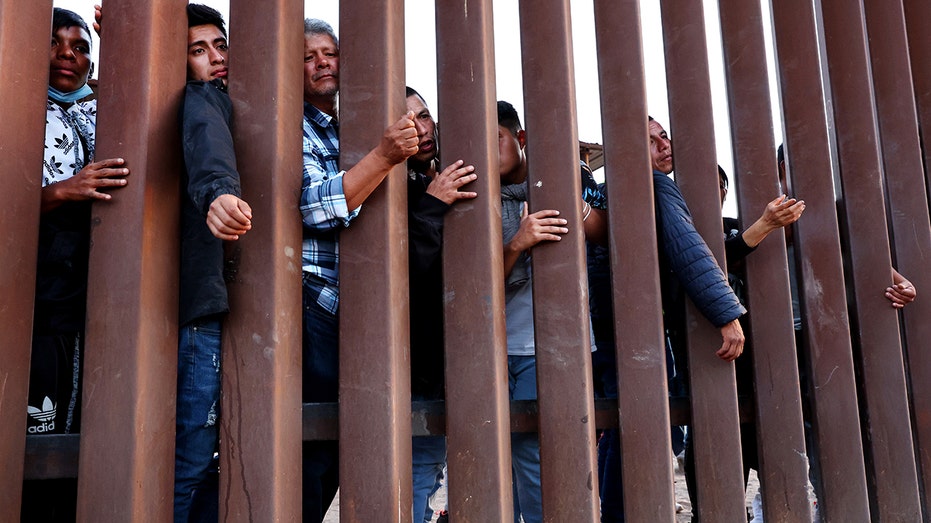
Trump’s 1,400‑Mile Smart Wall: Security Upgrade or Billion‑Dollar Symbol?

Sarah Johnson
December 18, 2025
Brief
Beyond miles of fencing, Trump’s 1,400-mile Smart Wall marks a permanent shift toward a high-tech security border with lasting impacts on surveillance, migration routes, civil liberties, and U.S. politics.
Trump’s 1,400‑Mile ‘Smart Wall’: Security Upgrade or Billion‑Dollar Symbol?
The Trump administration’s decision to ramp up construction of a 1,418‑mile “Smart Wall” along the U.S.-Mexico border is more than a law‑and‑order headline. It’s the culmination of a decades‑long shift from human‑centered border enforcement to a sprawling, technologically saturated security regime — and it will shape immigration, civil liberties, and U.S. politics long after the current administration leaves office.
The announced $3.3 billion in new contracts, bringing total spending to roughly $8 billion, signals that Washington is betting heavily on physical and digital infrastructure as the centerpiece of border policy. But the key questions are less about how many miles of wall are built and more about what kind of border the United States is engineering — and who will live with the consequences.
The bigger picture: How we got from fences to ‘Smart Wall’
The Smart Wall is the latest iteration in a series of efforts stretching back more than 30 years:
- 1990s – The era of “prevention through deterrence”: Operations Gatekeeper (California), Hold-the-Line (Texas), and Safeguard (Arizona) pushed migrants away from urban crossing points into deserts and mountains. The goal was to make crossings so difficult and dangerous that people would stop trying. They didn’t — deaths spiked instead.
- 2000s – From fences to virtual border: The Secure Fence Act of 2006 authorized about 700 miles of fencing. Under both the Bush and Obama administrations, physical barriers were paired with cameras, sensors, and drones. The Secure Border Initiative Network (SBInet) attempted a “virtual fence” using integrated technologies but was canceled in 2011 after cost overruns and performance failures.
- 2010s – The wall as political totem: Trump’s 2016 campaign rebranded border enforcement around a single image — a massive, continuous wall. In practice, the administration has largely replaced or reinforced existing barriers and expanded surveillance, but the symbolism of a wall has driven the politics.
The new phase described here — 1,418 miles of “Primary Smart Wall,” 536 miles of waterborne barriers, and 708 miles of “Secondary Border Wall” — reflects a fusion of these eras: the visible theater of steel bollards plus the less visible reality of persistent digital monitoring.
What the Smart Wall really is — and what it changes
On paper, the Smart Wall is a layered system: steel bollard fencing, patrol roads, lighting, cameras, sensors, and waterborne barriers, with nearly 1,100 miles of new detection technology including in areas where terrain makes building a physical wall impractical.
That combination has four major implications that basic coverage tends to gloss over:
- The border becomes a permanent high‑tech security zone.
This infrastructure isn’t temporary. Once embedded, camera networks, ground sensors, and integrated command systems become fixtures. Even if a future administration softens enforcement priorities, the hardware and data flows will remain — available to be repurposed or ramped up by the next political shift. - Surveillance footprint expands far beyond the line itself.
Border technologies rarely stay confined to the border. License plate readers, biometric systems, and integrated databases built initially for border control increasingly support interior immigration enforcement and ordinary policing. The precedent is clear: post‑9/11 tools created for counterterrorism migrated rapidly into domestic law enforcement. - Smuggling networks adapt; migrants bear the risk.
History suggests that more barriers and sensors do not end irregular migration; they redirect it. After earlier buildups, crossings shifted to more remote and lethal terrains, with human smuggling networks charging higher fees and migrants spending longer in dangerous conditions. Technology may improve detection, but it doesn’t address the economic and political drivers that push people to move. - Contractors, not just CBP, gain long‑term power.
A multi‑billion‑dollar Smart Wall locks the U.S. into a long horizon of maintenance, upgrades, and proprietary software contracts. That entrenches a security‑tech industry with a strong incentive to lobby for sustained or increased border militarization.
Why now? Political timing and policy calculations
The timing of new contracts and fast‑track waivers isn’t accidental. With Homeland Security Secretary Kristi Noem issuing nine waivers to speed construction, the administration is racing not just against migrants but against the clock of electoral politics and possible future policy reversals.
Waivers — often used to bypass environmental and procedural protections under laws like the National Environmental Policy Act (NEPA) and the Endangered Species Act — serve a dual purpose:
- Compressing timelines: Getting shovels in the ground quickly makes projects harder to halt, even if political power changes hands. Once contracts are signed and construction begins, canceling becomes politically and legally costly.
- Sidestepping local opposition: Waivers reduce avenues for border communities, tribal governments, and environmental groups to challenge projects that cut through sensitive ecosystems or sacred lands.
CBP Commissioner Rodney Scott’s framing — that a border wall with “the right technology” is “an important tool” for safety and a functioning immigration system — is deliberately modest. It recasts the wall from a singular solution to just one element in a broader toolkit. That rhetoric reflects a quiet recognition inside the security bureaucracy: walls alone have never been enough.
The data behind the politics: Does this kind of infrastructure work?
The empirical record is mixed and often misused in public debate.
- Apprehensions are down long term, but reasons are complex.
Border Patrol apprehensions peaked at about 1.6 million in 2000, fell dramatically over the 2000s, then fluctuated with surges of families and asylum seekers in the 2010s. Research by the Migration Policy Institute and others finds that U.S. labor demand, Mexican demographic changes, and Central American violence play larger roles than walls alone. - Walls shift flows, not root causes.
Studies of earlier fencing in Arizona and California show that while walls can reduce crossings in specific sectors, they tend to displace routes rather than eliminate attempts. A 2018 Government Accountability Office report on border fencing found localized operational benefits but limited evidence of system‑wide deterrence. - Technology improves detection, not resolution.
Airborne drones, cameras, and sensors have increased CBP’s situational awareness. But detection is only one piece: capacity to respond in time, legal frameworks for processing arrivals, and detention and court infrastructure are equally determinative. Without reforms in those areas, more detections can simply deepen backlogs.
What mainstream coverage often misses
Most news stories focus on the headline numbers: miles of wall, billions spent, partisan reactions. Three deeper issues are consistently underreported:
- Border communities become test beds for future domestic surveillance.
Technology piloted at the border — facial recognition, advanced analytics, persistent aerial surveillance — often migrates into cities and state-level policing. Residents in border regions, many of whom are U.S. citizens, live in what civil liberties groups describe as a de facto “rights‑reduced zone,” where checkpoints and stops are more common, and data collection more pervasive. - The environmental and tribal sovereignty costs are long‑term and hard to reverse.
Waterborne barriers and new construction along rivers and coastal zones can alter ecosystems, affect wildlife migration, and impact flood patterns. Waived environmental reviews mean unknown risks. Tribal nations whose ancestral lands straddle the border often lose access and see sacred sites disrupted, with limited legal recourse. - The Smart Wall does not meaningfully address legal immigration or asylum policy.
Political rhetoric implies that physical and technological barriers will make the immigration system “work the way it should.” In reality, they do little to fix visa backlogs, modernize asylum processing, or create legal pathways that could reduce irregular migration. Infrastructure is being built in lieu of — not alongside — comprehensive legislative reform.
Expert perspectives: Security, migration, and civil liberties
Border and migration experts tend to agree on one core point: infrastructure matters, but it’s no substitute for policy.
Vanda Felbab-Brown, a security and migration scholar at the Brookings Institution, has argued in past analyses that physical barriers “can at best be a partial tactical tool, not a strategic solution” and that without addressing corruption, demand for labor, and conditions in origin countries, “the flows will reconfigure rather than vanish.”
On the civil liberties side, the ACLU and other rights groups have repeatedly warned that expanded border technology risks normalizing broad surveillance powers that would be controversial if introduced inland. Their concern isn’t just privacy in the abstract — it’s about how data can be used to target specific communities, track political activity, or enable algorithmic profiling.
From a security operations standpoint, many retired CBP officials acknowledge the utility of layered defenses — fences, roads, sensors — but emphasize that staffing, training, and intelligence are equally critical. Walls and sensors without adequate personnel or clear rules of engagement can simply generate more alarms than agents can reasonably handle.
Looking ahead: What to watch as the Smart Wall expands
Several key fault lines will determine whether this massive investment reshapes immigration policy or merely deepens existing divides:
- Legal challenges to waivers and contracts: Lawsuits from environmental groups, landowners, and tribal governments could slow or reshape certain segments, particularly in ecologically sensitive or contested areas.
- Data governance and oversight: How long is surveillance data stored? Who can access it, and for what purposes? Congressional oversight — or its absence — will be decisive in determining whether a border tool becomes a more generalized domestic surveillance grid.
- Migration patterns in response: If crossings shift toward maritime routes or more remote terrain, the humanitarian costs could rise, even as officials tout improved “control” in highly surveilled sectors.
- Policy coupling — or the lack thereof: Whether any future administration links this infrastructure to broader reforms — guest worker programs, asylum processing modernization, regional cooperation with Mexico and Central America — will decide if the Smart Wall is a foundation for a different system or merely concrete and circuits added to the status quo.
The bottom line
The Smart Wall is less about concrete and steel than about the kind of state the United States is building at its borders. It represents a long‑term bet on technology and enforcement, but not yet on policy solutions addressing why people move. Its immediate effects will be felt by migrants, border communities, and ecosystems; its downstream effects may reach far into the interior through expanded surveillance and a more entrenched security‑tech industry.
Whether history views this as a necessary modernization, a costly symbol, or the starting point of a more expansive domestic surveillance architecture will depend less on how many miles are built and more on the rules, safeguards, and complementary policies that follow.
Topics
Editor's Comments
One underappreciated dimension of the Smart Wall is how it locks future policymakers into a particular vision of border management. Once billions are invested in hardware, there is a strong institutional incentive to justify, maintain, and upgrade that infrastructure, regardless of how migration trends evolve. That can crowd out investment in less visible but potentially more effective tools: immigration courts with enough judges to process asylum claims promptly, labor inspectors who can reduce demand for unauthorized work by targeting exploitative employers, and partnerships with origin countries to create lawful migration channels. There is also a quiet political asymmetry here. The costs of the Smart Wall — financial, environmental, and civil liberties-related — are diffuse and long-term, while the benefits are immediate and highly visible: photos of steel panels, drone flyovers, and statistics on miles built. That makes it attractive for short-term political gain, even if the long-term return on investment, in terms of safety and humane migration management, remains uncertain. As the system matures, journalists and watchdogs will need to focus less on the spectacle of construction and more on the data: how often is this technology used, against whom, at what cost, and with what measurable effect on both security and human life?
Like this article? Share it with your friends!
If you find this article interesting, feel free to share it with your friends!
Thank you for your support! Sharing is the greatest encouragement for us.