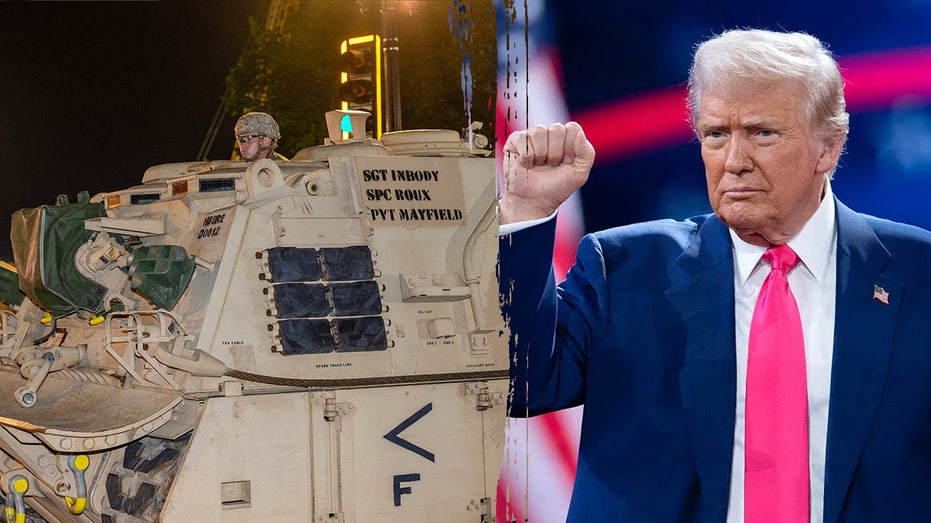
Trump’s $1,776 ‘Warrior Dividend’: Bonus, Branding, and the Battle Over America’s Military

Sarah Johnson
December 18, 2025
Brief
Trump’s $1,776 ‘warrior dividend’ is more than a Christmas bonus. This analysis unpacks the political symbolism, recruitment crisis, fiscal trade-offs, and long-term risks to U.S. civil-military norms.
Trump’s $1,776 ‘Warrior Dividend’: Bonus Pay, Political Symbolism, and a Long War for the Military’s Future
Donald Trump’s announcement of a one-time $1,776 Christmas “warrior dividend” for roughly 1.5 million U.S. service members is being presented as a simple holiday bonus and patriotic gesture. It’s neither simple nor just a gesture. It sits at the intersection of military morale, recruitment crisis, fiscal politics, and a deeper shift in how presidents use the armed forces as both policy instruments and political props.
On its face, this is a straightforward cash payment: $1,776 per service member, framed as a tribute to America’s founding nearly 250 years ago and paid, Trump claims, from tariff revenues and a new GOP tax-and-spending package. But the symbolism, timing, and structure of the payout raise bigger questions: Is this smart morale policy, or a political payment disguised as patriotism? Does it meaningfully address the military’s structural problems, or paper over them with a one-time check?
The bigger picture: Presidents, paychecks, and patriotism
Using military compensation as a political tool has a long history. Pay raises, bonuses, and benefits have often been timed to political cycles or framed as proof that a president “supports the troops.” What’s different here is the combination of overt branding, historical symbolism, and the attempt to connect the payment to broader ideological themes.
- Historical precedent: Congress has authorized enlistment and retention bonuses since the Vietnam era. Post-9/11, the U.S. spent billions on reenlistment bonuses to keep critical specialties in uniform. Those programs were targeted, negotiated as policy, and rarely branded around a president.
- Symbolic dollar figure: Choosing $1,776 is more than a cute nod to history. It signals Trump’s ongoing effort to appropriate Revolutionary imagery and cast his agenda as a restoration of a lost founding ethos — a narrative that resonates strongly with parts of the military and veteran communities.
- Direct presidential credit: While military pay raises normally come through the annual defense authorization and appropriations process, Trump is explicitly tying this payout to “my tariffs” and “our tax bill,” reinforcing a personal claim of patronage: the commander in chief as benefactor, not just policymaker.
That framing matters in a moment when the U.S. military is struggling with trust, recruitment, and politicization. The check is real money — about half a month’s base pay for a junior enlisted service member — but it’s also a message: align your loyalty with this president’s version of America.
What this really means for troops, budgets, and civil-military norms
1. Material impact on troops: meaningful but narrow
For many junior enlisted troops, $1,776 is not symbolic at all; it’s rent, car repairs, or paying down debt. A 2021 Department of Defense survey found roughly 24% of active-duty households experienced some level of food insecurity. A one-time cash infusion during the holidays will tangibly help many families.
But the bonus doesn’t touch structural issues service members consistently flag:
- Base housing shortages and deteriorating living conditions
- Childcare access and spouse employment barriers
- Mental health and suicide crises (active-duty suicide rates rose sharply in the 2010s and remain a core concern)
- Frequent relocations disrupting families and finances
In that sense, the dividend is a relief valve, not a repair job. It treats symptoms of financial stress without tackling the system that generates them.
2. Fiscal claims vs. fiscal reality
Trump attributes the payment to tariff revenue and a GOP tax-and-spending package. That’s a politically attractive story — foreign governments and a booming economy paying for American troops’ bonuses — but it oversimplifies how federal money actually moves.
- Tariffs as “free money”: Economists from across the spectrum have repeatedly pointed out that tariffs function as taxes on imports, which are largely paid by U.S. importers and, ultimately, consumers. They don’t operate as a separate pot of “extra” money; they’re part of general revenue.
- Deficit context: Defense spending already takes up roughly 12–13% of the federal budget in recent years, and the U.S. continues to run large annual deficits. A one-time $1,776 for 1.45 million troops is in the ballpark of $2.5–2.6 billion — not enormous in Pentagon terms, but not trivial either. Unless offset elsewhere, it’s simply added to the broader fiscal burden.
The key point: the “warrior dividend” is a political choice about who should visibly benefit from federal spending, not a windfall from tariffs magically paying for the troops.
3. A recruitment crisis reframed as a victory
Trump contrasts his claimed “record enlistment” with what he describes as “the worst” recruitment year under Joe Biden. That taps into a real problem: the U.S. military has been in a deep recruitment slump.
Services like the Army and Navy have missed recruiting targets in multiple recent years, citing factors such as:
- a shrinking pool of young Americans who meet physical, educational, and legal standards (often estimated at only about 23–25%)
- stronger civilian labor markets offering better pay and stability
- war fatigue after two decades in Iraq and Afghanistan
- perceptions of politicization and culture wars inside the ranks
A one-time bonus, while helpful for current service members, is not a designed recruitment tool. Unlike targeted enlistment or reenlistment bonuses, this payout goes to everyone in uniform regardless of specialty or service needs. That may boost morale but does little to fix pipeline problems. If anything, it may increase expectations for future “dividends” that are fiscally unsustainable.
4. The normalization of politicized military gestures
Perhaps the most consequential element is not the bonus itself, but how it is being used rhetorically. In the same address, Trump touts immigration policies, crime crackdowns, and culture-war victories (such as banning males from women’s sports at military academies), blending traditional military policy with domestic ideological fights.
This reflects a broader trend: the military as a stage on which domestic political battles are waged. We’ve seen, in recent years:
- fights over “wokeness” in the ranks, diversity training, and reading lists
- social issues — gender, sexuality, and sports — framed as national security threats
- presidents using military backdrops and personnel as visual symbols of partisan agendas
The “warrior dividend” fits neatly into that playbook: a financially useful policy wrapped in a partisan narrative that says, in essence, “my administration loves the troops; my opponents hollowed them out.” That message risks further eroding the norm that the military is a nonpartisan institution serving the Constitution, not a party or personality.
Expert perspectives on the ‘warrior dividend’
Military and budget experts are likely to agree on one thing: immediate cash helps, but the deeper challenges require sustained, boring, politically unglamorous work.
Retired Army Lt. Gen. David Barno, who has written extensively on civil-military relations, has warned that highly visible, politically branded gestures toward the troops can have a corrosive effect over time. In past writings, he’s argued that the more politicians claim the military as “theirs,” the more it pulls the force into partisan crossfire, undermining public trust.
Economists who study defense budgeting, such as those at the Congressional Budget Office and independent think tanks, emphasize trade-offs. Every dollar spent on across-the-board bonuses is a dollar not spent on long-term readiness, modernization, or systemic quality-of-life improvements like childcare facilities or mental health support — unless the overall budget is increased further, adding to long-term debt.
Recruitment experts point to a different priority: predictability. Young Americans contemplating service are more influenced by stable pay scales, clear benefits, and family support than by one-time gifts. They watch how veterans are treated, what the career trajectory looks like, and whether the institution feels respected and stable, rather than used as a political prop.
Data and evidence: what’s being overlooked
Several critical data points are largely absent from the celebratory narrative:
- Pay vs. cost of living: While basic pay has risen, many military families stationed in high-cost areas still struggle. A RAND Corporation study has repeatedly found that housing costs and spouse unemployment significantly strain military finances.
- Retention and mid-career exits: Retention in certain high-skill fields — cyber, aviation, medical — remains challenging. These are precisely the specialties where targeted pay and benefits matter more than flat, one-time bonuses.
- Public trust trends: The U.S. military has long ranked as one of the most trusted institutions, but surveys in recent years show a decline, with more Americans seeing it as politicized. Highly branded presidential payouts can either reinforce trust (“our leaders are supporting the troops”) or deepen concerns about partisan instrumentalization.
In other words, the “warrior dividend” exists in a larger ecosystem where morale, trust, and recruitment are fragile and dependent on sustained, credible policy — not just holiday generosity.
Looking ahead: what to watch
Several forward-looking questions will determine the true impact of this policy:
- Will this become a precedent? If troops receive a branded “dividend” this year, they may expect similar payments in future years or under future administrations. That could turn into an informal obligation, complicating long-term defense budgeting.
- Will Congress exert more control? Lawmakers may push to codify or constrain such payments to maintain oversight and prevent presidents from using the Treasury as a political ATM for broad-based payouts.
- Does recruitment actually improve? If Trump’s claim of “record enlistment” is to be more than a talking point, we should see sustained improvement in recruitment numbers across services. The Pentagon’s annual reports will show whether that materializes.
- How do allies and adversaries read this? For allies, a well-compensated, stable force is reassuring. For adversaries, a heavily politicized military narrative can signal domestic division. Both reactions matter to deterrence and alliance cohesion.
The bottom line
The $1,776 “warrior dividend” is real money for real people, and many service members will welcome it. But as policy, it’s less a revolution in military support than a highly branded, politically useful infusion of cash that leaves the hardest problems — recruitment, retention, depoliticization, and long-term financial stability — largely untouched.
If this becomes the model for civil-military relations — big symbolic checks and bigger rhetorical claims — the U.S. risks confusing loyalty to a commander in chief with loyalty to the institution and the Constitution. The troops may cash this check gladly. The country will be paying off the deeper costs of politicizing the military for much longer.
Topics
Editor's Comments
One of the most under-discussed aspects of the ‘warrior dividend’ is how it subtly reshapes the social contract between the state and the soldier. The all-volunteer force rests on a promise: in exchange for risk, sacrifice, and a degree of personal constraint, the government provides predictable pay, benefits, and long-term support. This bonus moves in the opposite direction — toward episodic, personalized generosity that can be tied rhetorically to whoever sits in the Oval Office. If future presidents emulate this model, troops may begin to see their financial well-being as contingent on political alignment or electoral outcomes, rather than on stable, institutional commitments. That’s a profound shift. It doesn’t show up in the immediate feel-good storyline, but over time it could weaken the perception of service as a profession grounded in enduring norms and obligations, replacing it with a more transactional, leader-centric view of military service.
Like this article? Share it with your friends!
If you find this article interesting, feel free to share it with your friends!
Thank you for your support! Sharing is the greatest encouragement for us.