
Zelenskyy, Wartime Elections, and Trump’s Pressure: The Hidden Battle Over Ukraine’s Democratic Legitimacy

Sarah Johnson
December 14, 2025
Brief
Zelenskyy’s sudden openness to wartime elections isn’t just a reaction to Trump. It’s a strategic move in a wider battle over legitimacy, peace terms, and Ukraine’s democratic future under fire.
Zelenskyy, Wartime Elections, and Trump’s Pressure: What’s Really at Stake in Ukraine’s Democratic Test
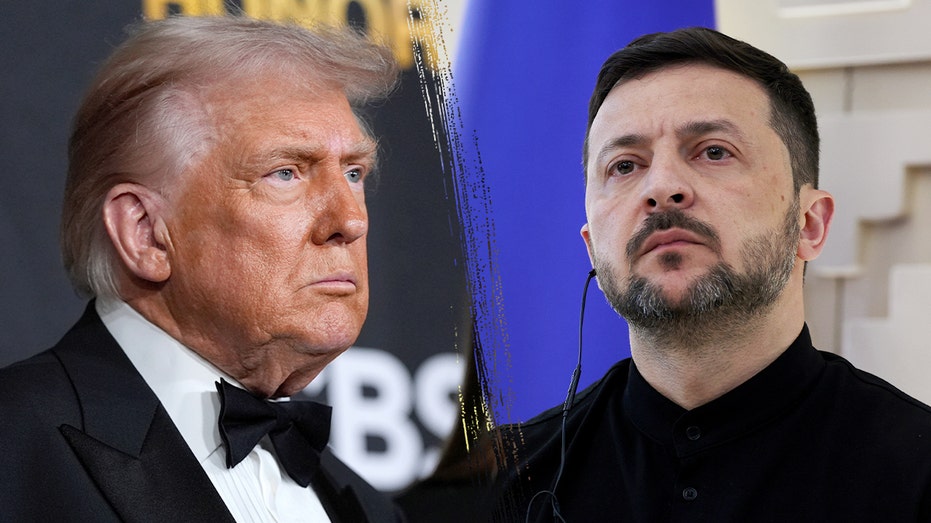
Ukrainian President Volodymyr Zelenskyy’s signal that he is now prepared to hold national elections during full-scale war is not just a response to a political insult from Washington. It is a stress test of Ukraine’s democratic identity, a pivot in its relationship with Western backers, and a crucial precedent for how democracies navigate existential wars in the 21st century.
On the surface, the story looks simple: former U.S. President Donald Trump calls Zelenskyy a “dictator without elections,” questions whether Ukraine is still a democracy, and soon after, Zelenskyy publicly raises the possibility of holding elections if security guarantees and legal changes can be arranged. But beneath that sequence is a far more complex calculus involving battlefield realities, constitutional law, Western domestic politics, and the shape of a potential peace settlement with Russia.
Why This Matters Now
Ukraine is nearing four years of full-scale war, governed under martial law, with regular elections legally suspended. The president’s term would ordinarily have ended in May 2024. For Ukrainians, the broad consensus has been clear: survival comes first; elections can wait. For some in the West, especially skeptics of ongoing aid, that position has increasingly been framed as a democratic red flag.
Zelenskyy’s apparent willingness to move toward elections under fire is therefore not just about domestic legitimacy; it’s about controlling the narrative in Washington and European capitals at a moment when Kyiv’s leverage over its partners is more fragile than at any time since February 2022.
The Bigger Picture: Wartime Democracy Is Rarely Neat
To understand the stakes, it helps to put Ukraine in a broader historical context. Democracies at war have frequently altered or postponed electoral processes:
- United Kingdom, WWII: General elections were postponed from 1940 to 1945. Winston Churchill led a unity government without a popular vote during the most critical years of the war.
- United States, Civil War: Abraham Lincoln insisted on holding the 1864 election in the midst of war, understanding that postponement might itself destroy the republic’s credibility.
- Israel: Has held elections under conditions of repeated conflict, but not during an all-out invasion threatening the state’s survival across its territory.
- Afghanistan and Iraq (post-2001, post-2003): Elections were held amid violence, but as part of externally managed transitions, not under martial law within long-standing constitutional democracies.
Ukraine’s situation sits between these examples. It is a recognized democracy facing an existential external invasion, with millions displaced, parts of its territory occupied, and active combat zones across a wide front. Elections under such conditions raise three structural problems Zelenskyy himself has highlighted before:
- Security: How do you safely open polling stations that could be targeted by missiles or drones?
- Representation: How do you ensure voting rights for millions of refugees and internally displaced people, including those in occupied territories?
- Legality: Ukraine’s constitution and electoral laws prohibit elections under martial law. Changing that in the middle of war is legally possible but politically explosive.
These are not hypothetical objections. They go to the core of what a legitimate election looks like in a country that insists it is fighting precisely to remain democratic.
Trump’s Criticism as Strategic Leverage
Trump’s accusations—calling Zelenskyy a “dictator without elections” and warning that Ukraine risks “not being a democracy anymore”—do more than sting. They signal a potential shift in the way a leading U.S. political faction may justify reducing or conditioning support.
For years, critics of aid to Ukraine have framed their objections around cost, priorities (“America first”), or fears of escalation with Russia. The democracy argument has been used mostly for Ukraine: Western leaders justified weapons, sanctions, and financial support as defending a democracy against authoritarian aggression. By framing Zelenskyy himself as undermining democracy, Trump flips that narrative on its head.
This matters because U.S. domestic politics directly affect Ukraine’s battlefield capacity and negotiating position. If a powerful U.S. voice can argue that Ukraine’s government is slipping toward autocracy, the moral clarity underpinning aid becomes easier to erode.
Why Zelenskyy Is Now Leaning Into Elections
Zelenskyy’s statement—“within the next 60–90 days, Ukraine will be ready” to hold elections if the U.S. and Europe can guarantee security—should be read less as a sudden conversion and more as a strategic repositioning on several fronts:
- Reassuring Western backers: By inviting the U.S. and EU to help secure elections, Zelenskyy turns criticism into a request: if you want elections, you must help make them safe and credible. That puts the onus back on skeptical partners.
- Reclaiming the democracy narrative: Ukraine can now say: we are ready to vote even under fire; if it doesn’t happen, it’s not because we fear democracy but because the security situation—largely driven by Russian aggression—makes it impossible.
- Pre-empting domestic discontent: While most Ukrainians still support postponement, fatigue is growing. High casualty rates, economic strain, and local grievances are accumulating. Signaling willingness to hold elections acknowledges that democratic accountability cannot be deferred indefinitely.
- Leverage in peace talks: As Washington pushes a peace plan that Kyiv and European partners view as too soft on Russia, Zelenskyy needs maximum legitimacy at home and abroad to resist unwanted concessions.
In other words, Zelenskyy’s message is carefully calibrated: he is not committing to elections at any cost; he is placing conditions that highlight both the practical difficulties and the West’s stake in the outcome.
Peace Plan Politics: Elections as Part of the Negotiating Chessboard
The timing is crucial: the Trump administration has floated a 28-point peace plan that Ukrainian and European officials reportedly found too deferential to Russia. Ukrainian negotiators have already pushed back, trying to narrow the plan and toughen its terms.
Having a fresh electoral mandate—or even a credible pathway to elections—could significantly change Kyiv’s negotiating hand:
- Stronger domestic legitimacy: A government renewing its mandate mid-war can more convincingly claim to speak for the nation on issues like territorial concessions or security guarantees.
- Higher political risk: Any perceived “sellout” in a peace deal could become a weapon for opposition parties. That may make major concessions harder, potentially complicating the very peace deal Washington says it wants.
- Signal to Moscow: Russia has framed its invasion as liberating Ukraine from an illegitimate or “Nazi” regime. A competitively fought election undermines that propaganda narrative, but also gives Moscow an incentive to disrupt the process militarily.
Trump’s criticism of Zelenskyy for allegedly not being “up-to-date” on peace proposals also underlines a deeper tension: Kyiv is trying to avoid being boxed into a take-it-or-leave-it plan shaped largely in Washington and Moscow, with European input but Ukrainian interests at risk of being diluted. Elections could serve as both shield and sword in that struggle.
The Legal and Technical Minefield of Wartime Elections
Behind the political drama lies a formidable legal and logistical challenge. Ukrainian law explicitly bans elections under martial law. Changing that would likely require:
- New legislation outlining how to conduct voting during war
- Clear rules for participation by soldiers at the front
- Mechanisms for displaced citizens and refugees abroad (millions are now in the EU and beyond)
- Safeguards against coercion or manipulation in regions close to the front lines
There is also a constitutional question: if you rewrite the rules during an existential crisis, how do you ensure those emergency measures don’t become a template for future leaders tempted to hold “managed” elections under crisis pretexts?
This is one area where the West’s role could be pivotal. If the U.S. and EU accept Zelenskyy’s invitation to help secure and oversee such elections, they could insist on strong transparency measures, robust international observation, and explicit sunset clauses on any wartime electoral provisions.
What Most Coverage Is Missing
Commentary on this story tends to reduce it to a personal spat—Trump calls Zelenskyy undemocratic; Zelenskyy pivots. That misses several deeper dynamics:
- This is about the next phase of the war. As front lines stabilize and the prospect of a long, grinding conflict grows, questions of governance, corruption, and legitimacy will loom larger than the early existential months.
- It’s also about Europe. European publics, especially in central and eastern states, watch U.S. debates closely. If American politicians frame Ukraine as drifting away from democracy, European leaders will face mounting pressure from their own skeptical voters.
- Russia is listening. The Kremlin benefits whenever allies bicker about Ukraine’s democratic credentials. Moscow’s propaganda machine will seize on Trump’s remarks and any Western divisions over elections to argue that Ukraine is no better than Russia.
- The precedent goes beyond Ukraine. How the West handles elections in a besieged democracy will shape expectations for any future conflicts involving Taiwan, Baltic states, or other frontline democracies facing authoritarian aggression.
Looking Ahead: Key Scenarios to Watch
Several paths are now in play, each with its own risks:
- Managed wartime elections within 60–90 days: A rushed vote with limited campaigning, heavy international monitoring, and complex logistics. This could reinforce Ukraine’s democratic image but risks low participation in front-line and occupied areas, raising questions about full representativeness.
- Conditional postponement: Ukraine could establish a clear legal framework describing when and how elections will be held (for example, within X months of martial law being lifted), combined with robust parliamentary oversight in the meantime. This might be the most stable compromise but may not satisfy U.S. critics demanding immediate elections.
- Partial or layered elections: Kyiv might explore holding parliamentary but not presidential elections, or local elections in safer regions. This would be legally and politically complicated but could be framed as a step toward normality.
- Escalation of U.S. political pressure: If Trump and allied figures continue to cast doubt on Ukraine’s democracy, and if elections are delayed, that could become justification to reduce military or financial support, especially if war fatigue grows among U.S. voters.
In all scenarios, Zelenskyy faces a core dilemma: move too fast toward elections and risk chaos or manipulation; move too slowly and risk losing the very democratic credibility that underpins his global support.
The Bottom Line
Zelenskyy’s openness to wartime elections is not a simple concession to Trump’s barbs; it is a strategic move in a multi-level game. At stake is not just who leads Ukraine, but how the country—and its allies—define democracy under siege. The choices made in Kyiv, Washington, and European capitals over the coming months will help determine whether Ukraine emerges from this war as a strengthened democracy with renewed legitimacy, or a battered state whose political foundations were quietly undermined while the focus stayed on the front lines.
Topics
Editor's Comments
One underexplored risk in the current debate is that the West could end up demanding two contradictory things from Ukraine at once: rapid movement toward elections and acceptance of a peace deal that may be domestically unpopular. If Washington pushes hard on both fronts, Kyiv might face a paradox—using a contested settlement as the backdrop for restoring democratic procedures. That could fuel long-term instability, empowering nationalist or populist challengers who argue that the war was effectively ended over the heads of the people. Historically, many post-conflict democracies have found that legitimacy crises emerge not during the height of fighting, but in the messy transition when war ends and politics normalize. In Ukraine’s case, how elections are sequenced relative to any peace agreement—before, during, or after—may determine whether the war’s end becomes a foundation for a stronger democracy or the opening chapter of a prolonged era of political fragmentation and distrust. Policymakers in Washington and European capitals should be thinking about that sequencing now, not after the fact.
Like this article? Share it with your friends!
If you find this article interesting, feel free to share it with your friends!
Thank you for your support! Sharing is the greatest encouragement for us.