Venezuela’s Hollow Military and Criminalized State: Why Maduro Is a Hard Problem, Not a Strong Opponent

Sarah Johnson
December 7, 2025
Brief
Venezuela’s decayed military looks weak on paper, yet its criminalized state, militias and foreign ties make it a strategic trap for Washington. This analysis unpacks the deeper risks beyond airstrikes.
Venezuela’s ‘Fortress on Sand’: Why Maduro’s Hollowed Military Still Poses a Hard Problem for Washington
On paper, Venezuela under Nicolás Maduro looks like a mid-tier military power aligned with U.S. adversaries and sitting atop major narcotrafficking routes. In practice, it is something far more complicated and, in many ways, more dangerous: a weak state with strong criminal networks, an eroded but still lethal military, and a population trapped between authoritarian repression and geopolitical maneuvering.
The renewed scrutiny of Maduro’s forces amid rising tensions with Washington is not really about whether the U.S. could win a war. Militarily, that is not in serious doubt. The real questions are: at what cost, to whom, and to what end? And how does the transformation of Venezuela into a “criminalized state,” as one former diplomat put it, reshape the logic of U.S. power in the Americas?
A State Turned Cartel Hub: How Venezuela Got Here
To understand why experts describe Venezuela as a “fortress built on sand,” you have to trace the evolution of the Venezuelan state over the past quarter-century.
Under Hugo Chávez (1999–2013), the military was politicized and rewarded with control over key economic sectors—oil, food imports, infrastructure. The goal was loyalty, not professionalism. That model hardened under Maduro, especially after the 2014 oil price crash triggered economic freefall and hyperinflation.
As sanctions tightened and state revenues collapsed, elements of the armed forces and ruling elite turned more openly to illicit economies: cocaine transshipment, illegal gold mining, fuel smuggling, and extortion. U.S. and regional officials have long warned about the so-called “Cartel de los Soles”—a network of military and political figures implicated in drug trafficking. Regardless of debates over its exact structure, the pattern is clear: the state apparatus became deeply intertwined with organized crime.
Historically, this puts Venezuela closer to Cold War-era “criminal states” and sanctuary regimes than to conventional adversaries. Think Panama under Manuel Noriega in the 1980s or, in a different way, Haiti under the coup-era junta in the early 1990s—states whose security forces blended official authority with illicit networks.
The bigger difference now is that Venezuela is embedded in a 21st-century ecosystem of global rivals: Russia supplying air defenses and fighter jets, Iran supporting energy and security cooperation, China providing surveillance and financial lifelines. That turns what might once have been a regional law-enforcement problem into a node in a larger strategic competition.
Why a Weak Military Can Still Be a Strong Problem
Analysts quoted in the underlying reporting converge on a core assessment: Venezuela’s conventional military is too degraded to stop a determined U.S. strike but still capable of complicating the early phases of any campaign. The rusting Russian armor, limited Su-30 fighter fleet, and S-300VM air-defense systems are not a decisive force; they are a speed bump backed by a sprawling, politicized security ecosystem.
That paradox—weak on paper, messy in practice—matters for three reasons:
- Urban vulnerability: Major Venezuelan population centers, including Caracas, Valencia, and Maracaibo, are densely populated, with critical infrastructure embedded among civilian neighborhoods. As Isaias Medina warns, this demands “overwhelming bias toward restraint.” Precision-guided munitions reduce risk, but they cannot eliminate it. Civilian casualties would be politically and morally costly.
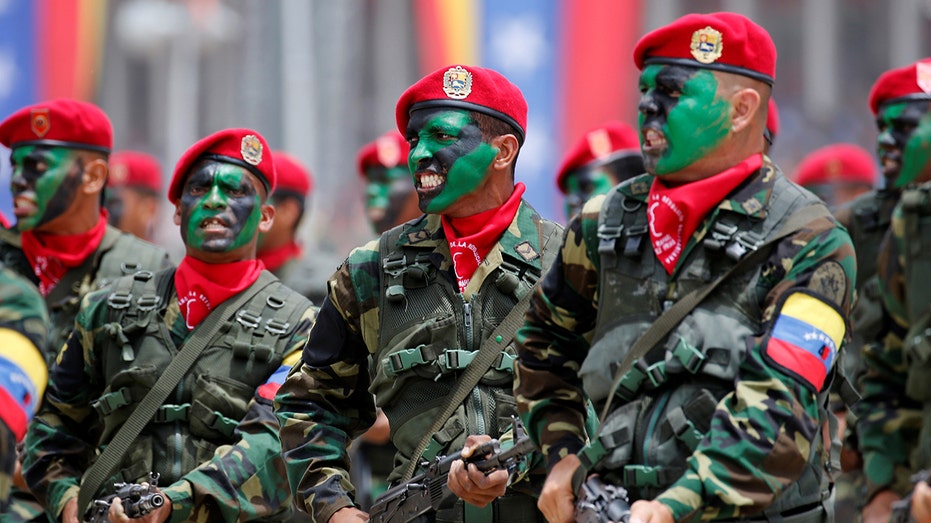
- Militias and irregulars: Beyond the core 65,000–70,000 professional troops, the regime has nurtured a massive network of militias and armed colectivos. Even if their combat skills are limited, they are embedded in communities and can function as enforcers, informants, and irregular fighters—crucial in any prolonged conflict or insurgency scenario.
- Criminal and insurgent spillover: Venezuelan territory is already used by Colombian guerrilla remnants, local gangs, and foreign criminal groups. Destroying the top of the military pyramid without a credible stabilization plan risks transforming Venezuela into a much larger, more chaotic version of northern Mexico’s cartel battlegrounds.
This is why retired Rear Adm. Mark Montgomery’s warning—“Today, I would not do this”—deserves more attention than the technical confidence that the U.S. could disable air and naval assets within days. The real challenge isn’t winning; it’s what happens after the win.
From Drug War to Shadow War: Continuity and Escalation
What’s emerging looks less like a traditional preparation for invasion, and more like an evolution of U.S. counter-narcotics doctrine into a broader “shadow war” against a regime labeled as a cartel host and partner.
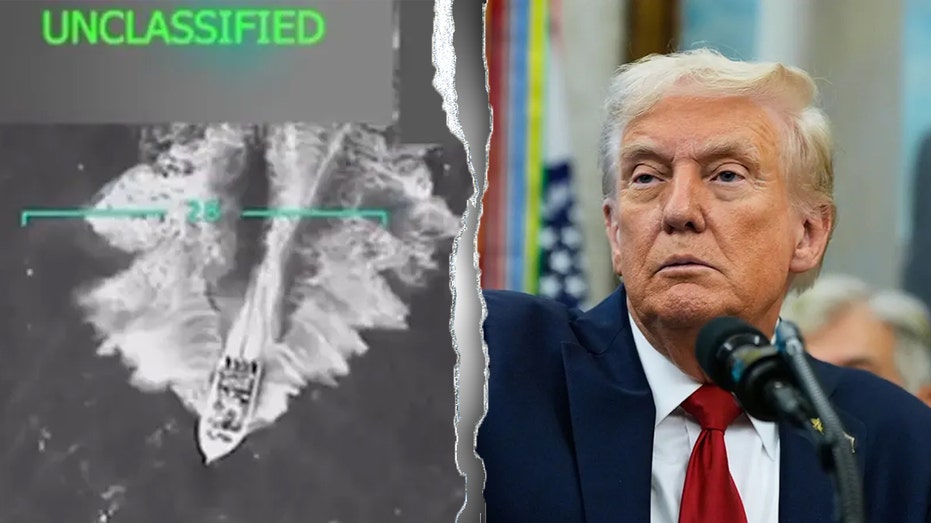
For decades, U.S. strategy in the hemisphere has relied on maritime interdiction, law-enforcement cooperation, and targeted sanctions. But as Venezuelan state actors became central nodes in drug flows and illicit finance, the line between counter-narcotics and regime pressure blurred. Targeted air and sea strikes on cartel-linked assets off Venezuela’s coast are part of this shift: using military tools in a law-enforcement logic, aimed not at conquest but at disruption and deterrence.
Historically, such hybrid strategies have a mixed record. Plan Colombia combined security assistance with institutional reforms and, over years, weakened major insurgent groups while strengthening the state—at a high human cost. In contrast, more kinetic, decapitation-focused strategies in Mexico hardened cartels, fragmented them, and spread violence.
Applying a similar approach to a sovereign state whose leadership is itself accused of criminality pushes into even more legally and politically contested territory. Medina’s framing—that striking the regime would be like “evicting a terrorist cartel that settled next door and not invading a country”—is morally resonant for exiled Venezuelans, but it cuts directly against the U.N. Charter’s core principle of state sovereignty. Other powers will read it as precedent, not exception.
The Missing Piece in the Debate: Venezuelan Society
Much of the discussion in Washington focuses on air defenses, tank inventories and militia headcounts. What’s underexamined is the social and political terrain any operation would land on.
Only about 20% of Venezuelans support the Maduro regime, according to Jorge Jraissati—a staggering legitimacy deficit that has been compounded by manipulated elections, crackdown on opposition leaders, and a collapse in living standards. More than 7 million Venezuelans have left the country in the last decade, one of the largest displacement crises in modern Latin American history.
That low approval rating, however, does not automatically translate into support for foreign military intervention. Surveys and anecdotal reporting suggest a more complex picture: deep anger at the regime, fear of repression, and skepticism about external “solutions” after observing the chaos in Iraq and Libya. The diaspora is often more supportive of hardline measures than those who would live through the immediate consequences.
This gap matters. A U.S. strategy that treats Venezuela primarily as a criminal target or proxy battleground risks further marginalizing Venezuelan civilians in the calculus. It also underestimates the regime’s ability to weaponize nationalism: Maduro has repeatedly framed tensions with Washington as an “anti-imperialist” struggle, using U.S. rhetoric as a rallying tool even while repressive apparatuses hold society in check.
Iran, Russia, China: The Quiet Convergence
Venezuela’s deepening relationships with Iran, Russia, and China amplify U.S. concerns. Each partnership serves different needs and creates different risks:
- Russia has supplied key military hardware—Su-30 fighter jets, tanks, and advanced air-defense systems—and provided political cover in international forums. Moscow gains a foothold in the Western Hemisphere and leverage in broader confrontations with Washington.
- Iran has become a critical partner in energy cooperation, sanctions evasion, and possibly security training. Tanker deals, refinery assistance, and flights between Caracas and Tehran have raised alarms about operational linkages beyond economics.
- China is more cautious on overt security ties but deeply invested economically, especially through loans and oil-backed agreements. It also supplied surveillance technology and digital ID systems that human rights groups say bolster authoritarian control.
From a U.S. perspective, this triad turns Venezuela into a strategic listening post, logistics hub, and sanctions-evasion platform for rivals. But from Caracas’ vantage point, it is insurance: a way to diversify support so no single external patron can dictate terms, while gaining enough backing to deter or complicate U.S. action.
What Washington Risks Getting Wrong
There are three key miscalculations that U.S. policymakers could make in this environment:
- Confusing military feasibility with strategic wisdom. The ability to neutralize air defenses in “a day or two” does not answer the core questions: What political end-state is achievable? Who governs the day after? How do you prevent criminal, paramilitary, and foreign actors from filling the vacuum?
- Underestimating the resilience of criminalized regimes. Decades of research on “mafia states” show that as institutions weaken, the system’s survival can become more, not less, dependent on illicit networks. Sanctions and strikes can hurt revenues but also incentivize deeper collusion with foreign patrons and criminal groups.
- Neglecting regional and migrant blowback. Any escalation against Caracas will reverberate through Colombia, Brazil, the Caribbean, and U.S. cities affected by Venezuelan migration. A destabilized Venezuela could send new waves of refugees northward, fueling the very domestic political pressures driving hardline policies.
Looking Ahead: Pressure Without Collapse?
The most likely trajectory in the near term is not a full-scale U.S. military operation but an intensification of what might be called “escalated containment”: more targeted strikes on cartel-linked assets, tighter sanctions on military and intelligence figures, and expanded cooperation with regional partners on intelligence, interdiction, and financial tracking.
To avoid repeating past mistakes, three elements will be essential:
- Regional ownership. Latin American and Caribbean governments must not be mere spectators. Any sustainable approach will require multilateral frameworks that include Brazil, Colombia, and Caribbean states—both to share intelligence and to legitimize containment measures.
- Humanitarian and governance pathways. Pressure without an off-ramp incentivizes regime hardening. Parallel to strikes and sanctions, there needs to be visible support for independent civil society, local governance capacity, and humanitarian corridors that bypass the regime as much as possible.
- Guardrails against mission creep. Once targeted strikes begin, domestic political dynamics can push toward incremental escalation. Explicit limits, congressional oversight, and clear metrics of success (e.g., measurable disruption of drug flows, protection of civilians, regional stability) are crucial.
In the end, the metaphor of a “fortress built on sand” captures the regime’s fragility but not its danger. Sand shifts; it also buries. A brittle, criminalized state could collapse under external pressure—or slowly grind down, exporting instability through migration, drugs, and geopolitical alignment with U.S. rivals. Navigating between those risks will test not just U.S. military power, but its strategic patience and political imagination.
The Bottom Line
- Venezuela’s military is hollowed out yet still capable of complicating any foreign operation, especially in dense urban environments and through militias and criminal networks.
- Washington’s emerging “shadow war” approach—using targeted strikes against cartel-linked assets—blurs the line between law enforcement and regime change, raising legal and political questions.
- The social and political realities inside Venezuela, including mass disapproval of Maduro but wariness of intervention, are being sidelined in the strategic debate.
- Deepening ties with Iran, Russia, and China make Venezuela a node in broader global competition, increasing the risks of miscalculation for all sides.
- The core policy challenge is not whether the U.S. can beat Maduro militarily, but whether it can pressure a criminalized regime without triggering state collapse or a protracted, destabilizing conflict.
Topics
Editor's Comments
What’s striking in the current debate is how quickly it gravitates toward technical questions—how many tanks, which missiles, how long to neutralize air defenses—while skating past the more fundamental issue: what kind of political order emerges after the shooting stops. The language of ‘evicting a cartel’ is emotionally powerful, particularly for exiles, but it risks obscuring the fact that Venezuela is still a society of nearly 30–40 million people with complex local power structures and a traumatized citizenry. Experience from Iraq, Libya and even Plan Colombia suggests that dismantling a regime intertwined with criminal networks is far easier than reconstituting a legitimate, functioning state. Another underexplored dimension is regional agency. Latin American governments are understandably wary of a precedent where military action is justified on the basis of a regime’s criminality. If Washington wants to avoid isolation and backlash, it will have to invest much more in a regional consensus that prioritizes Venezuelan civilians and long-term governance over short-term displays of force.
Like this article? Share it with your friends!
If you find this article interesting, feel free to share it with your friends!
Thank you for your support! Sharing is the greatest encouragement for us.