
Beyond the Headlines: Unpacking Trump’s Threat of U.S. Land Operations in Venezuela and Its Far-Reaching Implications

Sarah Johnson
December 4, 2025
Brief
A deep analysis of Trump's announcement on potential U.S. land operations in Venezuela, exploring historical tensions, geopolitical risks, narcotics trafficking complexities, and regional stability implications.
Why Trump’s Warning on Venezuela Signals a Potential Shift Toward Direct Military Engagement
President Donald Trump’s recent declaration that the U.S. may soon launch land operations inside Venezuela reflects a marked escalation in American foreign policy rhetoric and possibly action, centered on combating what he labels as narcotics-driven national security threats. This announcement deserves far more scrutiny than just the immediate claims about drug trafficking and migration—it taps into decades of complex U.S.-Venezuela relations, shifting regional geopolitics, and the escalating opioid crisis that has devastated countless American families.
The Bigger Picture: Historical Roots of U.S.-Venezuela Tensions
To fully grasp the weight of Trump’s statement, one must revisit the origins and evolution of U.S.-Venezuela relations. Traditionally, Venezuela was a key oil supplier to the U.S., fostering cooperative ties. However, the rise of Hugo Chávez in 1999 and later Nicolás Maduro deepened ideological divisions, with Caracas pursuing socialist policies antagonistic to U.S. geopolitical interests. This led to sanctions, diplomatic isolation tactics, and increasing tensions marked by accusations of authoritarianism and corruption in Venezuela.
Trump’s tenure has been marked by particularly aggressive rhetoric towards Maduro’s regime. His labeling of Venezuela as a narco-terror state aligns with broader U.S. efforts to frame Latin American leftist governments as threats linked to organized crime and destabilization. Historically, similar rhetoric has preceded covert support for opposition groups or military interventions, such as in Central America during the 1980s, underscoring the risks embedded in this narrative.
What This Really Means: From Maritime Drug Interdiction to Possible Land Incursion
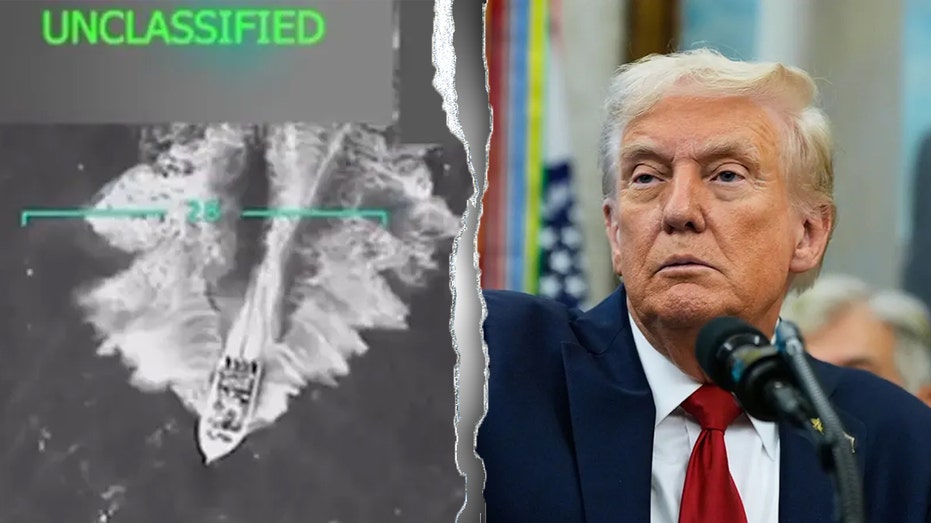
Trump’s claim that U.S. forces are intensifying strikes on drug trafficking vessels isn’t new, but the suggestion of moving operations "on land" inside Venezuela signals an unprecedented escalation. This shift could mean deploying military assets to disrupt drug labs, production sites, and smuggling corridors within Venezuelan territory, potentially opening a new frontier of conflict.
Such an operation would be fraught with legal, diplomatic, and practical challenges. International law generally prohibits unilateral military incursions without host nation consent or UN mandate. Historically, U.S. incursions in Latin America—such as Panama in 1989—have generated significant regional backlash and questions about sovereignty violations. Moreover, Venezuela’s military capabilities and alliances, including with Russia and China, complicate any potential ground intervention.
Trump’s framing of the Venezuelan government as intentionally exporting "killers, murderers, gang members," and even inmates, aligns with a narrative that justifies aggressive counter-narcotics and migration control measures. While migration from Venezuela is indeed a humanitarian crisis, experts highlight the risk of conflating complex flows of displaced persons with criminal elements, which can oversimplify drivers and justify militarized approaches.
Expert Perspectives: Navigating Complex Geopolitical and Drug Crisis Frontiers
Dr. Miriam Telasco, a Latin American studies scholar, notes, "Using military force against drug routes inside Venezuela risks exacerbating regional instability and humanitarian crises rather than resolving the underlying issues of governance and economic collapse in Venezuela."
Meanwhile, drug policy expert Dr. Andrew Mitchell highlights that "maritime interdiction has had limited success in curbing synthetic opioid flows because drug trafficking networks adapt quickly, using multiple routes and methods. Targeting production sites inside source countries is more impactful, but requires cooperation and clear legal frameworks."
Additionally, security analyst James Harwood points out the risk of escalating U.S.-Russia tensions if American forces conduct operations in Venezuela, where Moscow maintains strategic presence and interests. "Such maneuvers could risk direct confrontation or proxy conflicts in an already volatile global landscape," he warns.
Data & Evidence: Synthesizing the Opioid Epidemic and Drug Trafficking Trends
The opioid crisis remains a devastating reality in the U.S., with the Centers for Disease Control and Prevention reporting over 100,000 overdose deaths annually by 2023, with synthetic opioids like fentanyl playing a major role. The national conversation often ties fentanyl’s influx to border control and transnational drug cartels. Yet, data shows that the supply chains are complex, involving multiple production and transit points across North and South America.
Venezuela’s destabilized institutions and economic collapse have indeed created vulnerabilities exploited by narcotraffickers. While precise quantification is challenging, reports suggest Venezuela has become a transit and manufacturing hub for illicit fentanyl precursors, often trafficked onward to Mexico and the U.S. border. However, the cross-border networks are transnational and multilayered, involving Mexican cartels, Colombian rebel groups, and diverse actors.
Looking Ahead: Risks and Implications for U.S. Foreign Policy and Regional Stability
Should the U.S. move forward with land operations inside Venezuela, the implications could be profound:
- Regional Geopolitics: Latin American countries may view this as American overreach, sparking diplomatic fallout or solidarity with Venezuela. It could strain U.S. relationships with regional partners who prefer diplomatic solutions.
- Military Escalation: Direct military action risks broader conflict, potentially involving Venezuela’s allies and leading to prolonged instability.
- Humanitarian Consequences: Military action often exacerbates crises for civilian populations already suffering from poverty, political repression, and displacement.
- Drug Policy Efficacy: Without addressing demand-side factors and international collaboration, military interventions risk displacing rather than dismantling narcotics networks.
In sum, while the opioid epidemic demands urgent response, militarized incursions in Venezuela carry substantial risks that warrant careful consideration.
The Bottom Line
Trump's warnings about offensive operations on Venezuelan soil reflect deep anxieties about the opioid crisis and regional security, but also resurrect longstanding patterns of U.S. interventionist rhetoric in Latin America. The stated goal of countering drug trafficking must be balanced against potential legal, geopolitical, and humanitarian costs. Understanding this story requires placing it within the broader sweep of hemispheric relations and the complex realities of narcotics supply chains. The months ahead will test whether these declarations lead to concrete policies—and how Washington, Caracas, and regional actors navigate what could be a volatile new chapter.
Topics
Editor's Comments
Trump’s announcement marks a critical juncture that could redefine U.S. engagement in Latin America. It raises urgent questions about the efficacy and consequences of militarized approaches to drug crises, especially when involving sovereign nations with complex political alliances. Are we witnessing a pivot back to interventionist policies reminiscent of the Cold War era? The potential for escalating geopolitical rivalries and deepening regional instability makes evaluating alternative strategies all the more essential. The U.S. must balance the legitimate goal of protecting its citizens with a nuanced appreciation of Latin America’s socio-political landscape and the long-term ramifications of military actions.
Like this article? Share it with your friends!
If you find this article interesting, feel free to share it with your friends!
Thank you for your support! Sharing is the greatest encouragement for us.