
Albania’s Balluku Crisis: A Pivotal Test of Anti-Corruption Reforms and Power Politics

Sarah Johnson
December 18, 2025
Brief
Analysis of Albania’s parliamentary chaos over Deputy PM Belinda Balluku’s corruption probe, revealing how the crisis tests SPAK, EU integration, and the balance between stability and accountability.
Albania’s Parliamentary Chaos Isn’t Just About One Minister – It’s a Stress Test for the Country’s Entire Post-Communist System
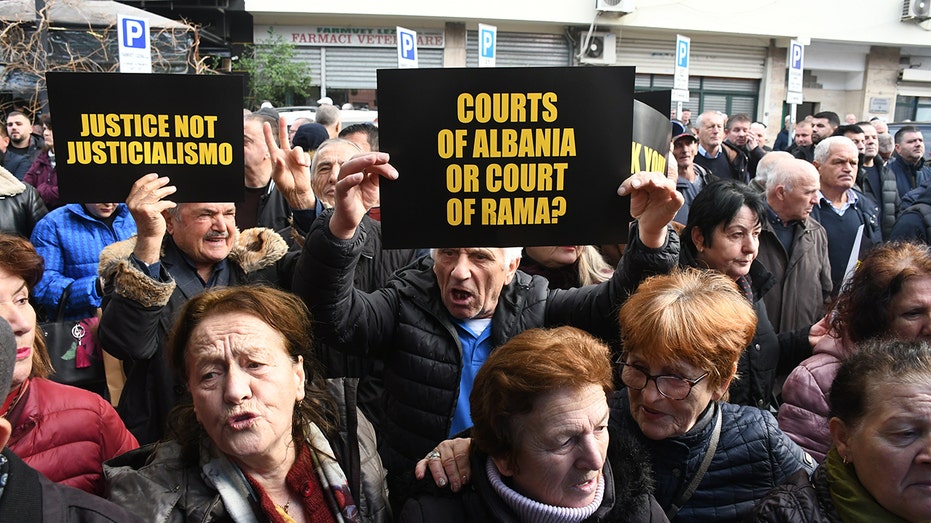
What unfolded in Albania’s parliament – opposition MPs lighting black flares, clashing with police and occupying government benches – is far more than theatrical protest over a single corruption case. It is the visible eruption of a deeper crisis over whether Albania’s anti-corruption architecture will be allowed to function independently, or whether entrenched political networks can still bend the system to their will.
At the center is Deputy Prime Minister and Infrastructure Minister Belinda Balluku, a powerful ally of Prime Minister Edi Rama, accused by special prosecutors of rigging tenders for major infrastructure projects worth hundreds of millions of euros. But around her stands something bigger: a NATO member and EU aspirant whose institutions are being pushed to choose between European rule-of-law standards and Balkan-era habits of impunity and political protection.
Why this confrontation matters
The images of smoke-filled chambers and MPs grappling with police capture a pivotal moment in Albania’s political evolution. The conflict is really about three intertwined questions:
- Can SPAK – the powerful Special Anti-Corruption and Organized Crime Structure created with heavy Western backing – prosecute top officials without political interference?
- Will parliament use its constitutional power over ministerial immunity to protect a key member of the government, or to demonstrate that no official is above the law?
- How far will international partners, especially the U.S. and EU, go in backing real anti-corruption enforcement when it targets a loyal Western ally?
The answer to those questions will shape not just Balluku’s fate, but Albania’s credibility as an EU candidate and the broader message sent to political elites across the Balkans.
How Albania got here: from ‘state capture’ fears to SPAK
To understand the stakes, you need to see this confrontation against two decades of struggle over corruption, political patronage and judicial reform.
Since the early 2000s, Albania has been repeatedly flagged by the European Commission, Transparency International and independent researchers as plagued by high-level corruption and what political scientists call “state capture” – the systematic bending of state institutions and public contracts to serve private and party interests.
Key milestones help explain the current showdown:
- 2013–2024: Edi Rama’s dominance – Rama’s Socialist Party has won multiple consecutive terms, tightening its control over central and local structures. Critics argue that this dominance has blurred the line between party and state, while supporters say it has brought stability and development.
- 2016: Radical judicial reform – Under intense EU and U.S. pressure, Albania adopted sweeping constitutional changes to vet and replace judges and prosecutors and to create new bodies, including SPAK and a National Bureau of Investigation. The goal: break the culture of immunity for powerful politicians.
- 2019–2023: SPAK’s early tests – SPAK began investigating former ministers, mayors and judges. Some high-profile convictions followed, but critics noted that the most politically sensitive cases involving figures close to the sitting government remained the ultimate test.
Balluku’s case is therefore not just about alleged irregularities in a tunnel or ring road tender. It is precisely the kind of investigation – involving a top-ranking, currently powerful minister – that reformers always said would prove whether SPAK is truly independent.
What the Balluku case signals about power and money
According to the indictment reported by prosecutors, Balluku allegedly favored a specific company in a tender for a 3.7-mile tunnel in southern Albania and later in a major road project in Tirana. These kinds of large infrastructure contracts have long been the lifeblood of political patronage across the region. They generate enormous rents: overpricing, manipulated tenders, subcontracting chains, and opaque PPP arrangements.
From a systems perspective, the case raises several critical points:
- Infrastructure as a corruption engine
In many Western Balkan states, highway and tunnel projects have been repeatedly tied to clientelistic networks. Governments use them to reward loyal business groups, who in turn provide financial and media support. If SPAK is allowed to fully probe these contracts, it would cut into the core economic model of political power in Albania. - Proximity to the Prime Minister
Balluku is widely seen as one of Rama’s closest allies – not a peripheral official. That proximity means any legal action against her inevitably touches the prime minister’s inner circle. For supporters, this makes the case look like a politically motivated attempt to weaken the government. For critics, it’s precisely why the case is so important: if someone at this level cannot be touched, the rule of law remains theoretical. - The immunity question as a litmus test
SPAK has requested the lifting of Balluku’s parliamentary immunity so she can be arrested and prosecuted. Parliament’s response becomes a litmus test: is immunity a shield for parliamentary independence, or a shield for impunity? The opposition’s demand to see all formal charges before the vote is legally reasonable; their resort to physical disruption signals a deep lack of trust that normal parliamentary procedures will be used fairly.
Opposition theatrics or systemic alarm?
The opposition Democratic Party’s decision to light black flares, throw water at the speaker and physically occupy the ministers’ seats is more than symbolic chaos. In the Albanian political tradition, dramatic obstruction has been a recurring tactic whenever the opposition feels procedurally boxed out or suspects a fait accompli is being rammed through.
But this time, the context is different:
- Blocked institutional channels – The opposition accuses the government of procedural opacity around the charges and the immunity vote. Whether or not that claim is fully justified, their resort to direct action reflects a perception that normal oversight tools – committees, hearings, inquiries – are ineffective against a dominant majority.
- Public mistrust of all sides – Surveys over the past decade consistently show low trust in both government and opposition in Albania. The spectacle of MPs fighting with police risks deepening public cynicism that corruption is being politicized rather than genuinely confronted.
- High symbolic value of the ombudsperson – The timing is notable: the disruption occurred as a new ombudsperson was taking the oath. The ombudsperson is nominally a key human rights and accountability figure. A chaotic, forceful confirmation amid flares and scuffles sends a powerful message about how weak – or politicized – oversight institutions remain.
State capture, or political defense against weaponized justice?
Former ambassador Agim Nesho’s characterization of the situation as “state capture” goes to the heart of the debate. In political science, state capture refers to a situation where private or political interests effectively control state institutions, shaping laws, policies and decisions to benefit a narrow group.
There are two competing narratives:
- The state capture narrative
Under this view, the ruling party uses its parliamentary majority, control over appointments and influence in public procurement to shield loyalists while presenting a façade of reform. The reluctance to fully embrace SPAK’s moves against a sitting deputy PM becomes evidence that anti-corruption is tolerated only up to a point – until it threatens the core power structure. - The weaponized justice narrative
Government allies often argue that parts of the justice system, or allied media outlets, are influenced by hostile political forces or business interests. By this logic, high-profile corruption probes are framed as selective or politically timed. Balluku’s denunciation of “mudslinging, insinuations half-truths and lies” fits neatly into this narrative.
The reality in many transitioning democracies is that both dynamics can coexist: ambitious prosecutors may sometimes be influenced by political calculations, while political leaders simultaneously try to shape the boundaries of acceptable investigation. What’s distinctive in Albania’s case is that SPAK was designed with heavy external involvement precisely to insulate it from domestic political pressures. Whether that insulation holds when it touches the government’s core remains the open question.
The quiet Americans: why Washington’s silence is telling
The U.S. State Department’s “no comment” on the Balluku case is officially unremarkable – standard practice on ongoing legal matters. Politically, though, it is significant.
Washington has invested heavily in Albania’s judicial reform, funding vetting processes, training prosecutors and publicly praising SPAK as a model for the region. At the same time, Albania is a reliable NATO ally in a strategically sensitive region, particularly in the context of Russia’s invasion of Ukraine and heightened competition for influence in the Balkans.
This creates a familiar tension:
- Stability vs. accountability – Western governments often face a trade-off between promoting robust rule-of-law and preserving a friendly, stable partner. Publicly pressing too hard on corruption cases that threaten a sitting pro-Western government risks political backlash and accusations of interference.
- Delegating to institutions – By staying publicly silent and emphasizing support for institutional processes rather than individual cases, Washington signals that SPAK’s work should speak for itself. But in a context of weak domestic trust, that neutrality may be read as tacit acceptance of whatever political outcome emerges.
For Albania’s political class, the real question is not the immediate U.S. reaction, but whether future EU and U.S. reports and decisions – on funding, integration milestones, and political endorsements – will reflect how this crisis is handled.
EU integration: the unseen referee
Albania’s bid to join the European Union is perhaps the most powerful external constraint on how this crisis plays out. The EU has repeatedly made clear that progress on accession is tied to demonstrable, sustained results in combating high-level corruption and ensuring judicial independence.
Several implications follow:
- Signal to Brussels – If parliament resists lifting Balluku’s immunity or appears to shield her from investigation, it could be interpreted in Brussels as a major regression. Even if EU institutions do not comment directly, this will inevitably feed into rule-of-law assessments.
- Precedent-setting case – A credible investigation and trial – regardless of outcome – would send a powerful message that Albania’s reforms are more than cosmetic. Conversely, a process marred by obvious political interference would reinforce the perception that entrenched networks remain untouchable.
- Regional demonstration effect – Neighboring candidates like North Macedonia, Montenegro, and Bosnia are watching. If SPAK can pursue a sitting deputy PM, it emboldens reformists across the region. If not, it reinforces the cynical view that anti-corruption bodies can target yesterday’s enemies but not today’s power brokers.
What most coverage is missing
Much of the immediate reporting focuses on the parliamentary spectacle and on Balluku herself. Several deeper dynamics deserve more attention:
- The administrative layer – Corruption at this scale typically involves networks of mid-level civil servants, procurement committees and project managers, not just one minister. Whether SPAK’s probe climbs down into these networks – and whether those officials cooperate – will reveal a great deal about how deeply rooted the practice is.
- Economic costs – Overpriced or manipulated infrastructure projects don’t just enrich a few insiders. They distort national investment priorities, crowd out more productive spending (like education and healthcare), and saddle future governments with debt. IMF and World Bank studies across the Balkans suggest that even modest reductions in procurement corruption could free up hundreds of millions annually.
- The political succession question – If Balluku falls, it could upset the internal balance within Rama’s party. Ministers overseeing large spending portfolios are often key power-brokers. Her removal could strengthen some factions and weaken others, with longer-term implications for Albania’s leadership landscape.
What to watch next
Several concrete developments will indicate whether Albania is moving toward genuine accountability or another institutional stalemate:
- The parliamentary immunity vote – Will Socialist MPs close ranks to shield Balluku, allow a free vote, or potentially signal internal dissent?
- Transparency of the indictment – How much detail about the alleged scheme becomes public, and how quickly? A detailed, evidence-based indictment would make political protection more costly.
- Reaction of Western embassies and EU institutions – Even carefully worded statements on rule-of-law and support for SPAK will be scrutinized for hints of frustration or concern.
- Street response – If the crisis spreads beyond parliament into sustained protests, it could escalate from an institutional test to a broader political confrontation.
The bottom line
Albania’s parliamentary chaos is not an isolated outburst; it’s a stress test of the country’s most ambitious experiment in post-communist judicial reform. The Balluku case sits at the intersection of money, power, and international expectations. How it is handled will send a clear message – to Albanians, to Brussels and Washington, and to the wider region – about whether Albania is ready to move beyond a politics where powerful figures remain untouchable, or whether the architecture of anti-corruption will buckle when it threatens the core of power.
Topics
Editor's Comments
One crucial aspect that deserves more public scrutiny is the role of mid-level technocracy in sustaining or resisting corruption. Political narratives tend to focus on headline figures like Balluku or Rama, but major procurement scandals rarely function without the complicity—or at least silence—of civil servants, engineers, and tender committee members. If SPAK’s investigation remains concentrated solely on the minister while ignoring the administrative chain, Albania may miss a chance to understand how deeply institutionalized the problem is. Conversely, if multiple officials begin cooperating with prosecutors, we may see a rare X-ray of how public contracts are actually awarded. Another underexplored question is whether intra-party rivalries are quietly shaping who is exposed to legal risk. Even in a seemingly unified ruling party, factional struggles over resources and succession can influence which corruption cases surface and which remain buried. Watching how different Socialist factions position themselves publicly around Balluku could offer clues about deeper shifts inside the governing elite.
Like this article? Share it with your friends!
If you find this article interesting, feel free to share it with your friends!
Thank you for your support! Sharing is the greatest encouragement for us.