Beyond the Brawl: Mexico City’s Street Fight Over Transparency and Power

Sarah Johnson
December 18, 2025
Brief
Behind Mexico City’s congressional brawl is a pivotal struggle over who controls public information, the future of transparency institutes, and the quiet erosion of democratic checks and balances.
Mexico City’s Transparency Brawl: A Street Fight Over Who Gets to See the Truth
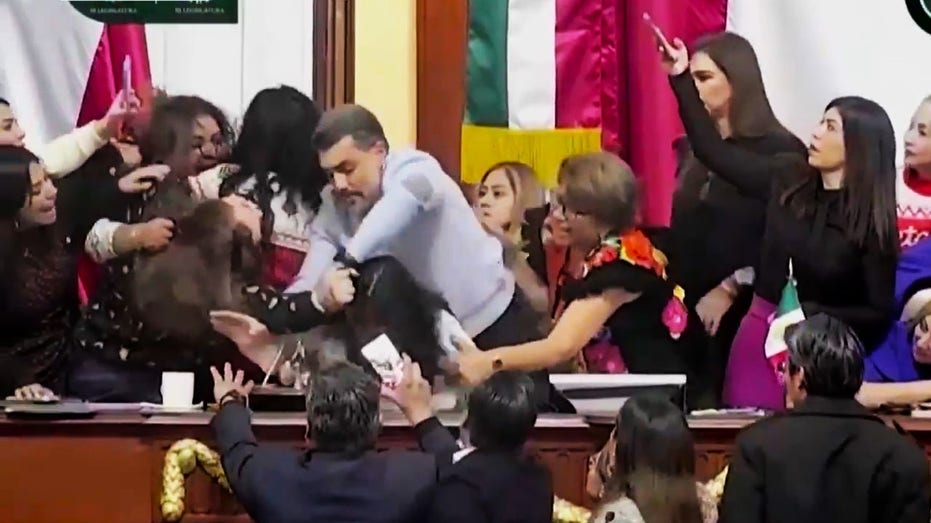
What looks like a viral clip of lawmakers yanking hair and throwing punches in Mexico City’s congress is, at its core, a fight over something far more consequential: who controls public information in one of the world’s largest cities, and whether Mexico’s hard‑won transparency system survives the current political moment.
The melee in the chamber is the most visual symptom of a deeper battle that has been unfolding for years between Mexico’s ruling party and the constellation of institutions built to limit governmental abuse: transparency bodies, regulators, electoral authorities and autonomous agencies. Understanding this incident requires looking past the scuffle and into a decades‑long struggle over corruption, accountability and political power in Mexico.
Why this ‘brawl’ matters far beyond Mexico City
On the surface, the story is simple: opposition lawmakers occupied the podium to protest a Morena-backed effort to dissolve Mexico City’s transparency institute. Tempers flared, someone’s hand was grabbed, an elbow flew, hair was pulled, and the session collapsed into chaos.
But the underlying stakes are substantial. Transparency institutes across Mexico are the mechanisms that allow citizens, journalists, and civil society to demand contracts, spending records, and internal documents from public authorities. They have been central to exposing ghost companies, padded public works contracts and corrupt procurement networks at every level of government.
Rolling back or hollowing out these bodies doesn’t simply change bureaucratic structures; it changes the balance of power between citizens and the state. The fight in Mexico City is part of a wider pattern in which the federal government and Morena-led local governments have questioned, weakened or tried to redesign institutions that were originally created to constrain them.
How Mexico’s transparency system became a political battlefield
Mexico’s modern transparency architecture is relatively young. After the country’s transition away from one-party dominance in the late 1990s and early 2000s, pressure from a growing civil society and independent media led to a series of reforms:
- 2002–2003: Creation of the original federal transparency framework and the first iteration of the national access-to-information body, which later evolved into today’s INAI (Instituto Nacional de Transparencia, Acceso a la Información y Protección de Datos Personales).
- 2007–2014: Constitutional reforms expanded the right of access to information and required states and municipalities to create their own local transparency and information commissions.
- Post-2014: Mexico City and other entities established local institutes empowered to order government agencies to hand over information on budgets, public works and government decisions.
As these institutions matured, they became a source of discomfort for those in power, regardless of party. Orders to disclose sensitive contract files, security spending or political communications often irritated presidents, governors and mayors. Many politicians came to view these bodies as slow, expensive and, in some cases, politically biased.
The rise of Morena—and Andrés Manuel López Obrador’s presidency—accelerated this tension. The president has repeatedly criticized the federal transparency institute as costly and unnecessary, calling for its functions to be absorbed into regular ministries. At the same time, Morena-led majorities in several states have sought to reshape or sideline local oversight bodies, citing austerity and efficiency.
The dispute in Mexico City’s congress fits squarely into this broader pattern: a ruling party determined to redesign institutions it sees as obstacles, and an opposition that increasingly defines itself by defending the checks and balances created in the last two decades.
What’s really at stake in dissolving a transparency institute
The formal issue in the chamber is the proposal to dissolve Mexico City’s transparency institute and, according to the opposition, a broken agreement to create a new body in its place. That dispute may sound technical, but it has several concrete implications:
- The independence question: Transparency institutes are designed as autonomous bodies with their own commissioners, budgets and legal mandates. Dissolving one to replace it with a different “mechanism” often means moving its functions into a department directly controlled by the executive or legislature. That shift, even if cloaked in promises of efficiency, fundamentally changes who has the final say on what information gets released.
- Continuity of investigations: These bodies don’t just answer requests; they accumulate case law and ongoing files on sensitive issues, from contracts for public transportation projects to surveillance technology purchases. If the institute is abruptly dissolved, unresolved cases may stall, and institutional memory can evaporate—conveniently, in many instances, for the authorities being investigated.
- Deterrence effect: The mere existence of an active transparency body deters some forms of corruption. Officials know their documents could be requested and reviewed. Weakening that oversight—even temporarily—signals that scrutiny can be delayed or evaded.
- Citizen trust: For ordinary residents of Mexico City, transparency is often the only way to challenge opaque zoning changes, public works that displace communities, or police abuses. Fragilizing that channel risks further alienating citizens from institutions in a city already grappling with inequality and insecurity.
Viewed through that lens, the violent altercation in the chamber is not just about legislative decorum. It is a moment where the tension between a centralizing political project and a rights-based transparency model breaks into the open, literally and physically.
Morena vs. the opposition: Competing narratives about transparency
The ruling Morena party tends to frame these reforms as necessary modernization and cost-saving. Their narrative is that multiple oversight bodies create bureaucratic duplication and that transparency can be protected by folding responsibilities into existing offices, especially in a context where social programs and security needs compete for limited resources.
The opposition—particularly the National Action Party (PAN) in this case—presents itself as the defender of institutional checks and balances. It accuses Morena of trying to capture or dismantle autonomous organs in order to avoid oversight of its own governance, contracts and political operations.
Both narratives contain selective truths. Mexico does have a fragmented regulatory landscape, and there are real debates to be had about efficiency and cost. But the timing and manner of reforms matter. Dissolving a transparency institute without a clear, credible transition plan—and with opposition parties alleging broken agreements—feeds the perception that this is less about efficiency and more about power.
Expert perspectives: From institutional erosion to performative outrage
Several trends identified by political scientists and governance experts help explain the deeper meaning of the brawl:
- Democratic backsliding through institutional dismantling: The Inter-American Commission on Human Rights and various democracy watchdogs have warned that in Latin America, erosion of democracy often happens not through coups but through the gradual weakening of independent institutions. Changing the rules, starving bodies of budgets, or merging them into ministries can be more effective than frontal attacks.
- Polarization as strategy: The physical fight itself becomes part of the political toolkit. Lawmakers know cameras are rolling; outrage and theatrics are a way to speak to their base. The PAN shows its followers that it is literally willing to fight for transparency; Morena can point to the chaos as evidence that the opposition is obstructionist and irresponsible.
- Gender optics and political machismo: The fact that several of the most visible aggressors are women doesn’t diminish—indeed, it underscores—how political machismo permeates institutions. Female politicians in Mexico are under pressure to show toughness in a system that still equates aggression with strength, while themselves being targets of gendered violence and harassment.
Behind the headlines, governance specialists are likely less interested in who pulled whose hair and more concerned with how the legislative process is being used—or bypassed—to reengineer transparency structures without broad consensus.
Data points: The cost of losing transparency
Mexico’s transparency regime, while imperfect, has produced very tangible results over the last two decades:
- Investigations into the so-called Estafa Maestra (Master Scam), a massive public funds diversion scheme under previous administrations, relied heavily on access-to-information requests and rulings by transparency bodies.
- Local transparency institutes have ordered the release of contracts for public transportation projects, security technology and social programs, shedding light on conflicts of interest and inflated costs.
- NGOs have used transparency laws to track spending on women’s shelters, indigenous programs and police equipment, often uncovering discrepancies between official discourse and actual allocations.
Internationally, the World Justice Project and Transparency International have repeatedly flagged that access to information is one of the few areas where Mexico has made tangible institutional progress, even as it struggles with impunity and violence. Weakening these pillars risks a slide backwards at a time when citizens are demanding more, not less, accountability.
What to watch next: Beyond the viral clip
The images from the brawl will circulate for days, but the real story will be written in quieter decisions that follow:
- The final legislative text: Will Mexico City’s congress ultimately approve the dissolution of the current transparency institute? If so, what specific structure will replace it, and how autonomous will it truly be?
- Appointment mechanisms: A key test of independence is how commissioners or equivalent officials are selected. If the new body’s leadership is effectively controlled by the ruling party, any promises of neutrality will ring hollow.
- Civil society’s response: Mexico has a robust ecosystem of NGOs, academic centers and investigative journalists. Legal challenges, public campaigns and international pressure could shape the outcome, as they have in past reforms.
- Spillover to other states: If Mexico City—often seen as a bellwether—successfully restructures its transparency institute in a way that concentrates control, other Morena-led states may replicate the model.
At a broader level, episodes like this will feed into assessments of Mexico’s democratic health, especially as electoral cycles approach. International investors, human rights observers and foreign governments pay attention not just to elections themselves but to how oversight mechanisms are treated in between.
The bigger trend: Latin America’s struggle over independent institutions
Mexico is not alone. Across Latin America, governments of the left and right have clashed with autonomous regulators, electoral bodies and transparency institutions. From Brazil to El Salvador, leaders have justified reforms by invoking efficiency, national sovereignty or anti-corruption—while often centralizing power in the process.
What distinguishes sustainable reforms from democratic erosion is usually process and pluralism: Were changes debated openly? Did they involve opposition input and civil society consultation? Are there safeguards that prevent capture by a single party or leader?
In Mexico City, the opposition’s charge that a prior agreement on creating a new transparency body was broken is crucial. If major institutional redesigns are pushed through unilaterally, the perception of partisan capture becomes hard to dispel, even if some technical arguments for reform are reasonable.
The bottom line
The hair-pulling and punches in Mexico City’s congress make for dramatic video, but the real story is quieter and more enduring: a struggle over who controls public information in a city of nearly 9 million people, and whether the transparency architecture built since Mexico’s democratic opening will be dismantled, redesigned, or defended.
Citizens should pay less attention to the choreography of the brawl and more to the legal texts that emerge, the appointment rules that follow and the willingness of civil society to contest any attempt to turn a right to information into a privilege granted at the discretion of those in power.
Key insights
- The brawl in Mexico City’s congress is a manifestation of a deeper struggle over control of public information and the future of independent oversight bodies.
- Dissolving a transparency institute risks weakening ongoing investigations, institutional memory and the deterrence effect against corruption, even if a replacement is promised.
- Morena frames reforms as efficiency and austerity, while the opposition casts itself as a defender of checks and balances; the truth lies in how independent any new structures will be.
- The conflict fits a broader regional pattern of democratic backsliding through gradual institutional erosion rather than overt authoritarian ruptures.
FAQs
Why does Mexico City have its own transparency institute?
As part of national transparency reforms over the last two decades, each state and Mexico City were required to create local bodies responsible for guaranteeing access to public information and protecting personal data. These entities function as the first line of appeal when citizens or journalists are denied information by local offices—municipal governments, city agencies, state police and so on. Mexico City’s institute plays this role for a vast urban area with complex governance and significant public spending, making it a crucial accountability mechanism.
Can transparency functions be safely moved into regular government departments?
In principle, any institutional design could work if it includes strong legal protections, clear independence guarantees and robust oversight. In practice, moving transparency responsibilities into ministries or offices controlled by the same political actors subject to oversight tends to weaken enforcement. It becomes harder for officials to order their own superiors or colleagues to disclose embarrassing information. International best practice favors autonomous bodies with protected budgets, transparent appointment processes and judicial recourse when their decisions are ignored.
How does this episode affect Mexico’s international image?
Images of lawmakers physically fighting reinforce perceptions of political instability and polarization, but the deeper concern for international observers is institutional resilience. If Mexico is seen as dismantling or politicizing its transparency architecture, it could affect assessments by democracy indices, risk rating agencies and human rights organizations. That, in turn, can shape investment decisions, cooperation programs and diplomatic relationships, especially in areas where transparency and anti-corruption commitments are part of trade or security agreements.
What can citizens do if they lose confidence in the new transparency structure?
Civil society organizations and citizens have several tools: strategic litigation in Mexican courts, appeals to federal bodies such as the national transparency institute, and pressure through media and international mechanisms. Historically, public backlash has sometimes slowed or altered institutional reforms. However, these routes require organization, resources and time, which is why many activists emphasize defending existing guarantees before they are dismantled rather than trying to rebuild them after the fact.
Editor’s note
The Mexico City brawl is a reminder that the erosion of democratic safeguards is rarely a single dramatic event; it’s a series of seemingly technical changes pushed through under the cover of partisan conflict and public fatigue. Focusing on the theatrics risks missing a critical pattern: as polarization intensifies, both government and opposition are incentivized to turn institutional debates into spectacles rather than transparent negotiations. The danger is that citizens become cynical or disengaged just as key protections are being rewritten. One question that merits far more scrutiny is how new transparency structures—if they are indeed created—will be evaluated over time. Will there be independent audits of response times, disclosure rates and compliance with rulings? Without measurable benchmarks and public reporting, promises of “more efficient” transparency are little more than slogans. For Mexico City residents, the true test won’t be who won the fight on the floor, but whether, a year from now, it is easier or harder to find out how their money is spent and who benefits.
Topics
Editor's Comments
One underexplored dimension of the Mexico City transparency fight is how it intersects with digital governance. Much of today’s public information—police bodycam footage, facial recognition deployment contracts, smart-city data partnerships—sits at the frontier of both transparency and privacy. Local institutes have been forced to navigate this tension, sometimes clumsily, but at least with a degree of independence from the political actors deploying the technologies. If those decisions are absorbed into executive-controlled departments, the same authorities deploying intrusive tools may also decide what the public is allowed to know about them. That convergence raises particularly stark risks in a megacity where surveillance and data-driven governance are expanding faster than regulatory frameworks. Observers should be asking not only whether Mexico City keeps a transparency body, but whether it has the capacity and autonomy to regulate the new data landscape that will define citizens’ rights in the next decade.
Like this article? Share it with your friends!
If you find this article interesting, feel free to share it with your friends!
Thank you for your support! Sharing is the greatest encouragement for us.