Beyond the Insults: What Putin’s Latest Ukraine Rhetoric Really Signals to Europe and the U.S.

Sarah Johnson
December 18, 2025
Brief
Putin’s Ukraine speech, insults, and talk of ‘historical lands’ reveal a calculated coercive diplomacy strategy aimed at Europe, the U.S., and the future of Europe’s security order.
Putin’s ‘Piglets’ Comment Isn’t Just Insult: It’s a Negotiating Strategy and a Test of Western Nerves
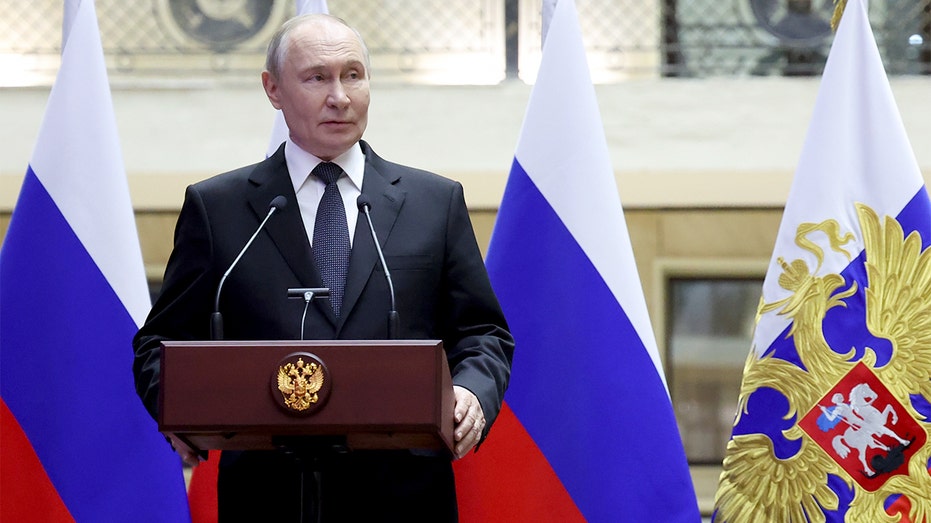
Russian President Vladimir Putin’s latest speech at the Defense Ministry was framed as a routine wartime address: a reaffirmation that Russia’s objectives in Ukraine are unchanged and will be achieved, by “diplomacy” if possible, by force if not. But buried within the familiar rhetoric were three strategically important signals:
- He openly tied any peace outcome to recognition of Russia’s expanded territorial claims (“liberation of historical lands”).
- He escalated his verbal attacks on Europe—calling European leaders “piglets”—just as back-channel negotiations intensify.
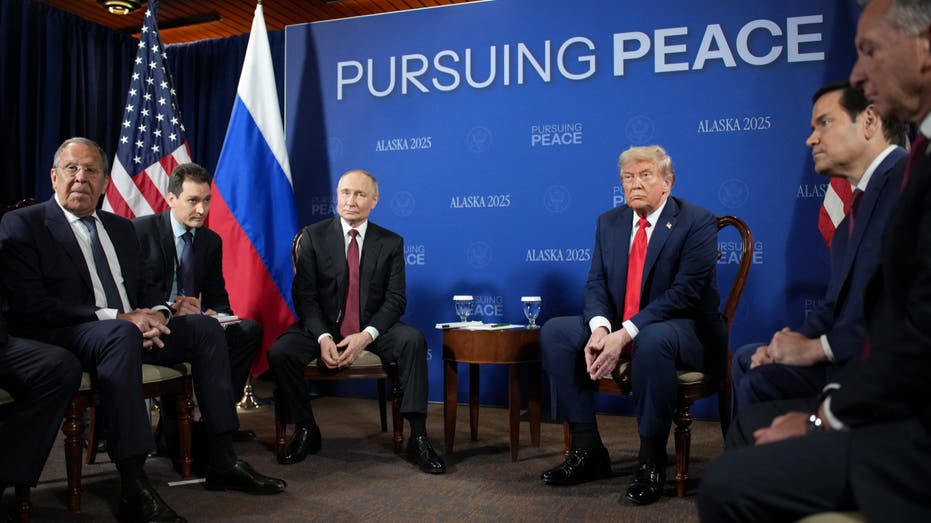
- He juxtaposed his stated openness to a U.S.-brokered deal (referencing Trump’s plan as a “starting point”) with threats of continued military advance.
Viewed together, this is less about bravado and more about shaping the negotiating environment: pressuring Ukraine, testing European cohesion, and signaling to Washington that Moscow sees the U.S.—not Kyiv, not Brussels—as the real counterpart at the table.
How We Got Here: A War of Narratives as Much as Territory
Putin’s insistence that Russia’s goals are unchanged echoes the language he used on the eve of the full-scale invasion in February 2022: demilitarization of Ukraine, a veto over its Western alignment, and what he frames as the “protection” or “return” of historically Russian lands. The idea of “historical lands” is not a throwaway phrase; it is a doctrinal concept that underpins the Kremlin’s domestic and foreign policy narratives.
This rhetoric has deep historical roots:
- Imperial framing: The notion that parts of Ukraine are inherently Russian territories dates back to Tsarist times and was revived under Putin, especially in his 2014 and 2021 essays arguing that Russians and Ukrainians are “one people.”
- Post-Soviet trauma: Putin repeatedly describes the USSR’s collapse as a “major geopolitical catastrophe,” and he explicitly frames Western policy since the 1990s as an attempt to exploit that collapse and dismantle what’s left of Russian power.
- Security buffer logic: Russian military doctrine since at least the early 2000s has emphasized preventing NATO’s expansion to its borders. The Ukraine war is consistently presented in Moscow as a preemptive defensive war, not an offensive one.
Calling European leaders “piglets” fits a long pattern of dehumanizing language used to signal contempt while reinforcing a siege mentality at home. Historically, the Kremlin has used such rhetoric most aggressively when it feels constrained militarily or diplomatically and wants to reassert psychological dominance—think of Soviet-era descriptions of “imperialist lackeys” and “decadent” Western elites during moments of crisis.
Why Putin Is Attacking Europe While Courting U.S. Intermediaries
The timing of this outburst is telling. As U.S. envoys Jared Kushner and Steve Witkoff shuttle between Moscow and Kyiv with draft proposals, Putin is sending two simultaneous messages:
- To Europe: You are not central to the outcome. You are Washington’s “piglets,” dependent, subordinate, and ultimately disposable in any U.S.–Russia bargain.
- To Washington: The real deal is between us. If you want to end this war on terms you can sell as a success, talk to Moscow directly and pressure Kyiv to accept painful concessions.
This approach is consistent with a long-standing Russian strategy: drive wedges inside the Western camp by portraying Europe as weak and divided, and the U.S. as the only power capable of making decisions. It also plays into U.S. domestic politics—any hint that a deal could be reached quickly if Washington “acts pragmatically” can become a talking point in election debates.
NATO’s Secretary General recently warned allies that Russia could be ready to target alliance members militarily within five years. Putin’s derision of European leaders is a direct response to that narrative. By mocking them and claiming all Western efforts to weaken Russia have “completely failed,” he is trying to erode the credibility of such warnings at home and among more skeptical European publics.
What Putin Is Really Saying About the Endgame
At first glance, Putin’s line—“goals will be achieved either through diplomacy or military means”—sounds like a simple restatement of war aims. In reality, it’s a sophisticated framing of the acceptable peace space from the Kremlin’s perspective.
Embedded in that statement are several implicit conditions:
- Territorial revision as a baseline: Any “diplomatic path” must start from the reality of Russian control over territories it now calls “new regions.” Moscow wants formal or de facto recognition of at least part of its gains.
- Security guarantees that constrain Ukraine: Even if Kyiv keeps some Western backing, Putin wants its military integration with NATO either frozen or tightly bounded—no long-range strike capability that could threaten Russian territory, limited Western troop presence, and controls on advanced weapons.
- Sanctions relief over time: While not stated in this speech, Russian officials routinely link any durable peace to a structured unwinding of key sanctions, especially those targeting energy, finance, and technology imports.
When Putin says the “root causes” of the conflict must be addressed diplomatically, he’s not talking about Donbas alone. He’s referring to Russia’s broader grievance with the post-Cold War European security order: NATO’s expansion, U.S. missile defense systems, and the principle that states like Ukraine can freely choose their alliances.
What the Flurry of Diplomacy Reveals—and What It Hides
The involvement of Kushner and Witkoff—figures outside formal State Department channels—signals a parallel track of diplomacy operating alongside official U.S. policy. Historically, such semi-private channels have appeared in two situations:
- When formal relations are too toxic to allow direct, visible negotiations.
- When one or both sides want to test controversial ideas without political ownership or accountability.
The leaked criticism that early drafts of the peace proposal were “too favorable to the Kremlin” suggests some of these ideas may involve substantial Ukrainian concessions on territory or security arrangements. The fact that the latest documents were reportedly reduced from 28 to 27 points is less significant than the broader dynamic: each iteration tests how far Washington and Kyiv are willing to bend—and how much domestic opposition they can absorb.
For Ukraine, the stakes are existential. President Volodymyr Zelenskyy has repeatedly vowed not to cede territory, especially after the horrors of Bucha and Mariupol. Any deal perceived as rewarding aggression risks not just domestic backlash but also setting a precedent across the globe that borders can be changed by force if the aggressor has nuclear weapons and enough staying power.
Expert Perspectives: Coercive Diplomacy in Real Time
Security and diplomacy experts see Putin’s approach as a textbook case of coercive diplomacy, where military pressure and negotiation are intertwined.
As Fiona Hill, a veteran Russia analyst, has often argued, Putin tends to negotiate hardest when he feels he has tactical leverage but strategic risk. The war has not delivered the swift victory Moscow expected, but Russian forces have adapted, rearmed, and made incremental gains while Ukraine faces ammunition shortages and donor fatigue. In that context, Putin’s message that talks are possible—but only on his terms—is designed to capitalize on perceived Western exhaustion.
Thomas Schelling’s classic concept of the “threat that leaves something to chance” also applies. By openly discussing the possibility of a future confrontation with NATO, both Putin and NATO leaders are engaging in risk manipulation. Each side hints at worse outcomes—escalation, wider war—to push the other toward concessions or greater commitment. The danger is that misreading these signals can lead to escalation by accident, not design.
Data Points the Public Rarely Sees
Behind the rhetorical war, several structural trends are shaping the negotiating landscape:
- Defense industrial ramp-up: European defense spending has risen dramatically since 2022, with several countries moving toward or beyond 2% of GDP and new production lines for artillery shells and air defenses coming online. This undermines Putin’s narrative that Europe is weak and out of options.
- Russian adaptation to sanctions: While Russia’s economy has been hit, it has reoriented energy exports and developed workarounds for key imports, especially via third countries. The war economy is costly but has not collapsed as some predicted.
- Ukrainian resilience: Despite heavy casualties and infrastructure damage, Ukraine has maintained state functionality, continued to export grain via alternative routes, and developed domestic drone and missile production.
These realities matter because they affect the perceived “time horizon” of the war. If both sides believe they can sustain the conflict and maybe improve their bargaining position, they have less incentive to compromise now. Putin’s speech is partly an attempt to convince his own elites and the outside world that Russia can fight for as long as it takes.
Looking Ahead: Three Things to Watch
Over the next 12–18 months, the trajectory of the conflict and the diplomacy around it will be shaped by three key variables:
- U.S. political dynamics: Any perception in Moscow that a future U.S. administration might seek a quick deal by cutting support to Ukraine will harden Russian negotiating positions today. References to Trump’s plan as a “starting point” are aimed squarely at that calculation.
- European cohesion under pressure: If energy prices spike again, populist parties gain ground, or Ukraine fatigue sets in, Putin’s bet that Europe is the weak link could start paying off. Mockery like the “piglets” comment is part humiliation, part test: who reacts, who shrugs, who wavers?
- Battlefield balance: Major Ukrainian advances or Russian breakthroughs would reshape the diplomatic space overnight. So far, both sides have achieved local successes but not decisive strategic gains.
In the meantime, expect Moscow to continue using a dual-track approach: public belligerence to project strength and deter Western escalation, paired with quiet openness to talks that lock in as many gains as possible.
The Bottom Line
Putin’s derision of European leaders and his insistence that Russia’s war goals in Ukraine are immutable are not just rhetorical flourishes. They are deliberate tools in a broader campaign of coercive diplomacy aimed at reshaping Europe’s security order and forcing the West—especially the United States—to accept Russian territorial and strategic gains.
The real story isn’t whether he called European leaders “piglets.” It’s that, three years into the war, Moscow believes it can still improve its position by combining incremental military advances, economic adaptation, and psychological pressure on Western unity. Any peace process emerging from this moment will be less about ending a war and more about defining a new, unstable balance of power on the continent.
Topics
Editor's Comments
One underexamined aspect of Putin’s latest remarks is how tightly they tie domestic legitimacy to the outcome in Ukraine. By insisting the war’s goals are unchanged and guaranteed—either by diplomacy or force—he narrows his own room for maneuver. Any settlement perceived inside Russia as a retreat from the ‘liberation of historical lands’ narrative would risk undermining the core story he has told the Russian public for years: that this is a just, inevitable reclamation of territory and status stolen after the Soviet collapse. That creates a paradox for Western policymakers. The more they frame the war in terms of forcing Russia to admit defeat or relinquish all gains, the more they incentivize Putin to prolong the conflict rather than accept a negotiated outcome that could be spun as partial success. This doesn’t mean the West should accommodate Russian demands, but it does suggest that, if negotiations ever ripen, crafting terms that allow Moscow some face-saving narrative—without legitimizing aggression—may be critical to securing a durable ceasefire. The difficulty is that such nuance is politically toxic both in Kyiv and many Western capitals, where public discourse tends to demand a clear ‘win’ or ‘loss,’ not the messy compromises real diplomacy often requires.
Like this article? Share it with your friends!
If you find this article interesting, feel free to share it with your friends!
Thank you for your support! Sharing is the greatest encouragement for us.