Israel’s Pre‑Deadline Strikes on Hezbollah Expose Lebanon’s Sovereignty Stress Test

Sarah Johnson
December 18, 2025
Brief
Israel’s pre-deadline strikes on Hezbollah expose deep tensions between Lebanese sovereignty, foreign-backed ceasefire mechanisms, and non-state power. This analysis unpacks the history, leverage games, and economic stakes behind the airstrikes.
Israel’s Pre-Deadline Strikes on Hezbollah: Testing Whether Lebanon’s State Can Replace a State-Within-a-State
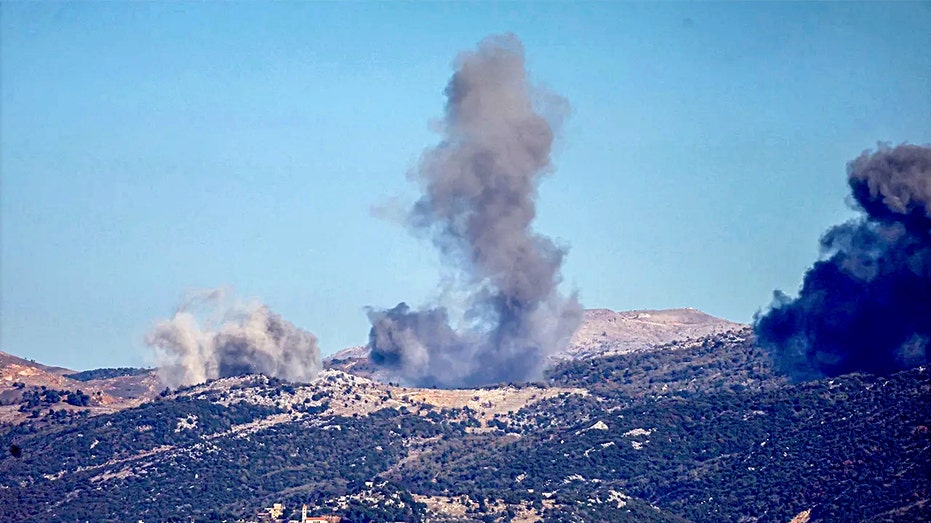
Israel’s airstrikes on Hezbollah sites in southern and northeastern Lebanon, launched just days before a deadline to clear armed Hezbollah forces south of the Litani River, are not just routine military operations. They are a stress test of three fragile systems at once: Lebanon’s ability to act as a sovereign state, the credibility of U.S.–European crisis management, and the viability of a regional order built on the assumption that non‑state armed groups can be slowly domesticated rather than decisively dismantled.
Why This Moment Matters
On the surface, the story is about timing: Israel hits Hezbollah targets as a U.S.-brokered ceasefire mechanism meets in Paris to review compliance with commitments made a year ago, including Hezbollah’s disarmament in the border zone. But the real story is about leverage. Israel is signaling that it will not simply accept “political paralysis” in Beirut or slow-motion implementation of disarmament pledges. It is using airpower to shape diplomatic outcomes—sending a message as much to Western capitals as to Hezbollah’s command.
For Lebanon, the strikes highlight an old dilemma with renewed urgency: can a weak state genuinely assert control over a powerful militia that has become deeply embedded in its security, political, and economic ecosystem? The answer will shape not only border stability but Lebanon’s chances of economic recovery, foreign investment, and even participation in broader regional normalization frameworks.
The Bigger Picture: A Long Conflict in a Narrow Strip of Land
To understand this episode, it helps to see it as the latest chapter in a conflict architecture that dates back at least to the 1980s and was partially re‑engineered after the 2006 war.
From Militia to Hybrid Power
- 1980s–1990s: Hezbollah emerged during the Lebanese Civil War as an Iranian‑backed Shiite militant group resisting Israeli occupation in southern Lebanon. It slowly built a parallel social welfare system and a sophisticated military wing.
- 2000: Israel’s unilateral withdrawal from most of southern Lebanon left a power vacuum that Hezbollah filled, framing itself as the “resistance” guardian of the border.
- 2006 war: A 34‑day conflict ended with UN Security Council Resolution 1701, which called for the area between the border and the Litani River to be free of any armed group other than the Lebanese Army and UNIFIL peacekeepers. In practice, implementation has been partial at best.
Hezbollah did not disarm. Instead, it evolved into a hybrid actor: part militia, part political party, part regional proxy for Iran. It gained seats in parliament, cabinet portfolios, and de facto veto power over Lebanese state decisions, all while amassing a missile arsenal estimated in the tens of thousands and building fortified networks in the south.
Ceasefire Mechanisms with Built‑In Ambiguity
Over the years, ceasefires and “understandings” between Israel and Hezbollah have relied on a kind of managed ambiguity: both sides tacitly accept some level of low‑intensity friction—surveillance, limited probing, symbolic attacks—so long as they avoid actions that might spiral into a full war. UNIFIL and various monitoring committees exist less to enforce disarmament in full than to prevent miscalculation.
The current U.S.-brokered framework, whose oversight committee is now meeting in Paris, fits this pattern. It promises, on paper, a Hezbollah-free zone south of the Litani. In reality, enforcement depends on Lebanese willingness and capacity to confront the very actor that can paralyze its politics and, as officials privately admit, outgun its national army in key domains.
What This Really Means: Signals, Leverage, and Domestic Constraints
Israel’s Calculus: Deterrence and Deadline Diplomacy
From Israel’s perspective, the strikes serve at least three purposes:
- Reassert deterrence. By striking training compounds, weapons depots, and a Hezbollah operative reportedly engaged in intelligence collection, Israel is communicating a red line: attempts to rebuild infrastructure in the border area will be punished, regardless of ceasefire mechanisms.
- Shape the Paris talks. Lebanese Parliament Speaker Nabih Berri called the strikes an “Israeli message to the Paris meeting.” That interpretation is credible. Israel is signaling to the U.S., France, and Saudi Arabia that it will not accept a purely diplomatic solution that leaves Hezbollah effectively entrenched in the south under a new legal fiction.
- Pressure Beirut, not just Hezbollah. By coinciding with high‑level discussions on bolstering the Lebanese Army’s deployment on the border, Israel is effectively asking: will Beirut actually deploy and enforce, or will it use the army as diplomatic cover while Hezbollah remains the real power?
In this sense, the strikes are part of what might be called deadline diplomacy by other means: the military timeline is used to compress a political one.
Lebanon’s Dilemma: Sovereignty vs. Survival Politics
Lebanon’s government has promised that the area south of the Litani will be clear of Hezbollah’s armed presence by year’s end. But there are structural barriers:
- Political fragmentation. Lebanon’s confessional system requires power-sharing among sectarian factions. Hezbollah is not just a militia; it is a central pillar of Shiite political representation. Any direct confrontation risks destabilizing the entire political order.
- Military imbalance. The Lebanese Army is underfunded, dependent on foreign aid, and careful to avoid open confrontation with Hezbollah. Even with U.S., French, and Saudi support, it is unlikely to forcibly disarm Hezbollah without risking civil conflict.
- Electoral calculations. With legislative elections on the horizon in 2026, leaders like President Joseph Aoun must weigh the cost of confronting Hezbollah against the risk of alienating key constituencies or provoking a governmental collapse.
This is why European and Lebanese officials warn of “political paralysis.” Hezbollah’s veto power means that any move to genuinely enforce disarmament in the south is likely to be diluted, delayed, or turned into a symbolic, partial redeployment rather than a structural change.
External Actors: Managing Escalation While Preserving Leverage
The Paris meeting, which includes U.S., French, Saudi, and Lebanese officials, illustrates a familiar Western and Gulf strategy: bolster state institutions (in this case the Lebanese Army) as a counterweight to non‑state actors, while using diplomatic pressure to de‑escalate Israeli military responses.
But this model is under strain. If the Lebanese Army is visibly propped up yet cannot—or will not—ensure that the border area is free of Hezbollah’s armed infrastructure, its credibility as a sovereign security actor is eroded. At the same time, Israel’s willingness to strike despite Western calls for restraint signals that the old assumption—that Israel will accept partial, slow-motion enforcement as long as major war is avoided—may no longer hold.
Data and Trends: Hezbollah’s Arsenal vs. Lebanese State Capacity
While precise numbers are classified and contested, several broad trends are well documented:
- Hezbollah’s arsenal. Experts have long estimated Hezbollah’s stockpile at over 100,000 rockets and missiles, including increasing numbers of precision-guided systems. Even modest attrition from Israeli strikes leaves a substantial capacity to target Israeli infrastructure and cities.
- Lebanon’s economic collapse. Since 2019, Lebanon’s currency has lost more than 90% of its value, poverty has surged, and state services have deteriorated. The Lebanese Army has relied on foreign assistance for basics—from fuel to soldiers’ food stipends.
- UNIFIL’s limitations. UN peacekeepers can monitor and report violations but cannot forcibly disarm armed groups. Their mandate is built around consent and cooperation, not coercion.
The imbalance is stark: a heavily armed, ideologically motivated non‑state actor with regional backing versus a fiscally bankrupt state whose army depends on donors. That asymmetry shapes every diplomatic conversation about “disarmament.”
What’s Being Overlooked: Economic and Regional Leverage
Much mainstream coverage frames this as a narrow military and diplomatic story. Two broader dimensions deserve more attention.
1. The Economic Price of Non‑Sovereignty
For Lebanon, the failure to assert monopoly over force in its territory is not just a security issue—it’s an economic one. Investors, lenders, and even humanitarian donors increasingly link support to governance and stability. A border region effectively controlled by a sanctioned militant group complicates:
- Maritime energy projects in the Eastern Mediterranean
- Long‑term reconstruction financing and debt restructuring
- Integration into regional infrastructure or trade initiatives
In other words, every delay or half‑measure in curbing Hezbollah’s armed presence deepens Lebanon’s isolation from emerging economic opportunities in the region.
2. The Abraham Accords Angle
U.S. officials have hinted that progress on Hezbollah disarmament could open doors for Lebanon to benefit indirectly from the network of normalization arrangements between Israel and several Arab states. That doesn’t necessarily mean full diplomatic normalization, but it could involve:
- Access to regional investment funds tied to infrastructure or energy
- Security coordination frameworks that reduce border tensions
- Indirect cooperation on gas exports or electricity projects
The strikes, then, are not just about enforcing a ceasefire line; they are about whether Lebanon positions itself on the side of state‑to‑state regional integration or remains tethered to a resistance axis whose costs increasingly outweigh the perceived benefits.
Expert Perspectives
Regional security analysts and diplomats are divided on how far Israel and Hezbollah are willing to go.
Many note that both sides remain constrained by the specter of a full‑scale war that would devastate Lebanon and severely test Israel’s air defense systems. However, as the border area becomes more militarized and Hezbollah tries to rebuild or reposition assets, the risk of miscalculation grows.
Several experts also emphasize that external pressure alone is unlikely to produce real disarmament without a shift in Lebanese internal politics. As long as Hezbollah is seen by a substantial portion of the Shiite population as both protector and provider, the state’s ability to confront it is structurally limited.
Looking Ahead: Scenarios to Watch
1. Symbolic Compliance vs. Substantive Change
The most probable near‑term outcome is some form of symbolic compliance: Hezbollah may reduce visible armed presence near the border, while maintaining command, control, and storage further north, and reliance on covert infrastructure. The Lebanese Army’s deployment might increase numerically, but without full enforcement authority.
Israel’s reaction will determine whether this is enough to stabilize the situation or whether it triggers further strikes. If Israel perceives the changes as cosmetic, it may continue to attack specific targets, keeping the south in a low‑grade conflict zone.
2. Institutionalizing External Support for the Lebanese Army
The U.S., France, and Saudi Arabia are likely to build a more structured support package for the Lebanese Army—financial, logistical, and training‑related—to bolster its presence south of the Litani. The strategic question is whether this support is tied to measurable, time‑bound benchmarks for curbing Hezbollah’s operational freedom, or whether it functions mainly as a conflict‑management tool without real enforcement power.
3. Escalation Pathways
The greatest risk is an incident that crosses both sides’ red lines: a Hezbollah attack that causes mass Israeli casualties or critical infrastructure damage, or an Israeli strike that kills senior Hezbollah commanders or inflicts heavy civilian casualties in Lebanon. Either could trigger a rapid escalation chain where political leaders lose control over their own escalation ladders.
The Bottom Line
Israel’s pre‑deadline strikes on Hezbollah targets are a reminder that ceasefire mechanisms and diplomatic committees can only manage, not resolve, the core contradiction at the heart of Lebanese sovereignty: a state that does not fully control its own territory or its most powerful armed actor.
The coming months will reveal whether Lebanon, with Western and Gulf backing, can at least establish a credible security regime in the south—or whether the border remains governed by a fragile, informal balance of deterrence, punctuated by strikes like these. The answer will shape not just war and peace along one frontier, but Lebanon’s economic future and its place in a region that is slowly, unevenly moving toward more formal state‑to‑state arrangements.
Topics
Editor's Comments
What’s striking in this episode is how little the core equation has changed since 2006, despite enormous shifts in the region. Israel still views Hezbollah’s presence in the south as a ticking time bomb; Hezbollah still relies on proximity to the border to sustain its resistance narrative and deterrent credibility; and Lebanon’s state institutions remain too fragile and fragmented to redefine the rules. The new element is the economic freefall and the parallel rise of regional normalization frameworks like the Abraham Accords. That combination creates a kind of double squeeze on Lebanon: cling to the status quo and risk permanent marginalization from emerging economic networks, or confront Hezbollah’s armed autonomy and risk internal destabilization. Neither path is politically appealing, which is why we see repeated cycles of cosmetic adjustments around the Litani rather than a decisive shift. Going forward, a key question for policymakers is whether continuing to subsidize a hybrid security order—through aid to the Lebanese Army and diplomatic cover—actually buys stability, or merely entrenches a system that guarantees periodic crises like the one we’re watching now.
Like this article? Share it with your friends!
If you find this article interesting, feel free to share it with your friends!
Thank you for your support! Sharing is the greatest encouragement for us.