Beyond the Overturned Touchdown: How Ravens–Steelers Exposed the NFL’s Catch Rule Problem Again

Sarah Johnson
December 8, 2025
Brief
A controversial overturned Ravens touchdown against the Steelers reveals deeper problems with the NFL’s catch rule, replay philosophy, and how technical officiating is reshaping games, rivalries, and playoff races.
Did the Ravens Lose to the Rulebook, Not the Steelers? What the Overturned TD Really Reveals About the NFL
On the surface, Sunday’s finish in Baltimore looks like another bitter chapter in one of football’s fiercest rivalries: Ravens vs. Steelers, a late-game swing, and a furious home crowd convinced the refs took a win off the board. But the overturned Isaiah Likely touchdown is about far more than one call or one game. It exposes a deeper tension inside the modern NFL: the league’s obsession with technical precision versus fans’ expectation of common-sense football.
When Lamar Jackson’s apparent go-ahead touchdown to Likely was ruled incomplete on replay, it didn’t just change the scoreboard in a 27–22 Steelers victory. It underscored a growing problem: the NFL’s catch rule—and the way it’s enforced in high-leverage moments—continues to shape playoff races, careers, and fan trust in ways the league still hasn’t fully reckoned with.
The long shadow of the catch rule
The controversy in Baltimore fits a decade-long pattern. The NFL has been tweaking, clarifying, and rebranding its catch rule since at least the late 2000s, yet fans and even broadcasters still struggle to predict what will stand and what won’t.
Consider the flashpoints that brought us here:
- Calvin Johnson, 2010 (the “Process” game) – Johnson appeared to secure a game-winning touchdown for the Lions, only for it to be ruled incomplete when the ball came loose as he stood up. That was the first modern “how is that not a catch?” moment that prompted public outcry.
- Dez Bryant, 2015 playoffs – Bryant’s spectacular grab against the Packers was overturned because he was deemed not to have completed “the process of the catch.” In 2018, after immense pressure, the league quietly admitted that, under new interpretations, it would now be a catch.
- Jesse James, 2017 (Steelers vs. Patriots) – A late TD was wiped out when James was ruled not to have survived the ground. The fallout helped push the NFL in 2018 to simplify elements of the catch rule.
Each of these plays pushed the league to adjust its language, but the Likely play shows the core problem remains: the rule may be technically clearer on paper, but its real-world application often contradicts what fans and players intuitively see as “a football play.”
What the league says vs. what fans see
NFL Vice President of Instant Replay Mark Butterworth laid out the framework for overturning Likely’s catch:
- Control of the ball in the air
- Two feet (or a body part) in bounds
- Plus an "act common to the game"—often interpreted as a third step, a turn upfield, or obvious movement to advance
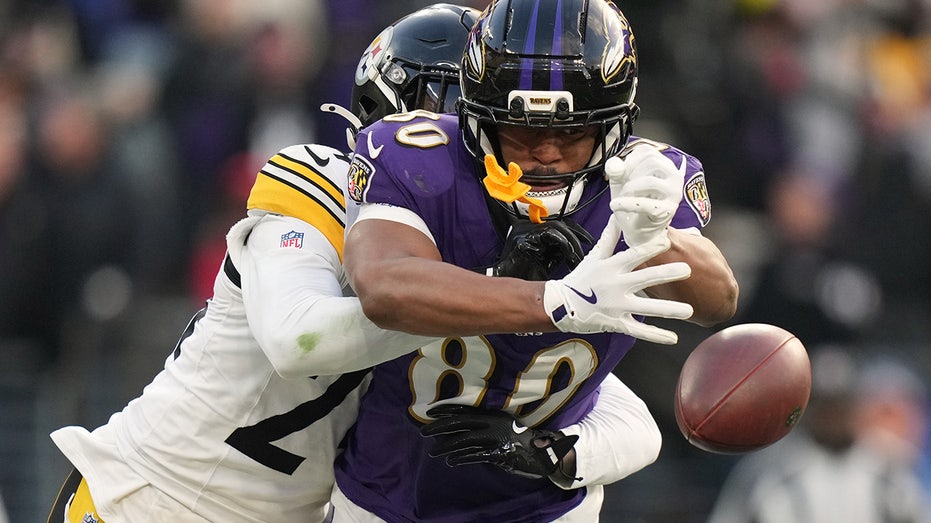
Butterworth’s key point: Likely never got that “third step” or act before Steelers CB Joey Porter Jr. ripped the ball loose. In their view, control + two feet was not enough. CBS rules analyst Gene Steratore backed that interpretation.
But from the stands and on television, what many saw was a receiver elevate, secure the ball, tap both feet in the end zone, and get contacted as he tried to protect the catch. Even Tony Romo and Jim Nantz—hardly casual observers—reacted live as if they’d just witnessed a touchdown.
This gap between rulebook logic and football instinct is where the controversy lives. The NFL insists on a three-part test; fans see two feet down with control in the end zone and ask, reasonably: What else does he have to do?
Why borderline replay decisions are getting more consequential
Modern replay was supposed to fix the worst mistakes. Instead, it’s increasingly deciding the tightest games—and sometimes based on frame-by-frame interpretations that overturn the call made on the field in real time.
Two features of this game make it especially consequential:
- The score and time – With 2:47 left, the Likely catch being ruled a touchdown would have put Baltimore up 28–27. That fundamentally changes play-calling, clock management, and win probability on both sides.
- Division implications – The Steelers move to 7–5, taking sole control of the AFC North, while the Ravens fall to 6–7. In a division often decided by one game or a head-to-head tiebreaker, a single call like this can echo into January.
Advanced models increasingly track the impact of individual plays on win probability. A borderline call on a potential touchdown in the final three minutes can swing win odds by 30–40 percentage points or more. In that context, replay is not a background safeguard; it’s a central actor in the outcome.
The overlooked angle: replay is changing how players play
One under-discussed impact of the current catch standard is behavioral. Offensive players in contested-catch situations are now operating under a split-second calculus shaped by the rulebook—and they know replay will scrutinize every movement.
For receivers, that means:
- Emphasizing obvious “acts” after the catch—extra steps, clear turns, exaggerated tucks—to satisfy replay standards.
- Potentially exposing themselves to more contact by trying to get that unmistakable third step instead of immediately going to the ground to protect their body.
For defenders like Joey Porter Jr., the incentive is equally clear: attack the ball instantly, because if you can dislodge it before that third step or unmistakable act, you may not just break up a pass—you might wipe out what looked like a completed touchdown.
In other words, replay isn’t just re-evaluating football; it’s subtly redefining it.
Steelers–Ravens: a rivalry shaped by inches and interpretations
This game also fits a long tradition between these teams. Steelers–Ravens has been one of the NFL’s most physical, tightly contested rivalries since the 2000s. It’s notorious for:
- Low margins – A large share of their matchups are decided by one score or less.
- High stakes – Division titles, playoff positioning, and tiebreakers are often on the line.
- Officiating flashpoints – Because of the physicality, these games frequently test the limits of rules on hits, catches, and turnovers.
In that context, this isn’t just “one bad call.” It becomes part of the rivalry’s memory—in the same way that Steelers fans remember the Jesse James reversal or Ravens fans recall borderline roughness or PI flags in past matchups.
The other overturned play: a pattern, not a one-off
The Likely play wasn’t the only controversial reversal. Earlier in the fourth quarter, a pass by Aaron Rodgers that was batted back and contested appeared, at first glance, to result in an interception by Ravens defensive lineman Teddye Buchanan. The call on the field was a pick—prime field position in a tight game. Replay overturned it.
Now put those two decisions together:
- Potential Ravens interception wiped out – Denies Baltimore short-field opportunity in a one-score game.
- Potential Ravens touchdown wiped out – Erases what looked like a go-ahead score in the final minutes.
Officials and league executives will insist each call was made independently and based on the rulebook. That may be true. But for players, coaches, and fans, the cumulative effect is what matters: both razor-thin replay judgments went against Baltimore in high-leverage spots. Even if the rulings are technically defensible, the optics deepen suspicion that replay is too intrusive and too willing to overturn calls made at full speed.
What experts say: rules clarity vs. football reality
Former players, coaches, and rules experts have been wrestling with this tension for years. The divide often runs along a familiar line: those who have to enforce the rule emphasize structure and consistency; those who played the game stress intent and common sense.
Rules analysts and former officials typically argue that:
- The “act common to the game” requirement is necessary to distinguish brief contact from a completed catch.
- Replay exists to correct objective errors, not to align with fan expectations.
- Consistency across all 256 games is more important than public perception on a single controversial play.
Former players and coaches counter that:
- Two feet down with control in the end zone should overwhelmingly be considered a catch.
- Hyper-technical parsing undermines the credibility of on-field officials and confuses fans.
- The league’s own past re-interpretations (like Dez Bryant) show that "by the book" today can be admitted as "wrong" tomorrow.
This philosophical divide is what we saw play out in real time: a rules office insisting Likely didn’t complete the catch, and a national broadcast team, echoing millions of viewers, instinctively reacting as if he had.
What this means for the AFC North and beyond
Strip away the rulebook for a moment and look at the standings. The practical consequences are serious:
- Steelers at 7–5 – They sit alone atop the AFC North, which has been one of the league’s most competitive divisions.
- Ravens at 6–7 – That’s the difference between controlling their own destiny and needing help down the stretch.
In a conference where postseason spots are often decided by tiebreakers, these margins are enormous. This game won’t just be remembered as a rivalry heartbreaker; it may be the hinge point that decides:
- Which team hosts a playoff game versus going on the road.
- Which coaching staff faces sharper scrutiny if they miss the playoffs.
- How the narrative around Lamar Jackson’s season is framed—clutch or snakebitten.
That’s the hidden weight of these calls: they don’t just swing one Sunday; they shape narratives, job security, and legacies.
Is the standard for overturning too low?
There’s a broader policy question the league has yet to fully confront: Has the bar for overturning calls on review quietly dropped?
Replay is supposed to require “clear and obvious” evidence to reverse the ruling on the field. But phrase that in plain language: Were you absolutely sure Likely did not complete the catch? Were you absolutely sure Buchanan did not secure that interception? Or did the slow-motion replays simply introduce enough doubt to justify a different interpretation?
If replay is functioning as a second opinion rather than a last-resort correction, the system is drifting away from its original purpose. And when that happens in money-time situations, the human element—players making plays in real time—feels subordinate to a video review conducted at 1/1000th the speed of the actual game.
Where the league may be forced to go next
The NFL has already reacted to past controversies by changing the catch rule once. It would not be surprising if plays like the Likely reversal renew discussion in the offseason, especially if similar calls influence playoff seeding or a postseason game.
Potential avenues the league could explore include:
- Simplifying end-zone catches – One possible tweak: once a receiver secures control with two feet in the end zone, the play is dead—a touchdown—unless the ball is clearly dislodged before the second foot lands.
- Raising the threshold for overturns – Emphasize that unless the replay angle is decisive, the call on the field must stand, especially on catch/no-catch plays.
- More transparency – Publish weekly breakdowns of controversial calls with video and rule explanations, allowing fans to understand not just what was decided but why.
None of these changes would erase the sting for the Ravens now. But the history of the catch rule suggests something important: today’s outrage is often tomorrow’s rule change.
The bottom line
The overturned Isaiah Likely touchdown will be remembered in Baltimore as a moment when the rulebook felt bigger than the game. Technically, the league can justify the reversal under its current framework. But in a sport built on trust—trust that what you see is what counts—this is another moment where the words in the rulebook and the instincts of football people diverge.
Whether you think it was the right call or the wrong one, it exposed a central truth about the modern NFL: the most important player on the field in the final minutes might not be a quarterback, a receiver, or a cornerback. It might be the rulebook—and the replay official interpreting it.
Topics
Editor's Comments
What’s most striking about this game isn’t that a call was controversial—that’s baked into sports—but how normalized it has become for replay to actively reshape outcomes in the final minutes. A decade ago, the conversation was about fixing egregious errors; now we’re parsing whether a receiver’s third micro-step counts as an “act” while tens of millions watch in real time. That’s a fundamentally different role for officiating technology. The Likely play also reveals a structural asymmetry: the league promotes spectacular catches to sell the product, yet the rulebook often undercuts those very moments with technical reversals. If fans can’t trust their own eyes on something as basic as a two-feet-down end-zone grab, the NFL risks turning organic drama into procedural controversy. Going forward, the real question is not just how the rule should read, but what kind of viewing experience the league wants to create—one governed by a strict legalistic framework or one that leans on the intuitive, player-driven moments that built the sport’s appeal in the first place.
Like this article? Share it with your friends!
If you find this article interesting, feel free to share it with your friends!
Thank you for your support! Sharing is the greatest encouragement for us.