Mahomes’ Meltdown or Deeper Problem? What the Texans Exposed About the Chiefs’ Future

Sarah Johnson
December 8, 2025
Brief
Patrick Mahomes’ three-interception loss to Houston reveals deeper cracks in the Chiefs’ roster construction, while highlighting the Texans’ emerging defensive blueprint and a shifting balance of power in the AFC.
Patrick Mahomes, the Texans’ Defense, and the End of an Era in Kansas City?
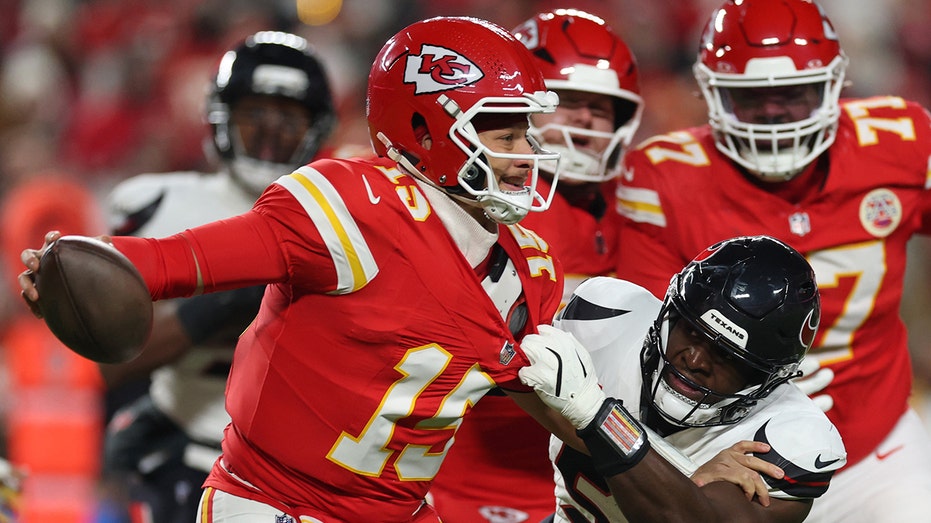
The headline coming out of Kansas City is simple: Patrick Mahomes threw three interceptions and the Chiefs’ playoff odds tanked after a 20–10 home loss to the Houston Texans. But beneath that box score is something far more consequential: a potential inflection point in the Mahomes era, a philosophical clash between old and new team-building models, and the quiet rise of a Houston franchise that is building the exact kind of roster the Chiefs no longer have.
This wasn’t just a bad night from a great quarterback. It was a case study in what happens when an elite passer is asked to be the entire offense against a defense that is deep, fast, and structurally sound at every level.
The bigger picture: How we got to a 6–7 Chiefs team
The most shocking detail isn’t Mahomes’ 12-of-30 line for 131 yards and three picks. It’s that a team that has appeared in three straight AFC Championships is now 10th in the conference at 6–7, with roughly a 16% chance to make the postseason.
To understand how we got here, you have to zoom out:
- The post–Tyreek Hill gamble: When Kansas City traded Hill after the 2021 season, the front office bet that Mahomes’ brilliance and Andy Reid’s scheme could elevate mid-tier receivers while the cap savings were reinvested elsewhere. For a while, that looked genius: the Chiefs still won a Super Bowl.
- Incremental erosion of offensive talent: But over time, that approach has yielded a receiver room filled with possession options and unproven youngsters, without a true alpha who can consistently separate against top defenses. Rashee Rice has flashed, but he’s not yet a coverage dictator in the way Hill once was.
- Redefining Mahomes’ burden: The Chiefs have gradually slid from a team where Mahomes was the centerpiece of a great offense to a team where Mahomes is the offense, especially on a night when he led the team in rushing.
Against most defenses, Mahomes’ improvisational genius and Reid’s creativity are enough to paper over those structural issues. Against this version of the Texans? Not anymore.
Houston’s defensive blueprint: Why this wasn’t a fluke
The Texans came into this game with the league’s top-ranked defense, and they played like it. But the real story is how they did it, and why it matters beyond one December night.
Under head coach DeMeco Ryans and defensive coordinator Matt Burke, Houston has built a unit that mirrors the 49ers’ recent defensive identity: a relentless front, rangy linebackers, and versatile defensive backs who can bait quarterbacks into mistakes.
Key components of that blueprint showed up all night:
- Disguise and opportunism in the secondary: Jalen Pitre’s interception jumping the route to JuJu Smith-Schuster wasn’t just individual brilliance. It was the product of disguised coverage and film study, knowing where Mahomes likes to go on specific concepts.
- Relentless four-man pressure: Houston didn’t need to send exotic blitzes every snap. The consistent heat forced Mahomes off his spot, drove him into scramble mode, and compressed the field vertically.
- Disciplined zone drops and leverage: The third interception, where Azeez Al-Shaair picked off a slightly behind throw to Travis Kelce, was emblematic: linebackers who get depth, understand route combinations, and are patient enough to capitalize on even minor inaccuracies.
In other words, this wasn’t Mahomes suddenly becoming reckless. It was an elite defense taking advantage of a quarterback who has to be perfect because his margin for error has evaporated.
What this really means for Mahomes and the Chiefs
There’s an instinct to treat any Mahomes meltdown as an anomaly. But at 6–7 with four games left, this season raises deeper questions:
1. The end of automatic contention
For half a decade, fans and analysts assumed that as long as Mahomes was upright, the Chiefs were a lock for double-digit wins and a deep playoff run. That assumption is now broken. Not because Mahomes has regressed into mediocrity, but because the rest of the AFC has caught up—and in some ways, passed Kansas City in roster construction.
The Texans are the most obvious example of that shift: a cheap, ascending quarterback (C.J. Stroud) surrounded by a deep defense and young playmakers. The Bengals, Ravens, and arguably even the Jaguars have also leaned into this model at various points.
2. Offensive identity crisis
The Chiefs are caught between eras. They still call high-risk, aggressive concepts assuming Mahomes can turn every play into a highlight. But the personnel is closer to a ball-control, execution-based offense that needs precision and separation, not just magic.
Mahomes led the team in rushing. The running game outside of his scrambles rarely scared Houston. And when your best play on fourth-and-1 is a low-percentage throw instead of a physically dominant run concept, that speaks volumes about where your offense is.
3. Fourth-down aggression without the supporting cast
Andy Reid’s decision to go for it on fourth-and-1 from his own 31 with the game tied at 10 was analytically defensible—but strategically revealing. This was a coach signaling he didn’t trust a field-position grind against the Texans’ defense. He trusted Mahomes to bail them out.
Except this isn’t the 2019 or 2020 Chiefs. When the throw to Rashee Rice fell incomplete, it exposed the gap between Kansas City’s historical reputation and the current reality: you can be analytically aggressive and still have the wrong play call for your personnel.
The Texans’ rise: Stroud, the defense, and a new AFC power structure
On the other side, Houston’s 8–5 record and five-game win streak aren’t an early-season mirage. They represent a franchise that has quietly rebuilt itself from one of the NFL’s most chaotic organizations into something resembling a sustainable contender.
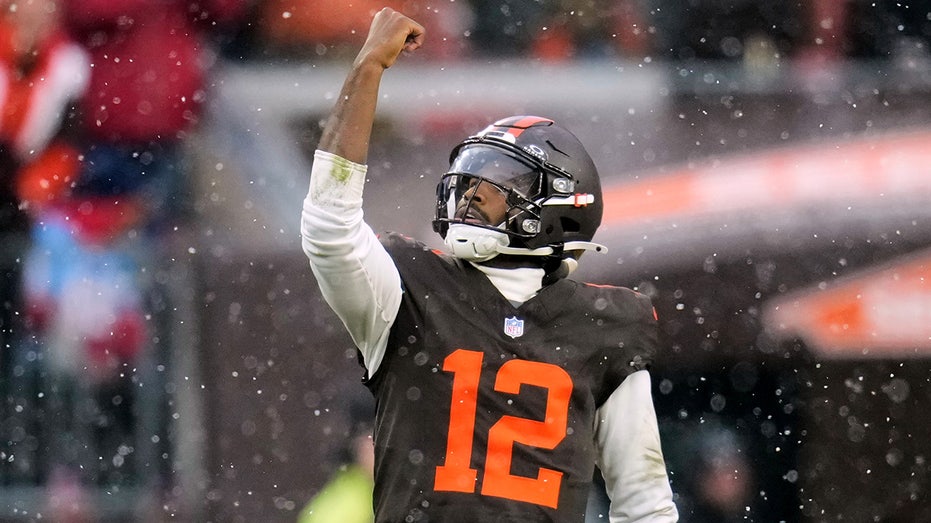
C.J. Stroud’s stat line—15-of-31 for 203 yards and a touchdown—won’t top MVP charts, but the context matters:
- He led a 90-yard touchdown drive capped by a nine-yard pass to rookie back Woody Marks.
- He made a critical third-and-3 play under pressure, escaping Chris Jones and hitting Jayden Higgins to extend what became a go-ahead drive.
- He avoided the kind of back-breaking mistake Mahomes made multiple times.
That’s the modern formula: a young quarterback who doesn’t have to be spectacular every drive because his defense consistently gives him favorable game scripts.
Houston’s offensive stats were modest—Marks needed 24 carries to reach 65 yards—but they were timely. The Texans repeatedly did just enough to flip field position, sustain drives, and cash in after defensive stops.
What mainstream coverage is missing
Most discussion will focus on Mahomes’ three interceptions, Andy Reid’s aggressive fourth downs, or the Chiefs’ falling playoff odds. But a few deeper elements are being overlooked:
- The cumulative psychological load on Mahomes: When a quarterback spends weeks carrying an offense that can’t consistently separate on the outside, mistakes like a slightly late or behind throw are not just mechanical—they’re the product of pressing, of trying to force big plays in tight windows because the easy ones aren’t there.
- The changing AFC defensive landscape: Houston’s blueprint—pressure with four, sticky zone/quarters concepts, and opportunistic safeties—mirrors what teams like the Bills and Bengals used in previous playoff runs to slow Mahomes. The difference now is that more teams have the personnel to sustain that approach for four quarters.
- The risk of overcorrecting: There is a real danger Kansas City reacts to this season by overhauling their scheme instead of their roster. The scheme still creates open looks; the receivers often fail to convert them. The fix isn’t turning Mahomes into a game manager—it’s restoring him to an environment where he doesn’t have to be a superhero.
Looking ahead: What this game signals about the next few years
For Kansas City, the next 12–18 months are critical:
- Wide receiver reset: Expect pressure—internal and external—for the front office to invest heavily in a true No. 1 receiver, whether via the draft or free agency. Mahomes can elevate talent, but even he needs at least one player who can win in isolation against top corners.
- Reevaluating the run game: Being forced to go for it on fourth-and-1 from your own 31 is often a symptom of not trusting your ability to win in the trenches. Kansas City must decide if it will recommit resources to the offensive line and backfield.
- Defensive sustainability: The Chiefs’ defense has kept them afloat in various games this year, but they were ultimately outplayed situationally by Houston. If the offense regresses while the defense is merely good, not elite, the margin for error narrows dramatically.
For Houston, this game could be a pivot from “surprising upstart” to “legitimate AFC factor”:
- Validation of the Stroud-Ryans model: A young quarterback paired with a defensive-minded coach can work—if the defense is truly elite, not just opportunistic.
- Defensive identity as a recruiting tool: Players notice which teams play fast, disciplined defense. Houston has a chance to become a destination for defensive free agents who want to be part of a unit that dictates games.
The bottom line
One ugly stat line from Patrick Mahomes doesn’t undo a Hall of Fame trajectory. But when that stat line comes in a season where the Chiefs are under .500 in December, it forces a reassessment of what we’ve taken for granted.
The Texans didn’t just beat Kansas City; they exposed how thin the Chiefs’ offensive margin of error has become and how far the rest of the AFC has come in building defenses designed specifically to challenge quarterbacks like Mahomes.
Whether this is the beginning of the end of the Chiefs’ dynasty window or just the jolt that forces a roster reset will depend less on Mahomes and more on whether Kansas City is willing to admit a hard truth: even the best quarterback in football can’t win alone anymore—especially not against a defense like Houston’s.
Topics
Editor's Comments
One underappreciated dimension of this game is how it reframes the narrative around quarterback value in the modern NFL. For years, the league has been tilting toward the idea that if you secure an elite quarterback, everything else becomes secondary. The Chiefs embodied that philosophy, and it worked—until the rest of the conference adapted. The Texans, by contrast, look like a throwback to a more balanced model, but with a modern twist: a young, efficient quarterback rather than a veteran game manager, and a defense built on speed and versatility rather than just size and intimidation. The danger now is that Kansas City could misdiagnose this season as a schematic issue instead of a roster construction problem. If they respond by asking Mahomes to play more conservatively without upgrading his supporting cast, they risk wasting prime years in the name of protecting statistics. The more rational response is uncomfortable but necessary: admit that even generational quarterbacks need above-average help, and spend accordingly, especially at receiver and along the offensive line.
Like this article? Share it with your friends!
If you find this article interesting, feel free to share it with your friends!
Thank you for your support! Sharing is the greatest encouragement for us.