Beyond the Elevator: How the Jay‑Z–Solange Clash Became a Blueprint for Monetizing Scandal

Sarah Johnson
December 8, 2025
Brief
A decade after the Jay‑Z–Solange elevator fight, a designer’s new claim reveals more about celebrity, surveillance, race, and profit than about what was actually said in that elevator.
Jay‑Z, Solange, and the Elevator That Wouldn’t Die: What This ‘New’ Detail Really Tells Us About Celebrity, Privacy, and Power
More than a decade after the 2014 Met Gala elevator fight between Jay‑Z and Solange Knowles, a fashion designer has offered a fresh explanation: an allegedly “innocent” compliment about Rachel Roy’s gown. On the surface, it’s another piece of celebrity gossip retrofitted onto an already over‑analyzed scandal. But underneath, this revival exposes something deeper about how modern fame works: how women’s bodies and emotions become public battlegrounds, how infidelity narratives are monetized, and how surveillance and social media have permanently changed what “private family matter” even means.
This isn’t really a story about who said what in an elevator. It’s a story about how a few seconds of leaked footage reshaped three careers, fueled a multimillion‑dollar narrative arc in music and fashion, and revealed the power imbalance between those who live inside the celebrity machine and those who profit from it.
The bigger picture: from leaked tape to cultural myth
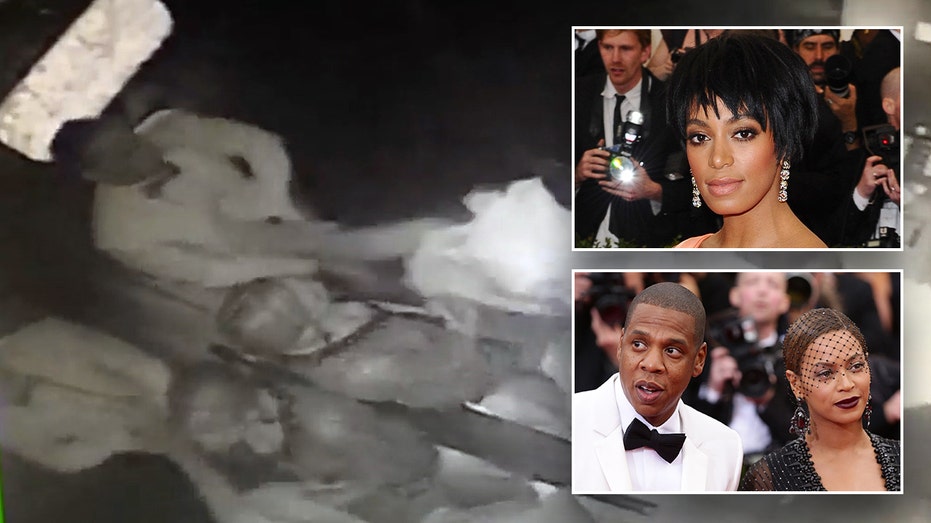
When the Standard Hotel elevator footage leaked in May 2014, it hit at the exact moment when celebrity, surveillance technology, and social media outrage culture were converging.
- Surveillance as entertainment: A hotel employee secretly sold private security footage to a tabloid outlet. Within days, the incident was a global meme. The hotel’s later statement and the employee’s firing did little to address a core issue: there was no meaningful accountability or regulation preventing this from happening again.
- The era of “receipts”: The 2010s cemented a cultural expectation that everything, from street altercations to family arguments, might be captured on video. The elevator fight became less a family conflict and more a piece of public evidence that demanded explanation.
- Celebrity as serialized narrative: Rather than shutting down the story, Beyoncé and Jay‑Z folded it into their art—Beyoncé’s Lemonade (2016), Jay‑Z’s 4:44 (2017), and even lyrical references to “Becky with the good hair” and the elevator itself. What began as an invasion of privacy was transformed into a highly controlled, commercially successful narrative of betrayal and reconciliation.
By the time Oscar G. Lopez, the designer of Rachel Roy’s 2014 Met Gala dress, publicly claimed that Jay‑Z’s compliment triggered Solange’s reaction, the elevator story had already evolved into cultural shorthand for marital infidelity, female rage, and the limits of Black celebrity respectability. His version simply plugs into an already existing mythos.
What this really means: respectability, gender politics, and who gets to profit
The Lopez account—that Solange was offended by Jay‑Z complimenting Roy’s gown—may or may not be accurate. The family’s own 2014 statement intentionally kept details vague, stressing that they had “worked through it” and that “families have problems.” Jay‑Z later gestured toward his own culpability in “Kill JAY‑Z”: “You egged Solange on / Knowin’ all along, all you had to say you was wrong.”
What’s striking in 2025 isn’t the specifics of Lopez’s story, but what it reveals about the ecosystem around the Carters and how that ecosystem works:
- Women as symbolic combatants: Public focus has consistently gravitated toward Solange’s aggression and Rachel Roy’s alleged role as “Becky,” rather than Jay‑Z’s admitted infidelity. The narrative repeatedly positions women in opposition, while the man at the center of the betrayal controls the most lucrative version of the story through his music and image.
- Collateral branding: Lopez is candid that “any press is good press” and that his business benefited from the scandal, even though he wasn’t directly involved in the conflict. The dress that missed the red carpet still became globally recognizable because it was attached to a viral moment. That’s an unusually blunt admission of how scandal becomes a form of capital.
- Respectability under pressure: Beyoncé’s stillness in the elevator—standing back, expression controlled—has been extensively dissected as a performance of composure. For a Black woman who has built a carefully curated brand of excellence, perfection, and control, visibly losing composure in a hotel elevator might have been far more damaging than speculation about what she was feeling.
- Privacy versus narrative control: The family’s joint statement in 2014 framed the incident as a “private matter,” yet in subsequent years, the same material became woven into multimillion‑dollar album cycles. Once privacy was breached, the only way to regain control was to tell their own version, on their terms, and monetize it.
Expert perspectives: gender, race, and the commodification of scandal
Media scholars have long argued that scandals involving Black celebrities are framed differently than those involving white counterparts. Dr. Raquel Gates, a media studies professor who writes about Black stardom, has noted in her work that Black women in particular are held to impossible standards of decorum and are punished more harshly when they are seen as “out of control.” Solange’s physical aggression in that elevator was replayed endlessly; the context of her anger was abstracted, then overshadowed by jokes and memes.
Relationship therapist and author Esther Perel has pointed out in interviews that when infidelity becomes public, the betrayed partner often loses control over the narrative—strangers feel entitled to weigh in on their choices, whether they stay or leave. Beyoncé flipped that script. Rather than confirm or deny, she staged a fully realized visual and musical narrative of hurt, rage, and eventual forgiveness in Lemonade, essentially saying: I’ll tell the story, but on my terms, in my language, and at my scale.
From a marketing perspective, the scandal followed a familiar pattern. Cultural critic and marketing analyst Mark Ritson has argued that, in the social media era, “controversy is no longer a risk to be avoided but a resource to be managed.” Lopez’s comment—“Sometimes you benefit from a scandal”—is the unvarnished version of what brands quietly practice: using viral moments, even painful ones, to gain visibility and status.
Data & evidence: the economics of a viral scandal
While the elevator fight itself was a private conflict, the ripple effects were measurable:
- Streaming and sales surge: After Lemonade dropped in 2016, it became the best‑selling album of that year in the U.S. by a female artist, selling over 1.5 million copies in pure sales and earning billions of streams. The narrative of betrayal, including the elevator subtext, was central to how it was marketed and discussed.
- Search and social spikes: Google Trends data shows massive coordinated spikes around “Solange Jay‑Z,” “Rachel Roy,” and “Becky with the good hair” in 2014 and again in 2016, corresponding to the elevator leak and Lemonade. Roy’s own Instagram backlash was intense enough for her to briefly go private, illustrating how fandom can quickly turn into targeted harassment.
- Long‑tail relevance: That Lopez can still gain interview value in 2025 by attaching his work to the elevator fight illustrates the staying power of certain cultural moments. We’re more than ten years out, and peripheral figures are still harvesting attention from it.
We don’t know whether Lopez’s recollection is fully accurate, partially true, or colored by hindsight and self‑interest. But we can quantify the incentives he has to tie his brand to an enduring pop‑culture myth. That alone should make us cautious about treating his version as definitive.
What mainstream coverage keeps missing
Most entertainment coverage of this new “revelation” has focused on the alleged trigger—Jay‑Z complimenting Rachel Roy’s dress—and rehashing affair rumors. That framing misses several more consequential angles:
- The ethics of leaked surveillance: A low‑level employee’s violation of privacy reshaped the public’s understanding of a major couple’s marriage. We still have no serious norms or regulations governing how private security footage involving high‑profile individuals is protected—or exploited.
- Emotional labor and public Black womanhood: Beyoncé’s role as silent mediator—staying physically calm, then later doing the heavy emotional and creative labor of narrativizing the pain—speaks to broader patterns in which Black women are expected to absorb chaos, maintain composure, and then transform trauma into palatable, profitable art.
- Fandom as quasi‑policing force: Roy’s experience with intense online bullying after her “good hair don’t care” post demonstrates how fans act as informal enforcers of perceived moral order. They respond to clues in lyrics or posts as if they are investigative leads. That fan‑driven policing can quickly turn into harassment, especially of women.
- The normalization of public family conflict: Jay‑Z’s 2017 comment, “I fought my brothers… it just so happens, who we are, these things go into a different space,” is key. For most families, a fight in an elevator stays in the elevator. For celebrities, it becomes a permanent part of their cultural record and business calculus.
Looking ahead: why this story keeps resurfacing
The persistence of the elevator story, and its periodic “updates,” tells us less about the Knowles‑Carter family and more about our culture’s appetite. A few trends to watch:
- Evergreen scandal mining: As digital outlets fight for clicks in a saturated media market, old scandals are routinely repackaged with new angles or voices. Any peripheral insider—designer, stylist, former employee—can revive a headline by attaching themselves to the moment.
- Influence of secondary players: Figures like Lopez and Roy illustrate a new class of semi‑public actors who straddle the line between private citizens and public figures. They benefit from proximity to celebrity but lack the infrastructure (legal teams, PR, fan bases) that Beyoncé and Jay‑Z have to manage fallout.
- Therapy and transparency as brand assets: Jay‑Z’s later discussions of therapy and emotional growth, including in his interview with David Letterman, reflect a broader shift: vulnerability is now part of the brand toolkit. But it raises a question—when does therapeutic transparency become another layer of performance?
- Surveillance normalization: The elevator incident is now part of a long line of security‑camera‑driven scandals. As biometric systems and AI analysis get more sophisticated, the potential for even more intimate leaks grows. The gap between “public” and “private” life for celebrities will likely continue to shrink.
The bottom line
Whether or not Jay‑Z’s compliment to Rachel Roy’s dress was the spark that set off Solange in that elevator, focusing solely on that moment misses the real story. The elevator fight has become a case study in how a single leak can be weaponized, reinterpreted, monetized, and endlessly revived by people both inside and outside the original conflict.
The Knowles‑Carters turned an invasive public humiliation into a multi‑year narrative about betrayal, Black womanhood, and reconciliation that earned awards, revenue, and renewed cultural relevance. Supporting characters—from designers to alleged mistresses—have navigated the fallout with far less control and far more exposure to fan aggression.
In 2025, the question isn’t “What really happened in that elevator?” It’s: Who gets to turn that moment into power, profit, and art—and who is left managing the collateral damage.
Topics
Editor's Comments
The most revealing part of this latest twist isn’t the alleged dress compliment—it’s Oscar G. Lopez’s casual admission that he benefited from the scandal. That comment underscores a structural reality we rarely confront directly: scandal is now a widely shared economic resource. Tabloids profit from the leak, designers profit from the visibility, platforms profit from the clicks, and even the injured parties can, if they have enough power and artistry, transmute humiliation into award‑winning work. But there is an underlying asymmetry here. Beyoncé and Jay‑Z possess the infrastructure—lawyers, managers, global fandom—to convert pain into narrative control and revenue. Secondary actors like Rachel Roy face intense public scrutiny and harassment with far fewer protections. Meanwhile, the hotel worker whose leak started it all was expendable, fired and forgotten once their role in supplying the raw material of scandal was complete. The elevator fight is not just gossip; it’s a map of who gains and who is sacrificed in our attention economy.
Like this article? Share it with your friends!
If you find this article interesting, feel free to share it with your friends!
Thank you for your support! Sharing is the greatest encouragement for us.