Inside the Brown University Shooting: How Budget Cuts and Blind Spots Created a New Campus Security Crisis

Sarah Johnson
December 18, 2025
Brief
The Brown University shooting reveals a deeper crisis: financially strained campuses, partial surveillance, and rising grievance-driven violence are converging into a new security vulnerability across American higher education.
Brown University Shooting Exposes a Dangerous New Phase of Campus Insecurity
The Brown University shooting is being covered as a manhunt story and a campus tragedy. But beneath the immediate horror lies a deeper, systemic problem: elite universities are entering a period of financial stress and security vulnerability at exactly the same moment the U.S. is seeing a long-term shift toward grievance-driven, targeted violence. Brown’s budget cuts and security gaps are not a side note to this case; they’re central to understanding why this incident matters far beyond Providence.
A lethal convergence: austerity, surveillance gaps, and grievance
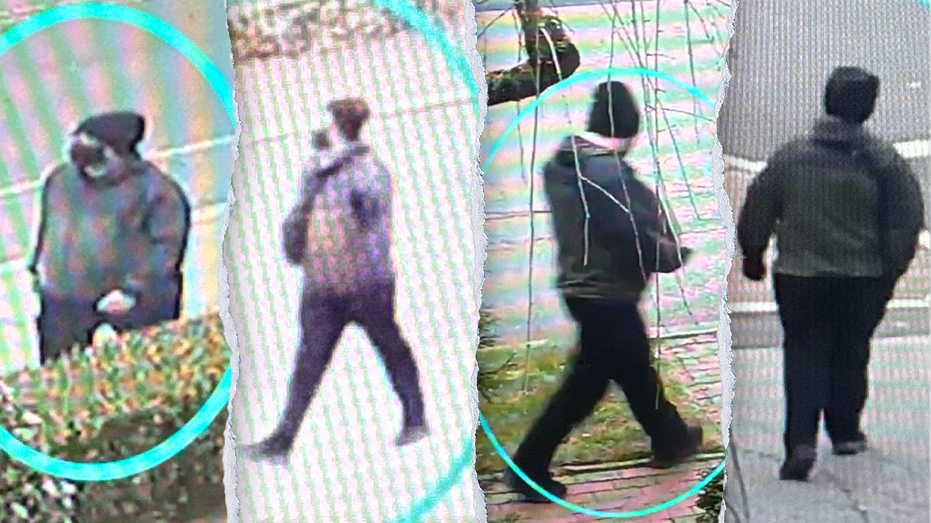
What stands out in this case is not just the masked gunman slipping into a study hall during finals week, but how little digital trace he appears to have left inside the building. Brown has reportedly deployed more than 1,200 cameras across more than 250 buildings. Yet in Barus and Holley — a major academic facility — police say there is no surveillance video showing the gunman inside.
That gap coincides with a period of clear institutional stress. Brown is confronting a $29 million budget deficit. In September, the university announced 48 layoffs and the elimination of 55 unfilled faculty positions, along with “modest, temporary reductions in information technology and facilities renewal.” Administrators openly acknowledged that operating cost reductions would affect service levels across campus.
Individually, neither budget cuts nor incomplete camera coverage are unusual. Together, in an era of rising grievance-fueled attacks, they create a new kind of risk: campuses that look heavily surveilled from the outside but still have critical blind spots inside — exactly the spaces where students gather, study, and feel safest.
How we got here: from open campuses to securitized, underfunded institutions
Historically, American universities were designed around openness: permeable campuses, unlocked buildings, and a culture that treated security as peripheral. Mass shootings and terrorist threats pushed that model toward a more securitized paradigm, but the shift has been slow and uneven.
- 2000: Brown reportedly had just 60 cameras, recording to VHS tapes. Surveillance was minimal and analog.
- Post-9/11 and post-Virginia Tech (2007): Universities nationwide ramped up threat assessment teams, emergency alerts, and digital surveillance, but often in an ad hoc, decentralized way.
- 2010s–2020s: Rising concerns about campus shootings, sexual assault, and mental health crises pushed schools to add more cameras, keycard systems, and police presence — while students and faculty increasingly raised civil liberties and privacy objections.
At the same time, higher education’s financial model began to fray: stagnant or declining enrollment in many regions, rising costs, growing dependence on tuition and endowments, and political scrutiny of “administrative bloat.” Covid-19 hammered budgets further. Even wealthy institutions are now juggling pressures to control costs, freeze hiring, and delay infrastructure upgrades.
Security often sits at the intersection of those tensions: expensive to maintain, politically sensitive, and invisible until something goes terribly wrong.
What Brown’s camera blind spot really tells us
Brown’s spokesperson emphasizes that cameras do not extend to every hallway, classroom, lab, and office — and argues it would be a security risk to disclose where they are. That’s a standard institutional line. What it obscures is a deeper reality: universities rarely treat camera placement as a coherent risk-based system. Instead, it’s often the product of incremental decisions, donor funding, past incidents, and competing campus politics.
Three structural problems emerge:
- Security as a capital project, not a living system. Cameras get installed when budgets and politics allow. But maintaining, upgrading, and integrating them — including analytics, storage, and monitoring — requires ongoing IT and facilities investment. Brown’s “temporary reductions” in those areas almost inevitably slow upgrades and reduce resilience.
- "Security theater" versus functional coverage. The number of cameras (1,200+) sounds robust, but what matters is coverage of critical pathways: entrances/exits, stairwells, transitional corridors, and high-density spaces. The absence of interior footage in Barus and Holley suggests either design blind spots or limits on how aggressively Brown wanted to surveil academic spaces.
- Privacy culture on campus. Many faculty and students resist pervasive interior surveillance. Universities often compromise by concentrating cameras at perimeters and select common areas, leaving precisely the kinds of interior spaces — study halls, labs, and seminar rooms — with lighter coverage.
In other words, this is likely not just a “Brown” problem. It’s a blueprint for vulnerabilities at many institutions that look secure on paper but have critical holes shaped by politics, budgets, and culture.
Grievance-driven violence and the campus environment
Experts cited in the case suggest the shooter may have a connection to the university and a grievance, though motive remains unknown. That hypothesis fits a broader pattern. In recent years, the U.S. has seen a rise in violence tied to perceived grievances against employers, institutions, or social groups.
When campuses implement layoffs and hiring freezes — especially in tight-knit academic communities — they create emotional shockwaves that extend beyond the employees directly affected. Research on workplace violence consistently finds that:
- Perceived humiliation, unfair treatment, or sudden job loss can be a key trigger in a small subset of cases.
- Violence often targets locations associated with the grievance-holder’s identity or experience, not just specific decision makers.
Former FBI supervisory special agent Jason Pack notes that in real cases, “grievance-driven violence often shifts toward where access is easiest and emotions are highest.” On a college campus, that often means student spaces, not the executive offices where budget decisions were made.
The timing — finals week — amplifies the emotional charge. Stress, sleep deprivation, and packed study halls create a high-density, high-anxiety environment. For someone harboring resentment toward the institution, those spaces can symbolically represent the university’s future and its perceived “chosen ones.”
The invisible trade-offs in campus security decisions
Brown’s decision to trim IT and facilities costs mirrors choices being made at hundreds of campuses, particularly those facing hidden or emerging deficits. The trade-offs often look small on paper: delaying camera replacements, consolidating monitoring staff, stretching maintenance cycles, deferring software upgrades.
The risk is that these “modest, temporary” cuts accumulate into a systemic fragility that only becomes visible in the aftermath of a crisis. Key questions that rarely make it into public debate include:
- How many cameras are actually monitored in real time versus passively recording?
- What percentage of cameras are currently fully operational and properly maintained?
- Are there clear minimum-security standards for academic buildings versus dorms and public-facing facilities?
- How are security and privacy concerns balanced — and who ultimately makes those calls?
Most universities do not publicly disclose this information, and there are reasonable security arguments for some opacity. But the Brown shooting demonstrates the cost of leaving these decisions to internal budget negotiations and technical staff without systematic, transparent risk assessment.
Expert perspectives: security, psychology, and campus culture
Security and behavioral experts point to several underlying themes in this case:
- Target familiarity: The suggestion that the shooter may be older than a typical undergraduate and possibly connected to the campus aligns with research showing that many targeted attacks are carried out by individuals with prior ties to the institution.
- Identity and grievance: In recent years, universities have become focal points in broader cultural and political conflicts. For some individuals, campuses are not just workplaces or schools but symbols of elitism, exclusion, or ideological opposition.
- Opportunity structure: Incomplete surveillance, open building access, and predictable student routines create opportunities for attackers who understand campus rhythms.
What’s striking here is how many of those factors intersect at Brown: a high-profile, elite institution; a period of layoffs and financial strain; and a security architecture that proved insufficient to capture the shooter’s movements inside a central building.
Data points: how unusual is Brown’s situation?
While comprehensive, up-to-date national data on campus surveillance coverage is limited, several trends are clear:
- After the Virginia Tech shooting in 2007, many universities dramatically expanded emergency communications, but camera deployments lagged behind, especially indoors.
- By the early 2020s, large universities often had hundreds to several thousand cameras, but coverage varied sharply between residence halls, athletic facilities, research labs, and classrooms.
- Budget pressures — particularly after the pandemic — led many institutions to prioritize enrollment management and student services over physical security upgrades.
Brown’s arc — from 60 VHS cameras in 2000 to more than 1,200 digital cameras today — is in line with broader trends. The problem is not the absolute number; it’s the mismatch between risk and placement, and between public expectations and operational reality.
What this means for students, parents, and universities
This incident is likely to reshape conversations around campus safety in several ways:
- Parents will demand more transparency. Expect more questions on campus tours and in admissions forums about where cameras are placed, how access is controlled, and how fast institutions will communicate during crises.
- Students will confront the tension between privacy and protection. Calls for greater interior surveillance may come from the same communities that, rightly, worry about overpolicing and the surveillance of marginalized students.
- Universities will be forced to quantify “acceptable risk.” In an era of constrained budgets, not every space can be hardened. Institutions will have to decide — and defend — which spaces get priority.
- Security will move from operations to governance. Boards and faculty senates are likely to be pulled more directly into conversations that have historically been relegated to campus police and facilities staff.
The Brown shooting also underscores a moral imperative: when universities undertake layoffs and cost-cutting — decisions that can heighten stress and grievance — they must simultaneously reassess their threat landscape. Economic austerity without security reassessment is a recipe for blind spots, both literal and figurative.
What to watch for next
Several developments in this case will have implications beyond the immediate investigation:
- Investigative findings on access and planning. If it emerges that the shooter exploited specific knowledge of Brown’s camera blind spots or access points, that will raise urgent questions about insider risk and the security of system information.
- Brown’s post-crisis reforms. Will the university quietly add more cameras and restrict access, or will it engage in a public, transparent process that includes students and faculty in redefining the balance between safety and privacy?
- Copycat and ripple effects. High-profile campus attacks can inspire copycat behavior or shift perceptions of vulnerability at similar institutions, particularly other well-known, open-architecture campuses.
- Policy responses. State legislators and accrediting bodies may push for minimum security standards, reporting requirements, or new funding mechanisms for campus safety infrastructure.
The bottom line
Two students — Ella Cook of Alabama and Mukhammad Aziz Umurzokov of Virginia — are dead, nine more are injured, and a community is traumatized. The manhunt for the shooter will eventually end, likely through the combination of digital breadcrumbs and public tips that investigators describe. But if the conversation stops there, the most important lessons will be lost.
Brown’s tragedy exposes the hidden architecture of risk on American campuses: a patchwork of security systems built up over decades, strained by austerity, constrained by privacy concerns, and increasingly outmatched by the reality of grievance-fueled violence. The question now is whether universities — and the public — are willing to confront those trade-offs honestly, before the next blind spot becomes the next crime scene.
Topics
Editor's Comments
One under-discussed dimension of the Brown case is how much of our security discourse remains reactive and individualized. Public attention centers on “catching the killer” and parsing the shooter’s personal pathology—both necessary, but incomplete frames. What rarely gets scrutinized with the same urgency are the institutional and structural choices that shape risk long before an attack: budget allocations, governance structures, and the quiet compromises between privacy and surveillance. Universities, particularly wealthy ones, like to present themselves as both bastions of open inquiry and competent stewards of student safety. This incident forces a harder question: are their internal decision-making processes about security actually democratic, evidence-based, and transparent, or are they driven by liability, optics, and short-term financial pressures? If the answer is the latter, then we should expect Brown not to be an anomaly but an early, visible symptom of a much wider problem across higher education.
Like this article? Share it with your friends!
If you find this article interesting, feel free to share it with your friends!
Thank you for your support! Sharing is the greatest encouragement for us.