Dinosaurs on the Downhill: How a Massive Footprint Find Could Reshape the 2026 Winter Olympics Legacy

Sarah Johnson
December 17, 2025
Brief
A vast dinosaur footprint site near the 2026 Milan-Cortina Olympics reveals a deeper story about climate change, geotourism, and how Italy will balance Olympic spectacle with deep-time scientific heritage.
Dinosaurs, the Winter Olympics, and the Politics of Deep Time in the Italian Alps
When athletes descend on Bormio for the 2026 Milan-Cortina Winter Olympics, they’ll be racing less than a mile from what may be one of Europe’s most spectacular windows into the Triassic Period: an estimated 20,000 dinosaur footprints etched into a high, shaded rock face in Stelvio National Park. On its face, it’s a feel‑good curiosity story — Olympians skiing where “giants once roamed.” But underneath that headline is a much more consequential collision of themes: climate change, geotourism, conservation economics, and how societies manage “deep time” heritage in spaces built for spectacle and speed.
This discovery is not just about dinosaurs. It’s about how we will choose to value a place that now hosts three temporal layers at once: prehistoric ecosystems, 20th‑century ski development, and a 21st‑century mega‑event under the shadow of a warming planet.
From Ancient Shoreline to Olympic Venue: Why This Area Matters Geologically
The footprints, likely from long‑necked, Plateosaurus‑like herbivores living around 210 million years ago, were found on a north-facing rock wall at 7,900–9,200 feet in Stelvio National Park near the Swiss border. That alone tells a story.
- Triassic coastal plain, Alpine summit today: What is now high Alpine terrain was once a low‑lying coastal environment at the edge of the Tethys Ocean. The tracks record herd movements across mudflats or coastal plains, later buried by sediments, lithified, uplifted and folded during the formation of the Alps, and finally exposed by erosion and glacial retreat.
- A new puzzle piece for European dinosaur evolution: Triassic trackways in Europe have been found in Germany, Switzerland, and the Dolomites, but a site with tens of thousands of footprints in this part of the Alps is unusual. It potentially offers a continuous record of behavior, population density, and environmental change at a critical transition period just before the Jurassic diversification of dinosaurs.
- A non‑obvious site: The fact that a wildlife photographer — not a research expedition — found the tracks on a shaded, hard‑to‑reach wall illustrates how underexplored many high‑mountain rock faces still are, and how citizen scientists are increasingly altering paleontology’s discovery map.
In paleontological terms, this is less a quirky side note to the Olympics and more akin to suddenly realizing one of the world’s better natural “archives” of Late Triassic dinosaur behavior has been sitting above a major ski resort unnoticed.
Climate Change as an Invisible Co‑Discoverer
Though not mentioned in the initial reporting, climate dynamics are almost certainly part of this story. Across the Alps, receding glaciers and thawing permafrost have been exposing rock faces and sedimentary layers previously sealed under ice and snow.
- In the Alps and elsewhere, new fossils and trackways are increasingly found along the retreating edges of glaciers and snowfields.
- The north-facing, mostly shaded wall helps preserve the prints, but the broader region is warming faster than the global average. That accelerates erosion, rockfall, and freeze–thaw cycles that can both expose and destroy fossils.
So the discovery isn’t just about what the Triassic is revealing; it’s also a reminder of what the Anthropocene is eroding. The same climatic forces that reveal these tracks may shorten their lifespan — and that raises urgent questions about documentation, 3D scanning, and possibly protective measures before the Olympic spotlight fades.
Olympic Spectacle Meets Deep Time Heritage
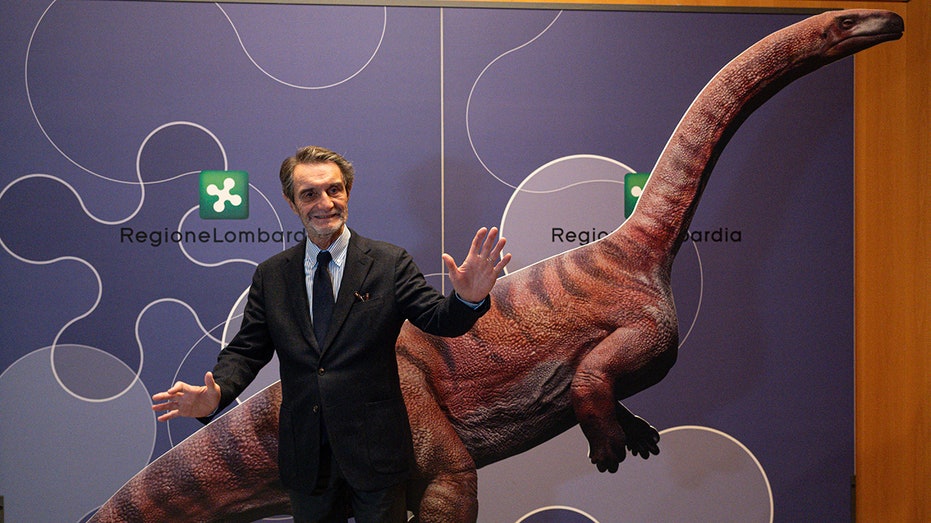
Governor Attilio Fontana’s description of the site as a “gift for the Olympics” hints at a powerful but tricky dynamic: the coexistence of a mega‑event and a fragile scientific resource.
Global sporting events have a mixed track record when it comes to heritage and environment:
- Environmental cost of winter Games: Past Winter Olympics have been criticized for deforestation, water diversion for artificial snow, and habitat disruption. The 2026 Games were already under scrutiny for their environmental footprint in sensitive Alpine environments.
- Heritage as branding: Host regions often lean heavily on cultural and natural heritage to market the Games — think archaeological backdrops, historic cityscapes, or “untouched nature.” The dinosaur tracksite could easily become a narrative asset in promotional campaigns, even if the public never physically accesses it.
- Infrastructure pressure: Increased visitor numbers, media presence, and logistical demands risk pushing nearby areas toward more development: new trails, viewing platforms, or helicopter overflights — all of which could threaten geologically fragile surfaces.
Authorities say there are no current plans to open the site to the public. That may be as much about safety and feasibility as preservation: at nearly 2,400–2,800 meters, on a shaded wall, with potentially unstable rock, this is not a casual tourist walk. But “no plans” before the Games is not the same as a long‑term conservation strategy.
Economic Temptation vs. Scientific Value
The Lombardy region and nearby resorts stand to benefit from the Olympics and from any post‑Games boost in tourism. A unique paleontological site so close to a world‑renowned ski area is a marketer’s dream: “Ski in dinosaur country” practically writes its own brochure copy.
Yet large tracksites are notoriously vulnerable. Even well‑intentioned tourism can be damaging:
- Foot traffic can abrade surfaces and micro‑detail in footprints.
- Freeze–thaw cycles are amplified when surfaces are cleared or altered to create viewing areas.
- Vandalism and unauthorized sample collection become real risks in unmonitored zones.
Other countries offer cautionary and hopeful precedents:
- China’s Zhangjiawa tracksites saw significant degradation as tourism outpaced protective infrastructure.
- Portugal and Spain have developed controlled “geopark” models, where tracksites are integrated into education and tourism under strict oversight, often with elevated walkways and limited direct access.
If Lombardy opts to turn this “gift” into a long‑term asset, the political choices will revolve around how much immediate tourist revenue is sacrificed for scientific integrity — and how quickly protective measures like 3D mapping, detailed stratigraphic studies, and legal designations are implemented.
What the Tracks Could Tell Us About Life Before the Dinosaurs’ Reign
Scientifically, a site with 20,000 footprints from the Late Triassic could reshape understanding of dinosaur behavior and environment in pre‑Jurassic Europe.
- Herd behavior and social structure: Dense, multi‑directional trackways can show whether these herbivores moved in organized groups, how many individuals were present, and whether there were mixed age classes walking together.
- Paleoenvironment reconstruction: Track spacing and depth provide clues about substrate consistency (mud vs. sand), water levels, and slopes — all of which help reconstruct the ancient coastal plain’s climate and geography.
- Biogeography: Comparing these tracks with similar sites in the Dolomites and northern Europe could refine maps of dinosaur distribution before continental configurations shifted further. It may show whether certain herbivores were more widespread than previously thought.
- Triassic–Jurassic transition: This is a period marked by major extinctions and ecological reshuffling. Detailed dating of the track-bearing layers could link the site to broader climatic or volcanic events known from global geological records.
In other words, this is not just a curiosity. It’s potentially a high‑resolution behavioral and environmental record at a turning point in Earth’s history.
The Overlooked Story: Citizen Science and Underfunded Paleontology
The role of wildlife photographer Elio Della Ferrera underscores a quiet reality: many major paleontological finds are no longer made exclusively by full‑time scientists. In mountainous and remote areas, photographers, hikers, and local residents are often the first to spot anomalies.
This has two implications:
- Need for rapid-response science funding: Once a site like this is identified, research teams need resources to survey, map, and protect it quickly, especially if media coverage and political attention are about to increase. Many European natural history institutions operate with limited field budgets.
- Public education as protection: Training local guides, outdoor photographers, and park staff in basic geoconservation principles can turn them into the first line of defense against accidental damage or illicit collecting.
Here, the Olympics might paradoxically help: increased attention can be leveraged to secure national or EU funding for urgent documentation and conservation, if policymakers frame the site as part of a broader scientific legacy rather than an Olympic novelty.
Looking Ahead: What to Watch Between Now and the Games
Several key developments will determine whether this discovery becomes a long‑term asset or a brief media diversion.
- Formal protection status: Will regional or national authorities move to designate the tracksite as a protected geosite with explicit legal safeguards before visitor pressure grows?
- Research mobilization: Are paleontological teams from Italy and abroad able to start detailed mapping and high‑resolution 3D scanning within the next field seasons? Delays increase the risk of both natural and human damage.
- Olympic communications strategy: The way organizers talk about the site matters. Framing it as a fragile scientific treasure rather than an accessible attraction could temper expectations and reduce pressure for hurried public access.
- Post‑Games planning: Perhaps the most important period will be after February 2026, when media attention wanes but tourism remains elevated. This is when plans for a permanent interpretive center, virtual exhibits, or controlled guided visits might emerge.
Speculatively, one likely scenario is a hybrid approach: the original tracksite remains off‑limits, while high‑quality replicas and digital reconstructions are showcased in Bormio or Milan, turning the discovery into an educational anchor for the region without sacrificing the integrity of the original rock surfaces.
The Bottom Line
The juxtaposition of Olympic skiers and Triassic dinosaurs is more than a media-friendly coincidence. It compresses 210 million years of Earth history into a single Alpine valley and forces a set of choices about what we value in that landscape: short‑term spectacle, long‑term science, or some fragile balance of both.
Handled thoughtfully, the discovery could turn the 2026 Winter Games into a platform for a deeper conversation about climate, deep time, and stewardship. Handled poorly, it risks becoming another case study in how mega‑events burn through natural and scientific capital for a few weeks of global attention.
Key Takeaways
- The Stelvio National Park tracksite is potentially one of Europe’s richest Triassic dinosaur footprint records, with major implications for understanding pre‑Jurassic ecosystems.
- Climate change likely aided the exposure of the tracks but also threatens their long‑term preservation through accelerated erosion and instability.
- The proximity to an Olympic venue creates both opportunity (funding, visibility) and risk (tourism pressure, commercialization) for the site’s conservation.
- Citizen discovery highlights the need for rapid scientific response mechanisms and better integration of the public into geoconservation efforts.
- Policy decisions made in the next few years will determine whether this “gift for the Olympics” becomes a durable scientific legacy or a fleeting marketing hook.
Topics
Editor's Comments
What’s striking about this story is how easily it could have been framed as a novelty sidebar to Olympic coverage. Yet when you peel it back, it becomes a case study in how we treat deep-time heritage in the Anthropocene. We’re looking at a site created by slow geological processes over hundreds of millions of years, suddenly thrust into a two-week global spectacle built on speed and transience. That contrast should make policymakers and the public uncomfortable in a productive way. It raises hard questions: Do we have governance structures that can respond quickly enough to protect something newly recognized as globally important? Are our sporting institutions prepared to see themselves as stewards, not just consumers, of the landscapes they borrow? And perhaps most unsettling, how many other ‘Stelvios’ are being quietly exposed by warming and erosion without any witness at all? The Bormio discovery offers Italy and the Olympic movement a rare chance to show that mega-events can amplify, rather than cannibalize, scientific and environmental value. Whether they take that chance will tell us a lot about our priorities in an increasingly fragile world.
Like this article? Share it with your friends!
If you find this article interesting, feel free to share it with your friends!
Thank you for your support! Sharing is the greatest encouragement for us.