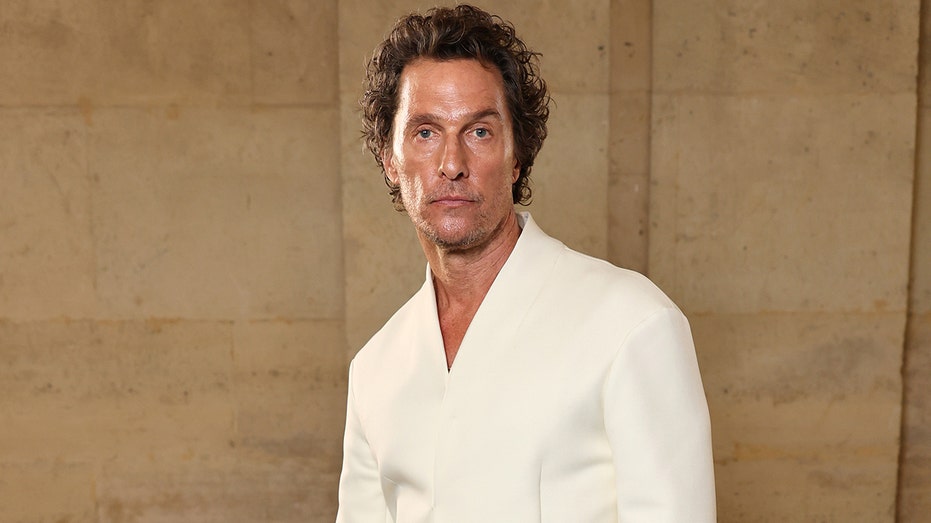
From Almost Monk to Moral Storyteller: The Deeper Meaning of Matthew McConaughey’s Abandoned Vocation

Sarah Johnson
December 16, 2025
Brief
Matthew McConaughey’s near‑decision to become a monk reveals far more than a quirky anecdote. This analysis explores what it says about celebrity, spirituality, modern storytelling, and our search for meaning.
Matthew McConaughey’s Abandoned Monkhood: What His Near‑Vocation Reveals About Fame, Faith, and the Future of Storytelling
Matthew McConaughey’s admission that he seriously considered becoming a monk for more than a decade sounds like late‑night talk show trivia. Beneath the punchline, though, is a revealing glimpse into the psychological cost of modern celebrity, the shifting role of spirituality in secular culture, and the emerging idea that storytelling itself can be a kind of public vocation—almost a lay priesthood of the digital age.
A star who almost opted out of the world
McConaughey recounts that after a formative year in Australia in 1988–89, he imagined a monastic or even hermit-like life for roughly ten years. Crucially, it wasn’t a fleeting fantasy: he sought discernment from an actual monk who told him, in essence, you’re not meant for silence; your calling is communication.
That conversation reframed his life path. Instead of disappearing into contemplative seclusion, McConaughey became the public figure we know: an Oscar‑winning actor, bestselling memoirist, aspiring political voice, and now author of a hybrid spiritual‑self‑help book of “Poems & Prayers.” This fork in the road offers a case study in how spiritual longing, media attention, and personal branding now intersect.
Celebrity and the ancient temptation to withdraw
Monastic withdrawal is not a novel impulse; it is more than 1,500 years old in Christian traditions and even older in Eastern religions. But McConaughey’s story sits at the intersection of that ancient instinct and a uniquely modern pressure: life in a hyper‑visible, always‑online culture.
Historically, three patterns stand out:
- The desert impulse: In the 3rd–5th centuries, Christian “desert fathers and mothers” left cities for isolation in Egypt and the Middle East, rejecting what they saw as moral decay and distraction. Their withdrawal was a critique of mainstream society.
- Monasticism as an alternative system: Medieval monasteries became centers of learning, healthcare, and economic organization. Monks did not just flee the world; they built parallel institutions with different values.
- Romanticizing renunciation: In the 20th century, Western seekers increasingly idealized monks, gurus, and ashrams—often as antidotes to consumerism and careerism. The monk became a cultural symbol of authenticity against a backdrop of perceived superficiality.
McConaughey’s decade-long attraction to monastic life aligns with a broader trend. Surveys from the Pew Research Center show that while formal religious affiliation is declining, interest in spirituality, meditation, and retreat is rising. Retreat centers report growing demand from high-income professionals and creatives who temporarily unplug from demanding careers. Celebrities like David Letterman, Richard Gere, and Russell Brand have all publicly flirted with intensive spiritual paths or retreat-like lifestyles.
Seen through that lens, McConaughey’s monastic fantasy reads less like eccentricity and more like the high-profile version of something many people feel: the desire to escape constant noise in favor of meaning, focus, and silence.
When a monk says “stay in the world”
The most counterintuitive detail is that the monk—symbol of withdrawal—discouraged McConaughey from retreating. He identified him instead as a “communicator” and “storyteller” who should not hide from society.
That advice echoes a long-standing tension inside religious traditions: the debate between contemplative and active vocations. Not everyone is called to the cloister; some are urged to live their calling in the world. The monk’s guidance effectively translated that distinction into secular terms: your gifts aren’t for the monastery; they’re for the public square.
This is notably different from the more common celebrity narrative of burnout, rehab, or a temporary retreat from fame. Instead of framing silence as a healing break from a toxic industry, the monk framed speech as a responsibility. In a media ecosystem where most messaging is commercial, self‑promotional, or partisan, the notion that a religious figure would ask someone to use mass communication as a vocation is striking.
McConaughey’s later career arc suggests he took that notion seriously: his memoir “Greenlights” reads like a mix of spiritual reflection, self‑help, and road‑movie storytelling; his speeches at universities and political events lean heavily on moral language, purpose, and “calling.” He seems to see storytelling as more than entertainment—it’s his chosen way of offering guidance, or at least affirmation, to a broad audience.
Storytelling as a secular priesthood
Underneath the anecdote is a broader cultural shift: as traditional clergy lose influence, secular storytellers increasingly function as moral reference points. Actors, podcasters, and influencers now frame life choices, model relationships, and narrate what “a good life” might look like.
McConaughey’s transition—from almost‑monk to spiritualizing celebrity—mirrors this shift. Consider the elements:
- Confessional mode: Like many modern public figures, he shares intimate details—marriage routines, bedroom size, parenting struggles—as moral lessons, not just gossip. This mimics the confessional tradition repurposed for entertainment.
- Everyday rituals as moral metaphors: His insistence that a queen‑size bed kept his marriage close is more than lifestyle advice. It’s a small parable about proximity, limits, and the danger of comfort eroding intimacy.
- Hybrid genres: Books like “Poems & Prayers” blur lines between liturgy and lifestyle: neither fully religious text nor secular self‑help, but a mash‑up designed for a spiritually curious, institution‑skeptical audience.
In a fragmented media environment, this kind of storytelling can act like a soft form of ethical guidance. People who would never read a religious text might internalize their moral frameworks through the stories celebrities tell about marriage, parenting, work, and meaning.
The psychology of almost walking away
McConaughey’s long attraction to monkhood wasn’t just about religion. It reflects core psychological tensions many high achievers experience:
- Visibility vs. authenticity: Being globally recognizable can intensify the desire to find spaces where you’re not performing. Monastic life offers the ultimate non‑performance: anonymity, routine, and a stable identity not tied to public approval.
- Freedom vs. constraint: The idea of a hermit’s life—fixed rules, rigid routines—can paradoxically feel freeing for people whose careers demand constant improvisation and self‑reinvention.
- Noise vs. meaning: The entertainment industry thrives on novelty and distraction. Monastic life is explicitly anti‑novelty; it bets everything on depth over variety.
Psychologists note that “escape fantasies” often peak during transitional phases—after early career success but before a stable life narrative has formed. For McConaughey, the Australia period came just before his acting breakthrough, and his continued contemplation of monkhood over a decade suggests a persistent question: is my life about performance or purpose?
By seeking out a monk as a kind of vocational counselor, McConaughey turned a personal crisis of direction into a discernment process. That’s a pattern more people are adopting—using spiritual advisors, therapists, or coaches not just to solve problems, but to choose a life path.
From monastery to marriage: why the bed anecdote matters
At first glance, his comments about ditching a king‑size bed in favor of a queen sound like light talk‑show filler. But placed alongside his near‑monastic turn, they reveal a consistent preoccupation: how physical space shapes relational and spiritual closeness.
There’s research to support this intuition. Studies in environmental psychology suggest that physical proximity can influence perceived intimacy and conflict resolution. A 2014 paper in the Journal of Environmental Psychology found that couples who maintain regular physical closeness (including shared bedtime routines) report higher relationship satisfaction, controlling for other factors.
McConaughey’s story of feeling his wife was “a football field away” in a king‑size bed—and his almost comic insistence that a smaller bed improved his marriage—translates those academic findings into an easily relatable image. It’s one more example of how he uses personal narrative as micro‑moral teaching: the size of the bed becomes shorthand for the size of the emotional gap you’re willing to tolerate.
What mainstream coverage is missing
Most entertainment coverage reduces this story to a quirky anecdote: “McConaughey almost became a monk.” What’s overlooked is what his pivot says about three larger trends:
- The rise of “spiritual but secular” celebrities: A growing number of public figures are crafting brands that mix spirituality, self‑help, and lifestyle, without formally aligning with religious institutions.
- The outsourcing of moral authority: As trust in formal religious and governmental institutions declines, people increasingly look to culture makers—for better or worse—for cues on meaning, ethics, and community.
- The monetization of introspection: The same inner turmoil that once might have driven someone silently into a monastery now often becomes content: memoirs, talk‑show segments, podcasts, and speaking tours.
McConaughey exemplifies this pivot: the crisis that could have removed him from public view instead became a story he tells about himself, a narrative that deepens his brand as a reflective, grounded figure rather than a purely glamorous one.
What this means for audiences
For viewers and readers, stories like this shape expectations about what a “good life” looks like under late capitalism:
- Integration, not escape: The message isn’t “leave everything and become a monk,” but “bring monastic values—simplicity, presence, discernment—into a public, relational life.”
- Self‑knowledge as prerequisite: McConaughey’s decade of contemplation and his consultation with a monk model a slower, more reflective approach to life decisions than the instant-pivot culture of social media.
- Domestic spaces as moral spaces: Even trivial household choices—bed size, who shares what room, how close you sleep—are framed as spiritual and relational decisions.
In a quieter way, the story invites people to ask: if a monk looked at my life, would they tell me to withdraw—or to step more deeply into my existing relationships and work, but with clearer intention?
Looking ahead: the next phase of McConaughey’s “calling”
McConaughey’s continued language—“I’ve still got time” to pursue a different calling—suggests he doesn’t see his life trajectory as fixed. As he ages out of certain Hollywood archetypes, several paths are plausible:
- More explicitly spiritual content: Expect further books, talks, or even multimedia projects that lean more heavily into prayer, ritual, and moral advice.
- Civic or political storytelling: He has already flirted with electoral politics and issue advocacy; the storyteller-as-moral-voice role could easily extend into sustained civic engagement.
- Retreats and “modern monastery” experiments (speculative): Given market demand for curated spiritual experiences, it’s conceivable he could host or sponsor retreat-style events blending reflection, storytelling, and community-building.
More broadly, his trajectory is a bellwether for how other public figures may navigate spiritual longing: not by leaving the stage, but by reframing their career as a kind of secular ministry of stories, rituals, and relational advice.
The bottom line
McConaughey’s almost‑monastic detour isn’t just an amusing footnote in a famous actor’s life. It’s a window into how modern culture retools ancient religious instincts—solitude, discernment, vocation—for an era of celebrity, platforms, and personal brands.
A monk once told him: don’t disappear; speak. The result is a career that treats storytelling as something close to sacred work—whether he’s talking about the cosmos in “Interstellar,” the chaos of Wall Street, or the size of the bed that keeps him and his wife shoulder‑to‑shoulder. In a world hungry for meaning but wary of institutions, that combination of vulnerability, spirituality, and entertainment is likely to become less an exception and more a model.
Topics
Editor's Comments
What makes this story more than a celebrity curiosity is the monk’s counterintuitive advice: do not retreat. It raises a provocative question about responsibility in a media‑saturated age. If you possess an outsized platform, is withdrawal a moral luxury you can no longer afford? Or, conversely, is the more radical act to resist the gravitational pull of visibility altogether? McConaughey accepted the premise that his communication gifts obligated him to remain in public life. That choice aligns with our cultural tendency to equate reach with impact—but it’s worth interrogating. Monastic traditions have long argued that unseen, non‑instrumental practices can exert a different kind of influence, precisely because they are not optimized for audience engagement. As more public figures rebrand introspection as content, we should ask whether the marketplace of stories is truly an adequate substitute for spaces of genuine, consequence‑free silence. McConaughey’s path might inspire millions, but his almost‑path—the one where he disappears from view—invites an equally urgent examination of what we lose when everything, even spiritual crisis, becomes part of the show.
Like this article? Share it with your friends!
If you find this article interesting, feel free to share it with your friends!
Thank you for your support! Sharing is the greatest encouragement for us.