Inside the Goa Nightclub Fire: How India’s Safety Laws Fail Where It Matters Most

Sarah Johnson
December 8, 2025
Brief
The Goa nightclub fire that killed 25 isn’t an isolated accident but a symptom of India’s chronic fire safety failures, weak regulation, and tourism-driven incentives to ignore life-and-death risks.
Goa Nightclub Fire Exposes India’s Deadly Safety Gap Between Law and Reality
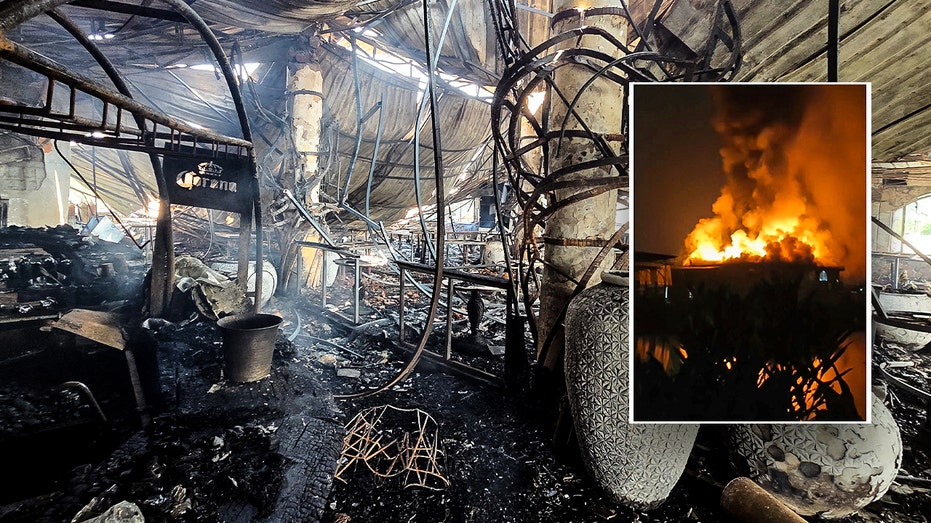
The blaze that killed 25 people at the Birch by Romeo Lane nightclub in Goa is being described as a tragic accident. It is not. It is the predictable outcome of a system in which fire safety rules exist largely on paper, enforcement is sporadic and negotiable, and nightlife and tourism are expanding inside infrastructure designed for a different era.
To understand why 25 people died in minutes on a dance floor in one of India’s most developed tourist hubs, you have to look well beyond the immediate cause – fireworks, a gas cylinder, or faulty wiring – and into the structural incentives, regulatory culture, and economic dependence that shaped every decision long before the first spark.
Beyond the Flames: Why This Story Matters
This fire is not just about one nightclub in Arpora. It reveals three converging pressures:
- A nationwide pattern of mass-casualty fires in commercial and leisure spaces, from cinemas to coaching centers to bars.
- A tourism-driven economy where political and financial incentives often favor business continuity over strict enforcement.
- An urban culture where young, mobile Indians and international tourists are packing into venues whose basic design assumes that nothing will ever go wrong.
When you connect these dots, the Goa incident looks less like an isolated disaster and more like a case study in how India’s rapid consumer and leisure boom is colliding with legacy infrastructure and weak regulation.
How We Got Here: The Historical Pattern of Fire Disasters
India’s history with deadly fires in public venues is long and disturbingly repetitive. Every few years, a fresh tragedy triggers promises of reform, inquiries, and temporary crackdowns – followed by drift back to business as usual.
Some of the most infamous cases illustrate how little the fundamentals have changed:
- Uphaar cinema fire, Delhi (1997): A transformer blast triggered a fire in a crowded cinema hall. With exits blocked and emergency lighting absent, 59 people died, many trapped in their seats by locked doors. The case dragged through courts for decades and became a symbol of impunity for powerful owners.
- AMRI hospital fire, Kolkata (2011): A blaze in a private hospital killed over 90 patients, many unable to move. Illegal storage of combustible materials and blocked exits were central to the disaster.
- Surat coaching center fire, Gujarat (2019): At least 22 students died when a fire engulfed a commercial coaching center built on unauthorized upper floors with a makeshift staircase and no usable emergency exit.
- Delhi Anaj Mandi factory fire (2019): A building packed with small industrial units and workers living on-site saw 43 killed in a pre-dawn fire, again amid illegally altered layouts and blocked escape routes.
Across these cases, inquiry reports repeat the same themes: non-compliance with fire norms, corruption or negligence in issuing licenses, inadequate inspections, poor emergency preparedness, and absence of accountability beyond a few scapegoats.
The Goa nightclub fits this pattern almost point for point: narrow exits, congestion, questions around safety clearances, and an entertainment venue operating at peak capacity in the middle of tourist season with minimal margin for error.
Goa’s Tourism Boom and the Shadow Side of the Night Economy
Goa’s economy has transformed over the past three decades from a sleepy coastal state into one of India’s most prominent tourism and nightlife destinations. Officially, tourism contributes around 16–17% of Goa’s GDP, but indirectly the figure is likely much higher when you count informal jobs, rentals, and service sectors.
This economic dependence shapes how regulations are enforced. Local businesses – especially bars, nightclubs, and beach shacks – operate in a system where:
- Licenses for alcohol, music, and construction are tightly controlled but also politically sensitive.
- Enforcement drives often spike after specific incidents or court orders, but are relaxed during peak seasons.
- Informal payments and “adjustments” can bridge the gap between what regulations demand and what businesses are actually willing to spend on safety.
In Arpora and nearby areas, the nightlife scene has exploded with high-density venues promising immersive experiences – LED-heavy stages, pyrotechnics, bottle service, and packed dance floors. Many of these spaces are retrofit or modular constructions, assembled quickly to catch seasonal demand and rarely designed from the ground up with evacuation and fire behavior in mind.
The Chief Minister’s admission that the club had “flouted safety norms” is telling. If norms were indeed flouted, it’s unlikely that this was unknown to local officials; more likely, it was tolerated until disaster made that position untenable.
What Likely Went Wrong Inside the Club
Eyewitness accounts point to an all-too-familiar chain reaction:
- Fireworks or firecrackers used indoors during a dance performance, likely near combustible decor, ceiling materials, or sound insulation.
- Rapid ignition of flammable materials, producing thick, toxic smoke in seconds.
- Panic and a “stampede-like situation” as more than 100 people tried to flee simultaneously through narrow exits.
- Some patrons fleeing toward the kitchen area, assuming it was a safe exit, only to become trapped along with staff in a dead-end or semi-enclosed space.
- Congestion on the first floor, with people unable to locate or access clearly marked, unobstructed emergency exits.
Modern fire science shows that in a crowded, enclosed venue with synthetic materials, flashover – when all exposed combustibles erupt almost simultaneously – can occur within 3–5 minutes. This leaves a very narrow window for survival, especially if exits are few, poorly marked, or obstructed.
Goa’s building and fire safety norms, like the National Building Code (NBC), do address occupancy limits, exit widths, and fire suppression systems. The gap here is not the absence of rules, but their systematic under-enforcement and the willingness to treat them as optional overhead rather than non-negotiable life safety requirements.
The Deeper Causes: Governance, Incentives, and Impunity
When leaders promise a “magisterial inquiry” after tragedies, seasoned observers in India understand the coded language. Such inquiries can identify proximate causes but rarely challenge the deeper structures that allowed the risk to accumulate.
Several structural factors stand out:
- Fragmented regulation: Fire safety, building permissions, excise licenses, and local trade permits fall under different authorities. This allows responsibility to be diffused: each department can claim that compliance in its narrow domain was “in order.”
- Short political cycles and local patronage: Nightlife and hospitality businesses often have direct links to local power networks. Cracking down aggressively can carry political costs, especially in a state as reliant on tourism as Goa.
- Economic incentives to overfill venues: Peak tourist season is when clubs earn a disproportionate share of their annual revenue. The pressure to maximize crowd density is enormous, often overwhelming concerns about evacuation capacity or safe operating practices.
- Low probability, high impact risk – and a cultural discounting of safety: For owners, investing in robust fire safety – sprinklers, fire-retardant materials, staff training, and regular drills – is costly and yields no visible benefit until disaster strikes. In a low-enforcement environment, cutting corners becomes rational behavior.
These dynamics create a recurring pattern: after each fire, officials vow to “take strict action,” conduct inspections, and seal a few high-profile establishments. Over time, as public attention fades, enforcement softens, connections are used to reopen venues, and the cycle resets.
What Experts Say: From Building Codes to Behavioral Risks
Fire and urban safety experts have been warning for years that India is sitting on a much larger latent risk in its commercial and entertainment spaces.
Urban safety researcher Dr. Anupam Sarmah notes that India’s National Building Code is “relatively modern on paper” but “treated as a suggestion rather than a binding standard” in many states, especially for smaller and mid-sized private establishments. He points out that in many cities, “the number of licensed fire safety inspectors is a fraction of what would be required to monitor actual built-up areas.”
Crowd risk analyst G. Keith Still, who has worked globally on crowd disasters, has repeatedly emphasized that once densities exceed roughly 4–5 people per square meter, normal movement becomes difficult and panic can quickly convert into crushing forces that kill, even without fire. In a nightclub scenario, with loud music and dim lighting, perception of risk is delayed and reaction time is shortened.
Indian fire safety consultants have also warned about indoor pyrotechnics in poorly ventilated spaces. After major nightclub fires in places like Bucharest (2015) and São Paulo (2013), some countries tightened restrictions on indoor fireworks and flammable acoustic materials. India has not significantly updated or enforced such specific provisions in nightlife contexts, leaving it vulnerable to the same risk profile.
Data: A Chronic, Under-Reported Crisis
Official fire data in India almost certainly underestimates the true scale of the problem, but even the available statistics are sobering:
- According to the National Crime Records Bureau (NCRB), thousands of people die annually in fire-related incidents, with urban commercial and residential fires contributing a significant share.
- One independent analysis of NCRB data for the 2010s suggested that more than 17,000 people died in commercial and residential fires over a ten-year period, though precise categorization varies.
- Only a minority of urban buildings – often large malls, five-star hotels, or newer corporate facilities – have fully compliant fire detection and suppression systems. Smaller commercial and entertainment venues lag far behind.
In this context, the Goa nightclub fire is both a statistical blip and an emblem of a systemic safety deficit impacting millions who work, live, party, and travel in India’s dense urban environments.
Implications: Tourism, Liability, and India’s Global Image
Goa’s brand as a tourist destination has survived drug raids, crime headlines, and beach erosion. But repeated safety failures hit differently, particularly for international tourists from markets where fire and crowd safety are strictly regulated.
The global tourism industry is increasingly sensitive to risk perception. Repeated stories of stampedes, fires, and infrastructure failures can cumulatively influence travel decisions, insurance premiums for tour operators, and the willingness of foreign promoters to stage events.
There is also the evolving question of legal liability. As India’s middle class becomes more legally aware and as global hospitality chains expand, the expectation of enforceable safety standards will rise. If domestic families and foreign visitors begin to pursue high-profile civil claims and cross-border litigation, the cost of non-compliance could shift from moral tragedy to financial and reputational crisis.
What Needs to Change – and What to Watch Next
Whether this fire becomes another entry in a long list of preventable disasters or a genuine turning point will depend on concrete structural changes, not just arrests and inquiries. Key areas to watch:
- Statewide audit of nightlife venues: Will Goa conduct and publish a transparent, independent safety audit of bars, clubs, and event spaces – and will closures be sustained, not symbolic?
- Public disclosure of compliance: A visible rating or certification system for fire safety in public venues could empower consumers and shift market incentives. Without public data, everything happens behind closed doors.
- Criminal accountability up the chain: Do prosecutions stop at mid-level managers, or do they reach owners and complicit officials who approved or ignored non-compliant structures?
- Reform of permitting and inspections: Digitized, time-stamped inspection records and random third-party audits could reduce scope for manipulation. The question is whether there is political will to confront entrenched patronage networks.
- Targeted bans and design updates: Restrictions on indoor pyrotechnics in venues without certified fire systems, mandatory fire-retardant interiors, and minimum exit-width standards for any venue above a certain occupancy.
If these changes don’t materialize, the most honest prediction is simple: this will happen again, in another city, with another crowd that assumed basic safety was someone else’s responsibility.
The Bottom Line
The Goa nightclub fire is not an isolated act of fate. It’s the visible tip of an iceberg built from weak enforcement, economic pressure, design complacency, and a cultural habit of tolerating “adjustments” in life-and-death regulations.
Until India treats fire safety in leisure and commercial spaces as a non-negotiable public good – with transparent oversight and real consequences – crowded rooms will continue to double as potential mass-casualty sites. For the families of the 25 who died in Arpora, that shift comes far too late. The question now is whether their deaths will at least force the reckoning that decades of previous disasters have failed to secure.
Topics
Editor's Comments
One uncomfortable but necessary question is whether we are over-focusing on individual venues and under-focusing on the state’s duty of care. When a chief minister promises to act against a club for ‘flouting safety norms,’ it implicitly frames the problem as one rogue operator, rather than a system where flouting norms is tacitly accepted until something goes wrong. In Goa’s case, the economy’s reliance on tourism and nightlife makes that selective blindness even more likely—shutting down popular venues before peak season is politically and financially costly. A contrarian way to look at this tragedy is to treat it less as a failure of a single nightclub and more as a failure of market regulation: the state created a permissive environment where the cheapest business model was also the most dangerous. Until regulators bear real political and legal consequences for repeated, predictable failures, we will continue to see owners take rational risks that are irrational for society as a whole.
Like this article? Share it with your friends!
If you find this article interesting, feel free to share it with your friends!
Thank you for your support! Sharing is the greatest encouragement for us.