Beyond the Holiday Crunch: How Congress’s Last-Minute Health-Care Fight Exposes a Deeper Governance Breakdown

Sarah Johnson
December 7, 2025
Brief
Congress’s year-end scramble over Obamacare subsidies and premium spikes reveals a deeper crisis: a health system governed by deadlines, brinkmanship, and short-term fixes instead of structural reform.
Congress’s Holiday Health-Care Crunch: What the Calendar Drama Really Reveals About Washington’s Deeper Dysfunction
On the surface, this looks like a familiar Washington story: Congress scrambling against a holiday deadline to patch the U.S. health-care system and avert painful premium hikes, all while juggling the risk of a government shutdown. But the real story is bigger than the December calendar. This standoff exposes a decade-long failure to govern around health care, a structural breakdown in how Congress handles complex policy, and a growing pattern of governing by crisis that has real human and economic costs.
The bigger picture: a decade of unfinished business on Obamacare
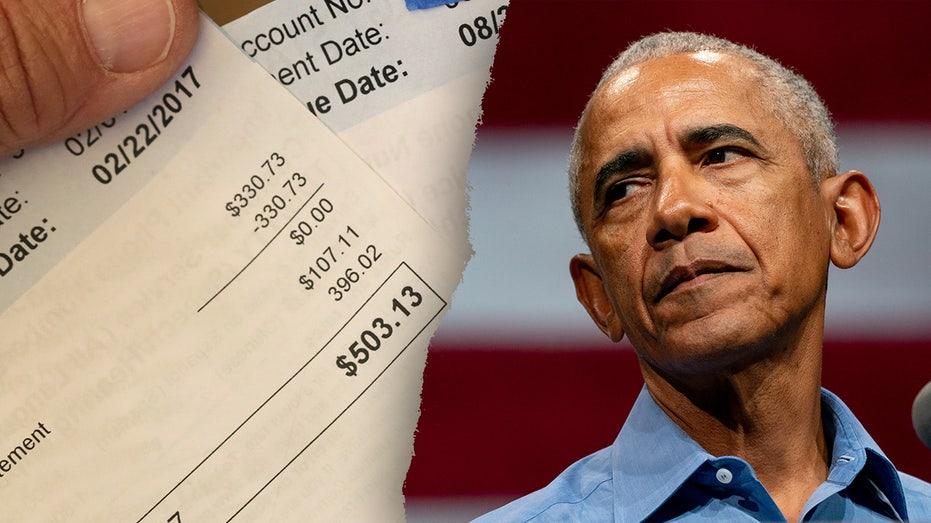
To understand the stakes, you have to go back to 2009–2010, when the Affordable Care Act (ACA) — often called Obamacare — was enacted in one of the most partisan, high-stakes legislative pushes in modern history. The Senate passed its version just before dawn on Christmas Eve 2009, an early sign that health care and holiday deadlines were going to be joined at the hip.
Since then, Republicans have campaigned for more than fifteen years on a promise to “repeal and replace” Obamacare. They’ve succeeded at repeal attempts, court challenges, and targeted rollbacks — but not at producing a durable, comprehensive alternative. Notably:
- From 2011 onward, House Republicans voted dozens of times to repeal or scale back the ACA without putting a fully fleshed-out replacement on the floor that could pass both chambers.
- In 2017, with unified GOP control, the most serious repeal effort collapsed in the Senate with the now-famous late-night “thumbs down” from Sen. John McCain, after the House had narrowly approved the American Health Care Act (AHCA).
- Since then, the pattern has shifted from repeal to piecemeal fights over subsidies, premium relief, and cost-sharing programs — the plumbing of the ACA rather than its structure.
The current fight is about those plumbing pieces: expiring subsidies and how to prevent another round of premium spikes on the individual market. Democrats are proposing a three-year extension of existing subsidies. Republicans are floating an alternative plan and emphasizing health savings accounts (HSAs) and market-based tools. But the calendar is unforgiving: only a handful of legislative days left, deep internal GOP divisions, and no clear bipartisan path to the 60 votes needed in the Senate.
What this really means: policy made in the shadow of the clock
The calendar drama isn’t just a scheduling curiosity. It’s a symptom of a deeper structural problem: Congress increasingly legislates only when forced by hard deadlines — and often only at the last possible moment. The health-care issue now colliding with year-end and January deadlines highlights three core dynamics:
1. Crisis-driven governance has become the default
Big policy decisions are now routinely pushed to the edge of fiscal cliffs: expiring subsidies, government funding lapses, debt ceiling deadlines. That governing-by-crisis pattern produces three consequences:
- Short-term patches instead of structural reform. It’s easier to extend subsidies for one to three years than to redesign the individual market or redesign employer-based coverage. That’s how the ACA, a major reform, has been followed by a decade of patches rather than a second-generation overhaul.
- Maximal leverage for hardliners. When the clock is ticking, small factions can wield outsized power by threatening shutdowns, blocking unanimous consent, or tanking procedural votes.
- Minimal transparency. Last-minute deals are typically negotiated by a small group of leaders, with rank-and-file lawmakers voting on dense packages they’ve barely read. That’s especially true around the holidays, when exhaustion and political pressure are highest.
2. Health-care policy is being made through subsidy brinkmanship
Instead of rethinking the architecture of the U.S. health system, Congress is fighting over narrow but crucial levers: premium subsidies, cost-sharing reductions, and tax-favored accounts. These levers directly shape what millions of people pay each month — but they’re also used as bargaining chips in broader budget and ideological battles.
In this round:
- Democrats want a three-year extension of current ACA subsidies, which cushion middle- and lower-income consumers from premium increases and expand eligibility further up the income scale.
- Republicans are leaning toward a package that emphasizes HSAs and market competition, arguing that subsidies entrench a flawed system and drive costs higher over time.
The unresolved question: Is Congress willing to let millions face higher premiums to gain leverage on broader health policy goals or budget issues? Past episodes suggest the answer is “not entirely” — but also that relief may come too late to prevent upheaval and uncertainty for consumers and insurers.
3. Partisan incentives reward posturing over problem-solving
Year-end fights take place in a political environment shaped by the next election as much as by policy outcomes. Republicans risk a backlash if they appear to be presiding over premium spikes without a viable alternative; Democrats risk being tagged as defenders of a status quo many voters still find too expensive. Both sides see political value in blaming the other for “Obamacare sticker shock.”
Compromise, by contrast, is politically risky: it blurs partisan lines and angers ideological purists. That’s why experts expect the first round of Senate votes — on both the Democratic subsidy extension and a still-emerging GOP plan — to fail. Only after those symbolic defeats might senators move toward a narrower, face-saving compromise.
Expert perspectives: what’s really at stake
Health-policy scholars and economists have long warned that using temporary subsidies as the main safety valve for a structurally expensive system is unsustainable.
Dr. Larry Levitt of KFF has summarized the pattern this way in past debates: when subsidies are generous and predictable, enrollment stabilizes and premiums moderate; when subsidies are uncertain or cut back, you see insurer exits, higher premiums, and coverage losses.
Similarly, Dr. Ezekiel Emanuel, a longtime health-policy expert, has argued that constantly extending subsidies without addressing underlying cost drivers — hospital consolidation, drug pricing, opaque billing — is akin to “patching a leaking roof with duct tape during every storm instead of repairing the structure.”
On the conservative side, analysts at places like the American Enterprise Institute have pointed to HSAs as a way to incentivize price sensitivity and reduce overutilization. But even many center-right economists acknowledge that HSAs alone can’t solve the affordability crisis for lower-income or chronically ill patients, who often can’t set aside enough pre-tax savings to meaningfully offset premiums and deductibles.
Data & evidence: who feels the pain if Congress misses the window?
While the exact numbers depend on the specific subsidies at issue, past Congressional Budget Office (CBO) and independent analyses give a ballpark picture of what’s at stake when ACA premium assistance is reduced or allowed to lapse:
- When expanded subsidies were scheduled to expire in earlier debates, estimates generally suggested that millions of people could face premium increases ranging from several hundred to several thousand dollars per year, depending on income and geography.
- Those hit hardest tend to be middle-income individuals and families who don’t qualify for Medicaid but don’t have generous employer coverage — especially those in their 50s and early 60s buying on the individual market.
- Insurers need clarity weeks before deadlines to finalize rates and offerings. The article notes that carriers can wait until about Jan. 15 for action — but political decisions that close to the line often translate into rushed implementation and confusion at the consumer level.
Overlay that with the government funding deadline — 11:59:59 p.m. Eastern on January 30 — and the picture becomes more volatile. Nine of twelve annual spending bills remain unfinished. Health-care provisions may be folded into a broader omnibus or minibus spending package, linking premium relief to everything from defense funding to education.
What’s being overlooked: the silent costs of uncertainty
Most coverage of these fights focuses on the immediate drama: who’s winning the messaging war, what the whip counts look like, whether leaders are willing to keep members in Washington over Christmas. What gets less attention is the cumulative damage of chronic uncertainty to families, insurers, providers, and the broader economy.
Three underreported effects stand out:
1. Planning paralysis for households
When families don’t know what their premiums or subsidies will look like next year, they delay other financial decisions: whether to start a small business, whether to retire early, whether to switch jobs and risk losing employer coverage. Health-care volatility becomes a drag on labor mobility and entrepreneurship.
2. Distorted insurance markets
Insurers set premiums and decide which regions to serve based on expected policy stability. Repeated brinkmanship around subsidies and cost-sharing discourages participation and pushes carriers to price in political risk. That can mean higher premiums and fewer choices, especially in rural or less profitable markets.
3. Eroding public trust
When residents watch Congress repeatedly flirt with shutdowns and premium spikes, it reinforces the sense that the system is not built to serve them. Surveys over the past decade show consistently high levels of public frustration with both parties on health care. Each new crisis deepens the perception that health policy is a political football rather than a core public good.
Looking ahead: what to watch between now and January
Several fault lines will determine whether this year-end scramble ends in another temporary patch, a modest bipartisan deal, or outright failure.
1. Can House Republicans unify behind any health-care plan?
House GOP leaders are preparing to release a health-care proposal, but history is stacked against them. Since 2009, Republicans have talked about an Obamacare alternative without passing one. Internal splits — between fiscal hawks, populists aligned with former President Donald Trump, and more pragmatic suburban members — make it difficult to craft a plan that’s both ideologically satisfying and politically survivable.
If Republicans can’t unify, the House may ultimately be forced to vote on a narrower, bipartisan fix or attach health-care provisions to must-pass government funding. That scenario would weaken GOP leverage but might be the only realistic path to avoiding premium spikes.
2. Will the Senate use failure as a springboard to compromise?
The Senate is expected to take initial votes on competing health-care plans, with both likely to fall short of the 60 votes required. The real question is what happens after those failures:
- Do leaders pivot quickly to a narrower deal focused on short-term subsidy extensions and targeted policy tweaks?
- Or do partisan incentives push both sides to dig in, using the looming government funding deadline as leverage?
Historically, the Senate has sometimes needed a high-profile failure before serious negotiations begin. But that pattern depends on a baseline willingness to compromise — something far less assured in today’s highly polarized environment.
3. How tightly will health care be tied to shutdown politics?
If Congress doesn’t resolve health-care issues by late January, the article notes that the odds of another government shutdown rise “exponentially.” That’s not just rhetorical. Health-care provisions could become bargaining chips in the broader fight over government funding.
This linkage matters because it raises the stakes: lawmakers who might otherwise support a narrow health-care deal could balk if it’s wrapped inside a larger spending bill they oppose on other grounds. Conversely, leadership in both parties may see premium relief as a politically attractive sweetener to sell an unpopular spending compromise.
The bottom line: health care as a recurring stress test for American governance
This holiday crunch is about more than a tight calendar and tired lawmakers. It’s another stress test of whether the United States can manage a complex, high-cost health system through a political process that is increasingly short-term, crisis-dependent, and polarized.
Whether Congress races through the weekend of December 20–23, comes back between Christmas and New Year’s, or pushes decisions into January, two realities are clear:
- The structural issues driving U.S. health-care costs — pricing power, consolidation, administrative complexity — will still be there when the holiday lights come down.
- The longer Congress relies on temporary subsidies and last-minute deals to manage those pressures, the more volatile premiums, coverage, and public trust will be.
The real question isn’t whether lawmakers can squeeze a health-care “fix” into a shrinking calendar. It’s whether they are willing to move beyond governing by crisis and finally treat health care as a long-term public investment rather than an annual political battleground.
Topics
Editor's Comments
The striking part of this story isn’t that Congress is bumping up against another holiday deadline—that’s practically a seasonal ritual in Washington. What stands out is how normalized it has become to manage the health-care system through a series of expiring provisions, emergency extensions, and crisis bargains. That isn’t just bad process; it’s bad policy. Volatility in subsidies and premiums ripples through the entire economy, shaping whether people change jobs, start businesses, or seek care when they need it. Yet lawmakers on both sides continue to treat these decisions as interchangeable bargaining chips in larger ideological battles. The deeper question the current standoff raises is whether our political institutions are still capable of undertaking long-term, structural reform in a domain as complex and consequential as health care. Until that question is answered in the affirmative, we should expect more year-end cliffhangers and fewer durable solutions.
Like this article? Share it with your friends!
If you find this article interesting, feel free to share it with your friends!
Thank you for your support! Sharing is the greatest encouragement for us.