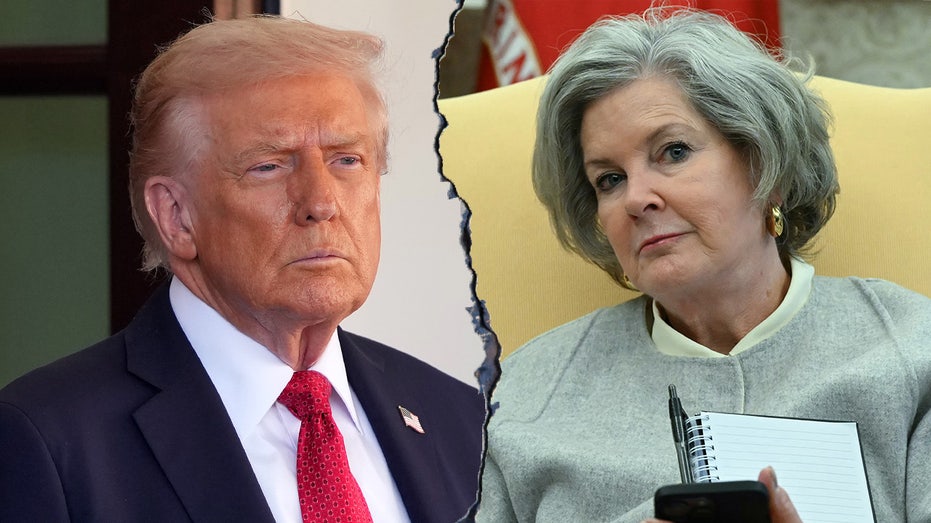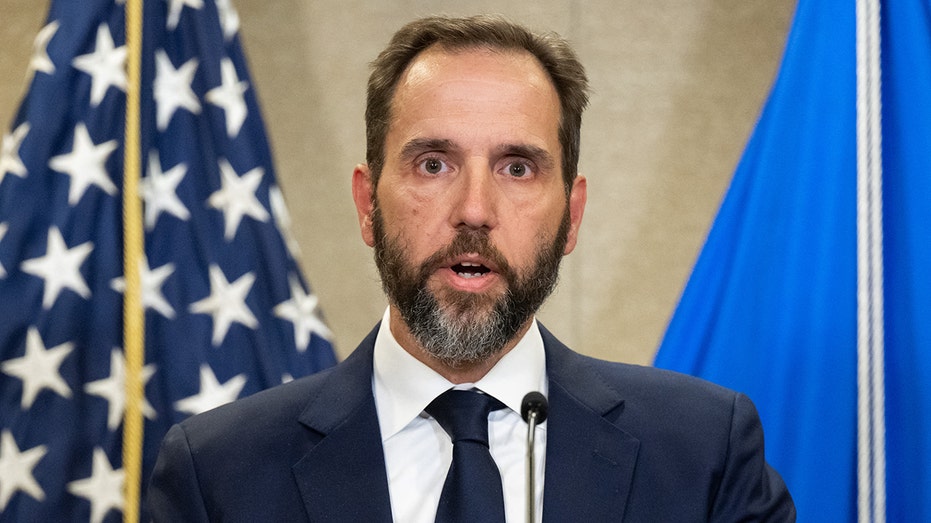
Jack Smith Before Congress: How One Deposition Could Rewrite the Rules for Prosecuting Presidents

Sarah Johnson
December 17, 2025
Brief
Jack Smith’s closed-door House deposition is about much more than Trump. It’s a pivotal test of special counsels, separation of powers, and how future presidents will face — or evade — legal accountability.
Jack Smith’s Deposition Isn’t Just About Trump — It’s a Stress Test for the Rule of Law
What’s scheduled as a closed-door deposition of former special counsel Jack Smith before the House Judiciary Committee is, in reality, the latest front in a years-long war over who ultimately polices American democracy: prosecutors, politicians, or the public. This session is not simply a postscript to the Trump prosecutions; it’s a live experiment in how far Congress is willing to go in reining in — or weaponizing — the justice system.
Republicans cast Smith as the face of an out-of-control prosecutorial state. Smith and his defenders frame his work as a necessary, if imperfect, response to unprecedented attacks on constitutional order. The answers Smith gives — and the questions he refuses to answer — will help define the boundaries between legal accountability and political retaliation in a post-2020, post-Jan. 6, post-Trump-conviction America.
The Bigger Picture: A Long History of Congress vs. Prosecutors
To understand why this deposition matters, it has to be viewed as part of a decades-long struggle between the legislative branch and independent or semi-independent prosecutors investigating high-level political actors.
- Watergate and the special prosecutor model: In the 1970s, the showdown between President Richard Nixon and special prosecutor Archibald Cox — culminating in the “Saturday Night Massacre” — convinced Congress that investigations of presidents couldn’t be left entirely inside the executive branch. That episode produced the now-expired Independent Counsel Act, which was used in investigations of Reagan, Bush, and Clinton.
- The Clinton era backlash: Ken Starr’s sprawling investigation into President Bill Clinton, which moved from real estate deals (Whitewater) to personal conduct (Monica Lewinsky), generated bipartisan frustration. Many Democrats saw it as partisan overreach; many Republicans concluded that an independent prosecutor could be a powerful political tool. Congress let the Independent Counsel Act lapse in 1999, but replaced it with the current special counsel regulations inside DOJ.
- Mueller and the modern partisan template: Robert Mueller’s Russia probe became the blueprint for how both parties now fight high-profile investigations: relentless public attacks, TV-driven narratives, and congressional efforts either to shield or dismantle the investigation. That era normalized the idea that congressional oversight and prosecutorial independence can be weaponized simultaneously.
Jack Smith’s work on Trump — from the 2020 election interference case to the classified documents case — sits squarely in this lineage. But this time, the stakes are higher: we are no longer debating past conduct of a sitting president, but the criminal exposure of a former president who returned to power in 2024, effectively gaining control over the very Justice Department that once charged him.
What This Really Means: Oversight, Retaliation, or a Warning to Future Prosecutors?
The House deposition serves several overlapping purposes, depending on where you sit politically — and recognizing those overlapping motives is essential.
1. A De Facto Trial of the Special Counsel Model
Republicans under Chairman Jim Jordan are not only scrutinizing Smith’s decisions; they are implicitly putting the entire special counsel framework on trial. Key lines of questioning — about timing during an election, scope of subpoenas, gag orders, and targeting of lawmakers — are aimed at arguing that special counsels are insufficiently accountable and inherently prone to politicization.
If that argument gains traction, expect serious legislative proposals to:
- Limit or define more narrowly the circumstances under which a special counsel can be appointed;
- Impose stricter reporting and disclosure requirements to Congress;
- Constrain the ability of special counsels to issue subpoenas affecting members of Congress.
Those changes would not just affect Trump-related matters. They would fundamentally reshape how future investigations into presidential or high-level misconduct are pursued, regardless of party.
2. A Warning Shot to Future Prosecutors
By hauling Smith in for an aggressive, closed-door deposition, House Republicans are sending a broader message: pursuing criminal charges against a top national political figure — especially a president or ex-president — may come with years of personal and professional scrutiny from Congress. That could chill future prosecutors, even if they are acting in good faith.
Career prosecutors weigh risk, institutional backing, and future employment when deciding whether to take on explosive cases. The more visible and politically punishing the consequences, the more likely some will quietly decline to pursue borderline or novel cases. That might be exactly what some lawmakers would like: fewer criminal cases against political elites, and more room for political processes to handle disputes.
3. A Test of Separation of Powers in the Age of Mass Data
The most constitutionally sensitive issue here isn’t the Trump indictments themselves; it’s Smith’s subpoenas for phone records and data from Trump-aligned lawmakers and hundreds of allies in and around Jan. 6. Members of Congress argue this breaches separation of powers; Smith calls the subpoenas narrow and “entirely proper.”
In an era where metadata can reveal detailed political organizing — who called whom, when, and how often — investigative tools that once seemed routine now raise pointed questions:
- Can prosecutors treat lawmakers like any other citizen when collecting digital evidence, or do they deserve heightened protections?
- At what point does investigating a conspiracy around an insurrection bleed into surveilling the internal communications of a co-equal branch?
- Does Congress have a meaningful mechanism to resist such subpoenas besides political backlash?
How Smith explains his legal rationale — and how much he’s willing to say under the veil of grand jury secrecy — will shape future norms for digital-era investigations involving elected officials.
Expert Perspectives: Law, Politics, and Precedent
Many legal scholars see this clash as a predictable consequence of a system that never fully reconciled prosecutorial independence with democratic accountability.
Laurence Tribe, a constitutional law professor emeritus at Harvard, has previously warned that, “When Congress pulls prosecutors into the political arena to grill them about ongoing or recent cases, it risks normalizing the idea that law enforcement is just another partisan weapon.” That concern is palpable here: the line between oversight and intimidation is not bright, and both parties have crossed it at different moments.
Former federal prosecutor and law professor Andrew Weissmann has argued that subpoenas of lawmakers connected to Jan. 6 are legally defensible if they are narrowly focused on conduct that could constitute crime, not protected legislative acts. The Supreme Court’s Speech or Debate Clause jurisprudence draws that line: members of Congress can be investigated and even prosecuted, but not for legitimate legislative activity. Smith’s defense will likely lean on that distinction.
On the other side, conservative legal voices emphasize the danger of normalizing prosecutions that center on political acts around elections. John Yoo, a law professor and former OLC official, has suggested that aggressive use of criminal law in electoral disputes “invites cycles of prosecution and counter-prosecution that undermine the peaceful transfer of power.” From that vantage point, Smith’s work — even if legally grounded — could be seen as contributing to a spiral that future presidents will feel bound to continue.
Data & Evidence: What’s Different This Time
Several contextual data points illuminate why this confrontation is historically unusual:
- Presidential prosecutions are unprecedented: Before Trump, no former U.S. president had ever been federally indicted. Smith’s dual cases on election interference and classified documents pushed the Justice Department into entirely new terrain.
- Scope of January 6 investigations: More than 1,400 people have been charged in connection with Jan. 6-related crimes, and DOJ has described it as one of the largest criminal investigations in U.S. history. A probe of that magnitude inevitably brushes against political actors and institutions.
- Digital evidence scale: According to court filings in various Jan. 6 cases, investigators obtained tens of thousands of phone records, messages, and digital communications. In that context, subpoenas to legislators were extraordinary but not isolated; the entire investigation was premised on digital footprint analysis.
- Post-indictment context: Smith ultimately dismissed the charges after Trump’s 2024 victory, citing DOJ policy against prosecuting a sitting president. That creates a paradox: the very fact of Trump’s political success shielded him from further prosecution, while simultaneously empowering allies who now seek to dismantle the investigative architecture that produced those charges.
Looking Ahead: What to Watch Beyond the Transcript
Several downstream developments will matter more than any single exchange in Wednesday’s deposition.
1. The Transcript and Its Timing
Chairman Jordan has signaled he wants to eventually release the full transcript, but that requires bipartisan agreement or a committee vote, plus time for Smith’s team to review. The timing will be tactical: Republicans may hold the release to coincide with broader legislative or messaging pushes, particularly around reforms to DOJ, the FBI, or the special counsel regulations.
2. Legislative Proposals Targeting DOJ and Special Counsels
Expect proposals in at least three areas:
- Limitations on special counsels’ authority around subpoenaing lawmakers, particularly communications that intersect with legislative business;
- New reporting requirements obligating special counsels to brief Congress more regularly and in more detail, raising fresh separation-of-powers concerns;
- Statutory codification or modification of the internal DOJ policy against prosecuting sitting presidents, possibly expanding it to certain periods before or after elections.
3. The Precedent for Future Presidents
Perhaps the most under-discussed consequence: how this episode will shape the behavior of future presidents of both parties. They are learning in real time that:
- Prosecutors can bring charges against a former president, but those charges may evaporate if the target regains office.
- Congress can respond by attacking not just prosecutorial decisions but the individuals who made them.
- Norms that once discouraged overt retaliation against prosecutors are eroding.
That combination could incentivize presidents to see criminal investigations not as independent guardrails, but as political obstacles to be neutralized — either by winning elections or by restructuring the system that produced those investigations.
The Bottom Line
Jack Smith’s deposition is nominally about subpoenas, gag orders, and the nuts and bolts of two Trump cases that DOJ has now dropped. But the real stakes are much larger: whether the United States can sustain a system in which prosecutors are empowered to investigate the most powerful political figures without becoming permanent combatants in a partisan war.
If Congress emerges from this moment with reforms that clarify rules, protect core constitutional functions, and preserve credible avenues for holding presidents accountable, the turmoil may ultimately strengthen the rule of law. If, instead, the outcome is a system where each party uses power to shield its leaders and punish its investigators, the message to future presidents will be simple — and dangerous: win, and you are untouchable; lose, and you are vulnerable to criminalization by your successors.
The deposition beginning at 10 a.m. is thus less a backward-looking post-mortem and more a preview of how American democracy will handle its next constitutional crisis — because there will be a next one.
Topics
Editor's Comments
One underappreciated dimension of the Jack Smith episode is how it quietly normalizes the idea that criminal accountability for presidents is contingent on electoral outcomes. Smith’s decision to dismiss charges after Trump’s 2024 victory was consistent with DOJ policy, but the optics are grim: win the presidency and the federal cases disappear; lose and you face prosecution by your successor’s Justice Department. That dynamic risks hardening a winner-take-all mentality where elections become not just contests for power, but contests for legal survival. In that environment, every institutional player — prosecutors, lawmakers, judges — faces pressure to bend norms to protect or punish political figures. The hard question almost no one in Washington is confronting honestly is whether the United States needs a more formal, bipartisan mechanism for addressing alleged presidential crimes, such as a standing independent tribunal or a post-presidency accountability process, to avoid placing so much weight on the partisan swings of the Justice Department.
Like this article? Share it with your friends!
If you find this article interesting, feel free to share it with your friends!
Thank you for your support! Sharing is the greatest encouragement for us.