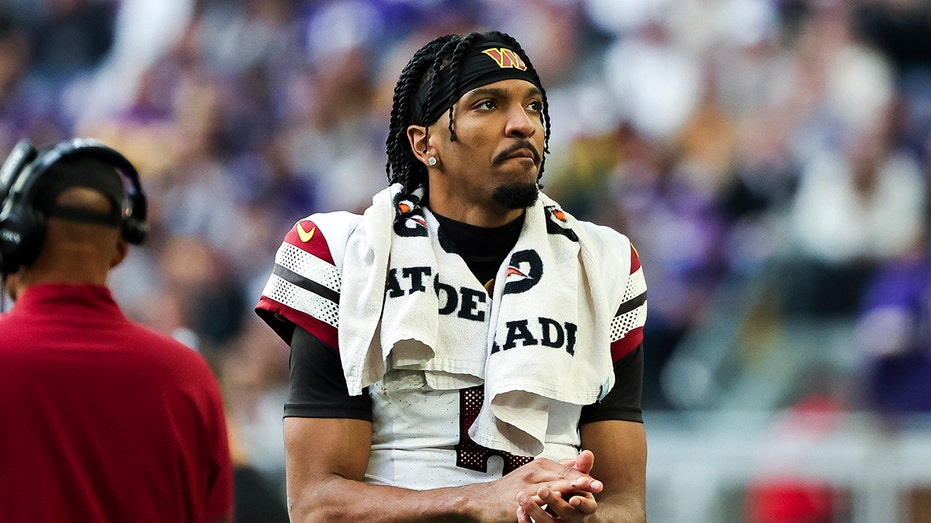
Jayden Daniels Shut Down: Inside the High-Stakes Test of Washington’s Franchise Rebuild

Sarah Johnson
December 16, 2025
Brief
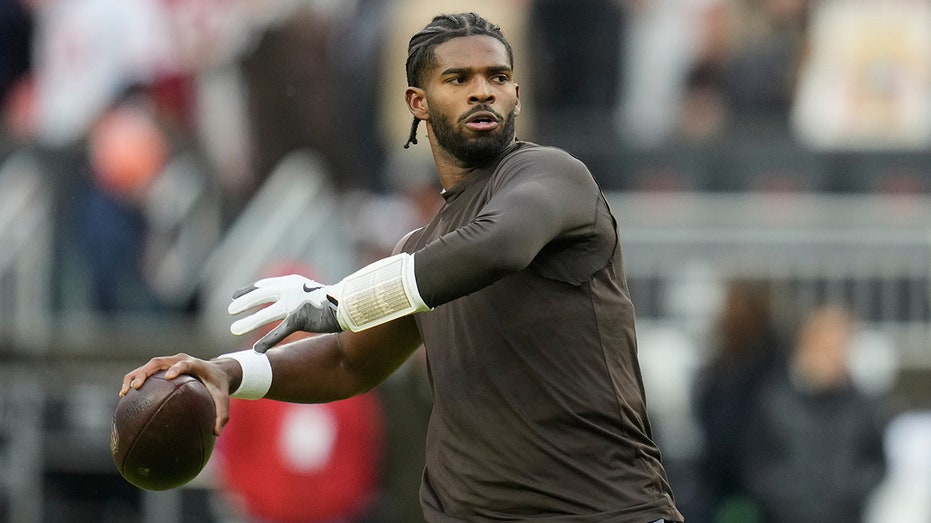
Washington shutting down Jayden Daniels is more than load management. It’s a stress test of their roster, scheme, and ability to protect a rare franchise QB in a shrinking rookie window.
Jayden Daniels Shut Down: What an Injury-Riddled Season Really Means for Washington’s Future
The Washington Commanders’ decision to shelve Jayden Daniels for the final three games of 2025 looks, on the surface, like a standard “protect the franchise quarterback” move. Underneath, it’s a stress test of the entire organization’s long-term vision: roster building, sports science, coaching philosophy, and how modern NFL teams manage the short shelf life of elite quarterback play.
A Franchise at a Crossroads, Again
To understand why this matters, you have to zoom out. Washington’s 2024 run to the NFC Championship Game behind a rookie Daniels felt like a franchise reboot after decades of instability, mismanagement, and cyclical rebuilds.
For context:
- Washington’s last NFC title game appearance before 2024 came in the 1991 Super Bowl season. That’s a 33-year gap.
- Since 2000, the team has cycled through more than a dozen starting quarterbacks drafted or acquired as “the answer” — from Patrick Ramsey and Jason Campbell to Robert Griffin III, Kirk Cousins, Dwayne Haskins, and a long line of stopgaps.
- Daniels’ 12–5 rookie year wasn’t just a good season; it was a statistical and narrative break with a quarter-century of dysfunction.
That’s what makes this 2025 collapse so important. The Daniels injury saga is not just a one-off bad-luck season. It’s a revealing early test of whether Washington has truly escaped its old patterns or is still that same fragile franchise, only with a more exciting quarterback at the center.
The Anatomy of an Overloaded Season
Daniels’ 2025 injuries form a pattern that front offices and sports performance staffs obsess over:
- Week 2: Knee sprain, misses two games.
- Week 7: Hamstring strain, misses another game.
- Week 9: Brutal elbow injury in a 38–14 home blowout to Seattle.
- Week 14: Re-aggravation chasing down a defender after an interception.
This isn’t a single catastrophic hit; it’s a season of cumulative stress. For a dual-threat quarterback like Daniels, that’s exactly what teams fear most. His college and rookie-year profile was built on dynamic, off-script playmaking — the same style that fueled Lamar Jackson’s MVP, Josh Allen’s surge, and early Russell Wilson. But the league has seen repeatedly that this style is sustainable only if the ecosystem around the quarterback is carefully engineered to protect him.
That ecosystem is where Washington’s questions begin.
Why Washington Shut Him Down – And Why It’s More Than Medical
Head coach Dan Quinn described the shutdown as “part medical, part team.” Behind that phrase sit several strategic calculations:
- Medical: Elbow and soft-tissue injuries tend to linger and compound. With no playoff hope at 4–10, there is zero rational upside to exposing Daniels to further damage that could alter his 2026 offseason and, by extension, his prime years.
- Organizational risk management: Daniels is not just a player; he’s a multi-year asset in a league where franchise quarterbacks can cost $50+ million annually under second contracts. You protect that asset when the competitive stakes are low.
- Evaluation of the rest of the roster: With Marcus Mariota starting, Washington gets clean tape on the offensive line, receiving corps, and scheme without Daniels’ athleticism masking flaws. That matters heading into free agency and the draft.
- Optics and culture: In the modern NFL, “pushing a star through pain for meaningless games” plays terribly with agents, the locker room, and increasingly health-conscious fans. Shutting him down isn’t just smart football; it’s smart politics.
They’re also threading a needle by keeping Daniels practicing. That allows him to stay engaged in installs, timing, and leadership roles without absorbing game-day risk. It’s a hedge: protect the body, preserve the quarterback as the organizational center of gravity.
The Dual-Threat Dilemma: Have Teams Really Learned?
Daniels’ 2025 arc fits a broader NFL pattern: the league wants the upside of dual-threat quarterbacks but still struggles to build protective environments around them.
Look at the last decade:
- Robert Griffin III (Washington, 2012): Rookie of the Year, then derailed by injuries amid intense usage, schematic rigidity, and poor long-term planning.
- Lamar Jackson (Baltimore): MVP season built on designed runs and play-action; Ravens later recalibrated the offense and roster construction to reduce exposure to hits and diversify the passing game.
- Cam Newton (Carolina): MVP in 2015, then a steep physical decline after years of designed runs, hits in the pocket, and limited protection from the officiating point of view.
Daniels’ 2024 breakout — 12–5, NFC title game, Offensive Rookie of the Year — put him on that same trajectory: an offense heavily shaped around his mobility and playmaking. But 2025 raises the question: did Washington adjust quickly enough for Year 2, or did they treat the 2024 formula as sustainable without modification?
This is the strategic pivot point: the most successful dual-threat QB evolutions (Jackson, early Wilson) gradually shift from “you are the system” to “you operate within a robust system.” That means better offensive line investments, more quick-game passing, high-percentage concepts, and a willingness to sacrifice some highlight plays for long-term availability.
Marcus Mariota’s Cameo and What It Quietly Reveals
Marcus Mariota’s performance is statistically modest but analytically revealing: 1,600 passing yards, 10 touchdowns, 7 interceptions, nearly 300 rushing yards and a score. None of that screams long-term starter, but it does tell us something about the environment.
When a 32-year-old journeyman can step in and be “serviceable” while the team is mired in an eight-game losing streak, it suggests that:
- The scheme is functional but not transformative — competent enough for a veteran to run, not advanced enough to elevate a depleted roster.
- Washington’s offensive line and supporting cast likely aren’t good enough to carry a young quarterback when he’s not playing at a superhuman level.
- The margin for error around Daniels is thin. That’s a roster-construction red flag, not just bad luck with injuries.
The organization will study the Mariota tape heavily. If the offense looks structurally similar but less explosive, that’s normal. If it looks smoother, more on schedule, and less chaotic, Washington may have to confront uncomfortable truths about how much they’re asking Daniels to create out of nothing.
The Overlooked Part: Psychological and Developmental Impact
There’s a non-physical dimension here that rarely gets covered in depth: development. For a second-year quarterback, live reps are invaluable. Reading full-speed defenses, adjusting protections, dealing with game-planning against you as the focal point — that’s where Year 2 growth happens.
By shutting Daniels down, Washington is making a tradeoff:
- Gain: Reduced risk of a long-term structural injury, preserved offseason stability, and a clean physical reset.
- Loss: Three games of experience in adversity — behind a struggling line, on a losing team, with defensive coordinators having a full season of film on him.
How they mitigate that loss matters. That’s where continued practice reps, film work, and possibly increased input into game-planning become crucial. The best organizations turn injury layoffs into “quarterback graduate school” instead of just rehab time.
What This Means for Washington’s Next Two Offseasons
Shutting Daniels down is only Step 1. The real story is what comes next. Three key fronts will define whether 2025 becomes a blip or the beginning of a troubling pattern:
1. Roster Building: Protect the Investment
Expect Washington’s offseason priorities to tilt heavily toward:
- Offensive line upgrades: Particularly at tackle and interior pass protection. Daniels’ style demands not just solid blocking but consistency, so he’s not constantly improvising under duress.
- Depth at receiver and tight end: More separation equals fewer extended plays, which equals fewer hits.
- Backfield support: A credible run game that doesn’t rely solely on quarterback-designed runs.
Organizations that fail to insulate their young stars often pay a long-term price — not just in injuries, but in eroding confidence and stalled development.
2. Scheme Evolution
Dan Quinn and the offensive staff will face pressure to tweak the offense. That likely means:
- More quick-game concepts and high-percentage throws to reduce time holding the ball.
- More under-center and play-action looks to keep defenses honest.
- Selective, not constant, use of Daniels as a runner — leveraging the threat without exposing him to unnecessary contact.
Teams that cling too long to Year 1 formulas often burn out their quarterbacks physically. The smarter ones evolve early.
3. Organizational Culture and Transparency
How Washington communicates about Daniels’ health — with him, his camp, and the public — will shape trust. The RG3 era in Washington is still a cautionary tale about misaligned incentives and opaque decision-making. This regime has a chance to show it operates differently.
What Most Coverage Misses
Much of the conversation will frame this as a lost season and a medical decision. But the deeper story is about timing in the modern NFL. Rookie-contract windows for franchise quarterbacks are the single most valuable competitive asset in the league. Washington has already burned Year 2 with minimal return.
That raises hard questions:
- Can Washington build a roster quickly enough to capitalize on Years 3–4 of Daniels’ rookie deal?
- Will they need to prematurely consider a massive extension if he bounces back in 2026, further constraining their cap flexibility?
- Has the league already begun to adjust to Daniels’ tendencies, and did this injury-plagued season give defensive coordinators a “free year” to study him without the counter-punch reps he’d otherwise get?
Looking Ahead: What to Watch
Over the next 12–18 months, several indicators will tell us whether Washington is on a sustainable path:
- Injury narrative: Does Daniels enter 2026 with a “durability concern” label around the league? That can shape how defenses attack him and how the front office structures any future contract.
- Offseason moves: Do they invest premium assets in protection and weapons, or lean on the assumption that a healthy Daniels alone restores 2024 form?
- Scheme changes: Preseason and early 2026 tape will signal whether Washington truly pivoted toward protecting their quarterback or just ran the same offense and hoped for better health.
- Internal messaging: Does the organization consistently portray patience and long-term thinking, or does panic seep in if 2026 starts slowly?
In the end, the decision to shut down Jayden Daniels is rational and arguably overdue. But its significance lies less in the three remaining 2025 games and more in how Washington uses this pause to rethink everything around the player they’ve staked their future on.
The Bottom Line
Washington didn’t just bench an injured quarterback; they hit pause on a franchise-defining experiment. The next moves — in the training room, in the draft room, and in the playbook — will determine whether Jayden Daniels becomes the exception to Washington’s cursed quarterback history or just the latest star whose potential was squandered by a team that couldn’t adapt fast enough.
Topics
Editor's Comments
The Daniels shutdown will be framed as conservative and player-friendly, but the deeper issue is timing. Washington is burning one of the few seasons in which they can surround a high-end quarterback with premium talent before his cap number explodes. That makes the margin for error in 2026 and 2027 razor thin. If they misallocate draft capital—say, opting for splashy weapons over foundational offensive line upgrades—or fail to evolve the scheme, this season’s injuries may look less like bad luck and more like an early warning. There’s also a cultural question worth asking: can a franchise with Washington’s recent history truly commit to patience if Daniels struggles early next year, or will old habits of scapegoating and quick fixes resurface? The answer will reveal whether this regime is genuinely different from the one that mishandled previous talents like RG3, or merely a new coat of paint on the same structurally unsound house.
Like this article? Share it with your friends!
If you find this article interesting, feel free to share it with your friends!
Thank you for your support! Sharing is the greatest encouragement for us.