J.J. McCarthy’s Griddy and the Quiet Power Struggle Inside the Modern NFL

Sarah Johnson
December 16, 2025
Brief
J.J. McCarthy’s in-play Griddy wasn’t just a quirky touchdown. It exposed deeper tensions in the Vikings’ culture, NFL branding, and the power young quarterbacks now wield over team identity.
J.J. McCarthy’s ‘Griddy’ Isn’t Just a Dance – It’s a Test Case for the NFL’s Next Generation Culture War
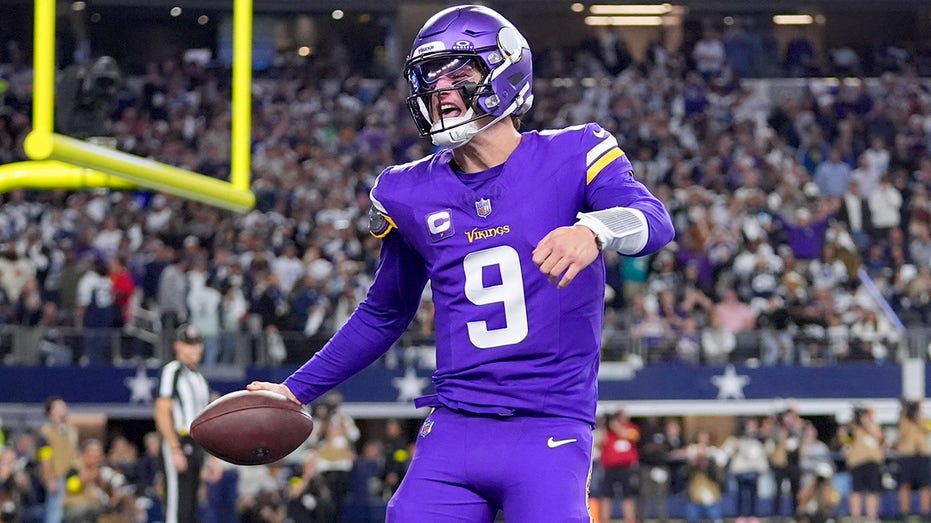
Minnesota Vikings quarterback J.J. McCarthy irritated his head coach by dancing into the end zone. On the surface, it’s a harmless Week 15 anecdote. Underneath, it’s a revealing window into the NFL’s ongoing tug-of-war between old-school discipline, new-school branding, and the evolving power of young quarterbacks.
Why This Moment Matters More Than It Looks
McCarthy’s decision to hit the Griddy while still en route to the end zone – after being explicitly told in practice not to – is not just about showboating. It sits at the intersection of:
- The NFL’s shifting norms on celebrations and individuality
- Coaches’ need to enforce discipline and avoid unnecessary risk
- Young quarterbacks’ growing role as cultural and commercial brands
- The precarious situation of a 6–8 team trying to reestablish an identity
In other words, this is less about one dance and more about how a franchise manages personality, authority, and risk in a league that is increasingly entertainment-driven but still brutally unforgiving of mistakes.
The Bigger Picture: From No-Fun-League to Viral-Clip League
To understand Kevin O’Connell’s irritation, you have to situate this moment in the NFL’s history with celebrations.
For years, the league was derided as the “No Fun League.” Excessive celebration penalties, fines, and a general clampdown on individuality defined the 2000s and early 2010s. But by 2017, the league reversed course, formally relaxing celebration rules, explicitly allowing group celebrations and choreographed dances in the end zone. The rationale was simple: younger audiences love personality, memes, and viral moments—and the NFL didn’t want to be left behind by the NBA and global soccer in the battle for attention.
The Griddy itself is part of that evolution. It emerged from Louisiana high school football, exploded through college ball, and became iconic in the NFL largely through Vikings star Justin Jefferson, whose end-zone Griddies became instantly recognizable league-wide. For Minnesota fans, the Griddy isn’t just a dance; it’s part of the team’s cultural brand.
But what McCarthy did was a notable twist: he didn’t celebrate after the score. He performed the move as he was still running into the end zone. That tiny difference – style before security – is exactly what coaches obsess over.
What This Really Says About McCarthy, O’Connell, and the Vikings
There are at least three underlying dynamics at play that go well beyond one touchdown.
1. A Young Quarterback Testing the Edges of Authority
McCarthy admitted he’d done the move in practice and had been told not to repeat it. His response: “So, just me being who I am, it's like, 'Oh, now I'm more enticed to do it.'” That’s an unusually candid acknowledgment of what every coach fears: that explicit boundaries can sometimes provoke rather than deter a confident young star.
For a second-year quarterback, this is a subtle but important line-crossing. He didn’t blow off a play call or audible into something reckless. But he did knowingly defy a direct coaching preference in a nationally visible moment. In a league where the quarterback is effectively a middle manager between coach and locker room, that matters.
O’Connell’s public response – calling it “entertaining” but undercutting it with a mild critique and a joke about 40-yard dash speed – is telling. He chose controlled frustration, not open confrontation. That suggests he understands the stakes: you don’t publicly embarrass or suppress your potential franchise quarterback over a celebration, but you also can’t entirely let it slide.
2. The Risk Management Problem Coaches See – and Players Often Don’t
From a coach’s perspective, the concern isn’t just optics. It’s risk. When a quarterback starts celebrating before crossing the goal line, a lot can go wrong:
- A defender chasing the play strips the ball
- A stumble, slip, or premature ball drop turns a touchdown into a turnover
- An official interprets the move as taunting, costing yards on the ensuing kickoff
All of those may sound far-fetched—until they’re not. Coaches live in contingency scenarios; their jobs often depend on a handful of plays per season. Touchdown security is drilled into players from youth football onward: finish the play, then celebrate.
McCarthy’s own comment – “If it's that open, obviously just get in the end zone no matter what – and be coachable” – suggests he grasps that he crossed a line strategically, even if he found it amusing personally. Expect internal film-room correction, even if the public tone remains light.
3. A Franchise Managing Identity in a Transition Phase
Minnesota is 6–8. They’re not tanking, but they’re not secure contenders either. In that liminal space, teams are quietly building for the future while still trying to win now. McCarthy just had the best statistical game of his career – 250 passing yards, two touchdown throws, and a rushing score – which makes this a narrative hinge point.
Do the Vikings become McCarthy’s team, with all the personality and looseness that implies? Or does the staff emphasize a more buttoned-up, Kirk Cousins–era style of operational discipline?
How they handle this moment – in the locker room, in film study, and in future media comments – will send a message to McCarthy, his teammates, and even future free agents about how much room the team gives its young stars to be themselves.
Expert Perspectives: Culture vs. Control
Sports psychologists often describe these episodes as “identity bids” – moments where a player signals who they are and tests how the system responds. Former NFL quarterback and analyst Dan Orlovsky has frequently argued that modern quarterbacks must be allowed to express themselves to maintain confidence and locker-room authenticity, as long as it doesn’t compromise the game.
At the same time, long-time coaches like Bill Belichick and Mike Tomlin have consistently reinforced the idea that the team comes first, and style should never jeopardize substance. A young quarterback, in particular, is expected to model the coach’s standards.
McCarthy’s case sits right in the middle: he didn’t cost his team points, but he did take a liberty after being warned. The Vikings’ handling of that nuance is more complex than a simple “fun vs. no fun” debate.
Data & Evidence: Why the League Leans Toward Personality
The NFL’s broader incentives quietly favor McCarthy’s instinct, not O’Connell’s annoyance.
- Social media metrics consistently show that highlights with personality—celebrations, trash talk, viral dances—tend to outperform standard touchdown clips in engagement and shares, especially among younger fans.
- League marketing increasingly spotlights individual stars’ quirks and celebrations, from choreographed end-zone moments to sideline interactions.
- Quarterbacks are now not just play-callers but multi-platform brands; endorsement deals often hinge more on personality and recognizability than on pure stats.
McCarthy, a young QB in a mid-market franchise, has every incentive to carve out a recognizable identity. A signature celebration is part of that toolkit—as players from Aaron Rodgers (the “belt”) to Cam Newton (the “dab”) to Jefferson’s Griddy have demonstrated.
That said, players who navigated this successfully typically drew a firm line between celebration after the whistle and anything that might jeopardize a live play. McCarthy just blurred that line.
What’s Being Overlooked: The Power Dynamic Underneath the Laughter
Mainstream coverage frames this as a light human-interest note: young QB dances, coach grumbles, everyone laughs. What’s underexplored is the power dynamic.
Quarterbacks are unique in sports. They are both employees and, effectively, on-field executives. They run the offense, speak for the team in media, and often outlast head coaches’ tenures. For a second-year quarterback, small acts of defiance, even playful ones, are early markers of how he intends to inhabit that power.
If McCarthy continues to play well, his leverage will grow. What looks like a harmless Griddy today becomes, in hindsight, an early chapter in the story of a quarterback carving out autonomy—or clashing with organizational expectations.
Conversely, if he struggles in future games, this moment could be held up as an example of misplaced focus or immaturity, fairly or not. That’s how narrative works in the NFL: behavior is retrofitted to match performance.
Looking Ahead: What to Watch for Next
There are several practical things to monitor over the next few weeks and into next season:
- Sideline and postgame body language: Does O’Connell’s frustration resurface after future games, or does the issue disappear?
- McCarthy’s future celebrations: Does he confine the Griddy to post-score moments? Does he retire it under pressure, or double down when the stakes are lower?
- Locker room response: Teammates may love a quarterback with swagger—if he backs it up. If McCarthy keeps stacking strong performances, his personality will likely be embraced.
- Front-office messaging: As the Vikings shape McCarthy as their long-term face, watch how team media and marketing lean into or away from this “rebellious but fun” image.
This isn’t a crisis story; it’s a calibration story. The Vikings are quietly negotiating where their young quarterback’s personality ends and the franchise’s non-negotiables begin.
The Bottom Line
J.J. McCarthy’s in-play Griddy is not just a cute clip from a December game. It’s a microcosm of the modern NFL: a league trying to balance control with charisma, and a young quarterback probing the limits of his growing influence.
If Minnesota manages this well, the story will eventually read like this: a talented, confident quarterback learned where the line is, kept his edge, and became the centerpiece of a new era of Vikings football—one that’s both disciplined and undeniably entertaining.
If they don’t, moments like this can snowball into questions about maturity, coachability, and leadership. The dance is over. The negotiation about what it meant has just begun.
Topics
Editor's Comments
What’s striking about this episode is how easy it is to dismiss—and how revealing it is if you don’t. The NFL has entered an era where a single viral clip can shape how a player is perceived far beyond his local market. For a second-year quarterback, that’s both an opportunity and a trap. McCarthy’s decision to do exactly what his coach told him not to do, in a low-stakes but highly visible way, reads like a test balloon: How far can I go? How will they react? The Vikings’ public handling so far has been careful, almost rehearsed: mild rebuke, a bit of humor, no sign of internal fracture. The real story will be written over the next year. If McCarthy evolves into a high-performing, durable starter, this dance will be remembered as an early sign of confidence and individuality. If he stalls out or clashes with the staff, it will be retrofitted into a red flag. That’s the danger with these culture stories—they’re not just about what happened, but about how we later decide to interpret it based on outcomes that haven’t happened yet.
Like this article? Share it with your friends!
If you find this article interesting, feel free to share it with your friends!
Thank you for your support! Sharing is the greatest encouragement for us.