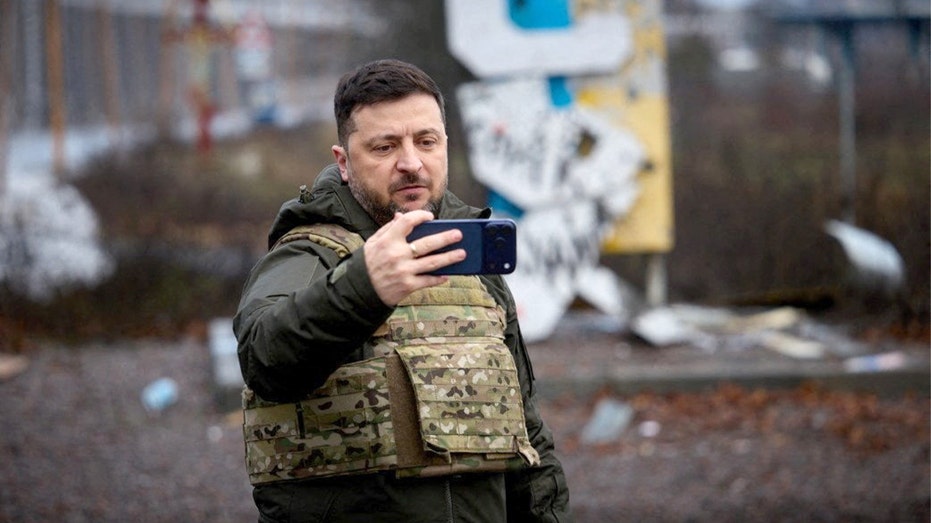
Kupiansk, Berlin, and the Next War: What Zelenskyy’s Frontline Visit Really Signals

Sarah Johnson
December 17, 2025
Brief
Zelenskyy’s surprise visit to Kupiansk is more than symbolism. This analysis explains how it reshapes debates on Ukraine’s security guarantees, NATO deterrence, and Europe’s long-term confrontation with Russia.
Zelenskyy in Kupiansk: A Battlefield Photo-Op or a Strategic Message to Moscow and the West?
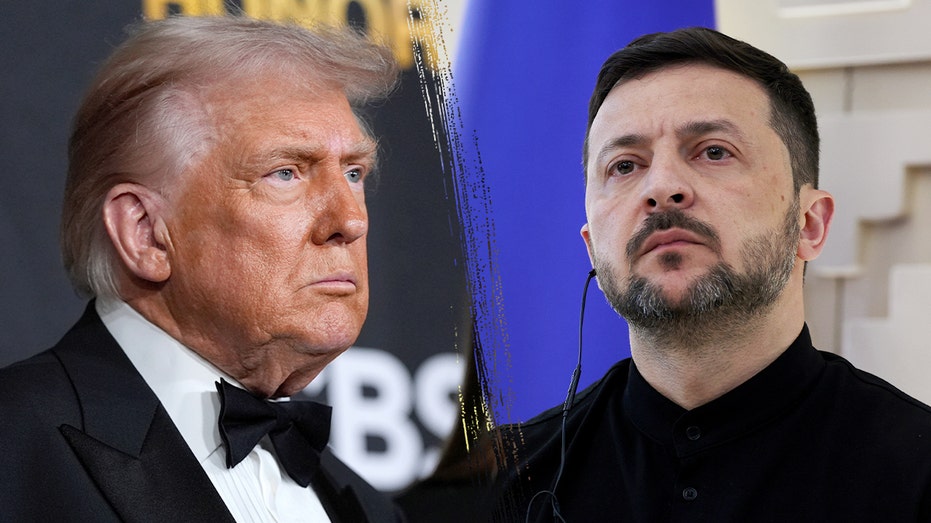
Ukrainian President Volodymyr Zelenskyy’s visit to Kupiansk, a frontline city Russia recently claimed to have “liberated,” is not a simple morale-boosting trip. It’s a multi-layered signal aimed simultaneously at Moscow, Ukraine’s own population, and a fractious Western alliance struggling to define what “victory” and “security guarantees” really mean nearly four years into the war.
The timing — on the eve of high-stakes talks in Berlin with U.S. envoys and European leaders on a postwar political architecture — is crucial. Zelenskyy is effectively using geography as diplomacy: standing in a city Russia insists it controls to pre-condition the terms of any peace or ceasefire discussions.
Kupiansk’s Significance: Why This City Keeps Reappearing in the War
Kupiansk is not just another frontline town. Before the full-scale invasion, it was a key logistics hub in the Kharkiv region, sitting on critical rail and road lines that connect Russia to eastern and northern Ukraine. When Ukraine retook Kupiansk in September 2022 during its lightning Kharkiv counteroffensive, it was widely seen as one of Kyiv’s biggest operational victories, severing key supply routes for Russian forces in the northeast.
Russia’s later claims in November 2025 that it had “liberated” Kupiansk — a term the Kremlin routinely uses to imply lasting control and local support — were meant to reverse that narrative. By showing up on camera in body armor under a damaged “Kupiansk” sign, Zelenskyy is openly contesting Russia’s information war: if the city were truly under Russian control, the Ukrainian president would not be touring it with his troops.
Historically, these types of visits have marked turning points or strategic messaging moments:
- World War II: Leaders like Churchill and Roosevelt visited frontlines or recently liberated cities to signal resolve to both their publics and adversaries.
- Post-2003 Iraq & Afghanistan: U.S. presidents made surprise visits to Baghdad or Kabul as much for domestic optics as for on-the-ground impact.
- Post-2014 Ukraine: Zelenskyy’s predecessor, Petro Poroshenko, repeatedly visited Donbas positions to showcase that Kyiv still held the line after the annexation of Crimea.
Zelenskyy is drawing from this playbook, but with a twist: he’s explicitly tying the frontline optics to upcoming diplomatic talks, making Kupiansk a physical argument against any deal that locks in Russian territorial gains.
From Budapest to Berlin: The Security Guarantees Question
When Zelenskyy invokes the “experience of the Budapest Memorandum,” he is not just engaging in rhetorical flourish. He is reminding Western capitals that Ukraine has already tried the “paper security guarantee” model — and it failed catastrophically.
In 1994, under the Budapest Memorandum, Ukraine surrendered what was then the world’s third-largest nuclear arsenal in exchange for assurances from Russia, the United States and the United Kingdom about its sovereignty and territorial integrity. Those assurances were political, not legally binding treaty guarantees. In 2014, Russia’s annexation of Crimea and its covert war in Donbas exposed how fragile those assurances were. In 2022, full-scale invasion turned Budapest into a case study in the limits of security guarantees without enforcement mechanisms.
Today’s Berlin talks are, in many ways, an attempt to design a “Budapest 2.0” that doesn’t collapse at the first stress test. That’s why Zelenskyy’s language is so pointed: he wants any future guarantees to be more like NATO’s Article 5 (collective defense) and less like Budapest’s polite diplomatic promises.
German Chancellor Friedrich Merz’s warning that peace cannot be reached “at the expense of the EU or NATO” underscores another uncomfortable reality: European leaders are trying to square two goals that are in tension:
- Containing and deterring Russia long-term,
- While avoiding a direct NATO–Russia war today.
That dilemma is driving the search for “innovative” security formats: long-term arms packages, joint production, training missions, and potentially a coalition of states willing to extend some form of defense commitments outside formal NATO membership.
Zelenskyy’s Multi-Level Signaling Strategy
Zelenskyy’s Kupiansk trip, combined with his refusal to accept territorial concessions, is carrying three distinct messages:
- To Russia: Claims of control over Ukrainian territory will be challenged both on the ground and in the international narrative. Kyiv will not pre-emptively legitimize any Russian gains at the negotiating table.
- To Western Allies: Ukraine is still capable of holding and contesting key positions; any narrative that “the front is collapsing” or that Kyiv must accept a dictated peace is premature.
- To Ukrainians: The leadership is physically present on the front lines and is not preparing the population for a capitulation or frozen conflict that cements Russian occupation.
The optics are particularly important as Western domestic debates harden. With U.S. politics polarized over Ukraine funding and European capitals arguing over burden sharing, Zelenskyy is fighting not just a war of attrition but a war of attention — trying to prevent Ukraine from slipping into the background noise of international crises.
NATO’s Fear Timeline: “Within Five Years” as a Political Clock
NATO Secretary-General Mark Rutte’s warning that Moscow could be able to use military force against NATO “within five years” is a stark departure from the alliance’s previously cautious public rhetoric. Whether that five-year horizon is a worst-case scenario or a central estimate, it functions politically as a countdown clock.
Historically, alliance threat assessments often serve dual purposes: they are analytical products, but they’re also tools to shape domestic spending debates. After Russia’s invasion in 2022, NATO adopted the 2% of GDP defense spending guideline as more than a target; it became a litmus test for seriousness. Many countries still fall short: as of 2024, only roughly half of NATO’s members had reached or surpassed 2% of GDP, with some major economies lagging behind.
By telling allies this is “not a moment for self-congratulation,” Rutte is indirectly pushing governments to accelerate rearmament. The subtext: even if Ukraine holds the line, NATO must prepare for a scenario in which Russia, hardened by years of war and militarization, tests the alliance directly — possibly through hybrid operations, cyberattacks, or conventional pressure on the eastern flank.
This is the deeper link between Kupiansk and Berlin: the future of the European security order hinges on whether Russia sees Ukraine as an isolated battlefield or as the front line of a broader West–Russia confrontation. Security guarantees for Ukraine will either reinforce NATO’s credibility or expose its limits.
What’s Being Overlooked: The Economic and Reconstruction Dimension
Much of the conversation around Ukraine’s future focuses on military aid and borders. Yet Zelenskyy’s reference to “postwar recovery and development” is not peripheral; it is central to whether any peace will last.
Data from the World Bank and other institutions has estimated cumulative damage to Ukraine’s infrastructure in the hundreds of billions of dollars since 2022. The longer the war drags on, the more the economic base erodes, increasing the risk of demographic decline as more citizens leave and do not return.
A credible political agreement will therefore need three pillars:
- Security guarantees to deter renewed Russian aggression.
- Economic guarantees – predictable, long-term reconstruction financing tied to governance reforms, akin to a modern “Marshall Plan for Ukraine.”
- Institutional anchoring – a clear pathway into EU structures, which historically has been one of the most effective tools for stabilizing post-conflict, post-authoritarian states in Europe.
If Berlin talks focus only on tanks and ceasefire lines, they risk locking in a fragile pause rather than building a resilient, sovereign Ukraine capable of standing on its own in 10–20 years.
Expert Views: Deterrence, Concessions, and the Risk of a Bad Peace
Security and Ukraine analysts are increasingly warning about the dangers of a “bad peace” — one that stops the fighting temporarily but structurally favors a renewed Russian offensive later.
Many point to the Minsk agreements of 2014–2015, which froze parts of the front but never resolved core disputes and left Russia with leverage over Ukraine’s political system. Kupiansk’s contested status today is, in part, the geopolitical aftershock of a settlement that postponed rather than resolved the conflict.
Experts in deterrence theory also emphasize that guarantees only work if they meet three conditions:
- Credibility: Adversaries must believe the guarantors will act.
- Capability: Guarantors must have sufficient military and economic tools available.
- Clarity: There must be no ambiguity about what triggers a response.
In the Budapest Memorandum, all three were weak. What Zelenskyy is seeking in Berlin is an architecture where all three are strengthened: perhaps not full NATO membership, but something far more robust than non-binding assurances.
Looking Ahead: Key Variables to Watch
Several critical questions will shape what comes next:
- Will Western leaders accept a model of security guarantees that implies real long-term commitments? Anything less will likely fail Ukraine’s test of credibility.
- How will Russia respond to Zelenskyy’s refusal to concede territory? Moscow may escalate militarily to force negotiations on its terms or shift to a strategy of grinding attrition to exhaust Western support.
- Can Ukraine sustain manpower and morale? Symbolic visits like Kupiansk help, but the real measure will be rotation systems, mobilization policy, and the state’s ability to maintain social cohesion.
- Will NATO states move beyond the 2% debate to a genuine industrial ramp-up? Without large-scale defense production, pledges of long-term support are only rhetorical.
Speculatively, if Berlin produces only vague language and no enforceable mechanisms, Russia will likely interpret that as a strategic victory, reinforcing its belief that time is on its side — the very complacency Rutte warns against.
The Bottom Line
Zelenskyy’s appearance in Kupiansk is far more than a battlefield photo-op. It’s an attempt to anchor the upcoming peace and security talks in a tangible reality: that Ukraine is still fighting, still holding critical ground, and still refusing to convert Russian military gains into diplomatic facts.
For Europe and NATO, the visit crystallizes a choice that can no longer be deferred: either Ukraine’s security is treated as integral to Europe’s own, backed by meaningful guarantees and long-term investment, or the continent risks replaying the Budapest mistake on a larger and more dangerous scale.
Topics
Editor's Comments
One uncomfortable but necessary question is whether Western capitals are preparing the public for the true costs of the security architecture they claim to support. Leaders routinely assert that Ukraine’s fate is tied to Europe’s security, yet defense spending increases remain politically fragile, and reconstruction promises are often larger on paper than in actual disbursements. If the Berlin talks culminate in a package heavy on symbolism but light on enforceable obligations, it will signal that the West is still trying to manage the conflict at the margins rather than reshaping the strategic environment that produced it. A contrarian perspective worth considering is that a more decisive, front-loaded commitment — in terms of arms, industrial mobilization, and reconstruction funds — might be less costly over a decade than the incremental, reactive approach of the past three years. The real risk may not be doing too much, but doing just enough to avoid outright defeat while failing to secure a sustainable peace.
Like this article? Share it with your friends!
If you find this article interesting, feel free to share it with your friends!
Thank you for your support! Sharing is the greatest encouragement for us.