The Naked Christmas Tree Trend: Minimalism, Class, and the Battle over Holiday Meaning

Sarah Johnson
December 16, 2025
Brief
The celebrity-driven ‘naked’ Christmas tree trend isn’t just decor—it reflects deeper tensions around class, control, childhood, and social media. This analysis unpacks what these bare trees really say about us.
The ‘Naked’ Christmas Tree Trend Isn’t Just about Decor – It’s about Identity, Class, and Control
At first glance, the “naked” or no-ornament Christmas tree trend looks like harmless lifestyle fluff: celebrities posting pared-back trees, social media skirmishes over whether ornaments are “a must,” and brands racing to sell neutral, pre-lit trees. But underneath the aesthetics is a deeper story about how we negotiate tradition, status, and emotional life in an anxious, image-saturated era.
What’s really playing out here is a cultural tug-of-war: between minimalism and memory, between curated perfection and messy family participation, between public image and private meaning. The Christmas tree has shifted from a family artifact to a social media object—and the naked tree is the latest front in that struggle.
How We Got Here: From Family Shrine to Lifestyle Object
The idea of stripping Christmas trees down to lights—or even leaving them completely bare—didn’t come from nowhere. It sits at the crossroads of several long-running trends.
1. Minimalism as moral and aesthetic virtue. Over the past decade, minimalism has evolved from an interior design preference into a quasi-ethical stance: fewer things, cleaner lines, less clutter, more control. From Marie Kondo’s “spark joy” decluttering to the popularity of Scandinavian-inspired “hygge” and “Japandi” aesthetics, owning less is sold as a path to calm and self-mastery. A sparsely decorated tree easily slots into that narrative—a visual shorthand for a life that’s composed, intentional, and unburdened.
2. The Instagram-ification of holidays. The Christmas tree used to be primarily for the people who lived with it. Today, it’s also for the people who follow us. Social media has transformed holiday decor into content—something to be rated, shared, copied, and monetized. A “naked” tree photographs well: it’s easily color-corrected, works with any palette, and avoids the visual chaos of kid-made ornaments and clashing colors. It’s a brand asset as much as a symbol of celebration.
3. Class and aspiration in domestic aesthetics. The celebrities driving this trend—Julianne Moore, Michelle Pfeiffer, Victoria Beckham, Khloé Kardashian—live in spaces designed to be photographed and published. Their trees sit in multi-million-dollar interiors where visual clutter reads as “mess” instead of “warmth.” The naked tree functions as a subtle class marker: it says, “This home is styled, curated, under control.” In that world, a tree covered in handmade macaroni ornaments can feel almost subversive.
4. Economic pressure and the illusion of simplicity. The article hints at something important: smaller gatherings, tighter budgets, and fewer decorations. Household finances are still under strain from years of inflation, higher housing costs, and stagnant wages for many workers. A minimalist tree can be framed as a rational response—less to buy, store, and stress over. But it also quietly shifts the meaning of “doing more with less” from economic necessity to aesthetic choice.
What’s Really at Stake: Memory vs. Control
On the surface, the debate sounds trivial—do you like ornaments or not? Beneath that, though, are deeper questions about what holidays are for and who gets to define them.
1. A battle over whose taste counts. When a commenter says, “You just don’t have taste. Ornaments are a must,” they’re not just critiquing a tree. They’re defending a world where the “right” Christmas tree is one layered with personal history—school crafts, commemorative baubles, gifts from relatives. The naked tree feels like a rejection of that vernacular, middle-class aesthetic in favor of a glossy, hotel-lobby look that erases individual quirks.
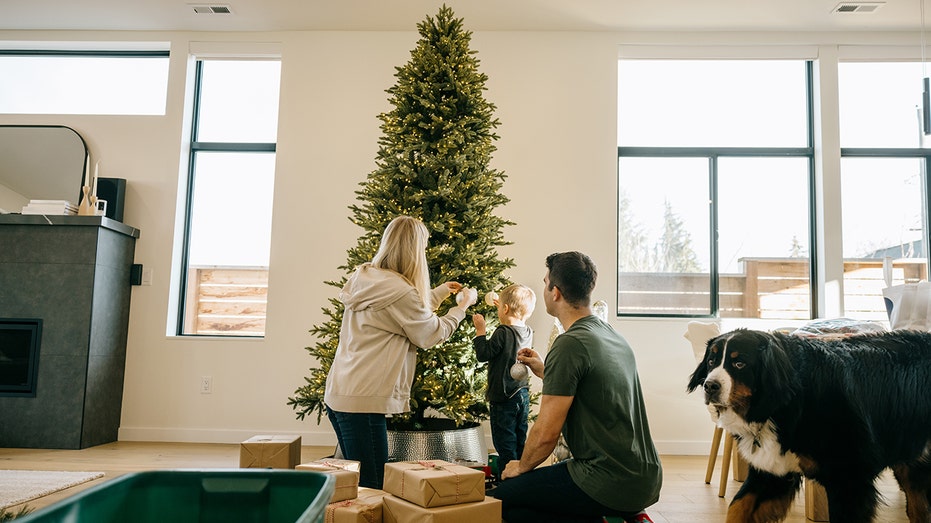
2. The erosion of child-centered traditions. One TikTok user wonders aloud, “I wonder how many kids don’t get to decorate their tree nowadays.” That question lands because it’s about agency. For decades, decorating the tree has been one of the rare moments when children’s visual taste is allowed to dominate a central part of the home. A no-ornament or tightly controlled tree shifts power back to adults—and often to the most image-conscious adult in the household.
Families that now keep a minimalist tree in the “public” living room and a second, more chaotic tree upstairs for the kids are essentially creating a two-tier system: one tree for the internet and visitors, one for private sentiment. That split tells us where authenticity ranks in the hierarchy of needs compared with external perception.
3. From memory-keeping to mood-curating. Traditional trees function as vertical family archives: every ornament a story, every smudge of glitter a reminder of a person or a year. A naked tree, by contrast, is about atmosphere—soft light, clean lines, serenity. It’s mood management rather than memory management. Given the backdrop of global and domestic stress, the desire for a visually calming holiday environment is understandable. But it also raises the question: when we declutter our visual field, what happens to the physical artifacts of our emotional lives?
Expert Perspectives: Aesthetic Choice or Cultural Shift?
Etiquette expert Jacqueline Whitmore reminds us, “Minimalism is a choice, not an obligation” and warns against shaming people over decor decisions. That’s an important point: policing others’ trees can easily become another form of lifestyle bullying.
But if we zoom out beyond etiquette, other disciplines see signals worth paying attention to.
On design and class signaling
Design historian and critic Alice Rawsthorn has written extensively about how “good taste” often maps onto elite norms. In that framework, the naked tree looks less like a spontaneous trend and more like another way that upper-middle and upper-class aesthetics become aspirational standards. What begins as celebrity styling can quickly turn into the next pressure point for ordinary households trying to keep up.
On psychology and control
Environmental psychologists have documented how people use home environments to regulate emotion and a sense of control, especially during periods of uncertainty. A stripped-back tree offers visual order in a world that feels anything but orderly. It’s no accident that minimalism’s popularity surged after the 2008 financial crisis and again during the pandemic years.
On childhood development
Child psychologists often emphasize the value of shared rituals—like decorating a tree—for attachment, memory formation, and a sense of belonging. When children are sidelined from these visual rituals in favor of an Instagram-ready living room, the trade-off isn’t just aesthetic; it’s developmental. The question, then, isn’t simply “Does the tree look good?” but “Who gets to leave their mark on the space?”
Data, Commerce, and the Minimalist Turn
While hard data specific to naked trees is limited, broader market trends point in the same direction:
- Over the past decade, sales of pre-lit artificial trees have outpaced traditional ornament-heavy setups, driven by convenience and lower long-term cost.
- Home decor retailers have steadily expanded “neutral holiday” collections—beige, white, metallics—mirroring broader interior design trends that favor muted palettes over vibrant, mixed-color decor.
- Consumer research has consistently shown that millennials and Gen Z favor “experiences over stuff,” which often translates into fewer physical decorations and more spending on travel or events around the holidays.
Retailers are not just responding to the naked tree trend; they’re amplifying it. Pre-lit, sparsely decorated trees and monochrome ornament packs simplify the process and align perfectly with influencer imagery. The result is a feedback loop: social media popularizes the look, retailers standardize it, and the aesthetic becomes easier—and more socially “normal”—to adopt.
What Mainstream Coverage Often Misses
Most lifestyle pieces frame this as a taste debate: elegant minimalism versus joyful maximalism. That’s the shallow story. What’s often overlooked:
- The class dimension: Naked trees are easier to pull off in expansive, architecturally impressive rooms. In smaller, cluttered, multigenerational homes, a bare tree can look more sad than serene. The same aesthetic signals “chic restraint” in one context and “couldn’t afford decorations” in another.
- The gender dimension: In many households, women still do most of the emotional and decorative labor of holidays. The pressure to maintain a spotless, on-trend, photographable home—now extended to the tree—adds another invisible workload, from editing which ornaments “make the cut” to managing children’s disappointment when their creations stay in the box.
- The sustainability question: Minimalism is often marketed as eco-friendly, but the reality is mixed. A bare tree can reduce consumption of cheap, disposable ornaments. Yet the push toward trend-driven decor and frequent style changes can encourage more buying over time, just in a different aesthetic.
Looking Ahead: Where the Tree Wars Go Next
Several plausible trajectories are emerging:
1. A split between “public” and “private” Christmas. Expect more households to adopt the two-tree model—one in the public-facing areas that aligns with current design trends, another in a more private space for sentimental, mismatched, and child-made ornaments. This mirrors a broader cultural split between the “feed” version of life and the messy offline version.
2. A backlash in favor of maximalism and nostalgia. Trends tend to generate counter-trends. As more celebrity and influencer trees go naked, we’re likely to see deliberate, proudly chaotic “memory trees” promoted as acts of resistance—decor as a reclaiming of imperfection and family history.
3. Quiet normalization of kid exclusion from central decor. If minimalist trees become the norm in aspirational media, fewer children will grow up with the expectation that the most visible holiday symbol is theirs to decorate. Future adults may feel less attached to physical ornaments and more to digital memories—photos and videos—of the season.
4. More overt value signaling through decor. Whether someone embraces a naked tree, a maximalist memory tree, or something in between will increasingly serve as a shortcut for broadcasting values: “I prioritize calm and aesthetics,” “I prioritize tradition and family,” or “I reject performative holiday perfection.” The tree becomes a kind of seasonal identity politics.
The Bottom Line
The naked Christmas tree isn’t just a quirky celebrity fad. It sits at the intersection of social media culture, economic stress, class signaling, and evolving ideas about family, control, and memory. The real question isn’t whether ornaments are “a must,” but whose preferences shape the tree, what gets erased in the pursuit of visual calm, and how much we’re willing to trade shared, messy traditions for curated, camera-ready serenity.
Amid those pressures, Jacqueline Whitmore’s etiquette advice lands with a broader resonance: “Minimalism is a choice, not an obligation.” The deeper challenge is to ensure that, in chasing the illusion of the perfectly clean holiday, we don’t strip the season of the very imperfections that make it human.
Topics
Editor's Comments
What looks like a harmless decor argument is, in miniature, a debate over who gets to define ‘home.’ The naked tree embodies a kind of aesthetic austerity that resonates in an age of burnout and clutter anxiety. But we should be cautious about how quickly an elite visual preference hardens into a social norm. When ‘good taste’ is equated with restraint, cleanliness, and visual quiet, anything outside that frame—color, sentimentality, children’s craft projects—can be subtly devalued. The two-tree compromise some families adopt is revealing: one version of Christmas for visitors and the internet, another tucked away for actual family life. That split raises uncomfortable questions. Are we designing our spaces to comfort the people who live in them, or to reassure an imagined audience that we’re in control? As economic and emotional pressures mount, the line between intentional simplicity and performative perfection will be one of the most important cultural fault lines to watch—holiday trees included.
Like this article? Share it with your friends!
If you find this article interesting, feel free to share it with your friends!
Thank you for your support! Sharing is the greatest encouragement for us.