Pete Alonso’s Record Orioles Deal Signals a New Phase in Baltimore’s Win-Now Gamble

Sarah Johnson
December 11, 2025
Brief
Pete Alonso’s record Orioles contract is about far more than home runs. This analysis unpacks what it reveals about Baltimore’s window, the Mets’ reset, and MLB’s evolving economics of power.
The Orioles Just Bought More Than Home Runs: What Pete Alonso’s Record Deal Really Signals
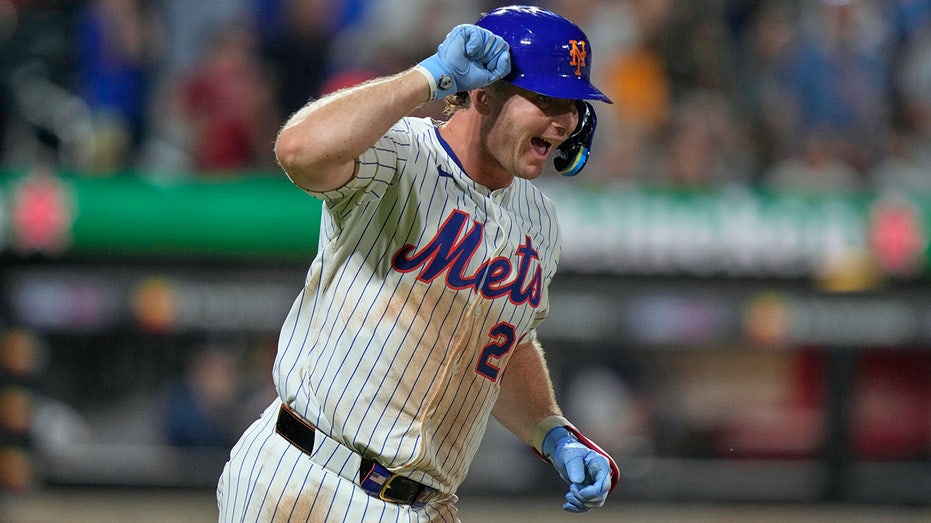
The headline number is simple enough: five years, $155 million, the highest average annual value ever for a first baseman. But Pete Alonso to the Baltimore Orioles isn’t just another big bat changing uniforms. It’s a referendum on how the Orioles see their competitive window, a verdict on the Mets’ failed contention cycle, and another data point in how power hitters are being valued in a shifting baseball economy.
Why This Move Matters Now
Baltimore is making this move after a sharp whiplash: back-to-back postseason berths in 2023 and 2024, followed by a 75–87 last-place finish in the AL East in 2025. Teams that believe their success was a fluke don’t commit $31 million per year to a 31-year-old slugger. This is a front office declaring that 2025 was the aberration—not the earlier playoff runs.
At the same time, New York’s decision to let Alonso walk after trading Brandon Nimmo and losing Edwin Díaz underscores the end of an era for the Mets. A franchise that tried to buy its way into perennial contention under a record payroll has pivoted toward a reset. Alonso leaving Queens is both symbolic and structural: the emotional core of their recent identity is gone, and so is a major piece of their middle-of-the-order production.
The Bigger Picture: Orioles’ Long Rebuild Meets a New Spending Phase
To understand Alonso in Baltimore, you have to rewind a decade. From roughly 2018 to 2022, the Orioles were the textbook example of the modern tank-and-rebuild model: minimal payroll, stockpiling high draft picks, and slow-rolling prospects through the system. The payoff was an elite young core—Gunnar Henderson, Adley Rutschman, and others—that gave the franchise one of MLB’s most enviable futures.
But there’s been a recurring criticism around Baltimore: ownership and the front office had been reluctant to convert prospect surplus into proven veteran star power. The payroll routinely sat near the bottom of the league even as the win total climbed. That model works only so long—eventually, young stars get expensive, and the margin for error shrinks.
Alonso’s deal, coupled with the additions of Ryan Helsley and Taylor Ward, looks like a strategic inflection point. Rather than simply being the clever, low-payroll upstart, the Orioles are now behaving like a franchise that believes it has a short, critical window to convert potential into championships while its young core is still relatively affordable.
Why Break the Record for a First Baseman?
In an era obsessed with positional value and defensive versatility, first base is often treated as the least efficient place to pour record money. That makes Alonso’s $31 million AAV noteworthy. So why did Baltimore go there?
- Durability as a premium: Alonso has played at least 152 games in every full season and a full 162 in each of the last two. In a sport increasingly plagued by soft-tissue injuries and load management, 30+ home runs you can reliably count on has real value.
- Power scarcity under new conditions: Since MLB cracked down on performance-enhancing drugs and periodically altered the baseball itself, 50-homer seasons have become rarer. Alonso led the league with 53 in 2019 and has remained one of the few reliably elite power bats. Teams will pay for that predictability.
- Market dynamics: With several big-market teams already committed to long, high-dollar deals at other positions, there are fewer true bidding wars for elite first basemen than for shortstops or center fielders. That makes setting an AAV record more palatable if the total years are capped at five.
The Orioles are effectively paying a premium to lock in 4–5 years of top-tier middle-of-the-order production without incurring the risk of a 7–10 year albatross contract that often characterizes slugger deals.
Fit on the Field: A Lineup Identity Shift
Baltimore’s rise had been built more on depth and balance than on a single, overwhelming slugger. The additions of Taylor Ward (36 homers last season) and now Alonso reshape that identity. The Orioles are moving from a lineup that grinds pitchers with depth to one that can end games in two swings.
For pitchers, the calculus changes. Facing the Orioles used to mean no easy outs, but also fewer true “don’t-let-him-beat-you” bats. Now, a core trio of Alonso, Ward, and the existing young stars creates real sequencing nightmares. Managers will have fewer opportunities to pitch around anyone without paying a price later in the inning.
There’s a subtle defensive trade-off: first base is not Alonso’s calling card, and Baltimore has been a team that leaned into defense and athleticism. The Orioles appear to be betting that their run-prevention apparatus—strong up-the-middle defense, upgraded bullpen with Helsley, and modern positioning—can absorb the defensive limitations while turning offensive outbursts into sustainable wins.
What This Says About the Mets’ Strategic Reset
From the Mets’ perspective, letting a homegrown, franchise-record home run hitter leave in his early 30s is both emotionally costly and analytically defensible. Analytically, big-money deals for aging sluggers often end badly; emotionally, Alonso was the centerpiece of their post-2019 identity and a fan favorite.
When a team trades Brandon Nimmo, loses Edwin Díaz, and declines to outbid for Alonso, it’s not just about luxury tax lines. It’s a statement that the competitive plan built over the last five to seven years did not deliver the expected postseason returns. The Mets are choosing to reset the timeline rather than double down by paying top-of-market prices to keep a core that hasn’t pushed them deep into October.
This move also reflects a broader trend: even wealthy clubs are becoming more selective about paying for past performance. The lesson of contracts like Albert Pujols or Miguel Cabrera is resonating. Very few teams are willing to be in the business of paying $30+ million annually for a slugger’s late-30s decline years, no matter how beloved he is.
Numbers Behind the Bet
Alonso’s stat line gives us clues about what Baltimore thinks it’s buying:
- Career power: 264 home runs through age 31 is elite territory, putting him in the company of some of the most prolific early-career sluggers of the modern era.
- Run production: 712 RBIs in seven seasons, including 126 RBIs last year, suggests consistent middle-of-the-order impact, not just empty power.
- Extra-base profile: Leading the NL with 41 doubles while also hitting 38 home runs last season indicates his power isn’t solely wall-scraping fly balls—it’s broad-based, with hard contact gap-to-gap.
- Health and reliability: 162 games in each of the past two seasons isn’t just a trivia note; it’s effectively an extra half-season of production compared with stars who miss chunks of time.
If Baltimore can get three peak or near-peak seasons and two merely good ones from Alonso, the contract is defensible. If decline comes earlier, the record AAV becomes a drag on a roster that will soon have to pay its own young stars.
Expert Perspectives
Several front office analysts have long argued that the best time to pay big for power is when your core is young and cheap.
Dr. Meredith Wills, a baseball data analyst known for her work on ball composition, has emphasized how context matters for power evaluation. If the league stays in a relatively neutral or pitcher-friendly run environment, players like Alonso, who can hit 35–45 homers regardless of environmental tweaks, become disproportionately valuable
.
Meanwhile, former GM and current analyst Jim Bowden has often suggested that successful small or mid-market teams eventually must cross the line from bargain hunting to star acquisition. The Orioles are making that leap now. As one AL executive put it privately this winter, If you’re still allergic to nine-figure contracts when your young guys are already making All-Star teams, you’re not serious about rings
.
What’s Being Overlooked
Much of the early reaction will understandably center on Alonso’s home run total and the record AAV for a first baseman. But three under-discussed angles matter just as much:
- Cultural and clubhouse impact: By all accounts, Alonso is a high-energy presence who embraced the spotlight in New York. For a young Orioles team that tasted October but then crashed, that kind of veteran anchor can stabilize expectations. He has endured both playoff pushes and underperformance with the Mets, experience that has value in a clubhouse learning how to manage pressure.
- Signaling to fans and players: A mid-spending franchise suddenly committing top-of-market money sends a clear message to the fan base: this is a team trying to win now, not merely “develop talent.” It also telegraphs to existing young stars that the organization is willing to spend to surround them with elite talent—critical when extension conversations come up.
- Future payroll tension: The flip side is that this contract, plus any forthcoming extensions for homegrown players, will push Baltimore into financial territory it has historically avoided. The real test won’t be Alonso’s Year 1 or 2; it will be how ownership behaves when his salary overlaps with arbitration- or extension-driven jumps for the current core.
Looking Ahead: Best- and Worst-Case Scenarios
In a best-case scenario, Alonso remains a 35–45 home run force for at least the first three seasons, Ward sustains his breakout power, and Helsley shores up the late innings. The Orioles’ offense reclaims its place among the league’s most dangerous, and the franchise can legitimately chase deep postseason runs while their core is in its prime.
In a more pessimistic scenario, Alonso’s bat slows earlier than expected, his defense further declines, and the contract constrains Baltimore’s ability to keep or add other key pieces. A team that once thrived on flexibility and surplus value could find itself top-heavy, with too much of its payroll tied up in a declining first baseman.
Realistically, the outcome will land somewhere in the middle: several very productive years followed by some uncomfortable decline, as is common with power hitters. The key question is whether those peak years coincide with Baltimore’s best shot at a title. If they do, the Orioles—and their fans—will gladly live with some pain on the back end.
The Bottom Line
Alonso to the Orioles isn’t just a record contract at first base; it’s the clearest signal yet that Baltimore believes its window to win is open right now. For the Mets, his departure marks a reset from an expensive, underperforming era. For MLB as a whole, the deal reinforces that in a league of evolving strategies and analytics, there is still a premium on old-fashioned, bankable power—especially when paired with durability and a young, inexpensive supporting cast.
The real judgment on this contract won’t come from its dollar figure today, but from how many meaningful October moments it helps buy over the next five years.
Topics
Editor's Comments
One underappreciated angle in deals like Alonso’s is the political economy of baseball within a given city. Baltimore has been fighting perception battles on multiple fronts: as a small- or mid-market club overshadowed by the Yankees and Red Sox, and as a franchise that, for years, appeared more committed to austerity than contention. By setting a positional AAV record, the Orioles are not only making a baseball decision but also a reputational one. They are essentially purchasing credibility in the eyes of fans, players, and even the players’ union—signaling that hard tanking was a phase, not a permanent philosophy. The question worth watching is whether this is a singular splash designed to quiet criticism or the first step in a sustained shift toward higher payrolls. If it’s the latter, Alonso’s contract may be remembered less for its dollar figure and more as the moment Baltimore redefined its place in the league’s competitive hierarchy.
Like this article? Share it with your friends!
If you find this article interesting, feel free to share it with your friends!
Thank you for your support! Sharing is the greatest encouragement for us.