Stephen Miller vs. CNN: How a Booking Spat Became a Battle Over Media Legitimacy

Sarah Johnson
December 11, 2025
Brief
Stephen Miller’s claim that CNN won’t book him is less about one guest slot and more about a strategic fight over media legitimacy, platforming norms, and the future of political debate.
Stephen Miller vs. CNN: A Small Booking Dispute That Reveals a Much Bigger Media War
On its face, the dispute is mundane: a former White House adviser says a major cable network won’t book him; the network denies it. But the clash between Stephen Miller and CNN isn’t really about one guest slot. It’s about who controls the terms of political debate in a fragmented media ecosystem—and how accusations of “partisan propaganda” have become a governing strategy, not just a campaign talking point.
What looks like a spat over airtime is actually a proxy battle over legitimacy: whose narratives count as news, who gets to confront or contest them, and how much obligation—if any—news organizations have to platform highly polarizing political actors.
The bigger picture: From crossfire to parallel universes
To understand why Miller’s claim resonates, you have to go back to a time when contentious guests were central to cable news identity. Throughout the 1990s and 2000s, shows like Crossfire and Hannity & Colmes built brands on live ideological clashes. Booking combative partisans wasn’t a glitch; it was the business model.
Three major shifts since then help explain why a figure like Miller has become such a flashpoint:
- Post-2016 radicalization of media politics. Donald Trump’s presidency turned editorial decisions—who gets booked, how often, and in what format—into overt political questions. Networks were pressured to defend or reject the administration’s claims in real time, often under threat of being labelled enemies of the people or state propaganda.
- Fact vs. platform dilemma. After the 2016 election, major outlets were criticized both for giving Trump surrogates too much airtime and for being too slow to call out falsehoods. By 2018–2020, many newsrooms adopted more stringent booking standards for officials seen as serially misleading, especially on immigration, elections, and public health.
- Acceleration of parallel information ecosystems. Conservatives increasingly turned to partisan outlets and social media as primary news sources, while liberals gravitated toward their own media universe. That has made moments of cross-ecosystem confrontation—like Miller on CNN—rarer and more theatrical, and therefore more politically valuable to both sides.
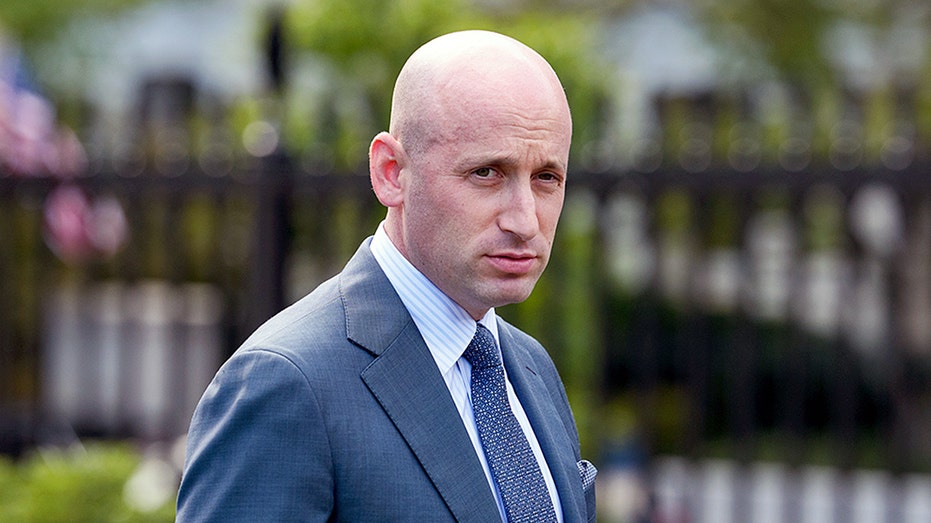
Stephen Miller is not just another talking head. As a chief architect of hardline immigration policies—family separation, the travel ban, and aggressive cuts to refugee admissions—he’s become symbolic, especially for critics, of a more nativist, combative strain of conservative politics. His presence on CNN carries symbolic weight for both his allies and his opponents.
What this really means: Legitimacy, not logistics
Miller’s claim that CNN refuses to book him, paired with the White House communications director’s accusation that CNN is a “propaganda arm of the Democrat party,” serves several strategic purposes:
- Delegitimizing mainstream arbiters. By framing CNN’s editorial decisions as fear—“they know he’d run circles around any of their hosts”—the White House recasts routine gatekeeping as evidence of bias and cowardice. The goal is not just to criticize CNN, but to erode its authority as a neutral referee in public debates.
- Creating a win–win narrative. If Miller is booked, the administration can frame his appearance as a brave foray into hostile territory. If he’s not, they can claim censorship and partisan exclusion. Either outcome feeds a narrative of persecution that motivates the base.
- Leveraging conflict as content. Miller’s previous CNN appearances were confrontational and widely shared on social media. These clashes generate viral clips that live far beyond the original broadcast. For political strategists, the primary audience may not be CNN viewers at all, but online supporters who consume the encounter as proof of “owning the libs” or “standing up to propaganda.”
- Shifting the debate from policy to process. Notice what’s missing from this latest exchange: substantive discussion of immigration policy, threats to ICE personnel, or National Guard deployments. Instead, the fight is about coverage of those topics. The meta-debate—whether CNN is fair, whether Miller is silenced—crowds out the underlying policy debate.
CNN’s response, in turn, reflects the precarious position of legacy outlets. They assert an open-door policy—“members of the administration…are welcome”—while carefully reserving the right to decide “when” and “as the news warrants.” That language is doing two things simultaneously: rejecting the idea of a blanket ban, while reminding the public that editorial judgment is not a form of political discrimination, but the core of journalism.
Data & evidence: How booking decisions became political ammunition
There are a few data-driven trends that help situate this spat:
- Trust polarization. Surveys from organizations like Pew Research Center have consistently shown that Republicans’ trust in national news outlets has collapsed more sharply than Democrats’ over the past decade. In some recent polls, fewer than 1 in 5 Republicans say they trust mainstream outlets “a lot” or “some.” That distrust is not just a background condition; it’s actively stoked by episodes like this.
- Fragmented audience incentives. Cable news ratings and digital metrics reward outrage, conflict, and intra-tribal affirmation. A fiery Miller–CNN clash may boost short-term engagement but can deepen long-term polarization. The incentives are misaligned with the public interest.
- Platforming debates post-2016. After the 2020 election, some outlets stopped inviting certain Trump-aligned lawyers and officials who pushed baseless fraud claims. That set a precedent: if a figure is consistently associated with false or inflammatory narratives, newsrooms may decide that live, uncontrolled interviews are too risky or unproductive.
Miller sits squarely at the center of this dilemma. He is media-savvy, combative, and highly ideologically driven. For outlets like CNN, the question isn’t just “Is he newsworthy?” but “Can we interview him in a way that informs rather than misleads, given time constraints and live format?”
Expert perspectives: Platforming, propaganda, and the ‘both sides’ trap
Media ethicists and political communication scholars see this kind of clash as symptomatic of deeper structural tensions.
Jay Rosen, a journalism professor known for critiquing “the view from nowhere,” has long argued that news organizations must move beyond reflexive balance—giving equal weight to all sides—and instead adopt a “truth-seeking” orientation. In that frame, not every spokesperson is inherently entitled to airtime simply because they represent a powerful office.
Political communication expert Dr. Kathleen Hall Jamieson has warned that live, confrontational segments can incentivize officials to use news shows as performance stages rather than forums for accountability. The more a guest is playing to the base at home, the less likely the exchange is to produce illumination for undecided viewers.
Media sociologist Dr. Zeynep Tufekci has also noted that outrage-based clips travel fastest on social platforms, regardless of their informational quality. That puts both CNN and Miller in a peculiar relationship: on-air conflict between them is mutually beneficial in terms of attention, even if both publicly claim the moral high ground.
What’s being overlooked: The silent cost of performative conflict
Mainstream coverage tends to frame these disputes as binary: either CNN is unfairly shutting out conservative voices, or the White House is bullying the press. What’s missing is a more nuanced look at how both sides benefit from—and are constrained by—the spectacle.
- Policy gets eclipsed. The original context for Miller’s appearance—immigration enforcement, National Guard deployments, threats to ICE personnel—has essentially disappeared from the current headline. Instead, the meta-story about “fake news hit pieces” and booking decisions dominates.
- Moderates become collateral damage. Viewers who might want to hear tough but substantive questioning of controversial policies are left with a binary choice between combative partisan shows and outlets that may appear inaccessible or hostile to certain voices. There is less space for serious, non-theatrical engagement.
- Journalistic norms are recast as partisan choices. When a network says it will decide “as the news warrants,” it’s invoking standard editorial practice. But in the current environment, those decisions are quickly reframed as acts of partisan warfare—making it harder for any outlet to maintain or rebuild trust across political lines.
Looking ahead: What to watch beyond the headline
Miller’s claim—whether or not it describes a formal booking policy—signals a few future trends worth watching:
- Increased weaponization of access. Expect more administrations and campaigns to publicly pressure outlets by publicizing booking rejections or negotiations. “They won’t have us on” is a powerful narrative in an era where victimhood can be politically lucrative.
- More explicit booking standards. To defend themselves, some news organizations may move toward more transparent criteria for platforming officials known for inflammatory or inaccurate claims. That could mean fewer live debates and more pre-taped, heavily fact-checked segments.
- Growth of partisan parallel platforms. As high-profile figures like Miller find guaranteed, unchallenged airtime on ideologically friendly networks and podcasts, the incentive to engage with adversarial outlets may decline. Occasional cross-ecosystem clashes will become more theatrical—and more weaponized—precisely because they’re rarer.
- Legal and regulatory undertones. When political leaders talk about including specific news outlets in corporate deals—such as Trump’s rhetoric about any deal to buy Warner Bros. “including” CNN—they flirt with using state or political power to reshape media ownership. Even if not acted upon, that rhetoric chills the environment in which editorial decisions are made.
The bottom line
This isn’t just a story about one advisor and one network. It’s a small, revealing skirmish in a longer war over who gets to define reality for the American public. Stephen Miller and his allies are using the language of exclusion and censorship to question the legitimacy of mainstream journalism itself. CNN, in defending its booking decisions as editorial, is trying to hold the line on traditional notions of news judgment in an era where every choice is reinterpreted as partisan.
For citizens, the risk is that we spend more time arguing about who is allowed on camera than about what those people are actually doing with political power. When performative media conflict eclipses substantive policy debate, everyone loses—except the strategists who understand that the fight over the stage can be more powerful than anything said on it.
Topics
Editor's Comments
What’s striking about the Miller–CNN episode is how little either side seems invested in persuading the other’s audience. Miller is speaking to his base, using CNN’s alleged rejection as proof of systemic bias. CNN is speaking to its own viewers and critics, emphasizing professionalism and editorial standards. Neither is really speaking to the shrinking middle that doesn’t see the press as either enemy or savior. This points to a deeper crisis: our media institutions are increasingly optimized for mobilizing the already convinced, not for building shared understanding. A contrarian question worth asking is whether the old ideal of a single national conversation, mediated by a handful of big outlets, is already gone. If that’s true, the real challenge isn’t how to get Miller back on CNN or keep him off—it’s how to create new spaces where adversaries engage in good-faith argument under conditions that reward accuracy rather than outrage. Right now, neither side has much incentive to build those spaces, and audiences are left navigating a landscape where conflict is abundant but reliable context is scarce.
Like this article? Share it with your friends!
If you find this article interesting, feel free to share it with your friends!
Thank you for your support! Sharing is the greatest encouragement for us.