Trump’s ‘Brink of Ruin’ Speech: Rewriting the Economic Story Americans Are Living Through

Sarah Johnson
December 18, 2025
Brief
Trump’s ‘brink of ruin’ speech wasn’t just about tax cuts. It’s a strategic attempt to rewrite the economic story behind inflation, affordability, and voter anger. Here’s what’s really going on.
Trump’s ‘Brink of Ruin’ Speech: Economic Narrative, Political Messaging, and the Battle Over Reality
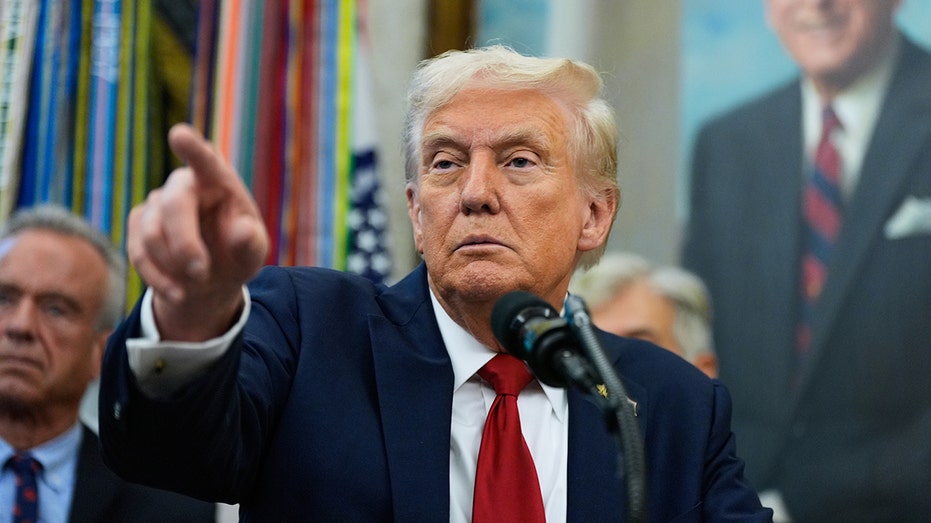
Donald Trump’s latest primetime address was less a policy update than an attempt to reset the national narrative: the United States, he argued, has been brought back from “the brink of ruin” by his hand, is now the “hottest country in the world,” and is on the verge of an unprecedented economic boom. Yet this rhetoric collides with a stubbornly negative public mood: three out of four voters say the economy feels bad.
Understanding this disconnect is the key to understanding the speech. It wasn’t just about selling a tax bill or a one-time military bonus—it was about reclaiming ownership of the economic story ahead of 2026 midterms and the 2028 presidential cycle, and about reframing pain at the grocery store and gas pump as the delayed fallout of Joe Biden’s term rather than a judgment on Trump’s own policies.
The bigger picture: A speech in a decade-long economic argument
Trump’s claim that he rescued the country from “the brink of ruin” is the latest chapter in a long-running political battle over who owns the post-pandemic economy. To unpack it, we need to trace three overlapping periods:
- The Biden stimulus era (2021–2022): Massive fiscal packages—especially the $1.9 trillion American Rescue Plan—aimed at speeding recovery from COVID. Many economists later argued that this over-stimulated demand and helped fuel the inflation spike of 2021–2023.
- The painful disinflation period (2022–2024): The Federal Reserve aggressively raised interest rates, cooling inflation but driving up borrowing costs for mortgages, cars, and small businesses. Real wages gradually caught up, but public frustration with prices became deeply entrenched.
- The Trump return and tax reset (2025): Trump’s new tax and domestic policy bill effectively made his 2017 tax cuts permanent for individuals and businesses, while adding targeted deductions for tips and overtime—high-visibility wins for workers, but with long-term fiscal costs.
Trump’s speech essentially recasts this sequence into a morality play: Biden and Democrats “looted the treasury,” caused inflation, and left a wrecked economy; Trump arrives with sweeping tax cuts and military bonuses to restore prosperity and pride. The reality is more complicated—and the public’s sour mood suggests that narrative alone cannot erase the lived experience of higher prices.
What this really means: Narrative inflation vs. price inflation
Politically, this speech signals three strategic moves:
- Owning the economic future, denying the economic present
By claiming the U.S. is “the envy of the entire globe” and on the verge of a historic boom, Trump is asking voters to focus on expectation rather than current conditions. Yet the cited poll shows 76% of voters view the economy negatively. That disconnect is not a minor messaging problem—it’s a structural trust problem. When leaders describe conditions that don’t match people’s daily lives, they risk further eroding credibility, even among sympathizers. - Reframing inflation as a partisan crime
Trump’s line that Democrats “looted our treasury for trillions of dollars, driving up prices” is shorthand for a broader conservative argument: that pandemic-era and Biden-era spending caused the worst inflation in four decades. There’s partial truth here—major institutions like the San Francisco Fed and IMF have acknowledged that U.S. fiscal stimulus contributed to higher inflation—but the speech omits the role of global supply shocks, energy shocks, and central bank policy. What’s new is the packaging: turning economic analysis into a prosecutorial narrative aimed squarely at Democrats in future elections. - Deploying symbolism to mask economic complexity
The proposed $1,776 “Warrior Dividend” to every soldier is classic Trump: an economically modest move with oversized symbolic value, wrapped in patriotic numerology tied to 1776. It reinforces his positioning as a champion of the military while sidestepping harder questions—like how permanent tax cuts, new deductions, and additional obligations fit into an already strained federal budget.
Tax cuts, tips, and the politics of ‘affordability’
The bill Trump touts contains three politically potent elements:
- Making key elements of the 2017 Tax Cuts and Jobs Act permanent, especially individual rate cuts and business provisions that were originally scheduled to expire.
- New deductions for tips and overtime pay, aimed squarely at service workers and hourly employees—two groups who have felt the sting of inflation acutely and who are acutely sensitive to take-home pay.
- Framing the package as “the largest tax cuts in American history”, a contested but recurring Republican talking point.
The political logic is clear: Democrats have been winning key races by campaigning on “affordability”—promising to lower costs for housing, health care, and daily essentials. Trump’s camp is responding with an affordability frame of its own, but through tax reductions rather than price controls or targeted subsidies.
Here’s the catch: tax cuts and price levels are not the same thing. A dollar more in your paycheck doesn’t erase the fact that rent is up 20–30% over five years in many metro areas or that grocery prices remain elevated even if inflation has slowed. The speech blurs this distinction, implying that lower taxes will directly “bring prices down,” when in practice they mostly affect disposable income, not the sticker price at the store.
Why voters still feel bad: The ‘vibecession’ reloaded
The poll data cited in the article echo a broader pattern observed since around 2022: what economists and analysts dubbed a “vibecession”—where economic indicators (growth, jobs) look reasonably strong on paper, but public sentiment remains firmly negative.
Several forces are driving that disconnect:
- Price level vs. inflation rate: Even if inflation falls, prices typically don’t go back down; they just rise more slowly. For many households, the level of prices—especially for food, housing, and insurance—still feels shockingly high compared with pre-pandemic norms.
- Debt and interest rates: The Fed’s tightening cycle made mortgages, car loans, and credit card balances more expensive. Lower unemployment is cold comfort if your monthly payment has jumped hundreds of dollars.
- Psychological anchoring: Voters tend to compare current prices to where they were 3–5 years ago, not to inflation-adjusted historical baselines. That anchoring effect keeps the sense of “everything is too expensive” alive long after price growth moderates.
Trump’s boast that the U.S. is now “the hottest country in the world” economically runs into this wall of lived experience. The danger for him is that repeated insistence on a booming economy could begin to sound as disconnected from reality as some of Biden’s earlier “Bidenomics is working” messaging—only with the partisan roles reversed.
Expert perspectives: Where the speech diverges from economic analysis
Economists and policy analysts are likely to converge on a few core points:
- On the causes of inflation: Most serious analyses assign responsibility to a mix of factors—fiscal stimulus, supply chain breakdowns, energy price shocks, and monetary policy, along with tight labor markets. Pinning it solely on “looting the treasury” overstates the case and underplays global dynamics.
- On tax cuts and growth: Empirical research on large tax cuts shows mixed effects on long-term growth, particularly when cuts are deficit-financed. The promised “economic boom, the likes of which the world has never seen” is more slogan than forecast.
- On fiscal sustainability: With the U.S. debt-to-GDP ratio already elevated, making tax cuts permanent while adding new benefits like the Warrior Dividend intensifies long-term budget pressures unless offset by spending cuts or other revenue.
In other words, Trump’s framing is politically effective but economically incomplete: it harnesses real public anger about prices while offering a simplified culprit (Democratic overspending) and a politically attractive but fiscally risky remedy (permanent tax cuts and symbolic bonuses).
Data and evidence: What’s missing from the speech
Notably absent from the address were hard numbers that would allow voters to weigh claims. Among the missing elements:
- Wage growth vs. inflation: Have real wages for middle- and lower-income workers recovered their pre-inflation purchasing power? In many sectors, they’ve only recently begun to catch up.
- Distribution of tax benefits: Who benefits most from the permanent extension of 2017 tax cuts? Nonpartisan analyses of that law consistently showed a disproportionate share of gains flowing to higher earners and corporations.
- Cost of the Warrior Dividend: A $1,776 payment to all soldiers (depending on whether this includes only active-duty Army or broader forces) could cost several billion dollars. The funding source and trade-offs were not discussed.
In the absence of numbers, the speech leans heavily on emotional cues—holiday timing, patriotic symbolism, and a promise of imminent prosperity.
Looking ahead: What to watch next
This speech is likely the opening move in a broader economic messaging campaign. Key questions going forward:
- Does the tax bill deliver perceptible gains for ordinary households by 2026? If workers in service and hourly sectors notice larger paychecks due to deductions for tips and overtime, Trump may gain traction on affordability—even if prices remain high.
- Do Republicans embrace or distance themselves from the “brink of ruin” narrative? GOP candidates in swing districts may calibrate differently, emphasizing empathy about high prices more than triumphalist rhetoric about a booming economy.
- How do Democrats respond? Expect a pivot toward emphasizing price gouging, corporate profits, and targeted relief rather than big-ticket stimulus. They will likely argue that tax cuts for businesses and higher earners won’t help families drowning in rent and medical bills.
- Will public sentiment budge? If the negative assessment of the economy stays near 70–75% going into the next election cycle, any incumbent—Trump included—will face serious headwinds, no matter how rosy the official narrative.
The bottom line
Trump’s address was less a report card on the economy than a bid to seize control of the story Americans tell themselves about it. By casting himself as the leader who pulled the nation back from “the brink of ruin,” he’s trying to pin the era of painful inflation squarely on Biden and Democrats while presenting his tax bill and military bonuses as both economic remedy and patriotic restoration.
But with 76% of voters still feeling the economy is in bad shape, narrative alone will not suffice. Unless household budgets start to feel meaningfully lighter—on rent, groceries, debt payments, and health costs—the gap between Trump’s triumphant tone and everyday reality could become a liability rather than an asset. The real battle ahead is not simply over GDP or tax rates, but over whose version of economic reality the public ultimately believes.
Topics
Editor's Comments
What’s striking about this speech is how fully it leans into narrative as economic policy. Trump isn’t just spinning numbers; he’s offering voters a story in which their hardships are the direct result of a partisan villain—Biden and Democratic ‘looting’—and their relief is tied to loyalty to his leadership. That narrative has real power, especially in an era when traditional economic metrics don’t match everyday experience. Yet this approach also carries risks. By overselling a coming boom and declaring the country ‘the envy of the entire globe,’ he raises expectations that may be impossible to meet, particularly with structural forces like housing shortages, health care costs, and demographic pressures still in play. If voters don’t feel tangible change in their monthly budgets, they may come to see these promises as more of the same political overstatement they have heard from both parties. The deeper question, which neither side is addressing honestly, is whether any short-term tax or spending tweak can solve a model where essential costs rise faster than pay over decades. Until that’s confronted, speeches like this are sophisticated messaging exercises layered on top of an unresolved economic reality.
Like this article? Share it with your friends!
If you find this article interesting, feel free to share it with your friends!
Thank you for your support! Sharing is the greatest encouragement for us.