Trump’s ‘Receipts’ on Inflation and Savings: Political Narrative vs Economic Reality

Sarah Johnson
December 18, 2025
Brief
Trump’s primetime ‘receipts’ on inflation and savings simplify a far more complex post-pandemic economy. This analysis separates political storytelling from the data and explores what it means for affordability and future policy.
Trump’s ‘Receipts’ on Biden-Era Inflation: What’s Real, What’s Rhetoric, and What Comes Next
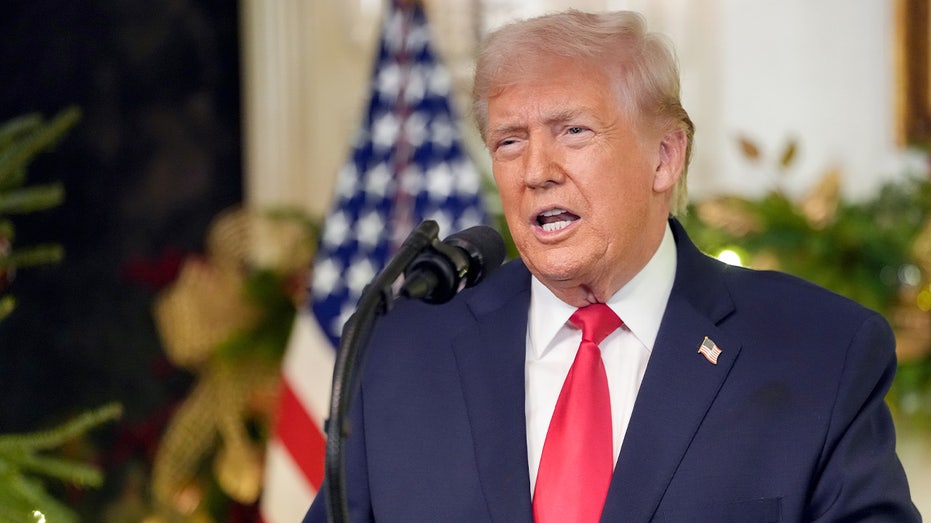
Donald Trump’s primetime address was less a conventional economic update than a bid to reframe the entire post-pandemic economy as a morality tale: Democrats as reckless spenders who “looted the Treasury,” Trump as the disciplinarian bringing America back “from the brink of ruin.” For voters who feel squeezed, the narrative is emotionally powerful. The question is whether it is economically accurate—and what it reveals about where U.S. economic policy is heading.
Beneath the boasts about turkeys, eggs, and gasoline lies a deeper political fight: who gets blamed for the inflation shock of 2021–2023, and who gets credit for the comedown that followed. That fight will shape not only the next election cycle, but the future of federal spending, worker pay, and even how we measure “affordability” in American life.
The bigger picture: Inflation, whiplash, and political memory
To understand Trump’s claims, you have to place them in the arc of the last five years:
- 2020–2021: Pandemic shock and stimulus. COVID-19 shuts down large parts of the economy. Under Trump and a divided Congress, the U.S. passes roughly $3 trillion in emergency support (CARES Act and follow-ons). Under Biden, another roughly $1.9 trillion is added via the American Rescue Plan in early 2021.
- 2021–2022: Inflation spike. Supply chains snarl, demand surges back, and energy prices rise. Year-over-year inflation peaks at about 9% in mid-2022, the highest in four decades.
- 2022–2024: The Fed slams the brakes. The Federal Reserve hikes interest rates at the fastest pace since the early 1980s. Mortgage rates double, housing affordability collapses, and consumers feel the squeeze even as wage growth picks up.
- 2024–2025: Inflation cools, prices don’t reset. Inflation falls back toward the Fed’s 2% target, but the price level remains much higher than pre-pandemic. The debate shifts from “inflation” to “affordability.”
Trump’s speech compresses this entire cycle into a simpler story: Democrats caused the inflation spike; Trump is now causing the disinflation and “savings.” That framing leaves out two critical realities: first, the bipartisan nature of the initial stimulus; second, the central role of the Federal Reserve and global supply shocks in both the run-up and the comedown.
What Trump gets directionally right—and what he leaves out
Some of Trump’s headline claims line up directionally with recent data, but the interpretation is more complicated.
On prices: from level to direction
Trump highlights specific categories:
- Cars up 22%
- Gasoline up 30–50%
- Hotel rates up 37%
- Airfares up 31%
- Mortgage “prices” up $15,000
- Thanksgiving turkey down 33% vs. last year
- Egg prices down 82% since March
The first set—cars, gas, hotels, airfare—essentially describes the price level compared with pre-pandemic or early Biden-era baselines. Those spikes are largely real and heavily documented by the Consumer Price Index. But they reflect a confluence of factors: global energy markets, supply chain disruptions, and pent-up demand, not just federal spending.
The second set—turkeys and eggs—describes changes from unusually high peaks. Egg prices, for example, were distorted by a historic avian flu outbreak that decimated flocks. As that shock eased, prices fell sharply. Trump presents that drop as proof that “his” policy is reversing Biden-era damage, but it’s mostly the market normalizing after a supply shock.
Economist Jason Furman, former chair of the Council of Economic Advisers, has repeatedly warned that “politicians overstate their role in both inflation’s surge and decline; the Fed and global factors do most of the work.” That perspective is almost entirely absent from Trump’s narrative.
On wages: the real wage story
Trump claims that under Biden, “real wages plummeted by $3,000,” while under Trump, factory and construction workers saw strong gains and “for the first time in years, wages are rising much faster than inflation.”
The core reality: when inflation surged in 2021–2022, it temporarily outpaced wage growth, causing a real income squeeze for many households. As inflation came down and nominal wage growth stayed relatively strong, real wages began to recover—especially for lower-wage workers. That improvement had begun before Trump’s recent address and is closely tied to a tight labor market, not a single administration’s budget choice.
Claudia Sahm, a former Fed economist, has noted that “the post-pandemic economy has been unusually good for workers at the bottom of the wage distribution, even after the inflation hit. That’s a story you can tell from the data, not just the rhetoric.” Trump highlights selected wage figures but doesn’t reckon with this broader pattern.
Why “affordability” is the new political battleground
Trump’s team is clearly responding to a shift in Democratic messaging. After years of defending macro metrics—GDP, unemployment, stock markets—Democrats found traction in leaning into the “affordability” crisis: rent, childcare, groceries, health care.
By claiming to “solve” affordability and painting Democrats as the cause of the crisis, Trump is trying to reclaim the kitchen-table issue that has cost incumbents across advanced democracies. This is part of a larger trend:
- Voters now care more about price levels than about inflation rates. Even if inflation is down, people still face higher bills than in 2019. Politicians who point to decelerating inflation sound tone-deaf if they ignore that.
- Economic memory is short and partisan. Many voters don’t distinguish between Trump-era COVID stimulus and Biden-era stimulus; they map all the pain onto whoever they dislike more.
- “Affordability” is a proxy for inequality and insecurity. Stagnant housing supply, corporate concentration in key sectors, and high medical costs all feed into a feeling that life is structurally unaffordable, regardless of which party is in power.
Trump is tapping into that deeper frustration but offering largely cyclical explanations—Democrats spent too much, I’m spending less—rather than addressing structural drivers like housing supply constraints or market power in food and energy sectors.
The overlooked piece: the Fed, global shocks, and fiscal hangovers
What’s striking about Trump’s address is what it barely mentions: the Federal Reserve and global economic conditions. Yet these are the central actors in the inflation drama.
- Monetary policy. The Fed’s dramatic rate hikes, not White House speeches, are what brought inflation down. Those hikes also directly produced the surge in mortgage costs Trump blames on Democrats, by pushing 30-year mortgage rates from ~3% to over 7%.
- Global energy markets. Oil prices were driven by OPEC decisions, Russia’s invasion of Ukraine, and post-pandemic demand—factors only partially influenced by U.S. administrations.
- Supply chain healing. The fall in goods prices, shipping costs, and some food items reflects global supply chains catching up, not just domestic policy pivots.
Mark Zandi, chief economist at Moody’s Analytics, has emphasized that “roughly half of the inflation surge was domestic policy and demand, half global supply shocks.” Trump’s binary story—Democrats caused it, Trump fixed it—elides that complexity.
Warrior Dividends: symbolism, spending, and precedent
Trump’s announcement of a $1,776 “Warrior Dividend” for every U.S. service member is economically small but politically symbolic.
- Cost and scale. With roughly 1.3 million active-duty personnel, the program could cost on the order of $2.3 billion—not massive in a $6 trillion federal budget, but not trivial.
- Message discipline tension. Trump criticizes Democrats for “looting the Treasury” but unveils a new cash transfer program. The difference, in his framing, is that this is targeted to the military and wrapped in patriotic symbolism (the amount matching “1776”).
- Policy precedent. If normalized, administration-branded cash bonuses to specific groups could become a recurring political tool, complicating efforts to rein in deficits that both parties publicly decry.
From a macroeconomic perspective, this payment won’t move the inflation needle. From a political perspective, it reinforces a core Trump theme: rewarding constituencies he defines as “deserving” while castigating broader social spending as waste.
What this means for future economic policy
Trump’s framing points to several likely policy and political directions:
- Renewed push for spending cuts framed as anti-inflation. Expect proposals to cut or cap domestic discretionary spending—especially in areas like climate, social services, and some health programs—under the banner of fighting inflation, even as defense and targeted benefits like the Warrior Dividend are protected.
- Pressure on the Fed. Public rhetoric that credits the administration for lower prices can morph into political pressure on the Fed to keep rates lower than they otherwise would, risking new inflation flare-ups if growth re-accelerates.
- Selective industrial policy. Trump’s emphasis on factory, construction, and mining wages suggests continued support for tariffs, energy production, and certain “strategic” industries, which can sometimes raise consumer prices even as they boost specific worker incomes.
- Data wars. Expect competing “receipts” as both parties cherry-pick timeframes and categories—Thanksgiving turkeys vs. rent hikes, gas prices vs. childcare costs—to tell opposite stories about the same economy.
Expert perspectives: competing readings of the same data
Different economists interpret the Trump-era and Biden-era economy through sharply different lenses.
Larry Summers, former Treasury Secretary, has criticized the scale of Biden’s early stimulus as “the least responsible macroeconomic policy we’ve had in 40 years,” arguing it clearly contributed to inflation—but he’s also underscored that “policy under both administrations failed to anticipate the inflation challenge.”
Heather Boushey of the Council of Economic Advisers has countered that “the cost of doing too little during the pandemic—lost jobs, business failures, long-term scarring—would have been far higher than the cost of confronting inflation later,” framing the inflationary fallout as a manageable side effect of avoiding a deep depression.
What Trump’s address signals is that the political system is not yet ready for that nuanced trade-off conversation. Instead, each party is committed to retrofitting the data to vindicate its choices and condemn the other’s.
Looking ahead: what to watch
In the coming months, several developments will test Trump’s narrative and Democrats’ counter-claims:
- Real wage trajectories. If inflation continues to ease while nominal wage growth stays positive, more households will feel genuine improvement, undermining doomsday narratives from either side.
- Housing affordability. Even with stable or slowing home prices, high mortgage rates keep ownership out of reach. Unless rates fall or supply expands meaningfully, the “housing crisis” will remain a potent issue Democrats can pin on current policy and Fed decisions alike.
- Deficit politics. Both parties promise fiscal responsibility while advancing tax cuts or targeted spending. Markets will eventually test how much latitude Washington has before higher interest costs force more painful choices.
- Global shocks 2.0. Another oil shock, geopolitical conflict, or supply disruption could reignite inflation and scramble all narratives. The way each side has hardened its storylines now may limit flexibility later.
The bottom line
Trump’s “receipts” are less a neutral audit of the Biden-era economy than a carefully curated narrative aimed at voters who feel that life became unaffordable on someone else’s watch and is now—slowly—getting better. Some of the broad strokes are grounded in reality: the inflation spike did coincide with Democratic governance; the recent easing has brought partial relief; many Americans still feel squeezed.
But the underlying drivers—pandemic shocks, global energy markets, the Fed’s rate hikes, and years of structural problems in housing and healthcare—do not map neatly onto red and blue timelines. As long as the debate remains framed as Biden vs. Trump rather than as a systemic reckoning with affordability, voters will continue to get more heat than light. Trump’s address is a vivid example: rhetorically effective, politically potent, and economically incomplete.
Topics
Editor's Comments
One critical element missing from most public debate—including Trump’s address and much of the Democratic response—is the intergenerational dimension of today’s affordability crisis. Younger Americans, especially those in their 20s and 30s, experienced the pandemic shock just as they were trying to form households, buy homes, and build careers. They faced the worst of the labor market shutdown, then the worst of the inflation spike, and now the worst of high interest rates. For them, the question isn’t whether prices are down a few percentage points since last Thanksgiving; it’s whether they will ever be able to catch up with exploding housing costs and student debt while supporting future families. A politics that reduces this to point scoring over turkeys and eggs risks alienating a generation that increasingly doubts the system’s fairness. The deeper challenge for both parties is whether they can move beyond short-term narratives and confront the structural drivers—zoning, market concentration, education and healthcare costs—that have made each macroeconomic shock so damaging to those starting from behind.
Like this article? Share it with your friends!
If you find this article interesting, feel free to share it with your friends!
Thank you for your support! Sharing is the greatest encouragement for us.