Unlocking Loyalty: How a 16th-Century Ring Near Bushwood Hall Sheds New Light on the Gunpowder Plot

Sarah Johnson
December 3, 2025
Brief
A recently found 16th-century gold ring near Bushwood Hall reveals new insights into the Gunpowder Plot, illustrating the secret bonds and regional Catholic networks that sustained one of England's most notorious conspiracies.
Opening Analysis
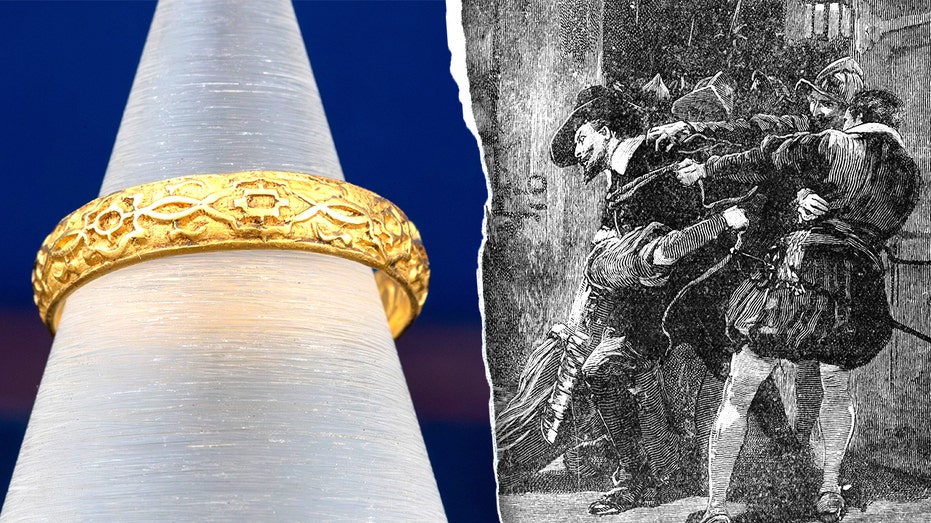
The recent discovery of a 16th-century gold ring near Bushwood Hall in Warwickshire rediscovered a tangible link to one of England’s most enduring historical dramas: the Gunpowder Plot of 1605. More than a mere artifact, the ring’s inscription and provenance offer a rare window into the complex interplay of loyalty, rebellion, and religious strife that shaped early 17th-century England. As the piece heads to auction, its significance extends far beyond its £12,000 estimated value, inviting us to re-examine the conspirators’ social networks, regional Catholic resistance, and the material culture that underpinned their covert operations.
The Bigger Picture
The Gunpowder Plot—an audacious attempt by a faction of English Catholics to blow up the Houses of Parliament and assassinate King James I—remains a defining moment in British history. Rooted in the religious tensions of post-Reformation England, the conspiracy sought to reverse Protestant dominance and restore Catholic influence under what the plotters viewed as a tyrannical regime. While Guy Fawkes is the figurehead of the plot, the mastermind was Robert Catesby, born at Bushwood Hall, near where this ring was found. This geographic detail situates the artifact close to the epicenter of Catholic recusant activity in the Midlands.
In early 17th-century England, Catholics faced harsh persecution, fines, and surveillance. Regions like Warwickshire harbored tight-knit Catholic communities who provided sanctuary and material support to conspirators. Bushwood Hall itself was more than a birthplace; it was a refuge and a tactical base for storing supplies. The ring’s proximity to the hall—near its moat and along an isolated track—lends credence to its association with Catesby’s circle.
What This Really Means
The inscription "Your Frende in Deede" is particularly illuminating. This phrase suggests a commitment that transcended words—implying action, perhaps even violence or sacrifice, in allegiance to a cause. Rings historically have been tokens of fidelity, oaths, and affiliations, especially in secretive or militant circles. In the context of the Gunpowder Plot, this ring could have functioned as a discreet symbol of loyalty among conspirators, a mark of trust who shared a dangerous cause under threat of capital punishment.
This artifact thus provides material culture insight into how political and religious dissenters maintained solidarity and communicated commitment. It also humanizes a story often reduced to mythologized figures and event timelines. Instead of abstract historical actors, we glimpse individuals bound by personal relationships and tangible symbols tied to specific places.
Expert Perspectives
Charles Hanson, the auctioneer, emphasized the importance of the Midlands’ Catholic population as a protective network allowing conspirators mobility between safe houses. He noted, “Guy Fawkes, Catesby and their network—many of whom were related by blood or marriage—moved between safe houses in the Midlands. They were protected by the region’s large Catholic base, which, like them, [were] against the king.”
Archaeological historian Dr. Emily Bennett of the University of Warwick notes, “Artifacts like this ring open new avenues to understand the social fabric of rebellion. While much attention focuses on grand political narratives, such objects reveal the everyday bonds and personal risks these conspirators undertook.”
Religious historian Professor Mark Smith adds, “The Gunpowder Plot was not just a political event but a climax of decades of sectarian exclusion. Items such as this ring symbolize the intersection of faith, loyalty, and resistance, underscoring the plotters’ deep conviction and desperation.”
Data & Evidence
Approximately 70% of England’s Catholic recusants in the early 1600s were concentrated in northern and midland counties, including Warwickshire, reinforcing the region’s importance as a Catholic stronghold. Records indicate that the Catesby family held significant local influence and that Bushwood Hall was a known sanctuary. Metal detecting finds in Warwickshire have revealed other 16th-17th century artifacts linked to recusant families, but this ring’s explicit inscription elevates its significance. Auction experts estimate £12,000 for its sale, reflecting both rarity and provenance.
Looking Ahead
The auction of this ring on November 27 will likely spur renewed public and academic interest in the Gunpowder Plot, potentially fueling further archaeological investigations around Bushwood Hall and Warwickshire. This find may encourage historians to reassess the covert material networks of the plotters and challenge the narrative that isolates Guy Fawkes as the sole iconic figure. Collectors and institutions might also seek out related artifacts, opening avenues for exhibits that contextualize the human stories behind the political thriller.
Beyond historical scholarship, this discovery invites reflection on how communities under religious or political duress forge hidden bonds—a timely consideration amid contemporary debates on state power, dissent, and loyalty.
The Bottom Line
This gold ring is more than a relic; it is a tangible thread connecting us to one of England’s most gripping conspiracies. Its provenance near Bushwood Hall, personalized inscription, and timing anchor it as a material testament to the intertwining of faith, loyalty, and rebellion. As it comes to auction, it reminds us that history is not simply made by grand gestures but also by intimate, secret acts that ripple through time.
Topics
Editor's Comments
This discovery invites us to reconsider the Gunpowder Plot beyond familiar legends and into the realm of personal relationships and material culture. Too often, history reduces the event to Guy Fawkes and the failed explosion, overlooking the human dimension of conspiracy—the friendships, family ties, and risks extending into daily life. The ring’s inscription implies a profound statement of active loyalty, highlighting the conspirators’ readiness to commit beyond mere words. It also reminds us that rebellion is lived, physically and emotionally, through objects and places. Looking ahead, it will be vital for historians and archaeologists to explore these more nuanced perspectives that deepen our understanding of political dissent as a social and cultural phenomenon.
Like this article? Share it with your friends!
If you find this article interesting, feel free to share it with your friends!
Thank you for your support! Sharing is the greatest encouragement for us.