U.S. Stakes in the 2026 U.N. Secretary-General Race: Geopolitics, Ideology, and Global Leadership

Sarah Johnson
December 6, 2025
Brief
An in-depth analysis of the 2026 U.N. Secretary-General race reveals shifting global power dynamics, challenges for U.S. diplomacy, and the high stakes of selecting a candidate aligned with Western values.
Why the U.N. Secretary-General Selection Matters Now More Than Ever
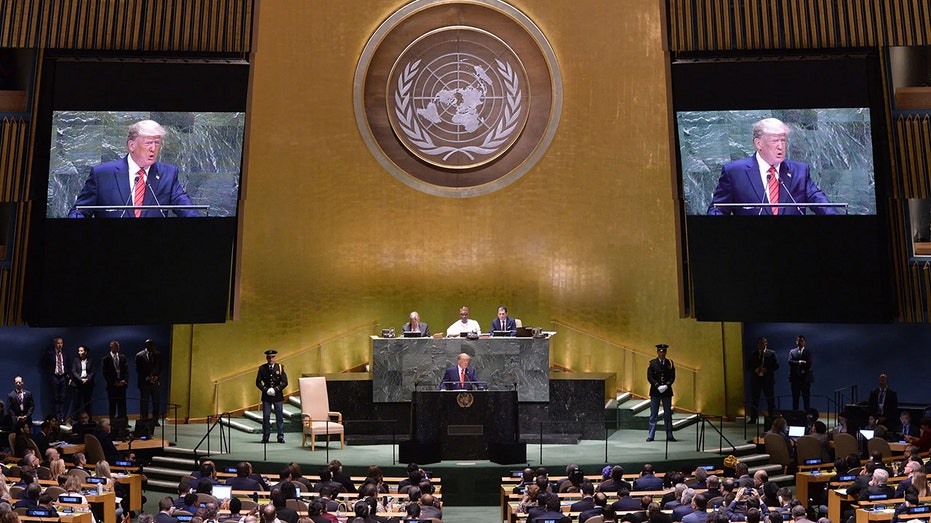
The upcoming 2026 transition for the next U.N. Secretary-General (SG) has evolved into a highly consequential geopolitical contest—one that the United States must actively shape or risk marginalization within a global institution that increasingly questions Western, particularly American, leadership. With the incumbent António Guterres facing criticism of bias and anti-American sentiment surfacing across the U.N., the struggle over his successor is reflective of broader shifts in the international order. This race highlights deepening geopolitical rivalries, ideological polarization inside the U.N., and the declining ability of the organization to represent U.S. interests effectively without direct engagement.
The Historical Context: U.N. Leadership as a Microcosm of Global Power Struggles
Since its establishment in 1945, the United Nations has served as a forum where post-World War II powers projected influence, sometimes collaborating but often competing. The selection of U.N. Secretaries-General has historically mirrored the prevailing geopolitical currents, balancing the interests of superpowers and regional blocs. During the Cold War, the U.N. was often a frontline for ideological confrontation between the U.S. and the Soviet Union, with leadership appointments carefully negotiated to avoid alienating either side.
The end of the Cold War briefly ushered in hopes for a more collaborative internationalism under the U.N., but recent decades have seen renewed tensions—particularly as powers like China and Russia assert their global ambitions and challenge Western dominance. The Secretary-General's role has simultaneously shifted from primarily administrative to symbolically representing multilateral diplomacy’s values and priorities.
Antonio Guterres, former socialist prime minister of Portugal, epitomizes the complicated legacy of U.N. leadership in the 21st century. His tenure has been marked by criticism over perceived partiality, especially regarding the Israeli-Palestinian conflict, and accusations that the U.N. under his leadership has leaned disproportionately towards anti-American stances. These tensions expose the U.N.’s internal challenges with balancing neutrality and the powerful political pressures from member states.
Power Dynamics and Political Motivations Underpinning the Next Selection
The 2026 selection process is unfolding amid an increasingly polarized U.N. environment. Russia and China, wielding veto power on the Security Council, aim to block candidates aligned with U.S. and Western values, underscoring how the U.N. has become a battleground for great power competition rather than a purely cooperative international body. This reality complicates Washington's ability to influence the process, despite the U.S. being the largest financial contributor.
Experts like Anne Bayefsky and Jonathan Wachtel emphasize the necessity for the U.S. to proactively endorse and elevate candidates who can effectively champion core ideals like human rights, democratic governance, and international peace—ideals the U.N. was founded upon but that appear under increasing strain. The candidacies of established U.N. insiders and left-leaning politicians from Latin America and elsewhere reflect a broader ideological shift within the organization, one that risks further alienating Washington unless countered strategically.
Evaluating the Candidate Field: Who Aligns With U.S. Interests?
The most palatable candidate for the U.S. appears to be Rafael Grossi, director of the International Atomic Energy Agency. His courageous handling of sensitive issues like Iran’s nuclear ambitions and safety concerns amid the Russia-Ukraine conflict earns him praise, marking him as a pragmatic, security-focused contender who understands the U.N.’s critical global responsibilities.
In contrast, other front-runners such as former Bolivian Vice President David Choquehuanca and former U.N. human rights chief Michelle Bachelet come with political histories that raise doubts within U.S. policy circles. Their perceived anti-Western or lackluster stances undermine their acceptability from a Washington perspective. Similarly, candidates like Rebeca Grynspan, with long careers entrenched in U.N. bureaucracy, may resist transformative reforms desired by those seeking a reinvigorated U.N. aligned with Western priorities.
The presence of left-leaning activists and U.N. insiders as likely nominees illustrates not only ideological divides but also the growing assertiveness of emerging powers and regions seeking to redefine the global governance architecture.
Broader Implications for the U.S. and Global Order
The outcome of this election is more than a personnel decision. It represents who will guide the world’s most prominent international organization through an increasingly fractious geopolitical era defined by competing visions of sovereignty, human rights, and global cooperation. An anti-American or passive Secretary-General could exacerbate U.S. diplomatic isolation, weaken collective responses to crises, and embolden authoritarian challengers to democracies.
More broadly, the election spotlights the declining unilateral influence of the U.S. within the multilateral system. With China and Russia leveraging veto power and support for candidates inclined against Western norms, the U.S. risks ceding control over the agenda of an institution that shapes peacekeeping, humanitarian aid, international law, and economic development initiatives worldwide.
Expert Perspectives Highlighting Strategic Challenges and Opportunities
Anne Bayefsky, Director of the Touro Institute on Human Rights and the Holocaust, explains, "The U.S. has historically underappreciated the strategic importance of the U.N. Secretary-General’s office, often treating it as peripheral rather than a frontline of diplomatic influence. Our funding conveys more than generosity—it buys us leverage that goes unexploited." Bayefsky warns, “We take a back seat in this election at our peril.”
Jonathan Wachtel, former senior policy advisor at the U.S. Mission to the U.N., notes, "The Security Council’s veto powers give Russia and China outsized influence over the candidate selection, creating a structural disadvantage for the U.S. to advance candidates reflecting liberal democratic values. The next Secretary-General must embody backbone to defend the founding ideals—life, liberty, and pursuit of happiness—amid rising authoritarian contestation."
Brett Schaefer, senior fellow at the American Enterprise Institute, critiques the leaked candidate pool as “overly insular and left-leaning, many are U.N. insiders resistant to reform. Rafael Grossi is a rare exception, but the U.S. needs to seriously back candidates who can shake up the status quo, not perpetuate it.”
Data & Trends Illustrate Shifting Power and Perception
- U.S. contributes approximately 22% of the U.N. regular budget and nearly 28% of its peacekeeping budget, making it the largest single financial backer.
- Since 2000, no U.S.-aligned candidate has been selected Secretary-General, reflecting a gap between U.S. preferences and global consensus at the U.N.
- Surveys reveal increasing skepticism among Western audiences about the U.N.'s effectiveness and impartiality, particularly on issues concerning Israel and human rights.
- Russia and China have cast Security Council vetoes to block Western initiatives median of 12 times annually since 2015, illustrating their growing assertiveness.
Looking Ahead: What to Watch in the Upcoming Election Cycle
Throughout 2025 and into 2026, expect intensive lobbying by member states and diplomatic maneuvering within the Security Council’s straw polls that narrow the candidate pool. The U.S. must decide whether to play a proactive role endorsing strong candidates or risk ceding ground to contenders aligned with China and Russia.
The possibility of the first female Secretary-General remains a salient factor, with calls for gender equity in leadership resonating across member states. However, this criterion could reinforce candidacies that are symbolic rather than strategically effective unless coupled with commitments to organizational reform.
Internally, the U.N. faces pressure to reform management and increase transparency, but entrenched bureaucracies promote resistance. The next leader’s ability to deliver real change is uncertain but pivotal for restoring the U.N.’s credibility and U.S. interests.
The Bottom Line
The 2026 U.N. Secretary-General election crystallizes the deeper struggle for ideological and geopolitical influence within a fragmented global order. For the U.S., it is a critical juncture to determine whether it will lead from the front or resign itself to marginalization within international institutions it helped build. Ensuring the selection of a Secretary-General who upholds Western democratic ideals and manages the organization effectively represents an urgent strategic imperative.
Topics
Editor's Comments
This leadership contest is a crucial test not just of U.S. diplomatic influence but of the United Nations’ future relevance. The growing sway of authoritarian states over the U.N.’s agenda threatens to transform an institution conceived as a platform for peace and cooperation into a battleground for geopolitical rivalry. For the U.S., complacency is not an option. The decision will reverberate across global governance, affecting issues from nuclear nonproliferation to human rights enforcement. The Trump administration's position and strategy here could signal whether the U.S. chooses renewed engagement with multilateralism or retreats further into unilateralism. Moreover, calling attention to the ideological spectrum of candidates helps readers see that this is more than a procedural election—it’s a clash over the U.N.’s very identity.
Like this article? Share it with your friends!
If you find this article interesting, feel free to share it with your friends!
Thank you for your support! Sharing is the greatest encouragement for us.