When the Desert Remembers Water: What Death Valley’s Ancient Lake Really Tells Us

Sarah Johnson
December 16, 2025
Brief
Lake Manly’s dramatic return in Death Valley is more than a viral oddity. It’s a visible climate signal reshaping desert hydrology, tourism, and risk in one of America’s most extreme landscapes.
Death Valley’s Ancient Lake Is Back. It’s Not Just a Curiosity — It’s a Climate Warning.
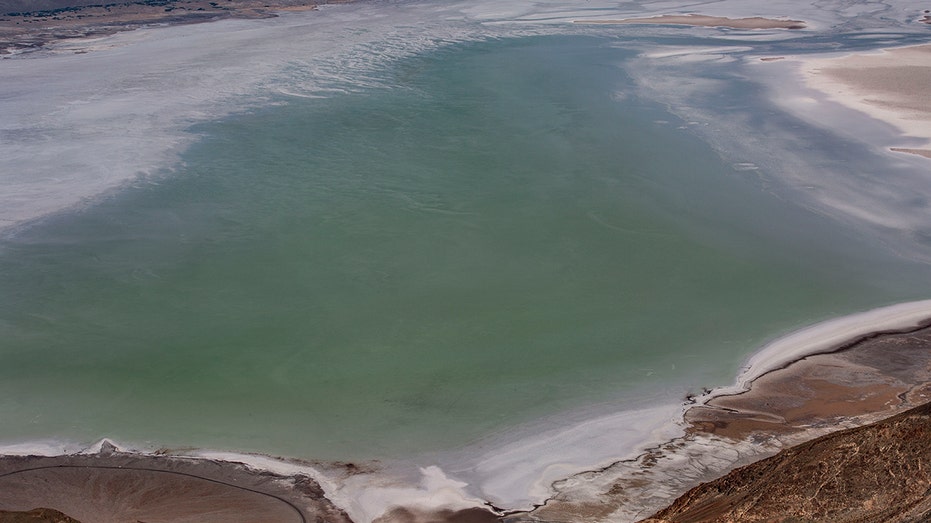
Death Valley’s fleeting rebirth of Lake Manly looks, at first glance, like a feel-good oddity: an ancient Ice Age lake briefly returning to one of the hottest, driest places on Earth. But underneath the viral photos and tourism bump is a more serious story about how a rapidly changing climate is reshaping even the most extreme landscapes — and what these rare lakes can quietly reveal about our future.
A desert that remembers its past
Badwater Basin sits 282 feet below sea level, at the bottom of a vast geological bowl. During the last Ice Age, that basin held Lake Manly — roughly 100 miles long and up to 600 feet deep, part of a chain of enormous lakes that once covered much of the U.S. Great Basin. As the climate warmed over thousands of years, those lakes retreated, leaving behind salt flats, playa clay, and a few remnant lakes like Pyramid Lake and Great Salt Lake.
Death Valley’s lakebed is essentially a fossilized memory of that wetter past. Every time a rare sequence of intense storms moves through, that memory briefly becomes visible: the basin fills, mineral crusts dissolve, and water spreads out across the desert floor, only to evaporate again.
What’s different now is not that the lake has reappeared — that has happened episodically — but how frequently and how intensely we’re seeing these extreme rain events in one of North America’s driest corners.
From statistical fluke to climate signal
Between September and December, Death Valley logged 2.41 inches of rain — more than it normally receives in an entire year — including a record 1.76 inches in November alone. That follows Hurricane Hilary’s remnants dropping 2.2 inches in 2023 and another 1.5 inches from an atmospheric river in early 2024, enough to briefly support kayaking on the basin.
On paper, those numbers sound small. In context, they are enormous. Death Valley’s average annual rainfall is around 2 inches. To get more than a year’s worth in a few months — and to repeat that pattern multiple times in a short span — shifts this from meteorological oddity to climate signal.
Climate scientists have been warning for years that a warming atmosphere holds more moisture, intensifying both droughts and downpours. Arid regions are particularly vulnerable to this swing: longer dry spells punctuated by short, violent storms. The pattern that produced Lake Manly’s rebirth is a textbook example of that new regime.
A mirror of an Ice Age — and a preview of a hotter one
Historically, the existence of Lake Manly helped scientists decode the last Ice Age. Shoreline terraces, sediment layers, and fossil remains around Death Valley tell a story of cooler temperatures, more persistent storms, and a regional hydrology that could sustain deep lakes over millennia. The lake’s disappearance marked the shift to the hyper-arid climate we associate with Death Valley today.
Today’s shallow reincarnation isn’t a sign we’re “going back” to that wetter past; it’s more like a visual side effect of a different kind of climate disruption. Where the Ice Age lakes were maintained by sustained cool and wet conditions, the modern Lake Manly is created by short-lived pulses of extreme moisture riding on a hotter atmosphere and falling on a landscape that has been baked dry.
In that sense, the lake is a paradox: it looks like a return to water abundance, but it’s actually evidence of hydrological volatility. The system is swinging more wildly between extremes of wet and dry — a pattern we’re also seeing in the American Southwest’s reservoirs, from Lake Mead’s record lows to sudden inflows during wet years.
Why these floods are especially dangerous in deserts
Deserts like Death Valley are structurally unprepared for deluges. After long dry periods, soils become hydrophobic and compacted. Sparse vegetation means there are few roots to slow runoff. When intense rain hits, it tends to run off rather than soak in, carving gullies, triggering debris flows, and funneling water into low-lying basins like Badwater.
In the near term, that means higher risks for visitors: flash floods that wash out roads, isolate tourists, or damage infrastructure. Recent years have already seen roads in Death Valley destroyed by flooding, forcing closures and costly repairs. The same systems that fill Lake Manly can at the same time rip apart the park’s lifelines.
Over decades, repeated flooding can subtly redraw the landscape, reworking alluvial fans and sediment deposits. For geologists, that offers a rich record of how storm patterns are changing; for park managers, it’s a growing bill and a moving target for maintenance and safety planning.
Tourism surge: opportunity and risk
The brief return of Lake Manly has already boosted business at nearby lodgings by an estimated 20–30%. This tourism spike illustrates a recurring pattern: climate-driven anomalies become instant attractions. We’ve seen it with unusually early fall colors, once-in-a-generation wildflower superblooms, and even with receding glaciers drawing “last chance tourism.”
That creates a tension for park management. On the one hand, increased visitation helps local economies and can raise public awareness about climate change. On the other, surging crowds converge on a fragile, water-logged surface not meant to bear heavy foot traffic or off-road parking. Playa sediments can be easily scarred by footprints and tire tracks, leaving marks that last for decades.
And unlike a permanent lake, Lake Manly is short-lived and deceptive. Depths can vary dramatically across a few meters; what looks like a shallow reflective surface might conceal deep, sticky mud that can trap vehicles or injure hikers. The tourist draw arrives faster than safety messaging and management can adapt.
Overlooked angle: water that doesn’t stay, and what that tells us
Most coverage has focused on the novelty of a lake in Death Valley, but the more pressing question is what doesn’t happen: almost none of this water ends up stored in groundwater or long-term reservoirs. Instead, it spreads thinly across the playa and evaporates, reinforcing the region’s salt flats.
In a West plagued by long-term water stress, this is a sobering reminder: extreme rainfall alone won’t solve chronic shortages. Without infrastructure or natural systems that can slow, spread, and sink water into aquifers, megastorms function more like spectacle than relief.
Lake Manly is an extreme example of a broader Western pattern: a hydrological system engineered and evolved for a different climate, now struggling to capture and use increasingly erratic water pulses. The spectacle in Death Valley underscores how much of the region’s climate adaptation challenge is about timing and storage, not just total precipitation.
What scientists are watching closely
For researchers, temporary lakes like this are more than a curiosity. They’re living laboratories. Hydrologists and climate scientists can use them to:
- Measure how quickly water is lost to evaporation in extreme heat, sharpening models of future water balance in arid regions.
- Study sediment layers and chemical changes as water fills and recedes, comparing them to ancient lake deposits to better interpret paleoclimate records.
- Track microbial and invertebrate life that springs up when water arrives, offering clues about ecosystem resilience and dormancy in extreme environments.
These observations feed directly into models that guide everything from Western water policy to predictions about how other deserts — from the Middle East to central Asia — may respond to rapid climate shifts.
Expert perspectives: an alarm hidden in a postcard image
Many experts see Lake Manly’s return as emblematic of a climate era defined by extremes rather than subtle shifts.
Desert climatologists point out that the frequency of these big rain events in Death Valley is increasingly hard to explain without factoring in human-driven warming. Hydrologists note that such lakes show how much more “flashy” desert hydrology is becoming — more runoffs, more floods, little long-term storage.
Economists and risk analysts, meanwhile, highlight how climate anomalies can temporarily boost tourism while simultaneously increasing infrastructure risk and emergency response costs. That balance is especially delicate in parks with limited budgets and aging roads and facilities.
Looking ahead: a future of more weirdness, not stability
Based on current climate projections for the American Southwest, several trends are likely:
- More intense downpours during the rare times it does rain in Death Valley, increasing the odds of ephemeral lakes, but also of destructive flash floods.
- Even higher evaporation rates as average temperatures rise, making long-lasting lakes less likely even when rainfall totals spike.
- Greater pressure on park infrastructure as roads, culverts, and visitor facilities face both extreme heat and repeated flood damage.
- Growing “climate spectacle” tourism — visitors chasing rare events like lakes in deserts, superblooms, or snow in unusual places.
How parks respond will vary, but the underlying challenge is shared: how to manage places designed and interpreted as stable icons ("the hottest, driest, lowest" valley) in a world where instability is becoming the norm.
The bottom line
Lake Manly’s return is not just a picturesque anomaly. It’s a visible marker of how the hydrology of the American West is shifting under climate change. In one of the driest spots on the continent, water is suddenly appearing in dramatic but short-lived bursts, offering little long-term relief while increasing risks and costs.
The shimmering water at Badwater Basin is, in many ways, a mirror: it reflects an ancient past when giant lakes ruled the Great Basin, and a volatile present in which water arrives more violently and vanishes more quickly. Understanding that dual story — not just snapping photos of a temporary lake — is key to grasping what this moment in Death Valley really tells us about the future of dry places everywhere.
Topics
Editor's Comments
The public framing of Lake Manly as a charming oddity risks missing the key story: we’re normalizing climate disruption by treating it as spectacle. A lake in Death Valley should prompt hard questions about infrastructure and policy, not just Instagram moments. Why are we still managing national parks and Western water systems around historical averages that no longer apply? The fact that so much of this new water simply evaporates is an indictment of our adaptation planning. At the same time, there’s a danger in over-reading a single event as definitive proof of any one climate scenario. The more responsible lens is to see Lake Manly as one tile in a mosaic of evidence: megafires, record heat, reservoir swings, and now ephemeral desert lakes. Together, they demand a shift from reactive repairs—fixing a washed-out road here, a flooded trail there—to proactive redesign of how we live with extremes in places long assumed to be stable, even when they were never truly so.
Like this article? Share it with your friends!
If you find this article interesting, feel free to share it with your friends!
Thank you for your support! Sharing is the greatest encouragement for us.