Airport Showers, Healthy Travel and the New Class Divide in the Skies

Sarah Johnson
December 16, 2025
Brief
Airport showers are more than a quirky perk. They reveal how wellness, status, and public policy collide in modern travel — and why ‘healthy’ airport design may deepen inequality if left to the market.
Airport Showers and the New Politics of “Healthy Travel”
Showers at airports sound like a quirky travel perk. In reality, they sit at the intersection of three powerful forces: the commercialization of wellness, the stratification of air travel, and a quiet policy shift toward "healthier" infrastructure. The growing push for airport showers is less about hot water and fresh socks — and more about who gets to feel human in an increasingly punishing travel system.
Why this story matters
Airport showers moving from rare luxury to sought-after amenity is a signal. It shows how airlines, airport authorities and governments are repositioning health and wellness as both a marketing tool and a quasi-public good. It also exposes a stark divide: wellness-oriented amenities are expanding, but largely behind the paywalls of status tiers, memberships and premium lounges.
As long-haul flying surges back after the pandemic and governments tout “family-friendly” and “healthy living” initiatives in travel hubs, airport showers become a proxy for bigger questions: Is wellness becoming yet another marker of inequality? Are airports quietly turning into semi-private clubs for those who can pay? And what would it look like if we treated basic recovery from travel as a public health need rather than an elite privilege?
The bigger picture: From glamorous lounges to wellness-industrial complex
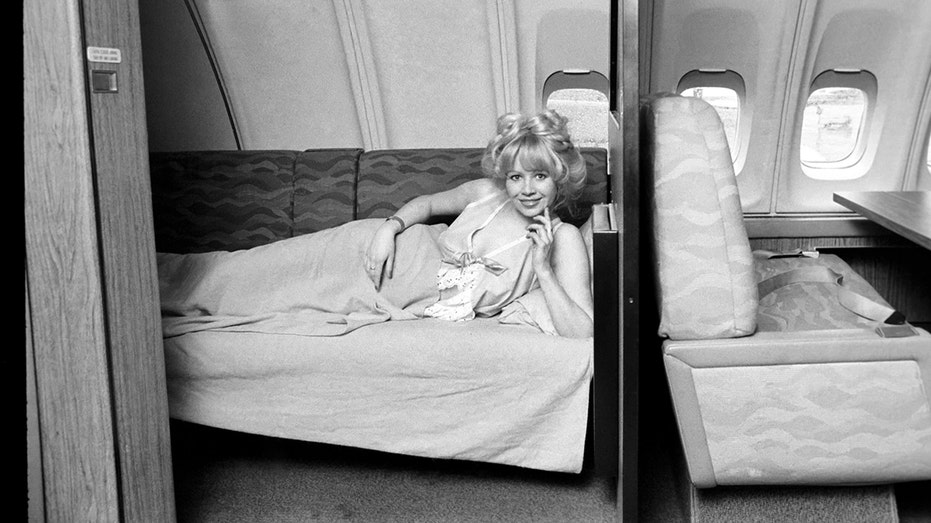
Once upon a time, airport lounges and showers were symbols of jet-set exclusivity. In the 1960s and 70s, flagship lounges for national carriers were designed for business elites and diplomats. Showers were a niche amenity in a handful of major international hubs, primarily in Europe and Asia, where ultra-long-haul flying created obvious demand for a mid-journey reset.
The 1990s and early 2000s brought a shift. Airline deregulation, global alliances, and more competitive premium cabins pushed carriers to differentiate through experience: lie-flat seats, on-board chefs — and increasingly sophisticated lounges featuring spas, nap rooms and showers. But access remained tightly controlled: first and business class passengers, high-status frequent fliers, or holders of certain credit cards.
Two developments changed the equation:
- The democratization of long-haul travel. Low-cost carriers and cheaper fares opened long-distance travel to middle-class leisure travelers and remote workers. More people were experiencing 14-hour flights and brutal layovers — but without premium tickets.
- The rise of the wellness economy. Global wellness spending has ballooned to an estimated $5–6 trillion annually, according to the Global Wellness Institute. Airports, hotels and airlines realized that “wellness” could be monetized as a premium layer: sleep pods, yoga rooms, meditation spaces, and showers branded as part of a healthy travel experience.
Today’s surge of interest in airport showers is part of this broader “wellness-industrial complex,” where basic physical needs (sleep, cleanliness, decompression) are repackaged as lifestyle products. TikTok videos of shower suites and influencer tours of lounges are less about hygiene and more about selling an aspirational vision of travel.
What this really means: Health, status, and the politics of access
On the surface, allowing travelers to shower during layovers aligns with public health goals: reducing fatigue, stress, and the circulating viral load that thrives when people feel miserable, dehydrated and sleep-deprived. But the way these amenities are being rolled out reveals a deeper tension between wellness as a public interest and wellness as a private commodity.
1. The “healthy travel” push is redefining infrastructure
Governments and airport authorities are increasingly bundling wellness-oriented updates into infrastructure and family-friendly improvement packages. The Trump-era $1 billion “family-friendly” airport initiative is one example of this trend, even if showers weren’t the headline. But while the rhetoric often emphasizes families and health, the execution tends to prioritize revenue-generating or status-driven spaces: upgraded lounges, premium security lines, branded wellness zones.
In other words, we increasingly treat comfort, rest and cleanliness as value-added extras rather than core components of a humane transportation system.
2. Wellness is becoming another layer of class separation
Most airport showers, especially in the U.S., live behind membership walls: airline-branded lounges, Priority Pass networks, elite tiers, or day-pass fees that are trivial to a business traveler expensing a trip but significant to a family of four. Meanwhile, the people who may need rest and recovery the most — economy passengers, low-income migrant workers, long-haul service workers — often have the least access.
This mirrors a broader social pattern: in urban design, wealthier neighborhoods get parks, bike lanes and boutique fitness studios, while poorer communities struggle for basic health infrastructure. Airports are now importing that same dynamic into controlled, quasi-public spaces.
3. Airport design is quietly being shaped by remote work and digital nomadism
The shift toward showers, spa facilities and “rest pods” reflects the rise of workers who treat airports as temporary offices and living spaces. If your workday spans time zones and your “commute” is a 10-hour flight, the ability to shower before a client meeting or video call becomes part of professional performance, not mere comfort.
This fuels demand for private, quiet, and physically restorative spaces between flights — and encourages airports to build tiered micro-environments: premium zones with showers, work pods and healthy food, contrasted with crowded, utilitarian public areas.
4. Hygiene and disease control: a missed opportunity
From a public health perspective, the pandemic should have prompted a deeper rethinking of how airports manage human fatigue, hygiene and crowding. There is solid evidence that sleep deprivation, stress and poor hygiene weaken immune responses and increase susceptibility to infection.
Yet instead of integrating showers and rest facilities as basic health infrastructure — similar to accessible bathrooms or clean water — they are framed as optional, luxury upgrades. That suggests a policy blind spot: healthier travelers mean fewer sick days, lower healthcare costs and potentially less transmission, but we still treat that as an individual responsibility to be purchased, not a systemic design challenge.
Expert perspectives: Comfort as a health intervention
Public health and travel experts increasingly argue that what happens in airports and on planes should be understood through a health lens, not just a customer-experience one.
Dr. Priya Menon, a global health researcher focused on air travel environments, notes:
“We know that long-haul travel produces a perfect storm of risk factors: sleep disruption, dehydration, close proximity to strangers and weakened immune function. Simple interventions like showers and quiet recovery spaces can meaningfully reduce stress load — but they are typically reserved for people who already enjoy better health access overall.”
From the aviation sector, design consultants point out that showers are not just about luxury, but about dwell-time monetization and passenger flow.
“When you keep people in the terminal longer with attractive wellness services, they spend more in retail and food,” says Marcelo Ruiz, an airport design strategist. “Showers, gyms and spas are part of a broader commercial strategy. The question is whether airports can build a public-access tier of these amenities without cannibalizing their premium offerings.”
That tension — between commercial incentive and public benefit — is at the heart of why airport showers remain limited, clustered in lounges, and often subject to long wait lists, as frequent fliers report.
Data & trends: Where airport showers fit in the wellness economy
- Global wellness spending is estimated at roughly $5.6 trillion and projected to continue outpacing general economic growth. Travel and hospitality are among its fastest-growing segments.
- Air travel volume is returning to or surpassing pre-pandemic levels. Major hubs are again seeing tens of millions of passengers per year, with long-haul and ultra-long-haul routes expanding.
- Wellness-oriented airport features now include yoga rooms (San Francisco, Chicago O’Hare), nap pods (Helsinki, Dubai), airside transit hotels (Singapore, Doha), and dedicated gyms (Baltimore, Toronto Pearson via partnerships). Showers are becoming part of a larger “healthy travel” ecosystem.
- Lounge access membership — via independent passes like Priority Pass or premium credit cards — has exploded. This has created crowding problems, which is why many lounges have wait lists for showers and entry at peak times.
Yet despite this growth, few major U.S. airports offer affordable, universally accessible shower facilities in the general terminal (outside secured lounges or transit hotels). The model is still overwhelmingly paywalled, either by money or status.
What’s being overlooked
Most mainstream coverage of airport showers focuses on traveler hacks: which lounge to choose, how to minimize wait time, and which airports have the “best” facilities. That misses several important angles:
- Equity and labor. Airport workers — cleaners, security staff, ground crews — also endure long shifts and physical strain. Very few conversations about showers and wellness in airports address whether staff have access to equivalent facilities.
- Disability and chronic illness. For some travelers, including those with sensory issues, chronic pain or immune vulnerability, the ability to shower and reset isn’t just comfort; it can determine whether long-distance travel is possible at all.
- Environmental impact. Showers consume water and energy. Without careful design (low-flow fixtures, heat recovery, greywater reuse), scaling them up could clash with airports’ climate pledges. There’s almost no public discussion on how to reconcile wellness amenities with sustainability commitments.
Looking ahead: Will airport showers go mainstream — and for whom?
The trajectory points toward more airport showers, but unevenly distributed.
Likely developments:
- More hybrid models. Expect to see a growth in semi-public shower facilities in some hubs: fee-based, but not restricted to lounge members, structured like pay-per-use sleep pods or mini-spas.
- Bundled wellness packages. Airlines and airports will likely market “healthy layover” bundles, combining showers, nap spaces, and healthier food options as add-ons to economy tickets — monetizing what many travelers assumed should be core comforts.
- Policy nudges. As governments continue to frame healthy living as a policy priority, we may see public funding or standards encouraging at least a minimal level of wellness infrastructure in major hubs — though that may focus more on air quality, water access and family spaces than showers specifically.
- Tech integration. The use of apps, waitlist notifications and pre-bookable shower slots will expand, turning access into another layer of data-driven personalization. That could deepen disparities if priority is algorithmically skewed toward higher-spend customers.
The key question is whether showers and related amenities will follow the trajectory of Wi-Fi: starting as a luxury, then becoming so obviously necessary that they’re expected as standard infrastructure — or whether, like premium boarding groups, they remain another marker of status in an increasingly stratified travel ecosystem.
The bottom line
Airport showers might seem like a minor lifestyle story, but they highlight a deeper shift: travel environments are being reengineered around the idea of “healthy living,” while access to the most meaningful forms of health-supporting infrastructure is still heavily mediated by class, membership and status.
If we accept that long-distance travel is now a routine part of economic life for millions, then cleanliness, rest and recovery in airports are not luxuries; they are basic human needs with real health implications. The challenge for policymakers and airport operators is to design for public health and equity in a space increasingly shaped by private wellness markets and premium experiences.
Topics
Editor's Comments
What’s striking about the airport-shower boom is how effectively it illustrates the quiet redefinition of public infrastructure. Airports still present themselves as civic gateways — symbols of national connectivity and economic vitality — yet their internal logic increasingly resembles a tiered private club. The same building can feel like a stressful transit prison in the main concourse and a wellness retreat behind the glass doors of a flagship lounge. This matters because airports are one of the few truly shared spaces that cut across class, geography and culture. When the most basic forms of humane treatment — a place to rest, wash, and decompress — become primarily available through loyalty schemes and premium pricing, we normalize the idea that dignity in transit is something you earn, not something you’re owed. A contrarian question we should pose to policymakers is whether the next round of “family-friendly” or “healthy airport” spending should be tied to measurable, universal access standards: not just how many spas or lounges get built, but how many ordinary travelers, workers and vulnerable passengers can realistically benefit.
Like this article? Share it with your friends!
If you find this article interesting, feel free to share it with your friends!
Thank you for your support! Sharing is the greatest encouragement for us.