Alex Hammerstone’s Battle Riot Comeback Is a Test Case for Wrestling’s New Middle Class

Sarah Johnson
December 16, 2025
Brief
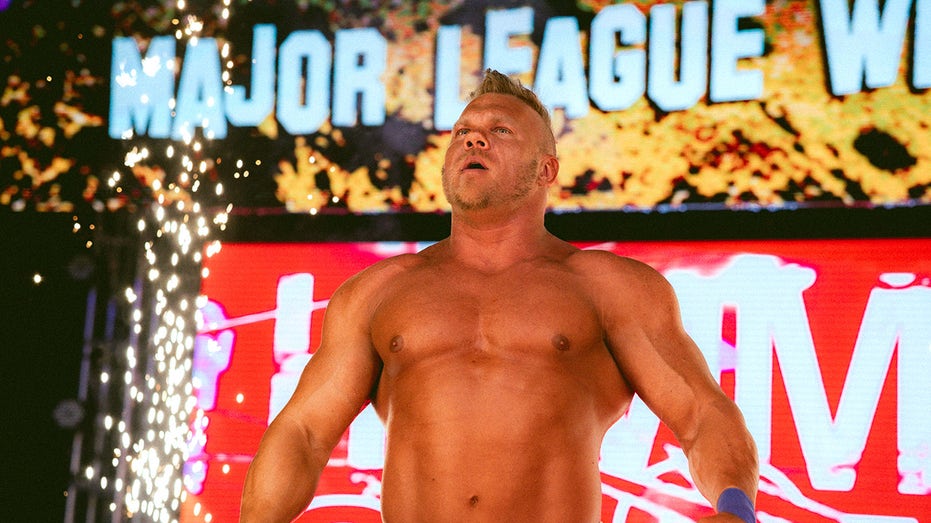
Alex Hammerstone’s Battle Riot comeback is more than a wrestling storyline. It’s a stress test of MLW’s underdog business model and a case study in how mid-tier promotions create and reclaim stars.
Alex Hammerstone, MLW’s Battle Riot, and the Fight to Matter in Wrestling’s New Middle Class
On the surface, Alex Hammerstone’s quest to become a two-time Battle Riot winner looks like a straightforward comeback story: a former champion returns to the promotion that made him, seeks redemption, and eyes another run at the top. But underneath that familiar narrative is something more revealing about where pro wrestling is headed — and what it now takes for a talent and an underdog promotion to stay relevant in a market dominated by billionaires and broadcast giants.
Why This Story Matters Beyond One Wrestler and One Match
Hammerstone’s comments about injuries, doubt, and MLW as an “underdog promotion” speak to a shifting ecosystem in pro wrestling. The modern landscape is no longer just a binary of WWE versus everybody else; it’s an increasingly stratified market where “middle-class” promotions like MLW are trying to survive between heavily funded giants and a fragmented indie scene.
His trajectory — from MLW centerpiece to a stint in TNA, to injury setbacks, and then a surprise return — mirrors the broader precarity of wrestling careers in 2020s: short windows of peak visibility, brutal physical costs, and a constant battle for relevance in a content-saturated world where fans have endless options and short memories.
The Bigger Picture: MLW’s Place in the Wrestling Ecosystem
To understand why Hammerstone’s Battle Riot run matters, it helps to place MLW in context.
- Origins and identity: Major League Wrestling started in the early 2000s, resurfaced in 2017, and carved out a niche with a mix of hybrid wrestling styles, edgy presentation, and a focus on international talent exchanges (notably with groups in Mexico and Japan).
- Not a vanity project: Unlike AEW, which launched with billionaire backing, MLW has grown incrementally through streaming deals, smaller TV arrangements, and touring. Hammerstone’s “underdog” description isn’t branding spin; it’s a structural reality.
- Talent churn as a feature, not a bug: MLW has functioned as a developmental or bridge platform for wrestlers who later break out elsewhere — MJF, Swerve Strickland, and others. That creates prestige (“we saw them first”) but also constant rebuilding.
Hammerstone was one of the few wrestlers who became synonymous with MLW rather than merely passing through it. His initial Battle Riot win in 2021 and subsequent world title victory over Jacob Fatu gave MLW something invaluable: a long-term top babyface that fans could identify with as “their guy,” not loaned star power.
Battle Riot as More Than a Gimmick Match
Battle Riot is structured as MLW’s answer to the Royal Rumble: a multi-man, stagger-entry match where the winner gets a shot at the world title. But for a promotion without weekly primetime TV, it functions as more than a storyline tool.
- Branding anchor: Battle Riot is one of MLW’s few recurring tentpole events. It acts as both a talent showcase and a soft “season premiere” for new directions.
- Talent signaling: Who wins Battle Riot is a message to fans, to locker rooms, and to industry watchers about whom MLW is willing to build around for at least a cycle.
- Continuity device: Hammerstone winning once, leaving, and now returning for another run creates a throughline that MLW can market as legacy: the idea that there is a history worth following.
If Hammerstone becomes only the second two-time winner, it is less about the statistic and more about MLW communicating that it is recommitting to a top act rather than endlessly cycling through talent that may exit the moment a bigger offer arrives.
Hammerstone’s Injuries and the Psychology of Modern Wrestling Careers
Hammerstone’s remarks about being “damn near broken” by scrutiny and setbacks are revealing. He ties his self-belief not to charisma or destiny, but to work rate and sacrifice: “I don’t think anyone could possibly be giving more than me.” That framing is important for several reasons.
- Physical fragility versus career expectations: Wrestlers in their 30s today are expected to maintain TV-ready physiques, perform high-intensity styles, and work a mix of TV, streaming, and indie dates. At 34, with surgeries and missed time, Hammerstone is in the zone where the industry quietly starts questioning durability, especially for powerhouses whose visual appeal is tied to size and explosiveness.
- The ‘What have you done for me lately?’ economy: His fear that fans might not receive him the same way underscores a broader truth: digital content cycles have shortened fan memory. Algorithms reward what’s new, not what was meaningful two years ago. In that environment, even former champions can feel disposable.
- Effort as identity: Hammerstone’s emphasis on effort and resolve fits into a familiar wrestling archetype — the hardworking, overlooked guy — but it also resonates with “grind culture” language that younger fans recognize. He’s selling not just his move set, but his work ethic as a character trait.
Psychologically, this is both empowering and dangerous. The identity of “no one works harder than me” is motivating, but it can also drive wrestlers past safe limits, especially in underdog promotions where guarantees and long-term security are thinner.
MLW as an ‘Underdog Promotion’ in a Billionaire Era
Hammerstone’s endorsement of MLW — stressing that it wasn’t built by a billionaire and had to “weather a storm and carve out their own niche” — offers a lens on the wrestling economy since 2019:
- Top tier: WWE and AEW, both with massive TV rights deals, global distribution, and deep capital reserves.
- Middle tier: Promotions like MLW, TNA, and some Japanese and Mexican companies, which have some TV/streaming presence but far smaller budgets.
- Independent scene: Regional promotions, super indies, and one-off specials that rely heavily on social media and niche streaming.
Middle-tier promotions are under unique pressure: they need to feel more “major” than indie outfits but don’t have the money to outbid top-tier companies. That creates three strategic imperatives:
- Develop a distinct identity: MLW leans into hybrid styles, international partnerships, and a more underground aesthetic to differentiate itself from polished corporate wrestling.
- Own certain careers: Building wrestlers from relative obscurity into headliners — Hammerstone, Fatu, and others — gives the promotion a sense of authorship. Fans are more likely to invest when they feel they’re along for the whole journey, not just renting a star they’ve already seen elsewhere.
- Weather talent churn: When those stars leave, the company must prove it’s more than a launchpad. Bringing Hammerstone back — and potentially re-centering the promotion around him — is part of MLW’s attempt to show it can not only make stars but also retain or reclaim them.
What This Really Means for Hammerstone’s Career Arc
Viewed strategically, Hammerstone’s MLW return and Battle Riot ambitions signal a few things about his medium-term career calculus:
- Rebuilding leverage: A strong run as MLW’s top guy again gives him renewed negotiating leverage, whether with MLW, TNA, or larger promotions down the line. Being a centerpiece is more valuable than being “just another guy on the card” in a bigger company.
- Storyline continuity as brand: The story of a former champion who climbed to the top once, left, was doubted due to injuries, then fought back to earn another shot is easily marketable across promotions. It’s a career narrative that can be repackaged for any TV audience.
- Age and urgency: At 34, he is entering what is typically the peak window for heavyweight-style performers — but that window isn’t open forever. A second Battle Riot win and a world title program against Mads Krule Krugger would likely be positioned as a defining chapter, not a warm-up.
Expert Perspectives on Underdog Promotions and Talent Value
Industry analysts have been tracking how promotions like MLW use events like Battle Riot to punch above their financial weight.
Sports media analyst Brandon Thurston has repeatedly noted that visibility and perceived momentum can be as important as actual pay in shaping a wrestler’s long-term value. Being the face of a promotion, even a smaller one, gives a wrestler a clearer identity to fans and decision-makers elsewhere.
Wrestling historian and author David Shoemaker has argued that the modern fan increasingly values “career arcs” — watching wrestlers grow, fail, reinvent themselves — over one-off dream matches. Hammerstone’s journey from MLW champion to injury-plagued journeyman and back to would-be standard-bearer fits that trend.
On the business side, wrestling economist Chris Harrington has highlighted how mid-tier promotions must create proprietary value: things that can’t be easily replicated by bigger companies. Homegrown stars, unique match concepts, and international flavor all fit that bill. A second Battle Riot win by Hammerstone would weave those elements into a story only MLW can tell.
What Mainstream Coverage Often Misses
Most surface-level reporting will frame this as a comeback and a feel-good crowd reaction. What tends to be overlooked:
- The risk-reward calculation for the wrestler: Returning to an underdog promotion is not just sentimental; it’s a strategic bet that being central somewhere is better than being marginal everywhere.
- The messaging to the locker room: Elevating a returning star sends a signal: if you invest in MLW, the company may invest back in you, even if you leave and return. That can help retention in an era where talent can shop themselves globally.
- The fan psychology of loyalty: Fans who stuck with MLW through roster turnover get a payoff when a foundational figure like Hammerstone comes back. That strengthens the emotional bond to the promotion as a “home base,” not just a content provider.
Looking Ahead: What to Watch as Battle Riot VIII Approaches
Several key questions will determine how significant this moment becomes:
- Booking follow-through: If Hammerstone wins Battle Riot but is not meaningfully followed up with a serious, well-built program against Mads Krule Krugger, the symbolic value evaporates quickly.
- Health and work style: How MLW structures Hammerstone’s workload — match frequency, style, and TV segments — will show whether the company is prioritizing longevity or short-term spectacle.
- Cross-promotion: With Hammerstone’s past in TNA and Japan, any future international or inter-promotional angles could raise his profile again. MLW has historically leaned into partnerships; a revitalized Hammerstone could become a key asset in those negotiations.
- Fan engagement data: Social media reaction, streaming numbers for Battle Riot, and demand for Hammerstone merch or meet-and-greets will all be informal but meaningful metrics of whether this comeback resonates beyond a pop on the night.
The Bottom Line
Alex Hammerstone’s push to win Battle Riot VIII is about more than another match or another title opportunity. It’s a stress test of MLW’s ability to build and rebuild around a recognizable franchise player in an era when money, media reach, and fan attention are heavily skewed toward billionaire-backed brands.
If MLW succeeds in turning Hammerstone’s return into a sustained, emotionally credible main-event story, it strengthens the argument that underdog promotions can still matter as more than stepping stones. If it fails, it will reinforce an uncomfortable reality: that even the hardest-working performers, in the most resilient of companies, can be swallowed by an industry increasingly shaped by capital, algorithms, and short-term memory.
Topics
Editor's Comments
What stands out in Hammerstone’s comments is how closely his personal narrative tracks with broader structural shifts in pro wrestling. His sense of being nearly broken by scrutiny and injury isn’t just an individual struggle; it’s symptomatic of an industry that increasingly treats wrestlers as endlessly replaceable content units. Mid-tier promotions like MLW are caught in the crossfire: they depend on the emotional investment fans build in performers, yet they operate in a labor market where upward mobility—to WWE, AEW, or higher-paying international deals—is both the carrot and the inevitability. One provocative question is whether MLW can truly afford to turn Hammerstone into its defining figure again without preparing for his eventual exit. That tension—between building a star and losing him at his peak—sits at the heart of the modern wrestling economy. It also raises a more uncomfortable issue: is the only sustainable identity for a promotion like MLW to embrace being a high-quality waystation, or can it credibly claim to be a destination in its own right? Hammerstone’s second Battle Riot run may be an early indicator of which path the company is really on.
Like this article? Share it with your friends!
If you find this article interesting, feel free to share it with your friends!
Thank you for your support! Sharing is the greatest encouragement for us.