Anthony Joshua vs. Jake Paul: How One Fight Could Redefine Boxing’s Future

Sarah Johnson
December 18, 2025
Brief
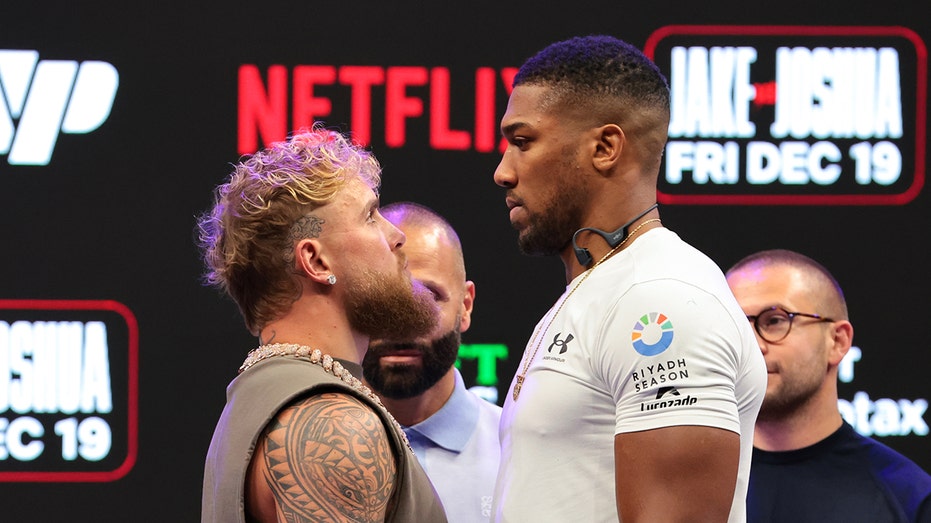
Anthony Joshua vs. Jake Paul is more than a mismatch. It’s a referendum on boxing’s future, pitting traditional merit and legacy against the rise of influencer-driven spectacle and algorithmic attention.
Anthony Joshua vs. Jake Paul: What’s Really at Stake for Boxing’s Future
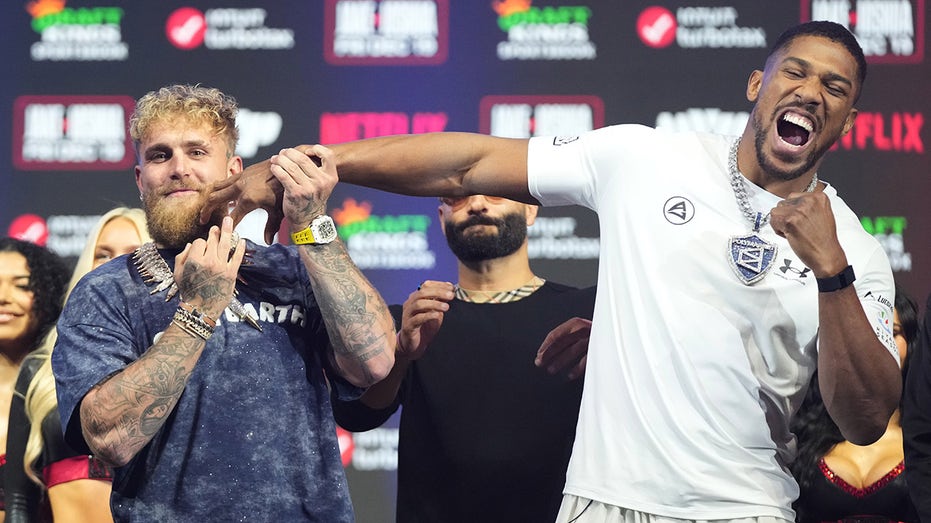
On paper, Anthony Joshua fighting Jake Paul looks like a mismatch: a former unified heavyweight world champion and Olympic gold medalist against a YouTuber-turned-boxer whose résumé is built largely on aging legends and crossover names. Yet the promoters aren’t treating this as a sideshow. Eddie Hearn openly calls defeat – or even a close fight – “an absolute disaster” for Joshua. That language tells you this bout isn’t just about two men in a ring; it’s about a power struggle over what boxing is becoming, who controls it, and whether traditional sporting legitimacy still matters in an era of influencer spectacle.
This fight is a stress test on the sport’s credibility. If Joshua dominates, promoters can argue that there’s a clear line between elite professionals and celebrity boxers, and that the old hierarchy still holds. If he struggles – or loses – that line blurs, and the implications stretch far beyond Joshua’s legacy. They reach into how fights are made, who gets paid, what fans expect, and how regulators and broadcasters treat boxing as a whole.
How Boxing Got Here: From Prizefighting to “Content”
To understand why this matchup exists at all, you have to trace boxing’s long drift from mainstream sporting institution toward niche spectacle.
- Television’s golden era (1950s–1980s): Boxing once commanded network prime time. Champions fought regularly, titles mattered, and the public knew who the heavyweight champion was.
- Fragmentation and pay-per-view (1990s–2010s): Multiple sanctioning bodies, complex mandatory defenses, and a shift to PPV pushed boxing behind a paywall. The biggest fights became rare “events,” while undercards and rankings became harder for casual fans to follow.
- Rise of MMA and digital media: As UFC offered a more organized product and clear title structure, boxing’s governance looked chaotic by comparison. At the same time, YouTube, Instagram, and later TikTok created stars who owed nothing to traditional sports pathways.
The breakthrough moment for influencer boxing was the 2018 KSI–Logan Paul fight and its 2019 rematch under professional rules. Those events sold out arenas and generated hundreds of thousands of PPV buys largely through digital-native promotion. The message to promoters was blunt: audience and attention could be manufactured outside the gym and gymnasiums; the fanbase followed personalities, not federations.
Jake Paul turned that insight into a business model. He built his record against faded MMA legends (Ben Askren, Tyron Woodley), undersized opponents, and one true boxer in Tommy Fury – who beat him. Yet each fight did something traditional boxing had largely failed to do consistently for a younger audience: create a simple, emotionally compelling narrative and hammer it relentlessly on social media.
Anthony Joshua, by contrast, is the product of an older system: amateur pedigree, Olympic gold in 2012, rapid ascent to world titles, and fights in sold-out football stadiums. But his aura of invincibility cracked with the shock loss to Andy Ruiz Jr. in 2019 and further with defeats to Oleksandr Usyk. While still an elite heavyweight and a major ticket-seller, Joshua is no longer the unquestioned king of the division.
The Joshua–Paul matchup sits at the crossroads of these two models: one rooted in sporting merit; the other in attention economics.
Why Hearn Calls Defeat “Catastrophic”
Eddie Hearn’s rhetoric isn’t just promoter hype; it’s risk management in plain sight. Several stakes converge:
- Legacy and narrative: Joshua’s career has been carefully reframed after the Usyk losses: he’s the disciplined, rehabilitated contender on his way back to the very top, with a plan that – in Hearn’s words – leads to “a world-class opponent in February” and then Tyson Fury. Losing to Jake Paul shatters that story. Even a labored points win would fuel the perception that Joshua is physically or psychologically past his best.
- Commercial leverage: Joshua’s bargaining power in future negotiations – especially for a Fury bout – depends on his drawing power and perceived competitiveness. A poor showing against Paul weakens his negotiating position with broadcasters and rival promoters, potentially costing tens of millions in future purses.
- Institutional credibility: If a man whose boxing résumé includes wins over Wladimir Klitschko and Andy Ruiz Jr. struggles with a fighter whose career began as an online personality, the implicit claim that “real boxing is different” becomes harder to maintain.
That’s why Hearn also goes out of his way to insist the fight is not scripted. Match-fixing is not a trivial allegation in a sport where betting lines move rapidly. A sanctioned professional contest involving a global star, with bookmakers posting odds worldwide, sits under regulatory and legal scrutiny. Any perception that the result was prearranged would invite investigations and damage the wider industry, not just the two fighters.
The Deeper Battle: Merit vs. Monetization
Beneath the trash talk is a much bigger question: who should boxing be built around?
Traditionalists argue that the sport’s core is meritocratic: years in the amateurs, gradual step-ups in competition, rankings, and titles. In that world, a fighter like Joshua is the norm; Jake Paul is a sideshow.
The reality of the current market is harsher. Fights are made based on who can generate revenue, not who has earned a ranking. On that metric, Jake Paul is not a curiosity – he’s a prototype. He brings a young, global, digitally engaged audience that many legacy fighters simply don’t match. Data from social media analytics firms consistently shows that Paul-related events over-index in the 18–34 demographic compared to traditional boxing cards, particularly in North America and parts of Europe.
This is why you’re seeing a steady normalization of crossover bouts: Deontay Wilder openly saying he’s “down” to fight Jake Paul; MMA stars crossing over for big paydays; retired boxers returning for exhibitions. The economic gravity is clear: attention and algorithmic reach now function as an alternative currency to titles and sanctioning belts.
The Joshua–Paul fight sharpens this tension. If Jake performs credibly against a top-tier heavyweight, it strengthens the case that future “superfights” don’t need world titles or clean records – they need emotionally resonant narratives and social media firepower. Matchmaking becomes more about virality than rankings.
The Risk Calculus: Why Joshua Took the Fight Anyway
From Joshua’s perspective, the upside is obvious:
- Massive exposure: Fighting Paul likely brings in audiences that don’t normally watch heavyweight boxing. That boosts his global profile ahead of a potential Fury megafight.
- High pay, low perceived risk: Against a naturally smaller, less experienced boxer, Joshua is a heavy favorite. The expectation is a highlight-reel knockout that reinvigorates his aura of danger.
- Brand reshaping: Joshua, whose public image has often been controlled and corporate, can present himself as an all-comers competitor willing to face anyone, from champions to disruptors.
But the downside is asymmetric. Joshua gains relatively little respect for beating Jake Paul – it will be dismissed as inevitable. Yet he risks enormous reputational damage for any outcome that deviates from dominance. That asymmetry is why Hearn’s language is so stark: the risk-reward balance is more fragile than it appears.
What If Jake Paul Wins – or Even Just Lasts the Distance?
The immediate aftermath of a shock Paul victory would be chaotic memes and hot takes. The deeper implications would unfold over months and years.
1. Redefinition of who is “elite”
If Paul beats Joshua or pushes him to a competitive decision, fans and media will aggressively question how we evaluate “elite” status. Was Joshua overrated? Are modern training methods closing the gap faster than expected? Is the heavyweight division weaker than nostalgia suggests? Even a narrow loss for Paul could be spun as validation that he belongs at a serious competitive level.
2. Crossover fights become central, not peripheral
A Paul victory would send a clear signal to promoters: crossover fights aren’t just profitable novelties – they can rewrite the competitive hierarchy. Expect more top-15 contenders and even champions flirt with influencer matchups. The notion that you have to work through traditional ranking systems to reach big paydays would weaken even further.
3. Regulatory and integrity concerns intensify
Upsets in boxing are not rare, but when they involve a polarizing figure who built his fame outside sport, they inevitably attract conspiracy theories. Commissions and betting regulators would face pressure to show robust oversight. Calls for more transparent judging, clearer medical protocols, and tighter control over matchmaking in celebrity-involved bouts would likely grow.
4. The fanbase splits further
There is already a visible divide between “hardcore” boxing fans and the newer audiences attracted by influencer cards. A Paul win over Joshua would deepen that rift. Traditional fans might disengage from events they see as circus-like, while younger viewers might double down on personalities-first narratives and care even less about belts and sanctioning bodies.
The Overlooked Factor: Boxing’s Failure to Tell Its Own Stories
What mainstream coverage often misses is that Jake Paul didn’t create the demand for spectacle; he exploited a vacuum. For years, elite fights have marinated too long, governed by rival promoters, broadcasters, and sanctioning-body politics. Fans waited nearly a decade for Mayweather–Pacquiao. Heavyweight unification has repeatedly stalled. Undercards are frequently thin, and rising prospects struggle for visibility.
In that vacuum, someone who can tell a clear, emotionally gripping story – “I’m the villain who will shock the world” – has a structural advantage. Paul’s narrative discipline, however grating to purists, exposes the sport’s chronic failures in self-promotion and scheduling.
Joshua–Paul is therefore not just about whether a YouTuber can beat a former champion. It’s a referendum on whether traditional boxing institutions can reassert their relevance in a media environment where attention is atomized and loyalty is fragile.
Data Points: How Big Could This Be?
While official PPV numbers are rarely transparent, independent industry estimates for previous Jake Paul events suggest:
- His early pay-per-view fights in 2020–2021 reached the low-to-mid six figures in buys, unusually strong for a relative novice.
- Social media engagement around his fights often outperforms world-title cards, particularly on platforms like TikTok and Instagram where highlight clips dominate.
- Anthony Joshua’s stadium fights in the UK have drawn 70,000–90,000 in attendance and strong PPV figures domestically, though his post-Usyk bouts have shown some softening.
A properly promoted Joshua–Paul event has the ingredients to be one of the most globally viewed boxing matches of the decade. That potential is exactly why so much rides on how convincingly Joshua can impose the traditional sporting order.
What to Watch For on Fight Night
Beyond the result, several details will reveal where the sport is heading:
- Matchmaking of undercard bouts: Is the undercard used to showcase rising traditional prospects, or is it filled with more influencer-driven fights? That balance will indicate promoters’ long-term strategy.
- Broadcast production choices: Does the coverage skew toward serious analysis, or does it lean into social-media-style content, reaction cams, and viral moments?
- Post-fight narratives: How do broadcasters and promoters frame the outcome? As a one-off curiosity or as proof of a new competitive reality?
The Bottom Line
Anthony Joshua’s promoter is right: a loss to Jake Paul would be “an absolute disaster” for Joshua’s legacy. But the stakes are larger than one man’s résumé. This fight is a public test of whether boxing’s old guard can coexist with – or be eclipsed by – a new model where social capital counts as much as sparring rounds.
If Joshua restores the traditional order with a dominant win, boxing’s institutions get a temporary reprieve and a lucrative bridge to a Fury showdown. If he doesn’t, the sport will have to confront an uncomfortable reality: the future may belong less to those who come through national amateur systems and more to those who come through algorithms.
Expert Perspectives
Teddy Atlas, veteran trainer and analyst, has long warned that boxing is drifting toward “theatre over competition,” arguing that fights are increasingly made “for business first, sport second.” A bout like Joshua–Paul is, in his view, the logical endpoint of that trend: “When you stop giving fans the best fighting the best, they’ll take whatever feels like the biggest event. It’s not that complicated.”
Dr. Catherine Houston, sports economist, notes that influencer boxing is part of a wider shift in sports monetization: “What you’re seeing here is a collision of two economies – the legacy broadcast-pay-per-view model and the creator economy. Joshua brings traditional value; Paul brings networked attention. The event is monetizing both at once.”
Andre Ward, retired undefeated world champion, has expressed ambivalence about the influencer wave: “On one hand, it brings eyeballs. On the other, it sends a message to young fighters who’ve been grinding for years that clout can jump the line. That’s a tough pill for purists to swallow.”
Looking Ahead
Regardless of the outcome, the Joshua–Paul experiment won’t be the last of its kind. If it sells, it will be copied. The real question is whether governing bodies, promoters, and broadcasters can use the influx of attention – however unorthodox its source – to rebuild sustainable pathways for serious fighters, rather than allowing the sport to drift further into one-off spectacles.
In that sense, Joshua’s performance isn’t just about avoiding embarrassment. It’s about whether the sport can still convincingly claim that what happens in the gym and the amateur ranks ultimately matters more than what happens on YouTube.
Topics
Editor's Comments
One under-discussed angle in the Joshua–Paul narrative is labor inequality inside boxing’s own ecosystem. While this fight may gross tens of millions, most professional boxers operate on shoestring purses, precarious contracts, and no long-term health protections. The rise of influencer megafights sharpens that contrast: a handful of celebrities can parachute in and extract enormous value because they control their own distribution channels, while career professionals remain dependent on opaque promotional structures and fragmented sanctioning bodies. If anything, this bout exposes how little institutional power rank-and-file fighters hold in negotiating their worth. A contrarian but important question is whether the influx of outside stars might eventually push traditional fighters toward collective action – demanding a bigger share of revenues, more transparent matchmaking, or even a quasi-union. So far, that conversation is largely absent. The danger is that the sport becomes even more top-heavy and personality-driven, while the majority of fighters continue to absorb the same risks for relatively marginal rewards.
Like this article? Share it with your friends!
If you find this article interesting, feel free to share it with your friends!
Thank you for your support! Sharing is the greatest encouragement for us.