Beyond Politics: What James Woods’ Tribute to Rob Reiner Tells Us About a Broken Culture

Sarah Johnson
December 16, 2025
Brief
James Woods’ tribute to Rob Reiner reveals more than a Hollywood friendship; it exposes how cross-partisan loyalties, mental health crises, and cultural gatekeeping collide in today’s hyper-polarized America.
James Woods, Rob Reiner, and What Their Friendship Reveals About a Fractured America
The raw emotion in James Woods’ tribute to Rob Reiner isn’t just a story about two Hollywood figures who liked each other across a political divide. It’s a case study in what has nearly vanished from American public life: the ability to see the whole human being behind their politics, even in an era of weaponized ideology, social media outrage, and cultural sorting.
Reiner’s shocking killing, allegedly at the hands of his own son, adds an even more tragic layer. The story intersects three major themes that rarely get examined together: the collapse of cross-ideological friendships, Hollywood’s role in American political identity, and the largely hidden crisis of mental health and family breakdown among the elite.
Rob Reiner, James Woods, and a Hollywood Now Unrecognizable
To understand the significance of Woods’ tribute, it’s worth remembering who these men are in the broader arc of American culture.
Rob Reiner came of age as part of a Hollywood dynasty. His father, Carl Reiner, helped define American comedy. Rob first emerged as an actor on the 1970s sitcom All in the Family, one of the most politically charged shows in U.S. television history. As “Meathead,” he embodied the progressive foil to Archie Bunker’s reactionary worldview, making him an avatar of post–Vietnam, post–civil rights liberalism.
As a director, Reiner’s work cut across ideological lines. Films like Stand By Me, When Harry Met Sally, The Princess Bride, Misery, A Few Good Men, and Ghosts of Mississippi embedded themselves in the American imagination, often blending mainstream entertainment with moral and political themes. Ghosts of Mississippi — the film that “saved” James Woods’ career — revisited the civil rights era through the prosecution of white supremacist Byron De La Beckwith for the assassination of Medgar Evers.
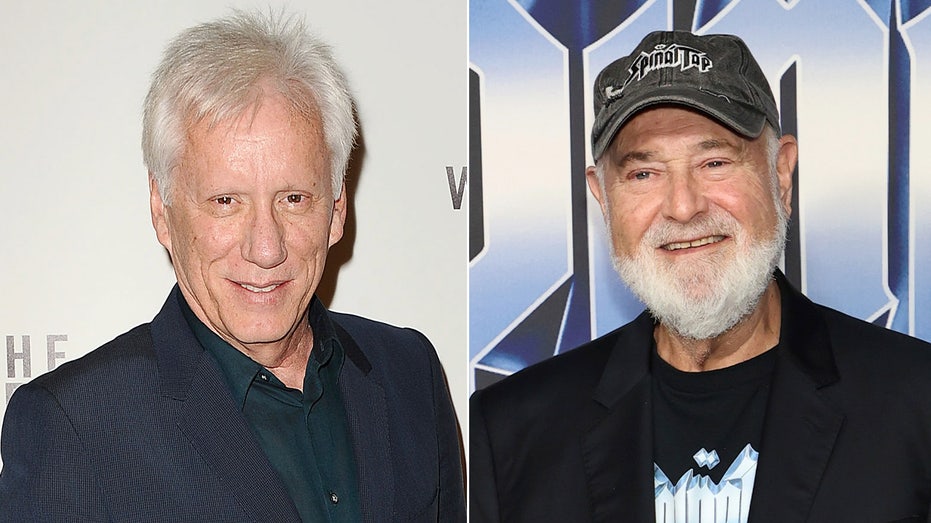
James Woods, by contrast, built his reputation playing intense, complex, sometimes unsettling characters — from Salvador and Videodrome to Once Upon a Time in America and Casino. Over time he became as known for his outspoken conservative politics as his acting, particularly as social media amplified his views.
A generation ago, a progressive director and a conservative actor collaborating on a civil rights drama — and becoming close friends — was unremarkable. Today, it feels almost exotic. That shift says as much about us as it does about Hollywood.
Why This Friendship Matters in a Polarized Era
Woods’ account reveals several things that are increasingly rare in the current climate:
- Professional courage over ideological conformity. Reiner “fought” the studio to cast Woods — an actor he believed in artistically, regardless of their later political divergence. That willingness to go against institutional pressure is fading in an era when casting decisions are heavily scrutinized through political and social lenses.
- A politics that doesn’t erase gratitude or loyalty. Woods doesn’t just respect Reiner; he openly credits him with rescuing his career: “I give all the credit to Rob.” That kind of public gratitude toward someone on the “other side” is increasingly seen as betrayal within polarized camps.
- A different definition of patriotism. Woods calls Reiner a “patriot” who loved America, even though they clashed on what patriotism looked like in practice. This is a sharp contrast with today’s discourse, where “patriotism” itself is often treated as a partisan label rather than a shared value.
Historically, cross-ideological friendships among public figures were not just common; they were often politically productive. Think of the close working relationship between Ronald Reagan and Tip O’Neill, who would battle fiercely by day and share drinks in the evening. Even in Hollywood, figures with radically different views shared sets, dinner tables, and long-term professional collaborations.
The difference now is that politics no longer sits alongside identity; it often is identity. Social media has turned political alignment into a constant performance, with friendships and alliances evaluated through a partisan lens. In that context, Woods’ story is not just sentimental — it is countercultural.
What Most Coverage Misses: The Quiet Power of Gatekeepers
One underreported thread in Woods’ tribute is what it reveals about power inside Hollywood’s creative ecosystem. Reiner didn’t just extend a personal kindness; he exercised gatekeeping power to override institutional resistance.
Studios originally did not want Woods — he was “32 years too young” for the role in Ghosts of Mississippi, and there were likely safer, more bankable options. Reiner, backed by Castle Rock’s Martin Shafer, insisted. That decision produced an Oscar-nominated performance and revived a stalled career.
This highlights a tension in today’s cultural debates:
- On one hand, critics of Hollywood argue that ideological homogeneity marginalizes certain voices, including conservatives like Woods.
- On the other, Woods’ story shows that individual gatekeepers can override those tendencies when they prioritize artistic conviction over ideological comfort.
What’s changed is not only the politics but the risk calculus. In the 1990s, Reiner could fight a studio on casting largely on artistic grounds. Today, such decisions may be interpreted through online culture war narratives: is this casting a “signal” about race, gender, ideology, or identity? That added layer of scrutiny makes acts of cross-ideological backing both rarer and more fraught.
The Shadow Story: Family Breakdown and Mental Health
Beneath the political symbolism lies an even darker story: a prominent family destroyed from within. Reiner and his wife Michele were allegedly killed in their Brentwood home, with their son Nick detained in the homicide probe. Woods’ reaction — struggling to breathe, asking first if it was a home invasion — reveals how unimaginable intra-family violence remains, even in a nation where such tragedies are not rare.
Data from the Bureau of Justice Statistics shows that roughly 10–15% of homicides involve family members, and adult children killing parents — parricide — is an especially disturbing subset. Research by criminologist Kathleen Heide has found that such cases often involve long-term mental illness, substance abuse, or chronic family conflict, rather than sudden, random eruptions of violence.
Hollywood and political reporting tend to cover elite families as if they exist outside these social crises. But they do not. In fact, the pressures of fame, wealth, public scrutiny, and expectation can exacerbate mental health vulnerabilities rather than shield against them. If allegations against the Reiners’ son are substantiated, this case will sit uncomfortably at the intersection of privilege and profound dysfunction.
What is missing from most coverage so far is any meaningful engagement with that structural context: how America’s mental health system, criminal justice framework, and social stigma too often leave families alone with escalating danger until it is far too late.
Reiner as Polarizing Activist, Unifying Colleague
In public life, Rob Reiner was increasingly seen as an uncompromising progressive activist — sharply critical of Republican presidents, vocal on voting rights, and active in Democratic politics. In online conservative spaces, he was often caricatured as a Hollywood liberal stereotype.
Woods’ description complicates that picture. For him, Reiner was not a two-dimensional partisan but a fiercely loyal friend and colleague who “was always on my side,” even as their politics diverged sharply. That duality is common but rarely acknowledged: people behave differently in personal relationships than in public arguments, yet audiences increasingly flatten public figures into one-dimensional avatars of their views.
This is where expert insight is helpful. Political psychologist Lilliana Mason has documented how “affective polarization” — the emotional dislike of the opposing side — has grown even faster than disagreements on specific issues. The more politics becomes tribal identity, the harder it is to maintain relationships that cross partisan lines. Woods and Reiner maintained exactly the kind of relationship that current dynamics discourage.
The Cultural Costs of Losing Friendships Like This
Beyond the personal tragedy, the loss of Reiner — and the story of his bond with Woods — raises a quieter but important question: what happens to a culture when professional and personal alliances become politically sorted?
Several downstream effects are already visible:
- Less ideological diversity in creative decisions. If people fear backlash for working with ideological opponents, self-censorship increases. That leads to fewer complex stories and more predictable narratives that echo the audience’s existing beliefs.
- Fewer bridges in a fractured media ecosystem. Figures like Reiner, who had credibility in both mainstream entertainment and progressive politics, and Woods, respected by some conservative audiences, could have served as mediators or translators between cultural camps. Their generation is thinning, and not many are replacing them.
- Escalating distrust of institutions. When people believe Hollywood is entirely mono-ideological and hostile to dissent, they disengage or migrate to parallel cultural systems, deepening the divide. Stories like Woods’ complicate that narrative — but only if they’re widely heard.
What to Watch Going Forward
This story will evolve on several fronts:
- Legal developments in the homicide case. As more details emerge about the circumstances of Rob and Michele Reiner’s deaths and their son Nick’s alleged role, expect renewed debate about mental health interventions, policing, and the adequacy of support systems for families in crisis.
- The battle over Reiner’s legacy. Different political communities are likely to emphasize different aspects of Reiner’s life — his activism, his films, his role on All in the Family, his family tragedy. The more nuanced story, which includes his cross-ideological loyalties, may struggle to compete with simplified narratives.
- How Hollywood responds publicly. Tributes from across the political spectrum, including from conservative voices like Woods, could create a rare moment of shared cultural mourning. Whether that moment leads to deeper reflection about ideological rigidity is less certain.
- Renewed attention to ‘impossible’ friendships. If Woods’ story gains traction, it may encourage other public figures to speak openly about relationships that cross the partisan chasm — or, conversely, highlight how many such friendships have already been severed.
The Bottom Line
James Woods’ eulogy for Rob Reiner is not just about gratitude for a career-saving casting decision. It’s a window into a different Hollywood, a different political culture, and a different understanding of patriotism and loyalty. It forces an uncomfortable question: if Woods and Reiner were starting out in today’s environment, would their friendship — and their collaboration — have survived the pressures of ideological sorting and online outrage?
The brutal circumstances of Reiner’s death risk overshadowing this quieter truth about who he was to those who knew him best. But if we ignore that part of the story, we miss the rare reminder that even in a bitterly divided America, some people still manage to disagree fiercely on politics while standing firmly by each other in life and work. Those relationships may be our most underappreciated guardrails against a politics that threatens to consume everything, including our humanity.
Topics
Editor's Comments
What stands out most in this story is not just the tragedy of Rob Reiner’s death but the dissonance between the public narratives we build around people and the private realities that surface only in moments like this. In the partisan imagination, Reiner was either a heroic activist or a Hollywood villain, depending on the audience. Woods, for his part, was often reduced to a combustible conservative provocateur. Yet when the cameras are off and careers are on the line, the picture looks very different: a director fighting a studio for an actor he believes in, and that actor decades later expressing unqualified gratitude and affection. The alleged role of Reiner’s son adds another uncomfortable truth: that the crises we associate with ‘other’ parts of America — mental health breakdowns, family violence, institutional failures — cut straight through the elite worlds of entertainment and politics. The question this case should force us to ask is whether we are willing to see public figures, and each other, in their full human complexity, or whether we will continue to flatten them into characters in our preferred political script.
Like this article? Share it with your friends!
If you find this article interesting, feel free to share it with your friends!
Thank you for your support! Sharing is the greatest encouragement for us.