Beyond the Daring Escape: How María Corina Machado’s Rescue Rewrites the Rules of Political Struggle

Sarah Johnson
December 16, 2025
Brief
A covert maritime mission rescued Venezuelan dissident María Corina Machado for her Nobel ceremony. This analysis explains what the operation reveals about private power, sovereignty, and Venezuela’s future.
Operation Golden Dynamite: What a Private Rescue of Venezuela’s Top Dissident Reveals About a Changing World Order
The dramatic extraction of Venezuelan opposition leader María Corina Machado from hiding to a Nobel Peace Prize ceremony in Norway sounds like a Hollywood script: disguises, decoy operations, violent seas, radio silence, and a clandestine maritime rendezvous in the dead of night.
But beneath the cinematic details lies a far more consequential story: a snapshot of how the global human rights ecosystem is evolving when states are either unwilling, unable, or politically constrained from acting. A U.S. veteran-led private group, operating without formal government backing, conducted what its leader calls the most complex mission in its history to rescue a woman whom Venezuela’s regime treats as its public enemy number one.
This operation is not just about one dissident’s journey from hiding to Oslo. It touches on questions of sovereignty, the privatization of rescue and conflict expertise, the future of nonviolent opposition in autocracies, and the growing role of symbolic international recognition—like the Nobel Peace Prize—as a form of geopolitical pressure.
The Bigger Picture: From Oil Giant to Pariah State
To understand why Machado needed this kind of operation, it’s crucial to understand how Venezuela reached this point.
Once Latin America’s richest country per capita, Venezuela’s political and economic collapse accelerated under Hugo Chávez (1999–2013) and deepened under Nicolás Maduro. A combination of authoritarian consolidation, dependence on oil revenues, mismanagement of the state oil company PDVSA, and sweeping U.S. sanctions pushed the country into one of the worst peacetime economic implosions in modern history.
- Since around 2014, Venezuela’s GDP has shrunk by roughly 75% according to multilateral estimates—a contraction comparable to wartime devastation.
- More than 7 million Venezuelans have fled the country over the last decade, one of the largest displacement crises in the world.
- Independent monitors have documented systematic repression, including arbitrary detentions, torture, and extrajudicial killings targeting political opponents.
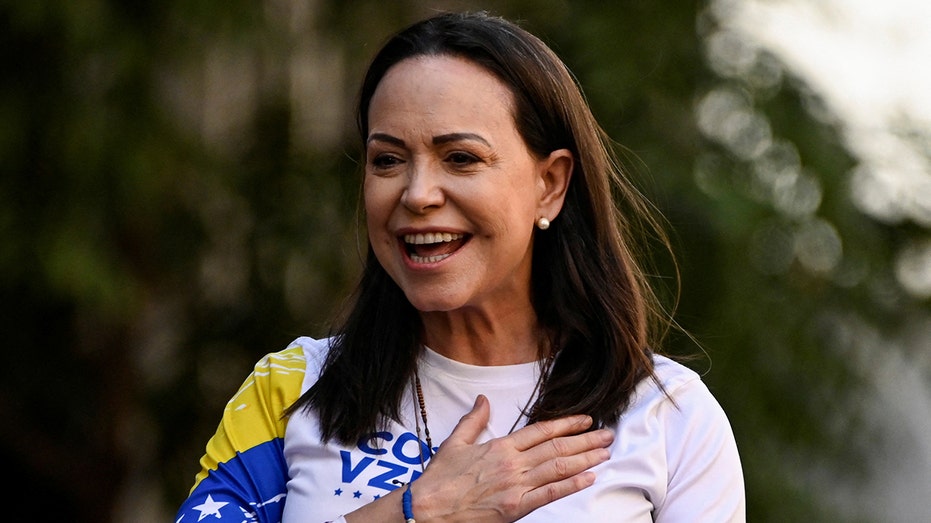
María Corina Machado has long been one of the regime’s most vocal and uncompromising opponents. A former National Assembly member and leader of the opposition movement Vente Venezuela, she has been barred from holding public office, harassed, surveilled, and smeared as a traitor and coup plotter.
Her profile surged again when she became the figurehead of a renewed opposition push for free elections, and then further when she was recognized internationally with a Nobel Peace Prize—an award that implicitly frames Venezuela’s crisis not just as political, but as a human rights struggle.
From the Maduro government’s standpoint, she is not a Nobel laureate but a fugitive and the nucleus of a movement seen as an existential threat. Hence the comparison by rescuer Bryan Stern: for Caracas, Machado is a domestic equivalent of a high-value target, the “most wanted woman in the Western Hemisphere.”
What This Really Means: Private Missions Filling a State-Sized Void
The most striking element of Operation Golden Dynamite is what it signals about the shifting role of states versus private actors.
Stern’s Grey Bull Rescue Foundation is part of a growing ecosystem of private organizations staffed by ex-military and ex-intelligence professionals who operate in conflict zones and failed states. They conduct evacuations, hostage extractions, and humanitarian support where formal government rescue capacity is limited, politically constrained, or slow.
We saw an early preview of this trend during the 2021 U.S. withdrawal from Afghanistan, when informal “digital Dunkirk” networks and private veterans’ groups organized rescues of Afghans who had worked with Western forces. Similar patterns have appeared in Ukraine, parts of Africa, and Haiti.
What’s new here is that a private outfit is extracting a high-profile political dissident from a still-functioning state, in a context that could easily have been interpreted by the host government as an act of foreign interference or even abduction.
Three implications stand out:
- Outsourced risk: Governments can tacitly benefit from these operations without formally authorizing them, thereby avoiding diplomatic fallout if something goes wrong. The explicit insistence that the U.S. government was not involved is part legal firewall, part geopolitical signaling.
- Gray-zone geopolitics: Operations like this sit in a “gray zone” between humanitarian action and covert political intervention. They use military skills, intelligence-style deception, and clandestine tradecraft—but under a philanthropic or NGO banner.
- New power for non-state actors: Groups like Grey Bull can influence political outcomes by deciding who gets out, who is protected, and whose story reaches the global stage. That is power usually associated with states, not nonprofits.
In practice, this means dissidents in authoritarian states are increasingly looking not just to embassies or international organizations, but also to this emerging ecosystem of privately run, high-risk rescue networks.
The Symbolic Battlefield: Why Oslo Matters to Caracas
The Nobel Peace Prize has long functioned as a moral spotlight—shining intensely on individuals who represent broader struggles. When Liu Xiaobo received the prize in 2010, China kept him in prison and prevented his family from traveling to Oslo; the image of an empty chair became a symbol of the regime’s fear of dissent.
In Machado’s case, the Maduro government had a strategic interest in ensuring she remained physically constrained inside Venezuela, invisible to the world and easy to dismiss as a fringe figure or criminal. Her appearance on an international stage, celebrated as a symbol of peaceful resistance, undermines that narrative.
The rescue thus shifts the information battlefield:
- Inside Venezuela: Footage and images of Machado receiving the prize become a powerful morale boost for the opposition and a direct challenge to the regime’s claims that she is marginal or discredited.
- Internationally: Her personal presence strengthens calls for continued sanctions, human rights investigations, and diplomatic isolation of the Maduro regime.
- For the regime: The operation’s success is a reputational blow, highlighting gaps in state control and competence. A “most wanted” figure slipping out under their nose diminishes the aura of omnipresence that autocracies rely on.
Expert Perspectives: Sovereignty, Private Force, and Human Rights
Legal and security experts are divided on what this type of operation means for the international system.
International law scholar Harold Koh has long argued that human rights norms are increasingly eroding the absolute shield of sovereignty, especially in cases of systemic abuse. While he has not commented on this specific operation, his broader framework fits: when a state systematically persecutes political opponents, its claim to non-interference becomes morally weaker—though not legally void.
Security analyst Candace Rondeaux has warned that the rise of private military and security actors can blur lines between humanitarian action and mercenary activity, especially when their work aligns with one side in a political conflict. Even without payment from states, rescuing a key opposition leader has clear political consequences.
Human rights organizations see a different danger: that the dramatic success of such missions may overshadow the thousands of lower-profile dissidents left behind. The international spotlight can protect a few, but it can also prompt regimes to crack down harder on those who remain.
Data & Evidence: Venezuela’s Repression and the Opposition’s Dilemma
The rescue of Machado comes against a backdrop of documented repression:
- A U.N. fact-finding mission on Venezuela has reported patterns of arbitrary detentions, forced disappearances, and torture aimed at dismantling political opposition.
- NGOs have documented hundreds of political prisoners at any given time since 2014, including opposition leaders, activists, and journalists.
- Electoral watchdogs and observers have repeatedly flagged Venezuelan elections as neither free nor fair, citing disqualifications, media control, and intimidation.
For opposition figures like Machado, this creates a strategic dilemma: stay inside the country and retain direct connection to the grassroots at the risk of imprisonment—or go into exile, where international visibility is greater but the connection to everyday Venezuelan life can weaken.
By enabling Machado to leave for a specific international event rather than permanently defect, the operation tries to have it both ways: leveraging the Nobel platform while casting her not as an exile, but as a leader temporarily stepping onto the world stage and potentially returning.
Looking Ahead: Escalation Risks and the Next Phase of the Struggle
The success of Operation Golden Dynamite could trigger several ripple effects:
- Tighter internal controls: The Maduro government may respond by increasing surveillance and movement restrictions on other opposition figures, closing remaining exit routes, and intensifying pressure on anyone suspected of aiding dissidents.
- Criminalization of rescue networks: Caracas could label groups like Grey Bull as “terrorist” or “mercenary” organizations, using that designation to justify crackdowns on local collaborators and to push friendly states to restrict their operations.
- Copycat operations—and failures: Success stories invite imitation. Less disciplined actors may attempt similar missions without the same expertise or risk assessment, potentially leading to botched operations that endanger dissidents and civilians.
- Diplomatic friction: If the Venezuelan government decides to treat this as a de facto foreign interference operation, it could use it to rally domestic support, claim victimhood, and demand explanations from countries hosting or supporting these private entities—even if they truly acted without state backing.
At the same time, Machado’s visibility from Norway will likely be used by the opposition to press for renewed international unity on sanctions and electoral conditions, especially if new negotiations or flawed elections loom.
What’s Being Overlooked: The Ethics of Selective Rescue
The narrative of a daring rescue lends itself to hero-worship—of both Machado and the veterans who brought her out. But there’s a quieter ethical question underneath:
Who gets rescued, and who gets left behind?
Private rescue organizations, even when operating as charities, must make hard choices about whom to prioritize. High-profile figures like Machado bring media attention, fundraising potential, and clear narratives of good versus evil. Meanwhile, lesser-known activists, community organizers, and journalists remain in prisons, safe houses, or refugee camps, often without the same level of international interest.
That imbalance isn’t unique to Venezuela. It’s a recurring pattern in Syria, Afghanistan, Hong Kong, Iran, and other authoritarian or semi-authoritarian contexts. The case of Machado highlights both the power and the limits of personalized human rights campaigns: one life can be saved and elevated as a symbol—but the underlying machinery of repression remains largely intact.
The Bottom Line
Operation Golden Dynamite is more than a dramatic rescue story. It is a sign of the times: a world where private actors staffed by ex-special forces run high-risk missions in the gaps left by cautious or constrained governments; where Nobel ceremonies double as battlegrounds in global narratives about democracy and autocracy; and where the line between humanitarian extraction and political intervention grows ever thinner.
For Venezuela, it underscores both the fragility of the regime’s internal control and the enduring resilience of its opposition. For the international system, it raises uncomfortable questions about how far non-state actors should go in confronting abusive regimes—and who will be accountable when the next mission doesn’t end with a safe landing in Oslo.
Topics
Editor's Comments
One of the most provocative aspects of this story is what it implies about who gets to enforce—or sidestep—the rules of the international system. For decades, human rights advocates have tried to hold states accountable through treaties, courts, and multilateral pressure. Operations like this suggest a parallel track is emerging, driven by private expertise and donor money rather than treaties. That might feel satisfying when the target is a widely reviled regime like Maduro’s. But we should ask harder questions before celebrating this as a new norm. What happens if similar skills are deployed on behalf of less clear-cut causes, or in places where the politics are murkier than Venezuela’s? If every side in a conflict can hire or organize its own “rescue” teams, the line between protection and provocation could collapse. The challenge is to recognize the courage and ingenuity evident in this mission without ignoring the longer-term risk of normalizing quasi-covert, privately run interventions in sovereign states.
Like this article? Share it with your friends!
If you find this article interesting, feel free to share it with your friends!
Thank you for your support! Sharing is the greatest encouragement for us.