Beyond the Thong Rumor: What the Shedeur Sanders Viral Moment Reveals About the Modern NFL

Sarah Johnson
December 11, 2025
Brief
A viral screenshot about Shedeur Sanders’ undergarments overshadowed his breakout Browns performance. This analysis unpacks what it reveals about NFL culture, masculinity, meme media, and player-controlled narratives.
From Viral Screenshot to Cultural Flashpoint: What the Shedeur Sanders ‘Undergarment’ Moment Really Reveals
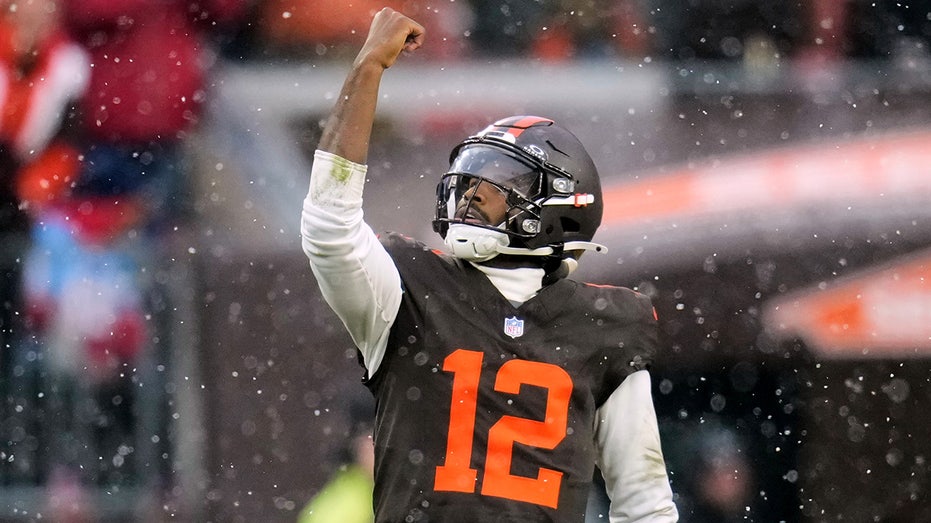
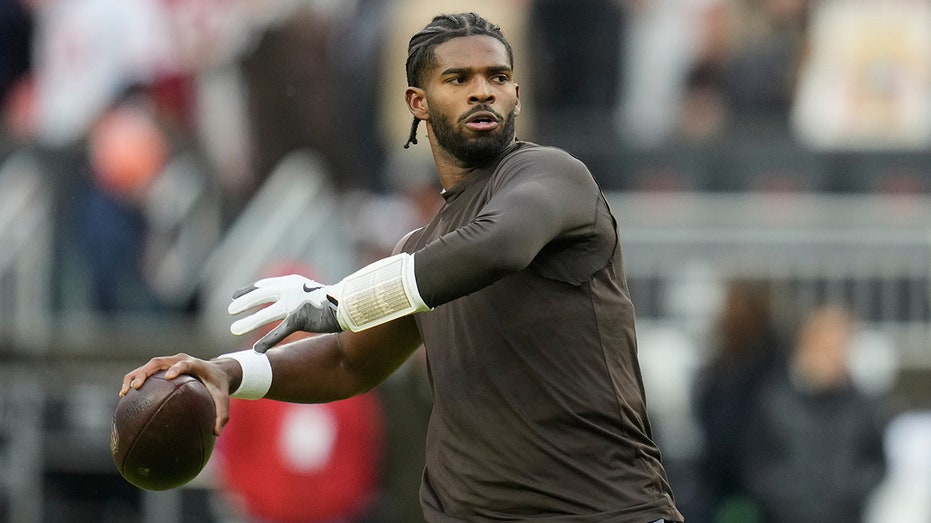
In a weekend where rookie quarterback Shedeur Sanders put up one of the most impressive statistical performances of his young NFL career, the internet chose to debate his undergarments. A blurry screenshot from the Cleveland Browns’ 31–29 loss to the Tennessee Titans overshadowed 364 passing yards and four total touchdowns, sparking speculation that Sanders was wearing a thong before he clarified it was simply back tape for an injury.
Beneath the obvious silliness, this episode is a sharp case study in how modern sports culture works: performance is often secondary to virality, athletes are content brands as much as competitors, and reputations are now shaped in real time by social media micro-moments that can drown out the actual game.
Why This Moment Matters More Than It Should
On its face, this is trivial: a misunderstanding about equipment and a rookie laughing it off on his brother’s YouTube channel. But it sits at the intersection of several powerful trends:
- The transformation of athletes into always-on media properties
- The dominance of meme culture over on-field substance
- Growing anxieties about masculinity, image, and ridicule in male-dominated sports
- The NFL’s shifting power balance between team-run PR and player-controlled storytelling
Sanders’ decision to address the rumor via his brother Shilo’s YouTube rather than through a press conference is especially telling. It shows a new media ecosystem where players bypass traditional gatekeepers, leveraging family-run channels and personal brands to frame narratives on their own terms.
The Bigger Picture: From Monday Night Replays to Meme Culture
This isn’t the first time a minor visual detail has eclipsed actual football. Over the past two decades, the NFL has gradually moved from being primarily a sporting competition to a sprawling entertainment product built for screens, social feeds, and memes.
Historically, embarrassing or odd-looking moments that went viral were typically tied to performance: Mark Sanchez’s infamous “butt fumble,” Leon Lett’s premature celebrations, or even wardrobe malfunctions related to uniforms. What’s different now is that the line between sports coverage and internet gossip has almost completely eroded.
We’ve seen parallel phenomena:
- Cam Newton’s fashion choices becoming a weekly debate topic, often overshadowing his MVP-level play earlier in his career.
- Odell Beckham Jr. becoming as known for one-handed catches in warmups and his social media persona as for his production at wide receiver.
- Travis Kelce’s relationship with Taylor Swift generating more media impressions than many playoff games.
Shedeur Sanders enters the league as part of a new class of athletes whose personal brand was built long before their first NFL start. As the son of Deion Sanders, with huge college visibility at Colorado and a robust social media following, he doesn’t just play quarterback—he’s already a content ecosystem. That makes him unusually susceptible to exactly this kind of micro-controversy.
What This Really Says About the Modern NFL
1. The Incentive Structure Now Rewards Virality Over Performance
In a rational world, the main story out of this game would be a late-round rookie pick (144th overall or later) throwing for the second-most yards by such a rookie since 1966. That’s a significant historical data point: it suggests the Browns may have found a potential long-term answer at quarterback despite being out of playoff contention.
Instead, the viral screenshot dominated conversation. That’s not simply the fault of “the internet”; it reflects how media outlets now compete. Social networks reward engagement, and odd images, sexual innuendo, and jokes are low-friction content that spreads faster than nuanced breakdowns of coverage schemes and progressions.
Media scholar Zeynep Tufekci has written extensively about “attention extraction” models, where platforms and publishers are incentivized to amplify whatever holds eyeballs the longest. A controversial or mocking clip of a player’s undergarments will outperform film-room analysis nine times out of ten. Sanders is caught in that incentive structure.
2. Masculinity, Mockery, and the NFL Locker Room
The nature of the rumor—whether Sanders was wearing a thong—matters. It taps into deeper ideas about masculinity in football culture. The NFL is still one of the most aggressively male-coded spaces in American life, where toughness, stoicism, and heteronormative performance are deeply embedded expectations.
Mocking a male athlete for supposedly wearing a thong is about more than wardrobe curiosity; it’s a way of policing gender norms. There’s an implied insult: that such attire is feminized, sexualized, and therefore incompatible with the hyper-masculine image of an NFL quarterback.
Sanders’ response—laughing, explaining it was back tape, calling the speculation “weird”—walks a careful line. He doesn’t take the bait by getting defensive or angry, but he also clearly wants to distance himself from the narrative. This suggests an awareness of how fragile public perception can be, especially for a young quarterback still fighting to be seen as a serious leader.
3. Player-Led Media Is Rewriting Crisis Management
Crucially, the clarification did not come via a team statement or beat reporter question; it happened on Shilo Sanders’ YouTube channel during a FaceTime call. That’s part crisis management, part family content, part branding exercise.
This fits into a broader trend that really accelerated with projects like “The Players’ Tribune,” the “New Heights” podcast, and athlete-produced vlogs: players prefer to own their narratives, monetize their own content, and control tone and context.
PR consultant Molly McPherson has noted that “digital-first crisis response” is now standard for public figures under 30: respond quickly, in your own voice, on your own channel, before the story calcifies. Sanders did exactly that—turned the rumor into a joke, explained the reality, and fed the content machine on terms favorable to him and his family brand.
4. The Browns’ Decision: Development Over Optics
Amid the noise, one football decision may matter far more than the viral screenshots: Cleveland has committed to starting Sanders for the remainder of the season, even after being eliminated from playoff contention.
That suggests three things:
- The coaching staff sees enough upside in his performance to prioritize his reps over veterans.
- The organization is willing to endure short-term social-media distractions in exchange for long-term evaluation.
- The front office recognizes that fan engagement around Sanders—good or bad—is now a factor in how the franchise is perceived.
Head coach Kevin Stefanski’s comments about “ups and downs” and “plays he wants back” are standard rookie-quarterback language, but the decision to stick with him despite elimination indicates this is no late-season experiment; it’s an audition for the future. The fact that this is being discussed in the same breath as a thong rumor underscores how skewed our attention has become.
Expert Perspectives: Media, Identity, and the Rookie Quarterback
Sports sociologist Dr. Michael Butterworth has argued that quarterbacks are uniquely burdened with symbolic expectations: they’re not just players, but embodiments of leadership, masculinity, and franchise identity. For someone like Sanders, who arrives with a famous last name and preexisting media spotlight, those expectations are amplified.
Media studies professor Dr. Nicole Kraft has pointed out that “second-screen culture”—where fans watch the game while scrolling social media—means that television images don’t just inform commentary; they become raw material for meme production. A single freeze-frame can generate thousands of posts within minutes, often completely detached from the unfolding game context.
Brand strategists also note the double-edged nature of this visibility. On the one hand, the Sanders family has built a multichannel media presence—from Deion’s college coaching spotlight to Shilo and Shedeur’s content—that creates significant commercial opportunities. On the other, the more visible you are, the more vulnerable you become to reputational whiplash from trivial controversies.
What’s Being Overlooked: The Actual Football Story
Lost in the noise are several substantive points about Sanders’ trajectory:
- Draft position vs. production: For a rookie selected 144th or later to post 364 passing yards and four total touchdowns in a single game is historically rare. That kind of outlier performance often foreshadows future starters.
- Resilience amid distraction: Being able to perform at a high level while the internet dissects your appearance—even for something as absurd as a perceived undergarment—offers a real-world test of mental toughness.
- Locker room dynamics: How a young quarterback handles public jokes and rumors matters. Laughing it off, explaining calmly, and moving on can actually enhance respect internally, signaling composure under scrutiny.
In a league where the mental side of quarterbacking is as critical as arm strength, Sanders’ handling of this odd moment may quietly reassure coaches that he can absorb off-field noise without imploding.
Looking Ahead: What to Watch Beyond the Jokes
Several longer-term questions emerge from this episode:
- Can Sanders turn fleeting virality into durable credibility? If he strings together multiple strong performances, this moment is likely to be remembered as an early-career footnote. If he struggles, it may be unfairly folded into a narrative of not being “serious enough.”
- Will team media strategies adapt? As players lean more heavily on personal channels, franchises will have to decide whether to integrate, support, or quietly resist this decentralization of message control.
- Does the league confront or lean into meme culture? The NFL has increasingly embraced memes in its own social media. But episodes like this raise uncomfortable questions about when humor turns into subtle policing of gender norms and personal autonomy.
Speculatively, if Sanders continues to develop and the Browns remain committed, this kind of episode may actually benefit his brand: being able to laugh at yourself early and move past it can humanize an athlete in ways scripted marketing campaigns rarely do.
The Bottom Line
This wasn’t really a story about whether Shedeur Sanders wore a thong. It was a story about how a single ambiguous image can commandeer the conversation around a rising athlete, how meme culture now rivals game tape in shaping public perception, and how young players are navigating a world in which they are both competitors and content producers.
If Sanders wins in the long run, this episode will be a punchline in a larger success story—an early reminder that in the modern NFL, controlling the ball is only half the job. Controlling the narrative, or at least surviving it, is the other half.
Topics
Editor's Comments
What’s most revealing about this story isn’t the rumor itself, but how seamlessly it fits into the current media ecosystem. A rookie quarterback delivers a historically strong performance for his draft position, and yet the dominant discourse centers on a zoomed-in screenshot and a sexually tinged joke. That mismatch tells us something uncomfortable about where the value lies in contemporary sports coverage: in easy laughs and shareable moments, not in understanding talent development or organizational decision-making. There’s also an underexplored equity angle here. Sanders, as the son of a Hall of Famer with built-in media savvy and platforms, can afford to laugh this off and quickly reframe the narrative. A less connected rookie without that infrastructure might be more vulnerable to being defined by a similar moment. As more athletes become their own media entities, the gap between those with sophisticated support systems and those without could widen. The league and players’ union will eventually have to grapple with whether media literacy and narrative management are now essential professional tools—on par with film study and strength training—for anyone expected to play quarterback in the NFL spotlight.
Like this article? Share it with your friends!
If you find this article interesting, feel free to share it with your friends!
Thank you for your support! Sharing is the greatest encouragement for us.