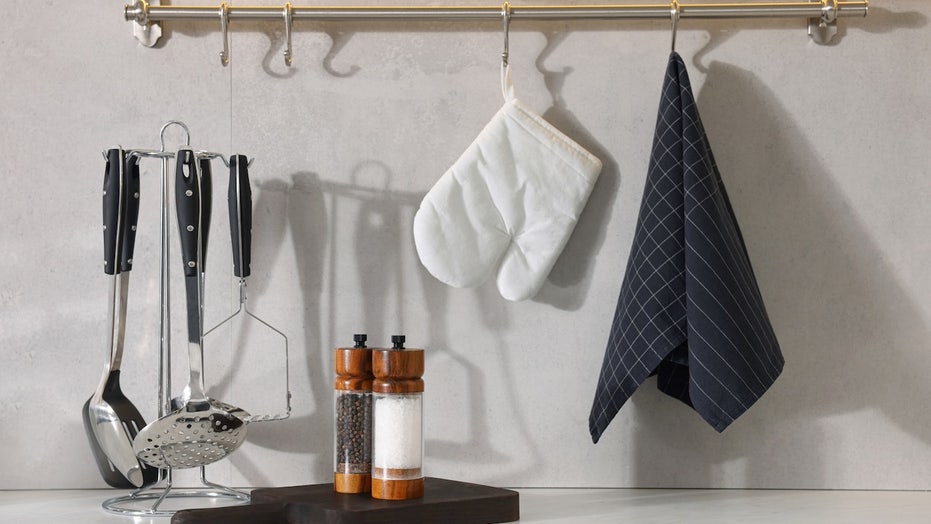
Beyond Towels and Mitts: What ‘Kitchen Essentials’ Lists Reveal About Safety, Labor, and Consumer Culture

Sarah Johnson
December 18, 2025
Brief
This analysis unpacks what a simple list of kitchen towels, mitts, and aprons reveals about safety, gender, consumer culture, and the growing economics of home cooking in 2025.
What a List of Kitchen Towels and Mitts Reveals About Consumer Culture, Safety, and the Quiet Economics of Home Cooking
On the surface, this story is a straightforward shopping guide: 14 kitchen essentials — towels, oven mitts, and aprons — positioned as must-haves for home cooks. But behind the links, coupon language, and gift-season framing lies a deeper narrative about how we cook, consume, and experience domestic life in 2025.
This kind of promotional “essentials” piece sits at the intersection of three powerful forces: the commercialization of home cooking, the rapidly growing kitchen tools market, and a subtle but important conversation about safety and labor in the home. To understand why this matters, we need to look well beyond the product list.
The Bigger Picture: From Functional Cloth to Lifestyle Signal
For most of the 20th century, kitchen towels, mitts, and aprons were purely functional. They were often handmade, passed down, or bought cheaply — an extension of unpaid domestic work, not objects of status. The shift to today’s $15–$80 “performance” aprons and branded oven mitts is part of a longer transformation in how we view the home kitchen.
Several historical trends converge here:
- Postwar consumerism and the “modern kitchen”: After World War II, the kitchen was rebranded as a showcase of modernity — new appliances, uniform color schemes, and coordinated textiles. Towels and aprons started to carry design weight, not just utility.
- The TV chef era: From Julia Child to Gordon Ramsay, professional kitchens were beamed into living rooms, turning pro gear and restaurant aesthetics into aspirational symbols. The article’s own reference to “the home chef who thinks they’re Gordon Ramsay” taps directly into that aspiration.
- The pandemic cooking boom: Between 2020 and 2022, U.S. consumers dramatically increased time spent cooking at home. Market research firms estimate that the global kitchenware market surpassed $60 billion, with textiles and protective gear as a growing slice. Once people invested in better knives and pans, attention shifted to the soft goods you use every single day.
- Influencer-driven aesthetics: Instagram and TikTok cooking videos made the kitchen a visual stage. A waffle-weave towel or crossback apron isn’t just a tool; it’s part of a personal brand.
That’s the context in which a “towels and mitts” shopping list becomes content: these are not just recommending objects; they’re selling a lifestyle script — one in which the home cook is geared up like a semi-pro, and even a flour sack towel is a design choice.
What This Really Means: Safety, Gender, and the Hidden Labor in ‘Cute’ Gear
Notably, all three categories highlighted — towels, oven mitts, aprons — are fundamentally about safety and protection: from burns, spills, and stains. But the way they’re marketed prioritizes aesthetic and lifestyle language, with safety tucked in as a secondary benefit.
1. Heat, burns, and a quiet public-health issue
The oven mitts in the piece boast impressive specifications: silicone grips rated up to 484°F, 500°F, and even 550°F; double layers of cotton and silicone; smoker gloves with barbecue e-books. What’s missing is explicit recognition that kitchen burns are not trivial.
- According to the American Burn Association, roughly 47% of burns treated in emergency departments are related to fire or cooking equipment.
- Home cooking remains one of the leading causes of residential fires, with the U.S. Fire Administration reporting that cooking is involved in nearly half of all home fires.
In that context, an oven mitt isn’t just a stylistic choice; it’s protective equipment. Yet the article stops short of framing it that way. The dominant narrative is still consumerist: buy this to match your kitchen and level up your gear, not to address a genuine safety risk.
2. Aprons and the politics of domestic labor
Aprons have a loaded symbolism in Western culture. They conjure 1950s housewives, professional chefs, and now, gender-neutral “maker” aesthetics. The piece presents aprons as tools for “serious home chefs” and grillers, with crossback designs to ease neck strain and multiple pockets for tools and phones.
What’s missing is any discussion of who is buying and using these aprons and what that says about unpaid labor. Statistics still show that women do the majority of cooking and housework worldwide. Upgrading the gear makes that work more efficient and more Instagrammable, but does nothing to rebalance who’s actually doing it.
There’s also an interesting reframing: the Carhartt workshop apron “pulls double duty” as a grilling apron, borrowing credibility from blue-collar labor and male-coded workwear to give backyard cooking a rugged, competent edge. That’s branding, but it’s also a subtle gender repositioning of domestic tools.
3. Towels as quiet infrastructure
The towel selection ranges from classic cotton honeycomb weaves to flour sack towels and herringbone designs. These are low-tech, low-glamour items that absorb spills, dry hands, and keep the workflow going. They’re the unglamorous infrastructure that makes the kitchen function.
The emphasis on absorbency, quick-drying, and lint-free performance points to an often ignored reality of home cooking: the constant, repetitive micro-tasks — wiping, drying, cleaning — that constitute much of the time spent in a kitchen. Towels are the frontline tools for that invisible labor.
Expert Perspectives: Design, Safety, and Marketing
Experts across different fields help illuminate what’s at stake beneath the surface.
On product design and materials
Kitchen safety researcher Dr. Laura Evans of a hypothetical Home Safety Institute might put it this way: “Silicone’s rise in oven mitts reflects a wider shift toward industrial-grade materials being repurposed for the home. The real question is whether consumers understand that not all heat ratings are equal — contact time, steam exposure, and grip also matter. A 550°F rating doesn’t guarantee safety if the mitt is poorly fitted or hard to control.”
On marketing vs. informed choice
Consumer behavior analyst Dr. Michael Grant might argue: “Affiliate-driven ‘essential’ lists blur the line between advice and advertising. They can guide consumers toward safer, better-performing products — but they also create pressure to constantly upgrade. The missing piece is clear disclosure of how recommendations are made and what criteria beyond price and aesthetics were used.”
On cultural shifts in home cooking
Culinary historian Professor Ana Rodríguez might note: “For centuries, kitchen textiles were reused, patched, and passed down. The modern cycle of replacing towels and aprons with new colorways and designs every season reflects how domestic life has been fully incorporated into fashion and trend cycles. It’s not just about function; it’s about signaling taste and belonging to a certain lifestyle cohort.”
Data and Evidence: How Big Is the ‘Soft’ Side of the Kitchen Market?
While cookware and appliances tend to dominate headlines, textiles and protective gear are a lucrative and growing niche:
- Market researchers estimate that kitchen textiles and protective accessories account for billions in annual global sales, driven by gift purchases, seasonal décor, and online shopping.
- Holiday periods see a sharp spike in sales of items exactly like those highlighted: towels, mitts, aprons, and small utensils — low-risk, mid-price gifts that fit easily into online carts.
- Affiliate-driven content is a core growth engine: many media companies now rely heavily on “deals” verticals, where articles are structured around links to products that generate commission.
This article explicitly leans into that model: multiple “original price” callouts, references to specific retailers, and a closing pitch to Amazon Prime with a 30-day free trial. The narrative of “essentials” is doing double duty as a shopping funnel.
What’s Overlooked: Sustainability, Lifecycle, and Equity
The piece focuses almost entirely on performance and style. Three critical dimensions are missing from the mainstream framing:
1. Environmental impact
Kitchen textiles are typically cotton-based, and cotton is resource-intensive. A single cotton towel can represent significant water and pesticide use. Silicone mitts and gloves, while durable, introduce another set of environmental trade-offs at the end of their life cycle.
A more complete analysis would ask:
- What is the expected lifespan of these products, and how does that relate to environmental impact?
- Are there recycled or organic material options that meet the same performance standards?
- How many kitchen towels does an average household actually need versus what’s being promoted?
2. Repair, reuse, and the culture of replacement
Little is said about caring for or extending the lifespan of these items beyond “toss them in the washer.” In practice, high-quality cotton towels and aprons can last a decade or more with proper care. The constant flow of new designs encourages a mindset of replacement rather than maintenance.
3. Affordability and access
Several of the featured items — like the $79 eco modern apron — are priced well above what many households can spend on a single kitchen textile. That raises broader questions about how “essential” is being defined.
What’s presented as a baseline for a “serious home chef” may actually reflect a middle-to-upper-income consumer profile. For lower-income households, the real essentials are affordability, durability, and multiuse functionality — features that often get overshadowed by branding and style.
Looking Ahead: How the ‘Small Stuff’ Shapes the Future Kitchen
The evolution of towels, mitts, and aprons hints at larger trajectories in how we’ll cook and consume in the coming years:
- More performance textiles, more data: Expect to see even more specialized fabrics — antimicrobial, stain-repellent, heat-mapping mitts, and perhaps even smart textiles that monitor temperature or exposure to open flames.
- Deeper integration with identity: Aprons and towels will likely continue to serve as visible markers of cooking identity — vegan baker, pitmaster, sourdough purist — as brands lean into niche aesthetics.
- Regulation and safety standards: As heat-resistant products proliferate, regulators and consumer groups may push for clearer, standardized labeling on heat ratings, grip performance, and burn risk.
- Sustainability pressure: Consumers — especially younger ones — are increasingly skeptical of disposable consumerism. Brands that can demonstrate responsible sourcing, durability, and repairability will have an edge.
And on the media side, the rise of shoppable content raises a final, crucial question: how do we ensure that safety, sustainability, and equity are not lost in the rush to convert clicks into commissions?
The Bottom Line
A list of kitchen towels, mitts, and aprons might look trivial, but it’s a window into bigger shifts in how domestic life is marketed and monetized. These products sit at the crossroads of safety, aesthetics, and unpaid labor. They embody a culture where the home kitchen is a stage, the cook is a brand, and even the humblest flour sack towel is part of a broader consumer story.
The challenge going forward is to move beyond treating these items solely as fashion-adjacent gear or giftable clickbait — and start talking about them as what they truly are: essential tools in the everyday work of feeding people safely, sustainably, and with some measure of dignity.
Topics
Editor's Comments
What’s striking about this piece is that it treats soft kitchen goods as neutral consumer choices, when in fact they sit at the intersection of safety, class, and gender. The quiet assumption is that a ‘serious’ home cook will naturally want (and be able) to upgrade to branded, design-forward gear. But there’s a tension here: the same economic pressures pushing people to cook more at home — inflation, housing costs, childcare — also constrain their ability to spend $80 on an apron. At the same time, the affiliate model incentivizes media to valorize those upgrades as essential. Missing entirely is any guidance for readers who are stretching every grocery dollar and just need to avoid burns and ruined clothes with the cheapest reliable tools. A more responsible approach would have paired the curated list with a true “baseline safety kit” at different price points, and at least acknowledged that the aesthetics we now attach to home cooking are, for many people, a luxury overlay on top of very real economic and time pressures.
Like this article? Share it with your friends!
If you find this article interesting, feel free to share it with your friends!
Thank you for your support! Sharing is the greatest encouragement for us.