Brooklyn Stabbing of Elias Rosner: What This Attack Reveals About Antisemitism and Public Safety

Sarah Johnson
December 18, 2025
Brief
The Brooklyn stabbing of Jewish victim Elias Rosner exposes deeper trends: surging antisemitism, fraying trust in public safety, and why ordinary people feel forced to confront violent hate themselves.
Brooklyn Stabbing of Elias Rosner: A Local Attack on a Global Fault Line
The stabbing of 35-year-old Elias Rosner on a Brooklyn street is being treated as a hate crime, but it is more than just another violent incident in New York City. It sits at the intersection of rising antisemitism, fraying public trust in institutions, online radicalization, and a growing cultural struggle over who is safe in public spaces — and who feels compelled to “stand up to bullies” at real personal risk.
Rosner’s own words — “I believe in standing up to bullies” — capture both the moral clarity and the deep social anxiety of this moment. When an ordinary person confronts an assailant who allegedly says, “I’m going to kill a Jew today,” we’re not just witnessing a crime; we’re watching the breakdown of the basic promise that a city’s streets belong to everyone, including its most visible minorities.
Why This Incident Matters Beyond Brooklyn
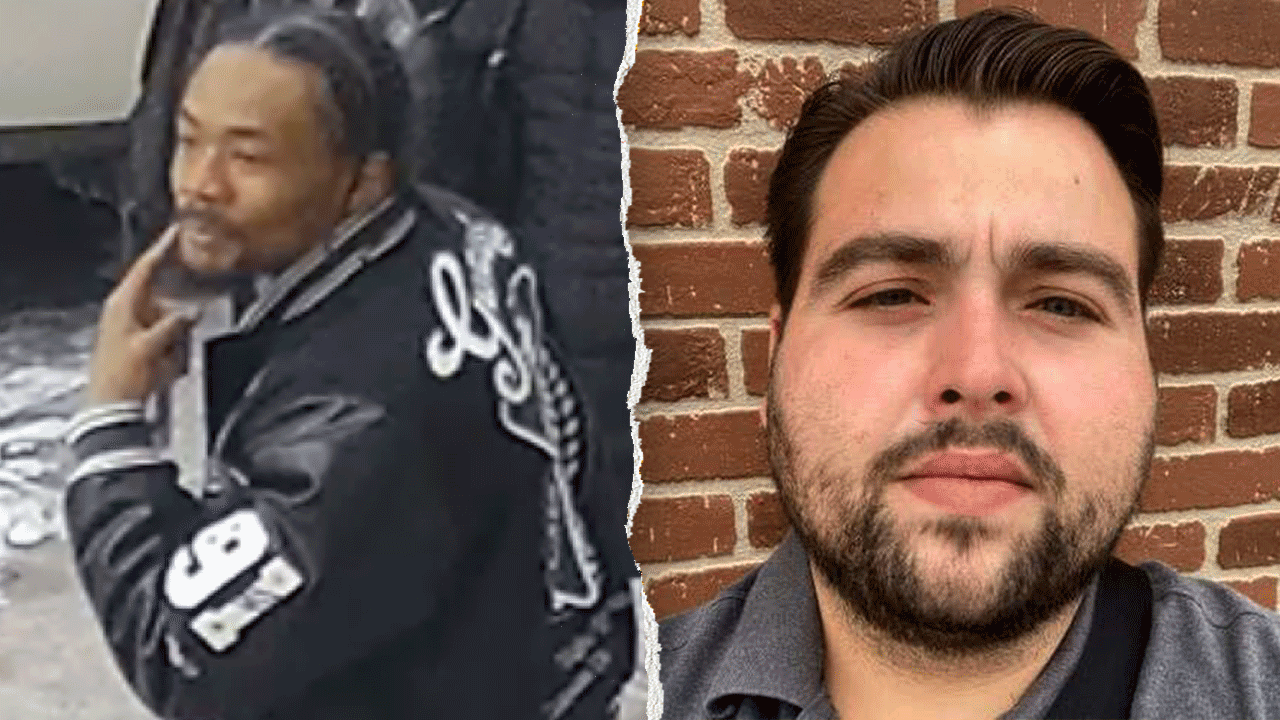
On its face, the story is straightforward: a Jewish man in a visibly Jewish neighborhood is approached, subjected to antisemitic threats referencing the Holocaust, and stabbed in the chest after following the suspect during a confrontation. Police are investigating it as a hate crime. But several deeper currents are at play:
- A documented surge in antisemitic incidents in the U.S., especially in New York City.
- The symbolic targeting of Jews in historically Jewish spaces, like Crown Heights and surrounding neighborhoods.
- The normalization of public harassment, where blatant hate speech in crowded areas doesn’t always prompt effective intervention.
- A growing impulse among ordinary people to physically confront threats because they no longer trust systems to protect them.
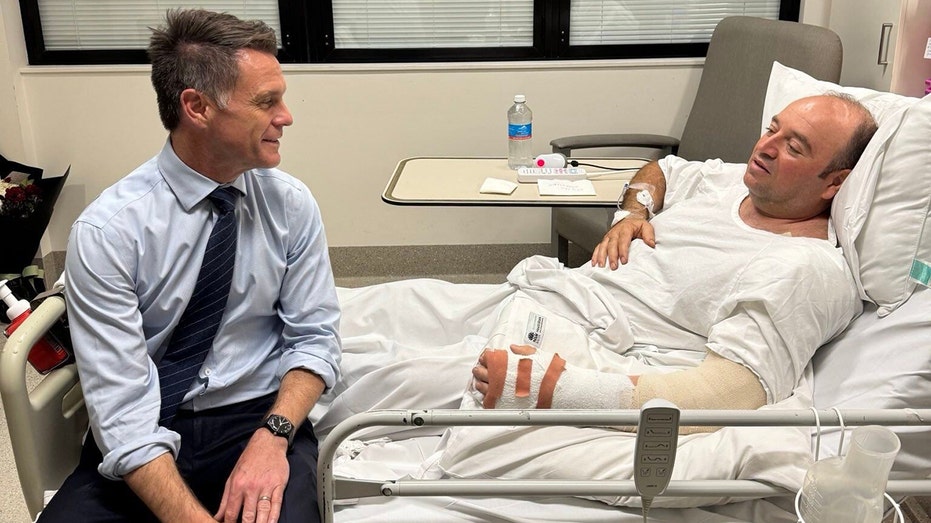
Rosner survived because he improvised — wrapping a sweater around his arm to block the blade. That detail reads like an action scene, but it’s also a stark reminder: survival in a major U.S. city, in 2025, for some minorities, is starting to feel like something that depends on personal tactics rather than public guarantees.
The Bigger Picture: A Long Shadow of Violence Against Jews in New York
To understand why this particular stabbing feels so charged, you have to see it as part of a historical continuum.
New York’s long history of antisemitic attacks includes:
- Crown Heights 1991: Days of unrest following a car accident involving a Hasidic motorcade escalated into antisemitic violence and a neighborhood-wide crisis of trust.
- Regular assaults in Brooklyn: Over the last decade, particularly in Crown Heights, Williamsburg, and Borough Park, visibly Orthodox Jews have been targets of unprovoked punches, vandalism, and harassment. Many never made national headlines.
- Jersey City 2019 and Monsey 2019: Deadly attacks on Jewish targets in the NY–NJ area signaled that antisemitic violence was no longer limited to graffiti or slurs — it could be lethal, and it could happen in suburban living rooms and schools as easily as in dense urban neighborhoods.
At the national level, the trend is undeniable. The Anti-Defamation League (ADL) reported that antisemitic incidents in the U.S. hit record highs in recent years, with thousands of documented cases annually. New York routinely ranks at or near the top in absolute numbers. These figures are not just abstract statistics — they map onto real neighborhoods like the one where Rosner was stabbed.
Layered on top is the historical memory of European antisemitism. References to the Holocaust, reportedly invoked by the suspect, are not random insults; they are direct taps into the deepest trauma in modern Jewish history. When a man says, “I’m going to kill a Jew today,” and invokes the Holocaust, he is situating himself — consciously or not — in a lineage of genocidal rhetoric that Jews are acutely attuned to.
What This Really Means: Public Space, Fear, and the Ethics of Confrontation
Rosner describes a very human calculus: “between fight, freeze and flight … I chose to fight.” He follows the suspect, the confrontation escalates, and he is stabbed. This decision raises several uncomfortable questions:
- Why did he feel he had to confront the attacker himself? In neighborhoods that have seen repeated hate incidents, people often feel that “if we don’t stand up, no one will.” This can be empowering — but also dangerously isolating.
- What does it say about bystanders? The attack occurred in a crowd of Jewish people. Footage shows a prolonged dispute. In many public hate incidents, witnesses freeze, unsure how to intervene safely. That hesitation creates a vacuum that emboldens aggressors.
- What is the role of community norms? In some communities, there is a strong cultural emphasis on not backing down from bigotry. This can help defend dignity, but it also places individuals in potentially lethal confrontations with people who may be mentally unstable, intoxicated, or armed.
The fact that Rosner used his sweater as a makeshift shield is both heroic and chilling. It’s the image of an ordinary citizen improvising self-defense against attempted murder — and in that improvisation, we see a broader shift: public space is increasingly experienced as contested rather than shared, especially by visibly identifiable minorities.
Expert Perspectives: Antisemitism, Radicalization, and Urban Security
Scholars and practitioners who track antisemitism and urban violence see this incident as part of overlapping trends, not an isolated outburst.
On the normalization of antisemitic rhetoric: Deborah Lipstadt, U.S. Special Envoy to Monitor and Combat Antisemitism, has repeatedly warned that what begins as “just talk” can rapidly escalate. When phrases like “Hitler was right” or casual Holocaust references appear on social media and at protests, it lowers the threshold for more explicit threats like “I’m going to kill a Jew today.”
On urban hate incidents and mental health: Criminologists note that hate crimes often occupy a gray zone between ideological radicalization and personal instability. Suspects in street-level attacks may be influenced by online conspiracies, personal grievances, untreated mental illness, or all three. That can make prediction and prevention particularly difficult — but it doesn’t make the impact any less terrorizing for the targeted community.
On policing and hate crime deterrence: Hate crime task forces, like the NYPD unit now investigating Rosner’s stabbing, aim to send a clear message that bias-motivated violence will draw extra scrutiny and punishment. Yet experts point out that if arrest and prosecution rates remain low, the deterrent effect weakens, and victims and communities become more skeptical of relying on law enforcement alone.
Data & Evidence: A Measurable Surge, Not a Vague Impression
Several measurable trends frame this attack:
- Record-high incidents: In recent years, the ADL has documented the highest number of antisemitic incidents since it began tracking in 1979, including assaults, harassment, and vandalism.
- Shift in form: There has been a noticeable rise in “street-level” attacks — physical assaults, threats on public transportation, and harassment in residential neighborhoods — as opposed to only institutional targets like synagogues.
- Social media amplification: Many incidents are now captured on video and spread widely online. This both raises awareness and risks creating a copycat dynamic as perpetrators see their actions generate attention.
Rosner’s stabbing checks multiple boxes on this list: a public, visible assault, apparently ideologically motivated, in a high-density Jewish area, caught on camera and circulated on social media.
Overlooked Elements: Bystanders, Preparedness, and the Emotional Aftermath
Much of the initial coverage emphasizes the suspect’s words and Rosner’s courage. Less discussed are three key dimensions:
- The role of bystander intervention training: Had there been people nearby trained in de-escalation or coordinated distraction tactics, the confrontation might have unfolded differently. Cities have begun experimenting with such programs, but they’re still far from universal.
- Community preparedness versus normalization of danger: Some Jewish communities now routinely discuss situational awareness, self-defense, and security protocols. While this can save lives, it also risks normalizing a permanent state of threat — a psychological toll that doesn’t show up in incident counts.
- The long tail of trauma: Rosner survived physically, but the psychological impact on him, his family, and the broader community will persist. Many victims of hate crimes report lasting hyper-vigilance, fear in public spaces, and a sense that they are “walking targets.”
In other words, the visible wound — a stab to the chest — is only part of the story. The less visible wound is a deepened sense of vulnerability among Jews who see this attack as one more proof that their safety in public cannot be taken for granted.
Looking Ahead: What to Watch
How this case unfolds will send signals far beyond one Brooklyn corner. Key questions include:
- Will the suspect be identified and prosecuted as a hate-crime offender? Quick, decisive action matters not just for justice but for deterrence and community reassurance.
- How will city officials respond? Are there concrete commitments to increased patrols in vulnerable areas, expanded hate crime training, and support services for victims?
- Will communities double down on self-reliance? If institutional responses are perceived as insufficient, expect a rise in volunteer patrols, security measures, and perhaps more people willing to do what Rosner did — physically confront threats, with all the risks that entails.
- What happens online? The way this attack is discussed on social media — whether it’s condemned across ideological lines or minimized and mocked — will shape broader norms around antisemitic rhetoric and violence.
There is also a quieter, but crucial, long-term question: whether Jewish children growing up in New York today will internalize this era as one where being visibly Jewish in public was dangerous, or as a period when society ultimately pushed back hard enough to restore a sense of safety.
The Bottom Line
The stabbing of Elias Rosner is not just one man’s ordeal; it is a flashpoint in a broader struggle over whether visibly identifiable Jews — and by extension other minority communities — can occupy public space without fear. It reflects a documented surge in antisemitic incidents, a fraying of trust in public institutions, and a growing willingness of ordinary people to confront hate directly when they feel no one else will.
Rosner’s instinct to “stand up to bullies” is admirable, but it also highlights an uncomfortable truth: when citizens feel they must personally absorb the risks of confronting hatred, it is a sign that the systems meant to protect them are not fully doing their job. How New York responds now will help determine whether this attack becomes one more data point in a bleak trend line — or a turning point that forces a serious reckoning with antisemitism in America’s largest city.
Topics
Editor's Comments
One of the most troubling aspects of this case is how familiar it already feels. A visibly Jewish man, an explicit threat invoking the Holocaust, and a knife on a city sidewalk — this should be shocking, yet for many in New York’s Jewish communities it fits a pattern they’ve been warning about for years. What’s rarely confronted in mainstream coverage is the cumulative psychological effect of that pattern: the quiet recalibration of daily life, from choosing what to wear on the subway to deciding whether to let children walk alone to school. When people like Elias Rosner feel both the need and the responsibility to confront aggressors themselves, it’s a symptom of a deeper erosion of trust. We tend to focus on individual perpetrators and victims, but the more unsettling question is systemic: at what point does a city that prides itself on diversity have to admit that certain groups no longer feel that public space truly belongs to them—and what is it prepared to do about that beyond issuing statements and increasing patrols for a news cycle?
Like this article? Share it with your friends!
If you find this article interesting, feel free to share it with your friends!
Thank you for your support! Sharing is the greatest encouragement for us.