Bondi Beach Hanukkah Attack: What This Antisemitic Terror Incident Reveals About the West

Sarah Johnson
December 18, 2025
Brief
The Bondi Beach Hanukkah terror attack exposes deeper shifts: rising global antisemitism, Australia’s shaken security narrative, and the growing role—and risk—of public Jewish visibility and celebrity activism.
Bondi Beach Hanukkah Attack: Why a Terror Incident in Australia Echoes Far Beyond Sydney
The Bondi Beach Hanukkah attack is not just another terrorist incident, and the celebrity responses headlining it are not just “entertainment news.” What happened on that beach sits at the intersection of three powerful currents: a historic spike in antisemitism, the globalization of political violence, and the new role of cultural figures as moral amplifiers in polarized societies.
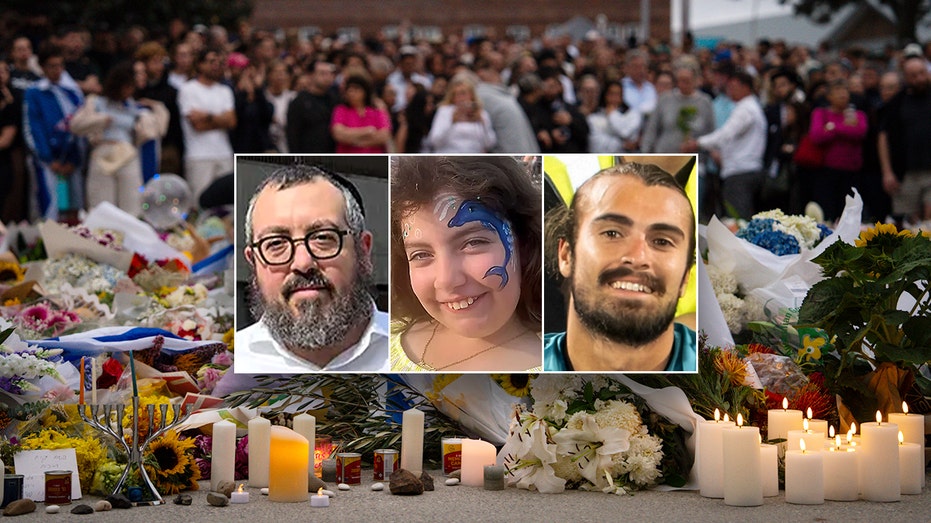
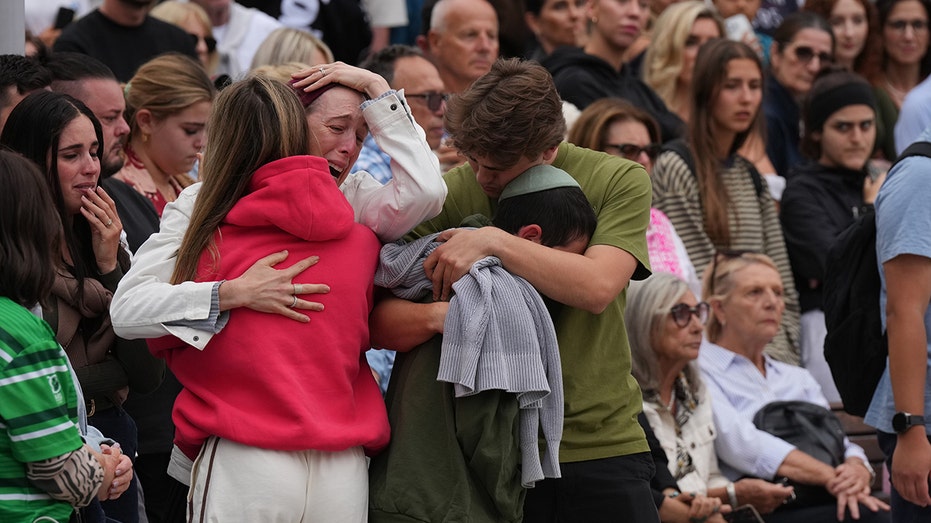
Sixteen people killed, dozens wounded, a Holocaust survivor among the victims, and an event explicitly celebrating Jewish identity deliberately targeted. That alone would make this a watershed moment for Australia, a country that has long seen itself as largely insulated from the scale of extremist attacks common in Europe and the United States. But the way this attack is being described, shared, and reacted to—from Gal Gadot and Ashton Kutcher to King Charles III and political leaders—reveals something larger: a global renegotiation of what it means to be visibly Jewish, visibly political, and visibly safe in the West.
Australia’s Shock: A Country That Thought It Had Solved Gun Violence
Rebel Wilson’s reaction—calling the shooting “the most un-Australian thing to have happen” and insisting “we shouldn’t have gun violence in Australia”—captures a deeply held national narrative. Since the Port Arthur massacre in 1996, when 35 people were killed, Australia has been held up as a model of gun control. A bipartisan package of reforms, including a national gun buyback, helped dramatically reduce mass shootings.
For almost two decades after Port Arthur, there were no mass shootings (defined as four or more fatalities excluding the perpetrator) in Australia. Even with some uptick in recent years, the country still experiences significantly fewer gun deaths per capita than the United States. So when Australians wake up to images of a mass shooting at Bondi Beach—a global symbol of laid-back coastal life—it isn’t just horror. It’s a sense of breach: of the social contract, of the assumption that such things happen “over there,” not here.
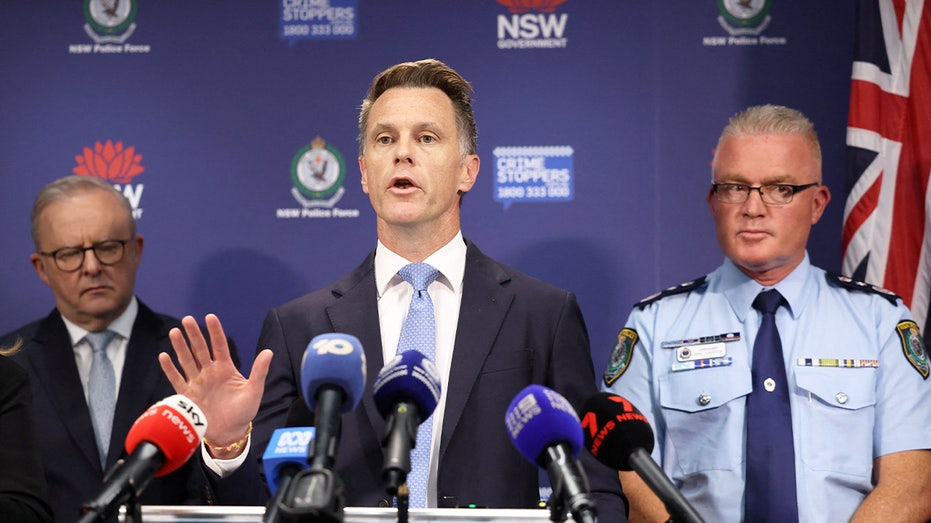
Overlay that with the explicitly antisemitic nature of the attack, and the narrative shifts from random tragedy to targeted terror. This is why Australian authorities quickly labeled the incident terrorism and emphasized that it was “designed to target Sydney’s Jewish community.” For a country that often sells itself as a multicultural success story, a planned massacre aimed at Jews during a religious celebration tears at the fabric of that story.
Antisemitism’s Global Spike – and the Post–October 7 Landscape
The Bondi attack did not happen in a vacuum. Since the October 7, 2023 Hamas attacks on Israel and the subsequent war in Gaza, antisemitic incidents have surged across much of the world. The Anti-Defamation League reported historic increases in antisemitic incidents in the U.S. after October 7; similar spikes were documented by Jewish communities and monitoring bodies in the UK, France, Germany, and Canada.
Australia has followed this pattern. Jewish organizations there have reported a marked rise in threats, harassment, and vandalism since late 2023, including swastikas on schools, protests targeting Jewish institutions, and online abuse. When Sara Foster references “swastikas on pre schools” and “college campuses turned into antisemitic indoctrination institutions,” she’s articulating a sentiment now widely shared in Jewish communities: that what once looked like fringe hatred has been normalized or excused under the cover of political activism.
Security experts have long warned that spikes in hateful rhetoric often precede or accompany physical violence. Ashton Kutcher’s line that “antisemitic rhetoric is not abstract—it carries a cost” echoes a growing body of research: when dehumanizing language is tolerated, the threshold for violence drops. The Bondi attack is, in that sense, part of a grim continuum—from synagogue shootings in Pittsburgh and Poway to attacks on kosher supermarkets in Paris and Jersey City.
Celebrity Voices as Moral Barometers—and Political Lightning Rods
On the surface, the involvement of Gal Gadot, Ashton Kutcher, Rebel Wilson, and others might seem like just another round of famous people posting reactions. But the dynamics are more complex.
Celebrity speech now plays at least three important roles in moments like this:
- Amplification of moral framing: Gadot’s language—“Festival of Light,” “send light into the darkness”—ties the attack to a broader symbolic struggle between light and darkness, hope and hatred. This isn’t simply grief; it’s an attempt to shape the narrative of what the attack represents.
- Pressure on political elites: When high-profile figures emphasize antisemitism specifically, they implicitly push governments and parties to name it, not subsume it into generic “hate” or “extremism.” That matters for policy and security allocation.
- Polarization risks: As Foster’s more combative post illustrates—“we have had ENOUGH… WAKING up… is the only option”—celebrity rhetoric can sharpen divides. Some will see her remarks as overdue moral clarity; others will view them as sweeping condemnation of entire political movements.
In the social media age, celebrities function like high-powered relays in the attention economy. Their statements can help ensure a targeted attack on Jews in Australia is not treated as a local story, but as part of a global pattern. At the same time, their involvement can draw backlash, accusations of hypocrisy, or claims that they’re selectively outraged. That tension will shape how future attacks are discussed, especially in conflicts that intersect with Israel–Palestine debates.
What Bondi Reveals About the Safety of Jewish Life in the West
Public Hanukkah celebrations have grown over the last several decades—from menorah lightings in city halls and public squares to large beachfront events like “Chanukah by the Sea.” They symbolize a confidence that Jewish identity can be visible, joyous, and integrated into national life.
The Bondi attack strikes directly at that visibility. It asks, implicitly: can Jews safely gather in public, under their own symbols, in Western democracies today?
This is why many Jewish leaders and allies are framing the attack as part of a pattern that includes:
- Synagogue shootings in the United States (Pittsburgh 2018, Poway 2019)
- Attacks on Jewish schools and community centers in Europe (Toulouse 2012, Copenhagen 2015)
- Repeated targeting of Jews at religious and cultural gatherings (the Hyper Cacher supermarket in Paris, 2015)
Israeli President Isaac Herzog’s reaction—linking the attack to the broader “heart of the entire nation of Israel”—reinforces another reality: Jewish communities worldwide are increasingly seen as interconnected. What happens in Sydney reverberates in Jerusalem, New York, and London, raising security concerns and psychological pressure simultaneously.
Head of State Responses: Unity, But Also Limits
King Charles III’s statement emphasizes themes that have become almost formulaic after terror attacks: horror, sympathy, praise for emergency services, and confidence that “the spirit of community and love… will always triumph over the darkness of such evil.” Likewise, political figures encouraging Jews to “celebrate proudly” and not fear send an important symbolic message: do not retreat, do not hide.
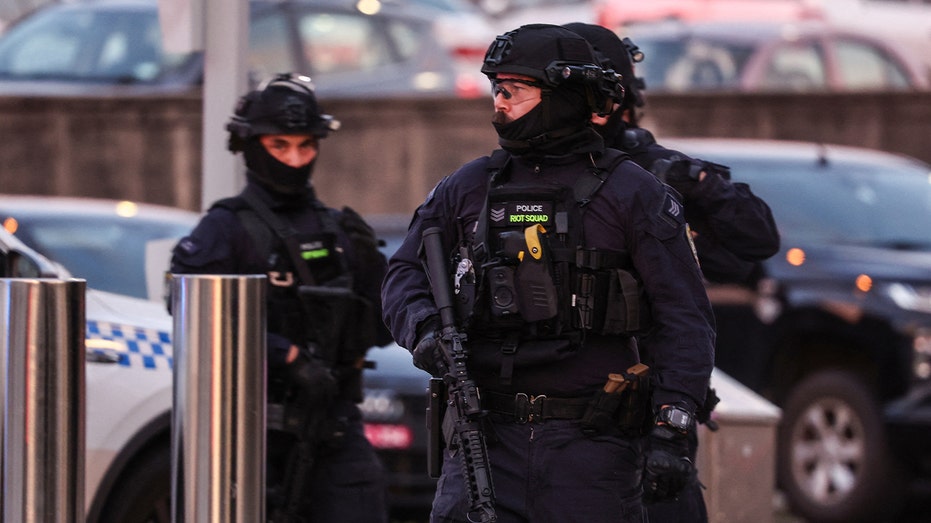
Yet the gap between reassurance and reality is widening. Jewish communities across the West now routinely celebrate holidays under heavy police protection, with concrete barriers, surveillance, and private security all but standard. “Pride” and visibility increasingly require accepting a level of physical risk that other communities may not face to the same extent.
The critical question going forward is whether governments will treat attacks like Bondi as isolated “one-offs” or as part of an enduring security challenge requiring sustained investment, legal clarity on hate speech and incitement, and robust community engagement.
What’s Being Overlooked
Several key issues are largely missing from the quick-take coverage:
- Radicalization pathways: How did the suspects come to view a beach Hanukkah event as a legitimate target? Were they influenced by global propaganda, local networks, or online ecosystems? The answers will shape counterterrorism strategies.
- Law enforcement resource allocation: As police forces are asked to guard more events and institutions, are they equipped, trained, and staffed to handle a long-term elevation in threat levels, especially against religious minorities?
- The mental health toll on Jewish communities: Living with constant heightened security and repeated trauma has psychological costs that go beyond physical safety.
- The line between criticism of Israel and antisemitism: Foster’s references to political slogans like “globalize the intifada” touch on a deep unresolved debate: when does activism about Israel and Palestine become incitement against Jews as Jews?
Data and Evidence: How Big Is the Problem?
While precise global statistics vary, several trends are clear:
- Major monitoring organizations have recorded record-high levels of antisemitic incidents in multiple Western countries since late 2023, including harassment, threats, vandalism, and violence.
- Security services in Europe and North America have repeatedly warned that Jews and Jewish institutions are “high priority targets” for both jihadist and far-right extremists.
- A growing share of such attacks deliberately target symbolic or communal spaces—synagogues, schools, markets, and now public religious celebrations—rather than random public places.
Bondi Beach fits squarely into this trend: a soft target chosen not for its economic or military significance, but for its religious and communal symbolism.
Expert Perspectives
Security analysts, scholars of antisemitism, and sociologists of religion offer several key insights that help frame the Bondi attack beyond immediate emotions.
Terrorism specialist Dr. Lydia Khaled notes that mixed ideological ecosystems are becoming more common: “We increasingly see attackers whose motivations blend global grievances, local resentments, and online conspiracy narratives. Focusing solely on one ideology or foreign group risks missing the hybrid nature of the threat.”
Historian of antisemitism Professor David Feldman has long argued that visible Jewish life has always carried risk in times of heightened polarization: “Public Jewish rituals are barometers of societal health. When lighting a menorah in a city square requires armored vehicles, it tells us something fundamental about the state of liberal democracy.”
And sociologist Dr. Nasreen Hanif stresses the broader stakes: “Attacks on Jews are often early warning signs of a wider breakdown in norms. Societies that fail to protect minorities rarely stop at one group. The way a country responds to antisemitic violence is a test of its commitment to pluralism itself.”
Looking Ahead: Four Things to Watch
- Security upgrades and their normalization: Expect increased police presence at Jewish events in Australia, and likely a review of security protocols. The question is whether such measures become permanent—and at what psychological cost.
- Policy debates on hate speech and incitement: Foster’s criticism of politicians who refuse to condemn certain slogans points to coming fights over where to draw the line between protected speech and incitement. Legislation and university policies will likely come under renewed scrutiny.
- Celebrity activism’s evolution: Figures like Gadot and Kutcher will face pressure—from both supporters and critics—to speak not only after attacks but about the broader climate that enables them. Their choices may influence whether antisemitism is treated as a central human-rights issue or a niche concern.
- Jewish communal strategy: Communities worldwide are already weighing how visible to be, how heavily to rely on state protection, and how to build coalitions with other minority groups facing hate. The Bondi attack will factor into those calculations.
The Bottom Line
The Bondi Beach Hanukkah attack is a brutal tragedy. But it is also a diagnostic moment. It reveals a Western world where Jewish visibility increasingly requires security planning; where antisemitic rhetoric is migrating from fringe corners into mainstream spaces; and where celebrities and heads of state are being forced, again, to articulate what they stand for in the face of targeted hatred.
Whether this becomes a turning point—prompting serious, sustained efforts to confront antisemitism and protect public religious life—or another entry in a growing list of “never again” moments quickly forgotten, will depend on what happens after the headlines fade and the candles of this year’s Hanukkah have long gone out.
Topics
Editor's Comments
One uncomfortable but necessary question is whether liberal democracies have been too slow to connect rhetorical permissiveness with physical risk. For years, chants calling for violence against Jews, displays of Nazi symbolism, and slogans like “globalize the intifada” have been defended in many spaces as merely provocative or symbolic political speech. The Bondi attack tests that boundary: when an explicitly Jewish gathering is targeted, how much of the preceding rhetorical environment should be treated as warning rather than background noise? At the same time, a blunt crackdown on speech risks driving grievances underground and feeding narratives of censorship and martyrdom. The challenge for policymakers and civil society is to develop a more nuanced framework that distinguishes robust political dissent from dehumanizing incitement, and to apply it consistently across ideologies. The cost of continuing to blur that line is likely to be paid, disproportionately, by visible minorities who are already on the front lines of escalating polarization.
Like this article? Share it with your friends!
If you find this article interesting, feel free to share it with your friends!
Thank you for your support! Sharing is the greatest encouragement for us.