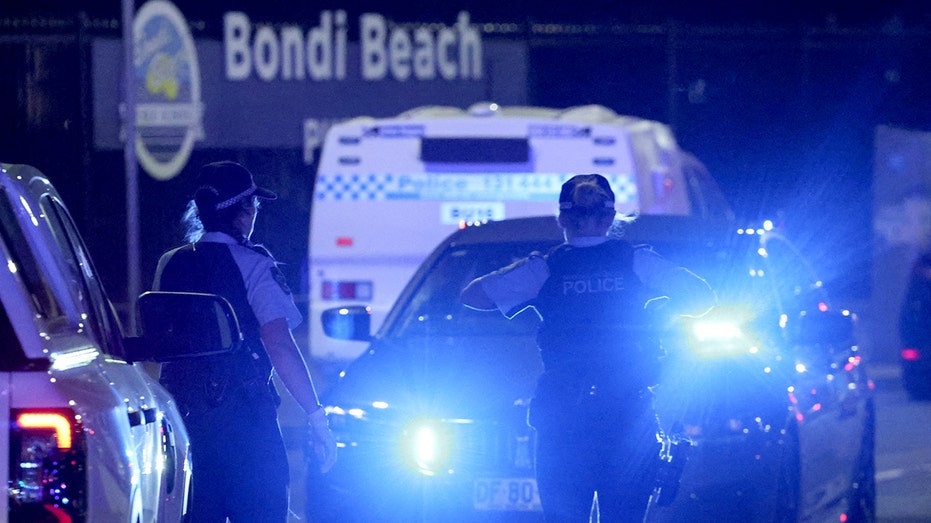
Bondi Beach Hanukkah Massacre: Inside the New Convergence of ISIS Ideology, Antisemitism, and Australia’s Security Gaps

Sarah Johnson
December 18, 2025
Brief
Beyond the ISIS flags and IEDs, the Bondi Beach Hanukkah massacre exposes deeper failures in Australia’s gun laws, antisemitism response, and regional counterterror strategy with the Philippines.
Bondi Beach Attack: How One Terror Strike Exposes Australia’s Vulnerabilities on Extremism, Guns, and Antisemitism
The Bondi Beach Hanukkah massacre is not just another tragic entry in the grim ledger of global terrorism. It is a stress test of Australia’s social compact: its promise of multicultural coexistence, its confidence in tight gun controls, and its assumption that geographic isolation offers some protection from global extremist currents. All three assumptions now look more fragile.
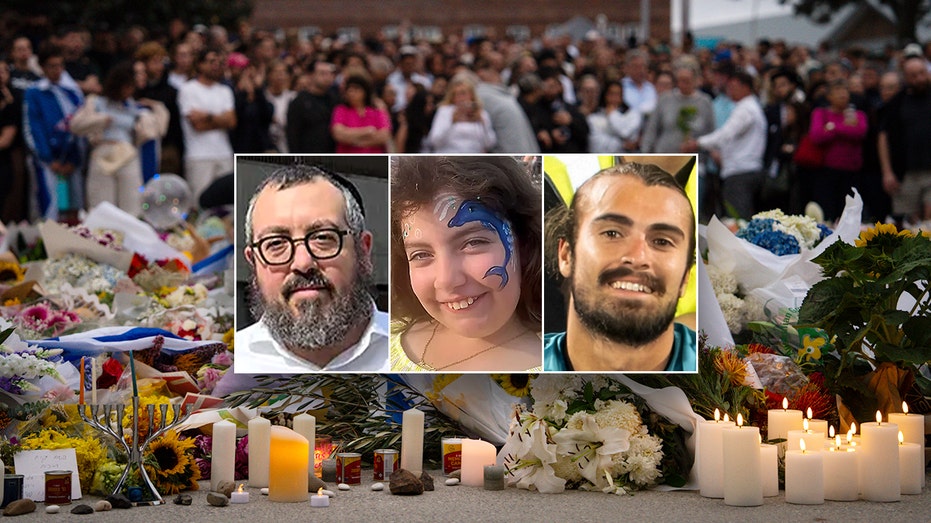
Two gunmen — a father and son, armed with firearms, improvised explosive devices (IEDs), and homemade ISIS flags — targeted Jewish families celebrating a religious holiday. Fifteen people were killed; dozens more were injured. Authorities now describe this as an ISIS-inspired terrorist attack, with indications the attackers may have intended a larger, multi-stage assault.
On its face this is about one horrific crime. Underneath, it’s about something bigger: the convergence of transnational jihadist ideology, rising local antisemitism, and gaps in security policy that were supposed to be closed after Port Arthur in 1996 and after the ISIS wave a decade ago.
Australia’s Terrorism Timeline: From Periphery to Front Line
For decades, Australians experienced terrorism mostly as something that happened to them overseas — most notably the 2002 Bali bombings that killed 88 Australians. Domestic attacks were rarer and generally smaller in scale. Still, the pattern since the mid‑2010s is clear:
- 2014 Lindt Café siege (Sydney): A lone gunman took hostages in a café, killing two before being shot by police. It forced Australia to confront homegrown jihadist violence.
- 2015–2017 ISIS-linked plots: Security services disrupted multiple attack plans, including intended attacks on police and public gatherings. A handful of small-scale stabbings and shootings occurred.
- Ongoing radicalization cases: By some estimates, over 100 Australians traveled to Syria and Iraq to join ISIS or other jihadist groups; dozens more were monitored for ideological support.
Authorities framed these as largely contained problems, managed by intensive intelligence work and a relatively small at-risk population. Bondi — with its apparent pre-planning, explosives, and explicit ISIS symbolism — ruptures that narrative. The attack echoes the ISIS-era assaults in Europe (Paris 2015, Brussels 2016) where gunmen blended simple weapons with bomb components, hitting symbolic civilian targets for maximum psychological impact.
Why Jewish Australians Were Targeted — and Why That Matters Globally
The victims were not random. They were targeted as Jews, celebrating a Jewish religious festival. That matters on three levels.
- Ideological core of ISIS: Jihadist movements like ISIS and al-Qaeda have always included explicit antisemitism in their worldview, drawn from a mix of distorted religious arguments and imported European conspiracy theories. Synagogues and Jewish community events are high-value symbolic targets.
- Global spike in antisemitism: Since the October 7, 2023 Hamas attack and the subsequent Gaza war, antisemitic incidents have surged across Western democracies. In the UK, reported antisemitic incidents more than doubled in 2023–2024; in the US, the ADL recorded record-high levels. Australia has seen similar patterns, from harassment to vandalism. Bondi is the most extreme manifestation of that trend.
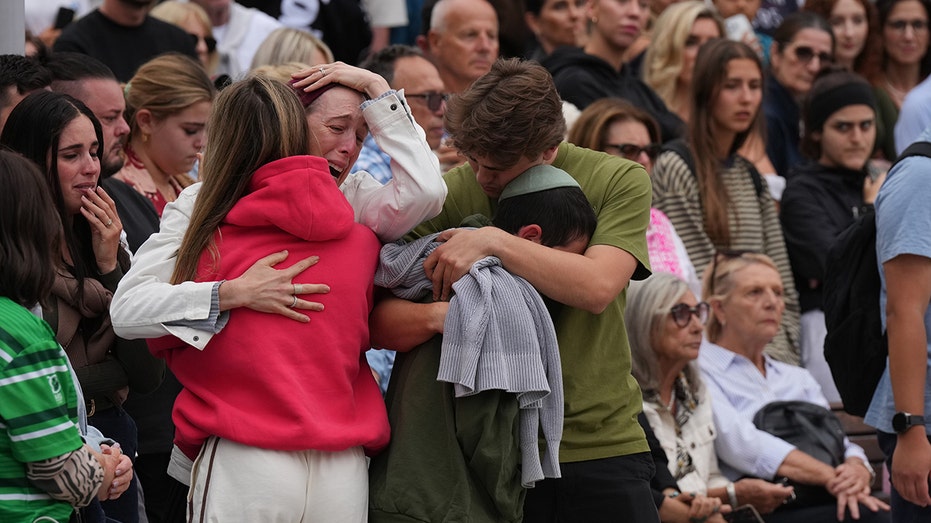
- Local perception of vulnerability: Jewish communities in Sydney and Melbourne have warned for months that security threats were growing. The attack validates their worst fears and will likely reshape how they interact with broader Australian society and the state.
A key underreported angle: this is both an ISIS-inspired attack and a hate crime targeting Jews. Too often, public debate treats those as separate categories. Here, they reinforce each other. The ideological environment that normalizes extreme hostility toward Jews — even when couched in geopolitical rhetoric about Israel — creates fertile ground for jihadist narratives to resonate.
The Philippines Connection: Echoes of a Fading but Not Dead Network
The suspects’ recent travel to the Philippines is a crucial clue, not a side note. For years, southern Philippines has been a patchwork of militant ecosystems:
- Abu Sayyaf: Once notorious for kidnappings and beheadings, pledged allegiance to ISIS in 2014–2015.
- Maute Group and others: ISIS-aligned militants who briefly seized Marawi City in 2017, drawing foreign fighters from across Asia and the Middle East.
Philippine authorities now argue these groups are degraded, with little current foreign fighter presence. That may be true in terms of large-scale operations, but ideological and social networks outlast the battlefield. Even if the Bondi attackers did not receive direct operational guidance, their travel suggests one of three possibilities:
- They sought contact with surviving ISIS-linked cells or sympathizers.
- They consumed propaganda, training, or facilitation from individuals tied to older networks.
- They used the Philippines as a relatively low‑visibility environment to radicalize, test weapons knowledge, or meet intermediaries.
Investigators will be scrutinizing communication logs, encrypted messaging apps, and financial trails. The question isn’t just whether there was a direct command link, but whether a revitalized or residual Southeast Asian ISIS ecosystem played an enabling role.
Australia’s Gun Laws Under Pressure: When ‘World-Class’ Isn’t Enough
One of the most politically explosive revelations is that the older suspect legally accumulated six firearms under Australia’s strict gun laws. That detail cuts against the prevailing narrative that Port Arthur-era reforms effectively made mass shootings improbable.
The 1996 National Firearms Agreement introduced licensing, mandatory registration, bans on many semi-automatic rifles and shotguns, and a large buyback. It worked: mass shootings dropped sharply, and firearm homicide declined. But Bondi exposes three vulnerabilities:
- Legal access loopholes: Certain categories of firearms remain accessible with the right licensing and justification (e.g., for sport or rural work). The question now is whether those categories are broader than they need to be for public safety.
- Insufficient ideological vetting: Background checks typically focus on criminal history and mental health flags, not systematic assessments of extremist sympathies. In an era where online radicalization is central, that blind spot is increasingly untenable.
- Family and network risk: When one family member has legitimate access, it can de facto become a shared arsenal, particularly if both are radicalized.
Prime Minister Anthony Albanese has promised the most sweeping gun reforms since Port Arthur. The risk is that debate focuses solely on hardware — further tightening categories and storage requirements — while neglecting the ideological dimension. The core policy question is whether a liberal democracy can design a licensing system that flags extremist risk without veering into mass surveillance of lawful political views.
Missed Signals and the Intelligence Challenge
Authorities have acknowledged that intelligence services were warned months earlier about Iran-linked terror activity and rising risks, though not necessarily specifically about this father-son pair. That raises difficult questions:
- Were there missed opportunities to detect their radicalization trajectory?
- Did resource constraints or political sensitivities about profiling religious or ethnic communities lead to under-monitoring?
- Did the focus on foreign state-linked threats (e.g., Iran) overshadow ISIS-inspired lone or small cell actors?
Modern counterterrorism operates on a paradox: success is invisible (attacks that never happen), while failure is painfully public. Bondi will push Australian agencies toward more aggressive data collection, algorithmic risk scoring, and community informant networks. But the line between necessary vigilance and rights‑eroding overreach will be fiercely debated, especially by minority communities who fear collective suspicion.
The Social Fabric Test: Antisemitism, Islamophobia, and Multiculturalism
Bondi has already produced both the worst and the best of Australia. On one hand, Jewish Australians are asking why warnings about rising antisemitism were not treated with more urgency. On the other, the heroism of Ahmed al Ahmed — a Syrian-born Muslim shopkeeper who tackled and disarmed one gunman — dramatically undercuts attempts to narrate this as a simple clash between Muslims and Jews.
Al Ahmed’s act matters beyond symbolism. It highlights three overlooked realities:
- Jihadist violence primarily harms civilians of all backgrounds, including Muslims. Many ISIS victims globally have been Muslims who reject its ideology.
- Minority communities are potential partners, not just risks. Effective counterterrorism relies on trust and cooperation with those most exposed to both radicalization and backlash.
- Narrative battles are as important as security measures. How leaders talk about this attack will shape whether it fuels cohesion or polarization.
Australia’s multicultural model has been held up as relatively successful: strong anti-discrimination laws, broad public support for immigration, and relatively low levels of communal violence. Bondi is a direct challenge to that model. If Jewish communities retreat behind heavily guarded institutions and Muslims experience a surge in suspicion and abuse, the country risks a more fragmented, securitized version of itself.
What Mainstream Coverage Is Missing
Much early reporting has focused on the ISIS flags, the bombs in the car, and political reactions. Less attention has gone to three deeper dynamics:
- The convergence of global and local grievances: Attackers likely fused global jihadist propaganda with local tensions over Israel/Palestine and perceived Western hostility to Muslims. Understanding that fusion is key to prevention.
- The transnational extremist ecosystem: Travel to the Philippines is part of a broader pattern of "training tourism" — short trips to conflict-adjacent regions where militants, sympathizers, and propagandists still circulate below the radar.
- Policy lag: Australia’s security architecture remains anchored in lessons from the 1990s (Port Arthur) and early 2000s (Bali, al-Qaeda), while adversaries have moved into a decentralized, digital-first model of radicalization and coordination.
Expert Perspectives
Counterterrorism scholars note that ISIS-inspired attacks often operate on a spectrum from centrally directed to purely self-starting. Professor Anne Aly, a terrorism expert and former counterterrorism academic, has previously described such plots as "network-enabled, locally executed" — a formulation that likely fits Bondi. The online ISIS universe provides ideological justification, target selection cues, and basic operational guidance; the planning and logistics remain local.
Security analysts in Southeast Asia have long warned that the collapse of ISIS territory in Syria and Iraq did not end the threat but redistributed it. Dr. Sidney Jones, a leading expert on regional militancy, has argued that "once an extremist infrastructure exists, it can be reactivated quickly, even after years of apparent dormancy." The suspects’ trip to the Philippines will be read through exactly that lens.
Meanwhile, scholars of antisemitism stress that terrorist attacks on Jews rarely emerge from an ideological vacuum. Dr. Deborah Lipstadt, a leading historian of antisemitism, points out that "extreme acts of antisemitic violence typically rest on a wide base of tolerated or minimized hostility to Jews in public discourse." Translating that insight into policy means treating everyday antisemitism as a security issue, not just a matter of offensive speech.
Looking Ahead: Five Key Fault Lines to Watch
- Scope of gun law reforms: Will changes focus on marginal technical tweaks or embrace ideological risk assessments and tighter oversight of high‑risk license holders?
- Philippines investigation outcomes: If evidence emerges of contact with ISIS-linked figures, expect renewed pressure on Manila and Canberra to deepen intelligence cooperation and re‑prioritize Southeast Asia in counterterror planning.
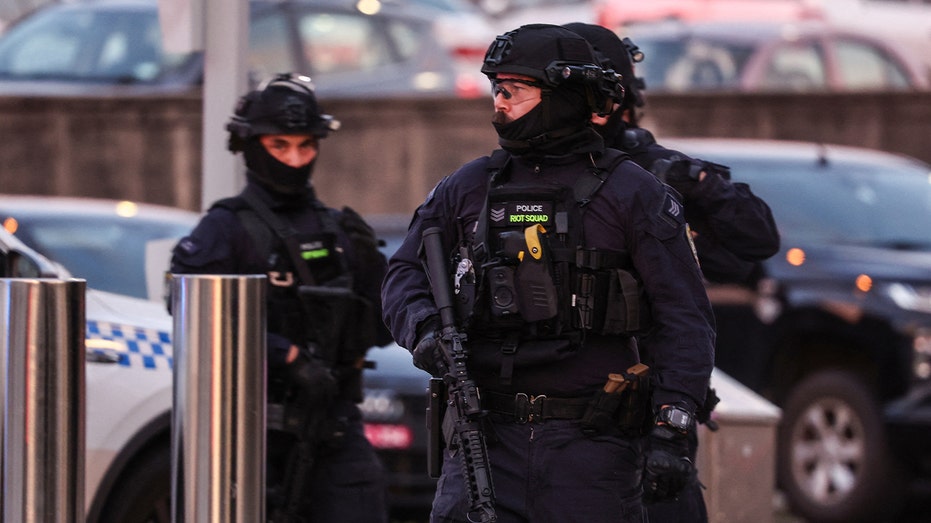
- Treatment of Jewish security concerns: Enhanced protection for synagogues, schools, and communal events will test how seriously the state takes antisemitic threats going forward — and whether support is delivered without framing Jews as a separate, perpetually endangered class.
- Community backlash dynamics: The extent of Islamophobic incidents in the aftermath, and official responses to them, will determine whether extremist recruiters can exploit a narrative of collective punishment.
- Digital radicalization policies: Expect renewed debate on regulating extremist content, encrypted communications, and foreign propaganda online — and whether platforms and telecoms should face stronger obligations.
The Bottom Line
The Bondi Beach Hanukkah attack is more than an ISIS-inspired atrocity. It’s a convergence point where gaps in gun control, underestimation of antisemitism, complacency about Southeast Asian militant networks, and the challenges of online radicalization all intersected — with deadly consequences.
Australia now faces a set of hard choices: how much surveillance is acceptable in the name of security; how to protect Jewish communities without stigmatizing Muslims; how to revise gun laws without ignoring ideological risk; and how to engage with transnational extremist networks that are weaker than a decade ago but far from gone.
The way these questions are answered will determine whether Bondi is remembered as an aberration — or as the moment when Australia entered a new, more dangerous phase of its struggle with extremism.
Topics
Editor's Comments
One of the most uncomfortable questions arising from Bondi is whether Australia, like many democracies, has learned the wrong lessons from past crises. After Port Arthur, the emphasis was on hardware — the types of guns civilians could own. After Bali and the Lindt Café siege, it was on policing and intelligence. Both approaches had successes, but they did not fully account for a world in which violent ideology can incubate in private chat groups and cross borders with a budget airline ticket. Treating extremist violence as primarily a problem of weapons and policing risks missing its cultural and informational roots. The normalization of antisemitism, the proliferation of conspiracy thinking, and the erosion of trust in institutions all create fertile ground for attacks like Bondi, regardless of whether the weapon is a legally obtained shotgun or a car used as a battering ram. A purely security-first response will not be enough; without a parallel effort to confront these deeper drivers, Australia may be condemning itself to an endless cycle of shock, reform, and surprise at the next attack.
Like this article? Share it with your friends!
If you find this article interesting, feel free to share it with your friends!
Thank you for your support! Sharing is the greatest encouragement for us.