Bondi’s Hanukkah Massacre: What This Attack Reveals About a Darkening Global Landscape for Jews

Sarah Johnson
December 18, 2025
Brief
The Bondi Hanukkah massacre is more than a terror attack. This analysis connects the victims’ stories to rising global antisemitism, ISIS-inspired radicalization, and the fragility of ‘safe’ democracies like Australia.
Bondi’s Hanukkah Massacre: What This Attack Reveals About a Darkening Global Landscape for Jews
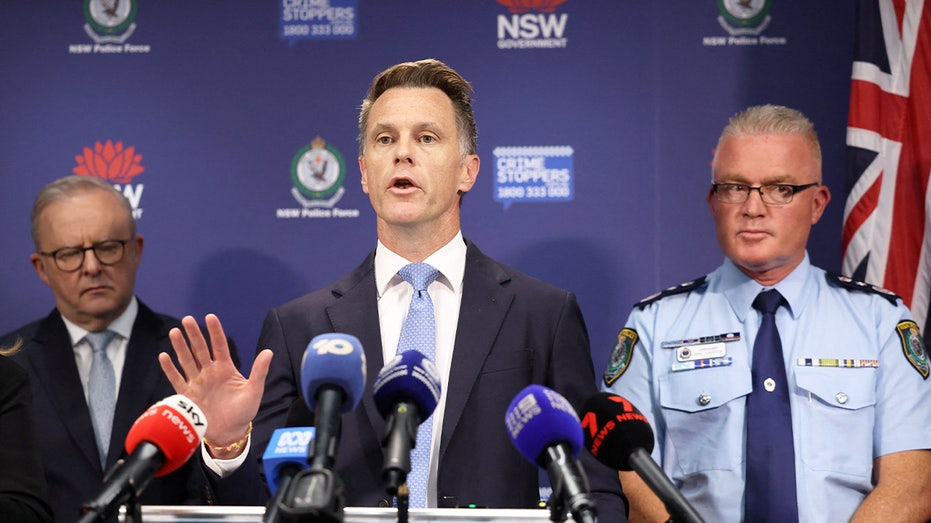
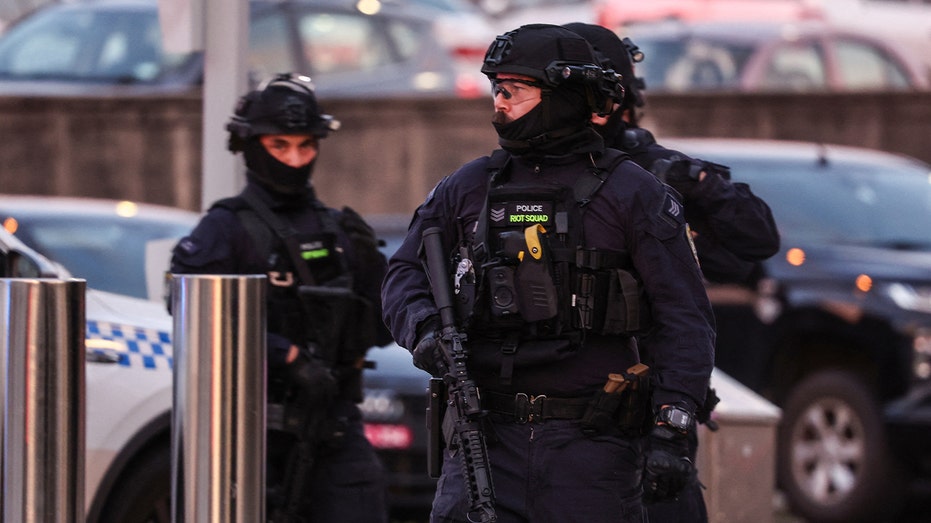
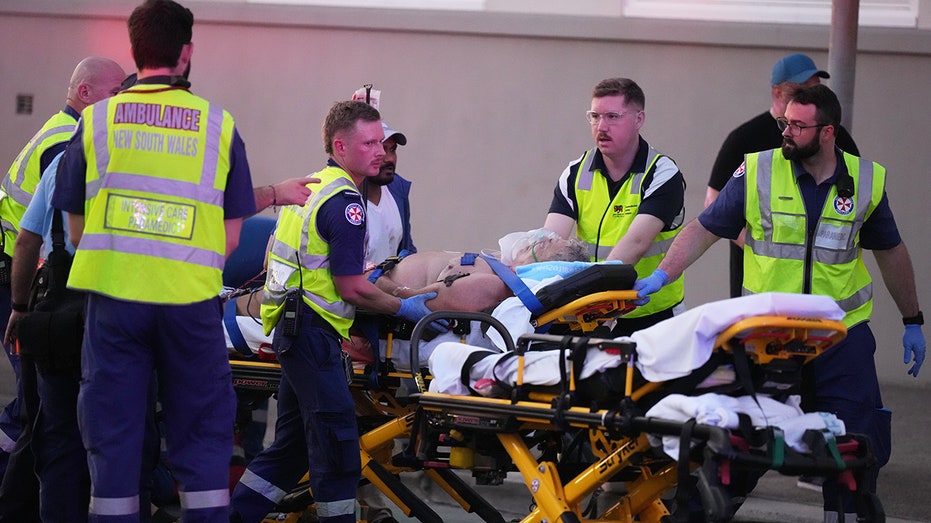
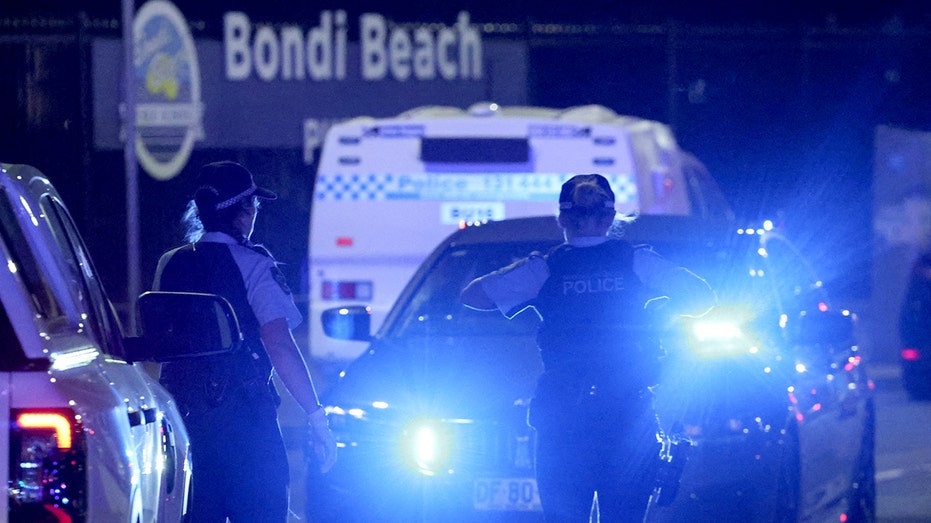
Fifteen people killed at a Hanukkah celebration on Sydney’s Bondi Beach – including a 10-year-old girl, multiple Holocaust survivors, and community leaders – is not just another terror incident. It is a convergence of history and present-day hatred in one of the world’s supposedly safest, most tolerant democracies. The details of who died, how they lived, and why they were targeted turn this attack into a grim warning about where global antisemitism and extremist violence are heading.
The alleged ISIS-inspired, father–son attack targeted a Jewish religious event in a city with strict gun laws and a relatively small Jewish population. It happened in broad daylight, at an event deliberately designed to be public, joyful, and open to the wider community. That combination – visibility, vulnerability, and symbolism – is central to understanding the deeper meaning of what unfolded at Bondi.
The victims embody a century of Jewish trauma and resilience
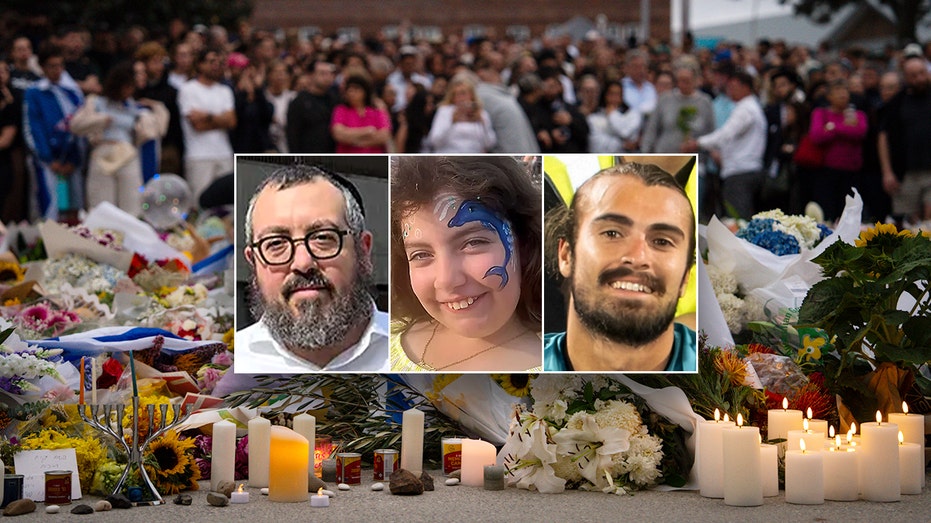
Most early coverage has rightly focused on the human stories: 10-year-old Matilda Britvan, described as “like a sun” by her aunt; Holocaust survivors Alex and Larisa Kleytman; volunteers, rabbis, activists, athletes, and retirees who spent their lives serving others.
But look more closely at who these victims were, and a pattern emerges:
- Holocaust survivors from Eastern Europe like Alex and Larisa Kleytman, who escaped Nazi extermination only to face antisemitic violence eight decades later in a liberal democracy.
- Immigrants from the former USSR – such as Reuven Morrison and others – who left authoritarian or antisemitic environments believing Australia would be a permanent refuge.
- Bridge-builders and anti-prejudice advocates such as Edith Brutman, who dedicated her life to combating discrimination – and died in an explicitly antisemitic attack.
- Community servants and quiet organizers like Rabbi Eli Schlanger and Rabbi Yaakov Levitan, the backbone of Jewish communal life, whose work rarely makes headlines until their deaths do.
- Everyday Australians and internationals – a retired police detective and rugby club stalwart, a French soccer player, long-time seniors’ volunteers – whose participation underscores that this was not an isolated “Jewish” event, but a shared civic space.
In one sense, this is a cross-section of postwar Jewish life: survivors, migrants, professionals, and volunteers building communities in an adopted homeland. The tragedy is that the very generation who spent decades teaching “Never Again” are murdered at a festival commemorating Jewish resilience – by attackers allegedly inspired by a movement that fetishizes genocidal imagery and frames Jews as legitimate targets.
From ‘Never Again’ to ‘Again, Elsewhere’: a historical through-line
For much of the post-1945 era, countries like Australia presented themselves as the antidote to the horrors of European antisemitism. Australian governments commemorated the Holocaust, took in Jewish refugees, and cultivated a public narrative of multicultural tolerance.
Yet the Bondi attack illustrates a subtle but important shift: violent antisemitism is no longer confined to the historical centers of Jewish trauma (Europe, the Middle East) but has become fully globalized. Over the last two decades, we’ve seen:
- The 2014 attack on the Jewish Museum in Brussels.
- The 2018 Tree of Life synagogue massacre in Pittsburgh.
- The 2019 Halle synagogue attack in Germany.
- Repeated attacks on Jewish schools, kosher supermarkets, and synagogues in France.
Australia has not been immune. The 1982 bombings of Jewish targets in Sydney and increasing harassment reports since the early 2000s were early signs. But Bondi is of a different order: an ISIS-inspired mass shooting aimed at families at a seaside holiday event.
The symbolism is stark: Holocaust survivors, whose very existence testifies to the failure of the Nazis’ extermination project, are killed while celebrating Hanukkah – a festival that itself commemorates Jews resisting forced religious erasure in antiquity. The attackers, reportedly carrying ISIS flags, tap into a transnational ideology that frames Jews as enemies of Islam and the West, blurring old European antisemitic tropes with contemporary jihadist narratives.
Why this attack, in this place, at this moment?
Investigators say the attack was ISIS-inspired, staged by a father and son who reportedly had access to weapons and explosives. But in 2025, “ISIS-inspired” is not just about allegiance to a formal organization; it’s about access to a global ideology, amplified online, that offers a simple script: Jews are villains, violence is heroism, and public mass killing is both spectacle and message.
Three overlapping dynamics likely made this event a target:
- Visibility of Jewish identity. “Chanukah by the Sea” is designed to be public-facing: giant menorahs, Hebrew songs, religious leaders, and families gathered in a highly visible, iconic location. In extremist logic, visibility equals vulnerability and propaganda value.
- Global polarization over Israel–Palestine. Although the attackers’ full motivations are still being pieced together, the timing – in an era of intense polarization over Gaza and following Australia’s UN vote on Palestinian statehood – created a volatile context. Radical milieus increasingly erase distinctions between Israeli policy, global Jewry, and local Jewish institutions.
- Generational radicalization. That this was allegedly a father–son operation is deeply significant. It suggests ideological transfer inside the family, not just online recruitment. Intergenerational radicalization is harder to disrupt because it’s embedded in daily life, not just chat rooms.
Rabbi Eli Schlanger’s September letter to the Prime Minister, warning against abandoning the Jewish people, now reads as tragically prescient. Addressing a geopolitical decision (Australia’s vote to recognize Palestinian statehood), he was fundamentally talking about security and moral clarity: that political symbolism in international forums can shape how local communities are perceived – and whether their fears are taken seriously.
What this really tells us about antisemitism in 2025
The Bondi attack exposes several uncomfortable truths that mainstream coverage often glosses over:
- Antisemitism is now a multi-directional threat. Jews in Western democracies face danger from jihadist extremism, far-right white supremacists, and fringe elements on the radical left. Bondi slots into the jihadist column, but the broader climate normalizes the idea that Jewish institutions are legitimate targets.
- Holocaust memory is not a shield. The presence of Holocaust survivors among the dead underscores that remembrance culture, museums, and education – while vital – are insufficient by themselves to prevent violence. The moral capital of “Never Again” has eroded in sections of the public sphere.
- Soft antisemitism feeds hard violence. The transition from rhetoric to bullets rarely happens in a vacuum. Online narratives that depict Jews as collective oppressors, conspirators, or “legitimate collateral” in political conflicts set the stage for a small number of individuals to act violently.
Extremism researchers have repeatedly identified this pipeline. As Prof. Cynthia Miller-Idriss, who studies radicalization, has noted in similar contexts, “Low-level, everyday hate creates the atmosphere in which high-level violence becomes thinkable.” Bondi is a brutal case study in that progression.
Guns, security, and the new ‘soft target’ problem
Australia’s strict gun laws have long been a point of national pride. After the 1996 Port Arthur massacre, sweeping reforms dramatically cut mass shootings. That history raises hard questions: how did a father and son assemble firearms, bombs, and ISIS flags and get close enough to kill 15 people at a well-publicized event?
Even before the full investigative report is public, several structural vulnerabilities are evident:
- Soft security at religious and community events. Many Jewish organizations already operate under heightened security, but temporary outdoor events on public land present new challenges. They are designed to be open – and that openness is precisely what extremists exploit.
- Fragmented intelligence on low-level actors. If the attackers were not on top-tier watchlists, Bondi demonstrates how hard it is to intercept small cells or family-based actors who may only cross into overt planning late in the process.
- The illusion of geographic safety. The idea that an ocean buffer and strict gun laws insulate Australia from “European-style” or “US-style” antisemitic attacks has now been shattered. This will likely reshape how Jewish communities and security agencies think about risk.
In response, Australia is already moving to tighten gun laws further. But legislative tweaks will not address the core problem: ideology travels more easily than weapons, and homemade or illegally sourced firearms will always remain a possibility for determined attackers.
Overlooked angle: extraordinary courage in a climate of fear
Lost in some coverage is how many victims died trying to protect others.
- Alex Kleytman reportedly died shielding his wife – a Holocaust survivor protecting another survivor.
- Boris and Sofia Gurman confronted an armed attacker and briefly disarmed him, at the cost of their own lives.
- Reuven Morrison, unarmed, charged toward the gunmen to protect his community.
- Tibor Weitzen was killed while trying to shield his loved ones.
These are not incidental details; they challenge another dangerous narrative – that Jewish communities are passive victims. The Bondi victims include people who ran toward danger, who took the risks that security forces take, and who understood instinctively that communal safety is a collective responsibility.
From a social perspective, this matters because fear is a powerful tool of terrorism. When communities respond with visible courage and cohesion, they deny attackers a key objective: the sense that they can permanently fracture public life.
International implications: from Bondi to Brussels to Brooklyn
Globally, the Bondi massacre will likely have at least four medium-term impacts:
- Security recalibration for Jewish institutions worldwide. Even communities that already live with armed guards will be rethinking large outdoor celebrations, especially during high-risk periods. Expect more perimeter controls, bag checks, and closer coordination with national security agencies.
- Intensified debate on radicalization and online hate. Governments are already grappling with how to regulate extremist content without curbing free speech. Bondi adds urgency: the argument that online narratives are harmless “just words” is increasingly untenable.
- Pressure on political leaders to draw clearer moral lines. Leaders who try to separate condemnation of terrorism from equivocation about its targets will face growing scrutiny. When Jews are killed for being visibly Jewish, language that treats them as proxies in a geopolitical dispute can fuel backlash and fear.
- Strain – or solidarity – in multicultural societies. How majority and minority communities respond now will matter. If Muslim, Christian, and secular organizations stand visibly with Jewish communities, it can blunt attempts to turn this into a clash-of-civilizations moment. If silence or victim-blaming prevails in some corners, social trust will erode further.
Expert perspectives: what scholars and practitioners are watching
Counterterrorism and antisemitism experts, looking at Bondi in the broader pattern, focus on several key themes:
- Dr. Shiraz Maher, a leading scholar on jihadist movements, has previously argued that ISIS’s enduring power lies less in organizational capacity and more in its “narrative franchise” – the ability to inspire local actors to stage attacks that symbolically align with its goals. Bondi fits that pattern: low-tech relative to 9/11, but high-impact and globally resonant.
- Dr. Deborah Lipstadt, the US Special Envoy to Monitor and Combat Antisemitism, has repeatedly warned that “what starts with the Jews rarely ends with the Jews.” An antisemitic attack in a public place is a warning sign for other minorities and democratic institutions as a whole.
- Professor Greg Barton, an Australian extremism expert, has noted in other cases that family-based radicalization can be particularly intractable because “the home becomes the echo chamber.” The reported father–son dynamic at Bondi is a textbook example.
What to watch next
The story of Bondi is far from over. Several developments will shape its long-term meaning:
- Investigative findings. How did the attackers obtain their weapons? Were there missed warning signs in schools, workplaces, or online forums? Were they part of a broader network?
- Policy responses. Beyond gun laws, will Australia invest more in community protection units, deradicalization programs, and monitoring of extremist content? Will there be a specific strategy for protecting religious minorities?
- Community resilience. Will Bondi Jewish institutions feel safe enough to keep their events public? Or will they retreat into more guarded spaces? That decision will speak volumes about whether terrorism has succeeded in reshaping public life.
- Global echo effects. Other countries will watch what Australia does and either replicate or reject its model. Bondi could become, like Christchurch or Pittsburgh, a reference point in international policy debates on hate-fueled terrorism.
The bottom line
The Bondi Hanukkah massacre is not simply about one horrific day on an Australian beach. It is about the return – in new form – of some of the oldest hatreds, now amplified by globalized extremist ideologies and digital networks. It is about the fragility of “safe” spaces, even in countries that pride themselves on tolerance and strict gun control. And it is about how societies choose to respond when their most vulnerable – children, elderly survivors, community servants – are targeted in the open.
Remembering the names and lives of the victims is essential. But if remembrance stops at mourning, the deeper warning of Bondi will be missed: that antisemitism, left unchallenged, is not a niche prejudice but a stress-test for the health of democracy itself.
Topics
Editor's Comments
One underexamined dimension of the Bondi attack is the role of broader political discourse in shaping the risk environment, even when there is no direct causal link to government decisions. When states vote on contentious issues like Palestinian statehood or issue strongly worded statements on Middle East conflicts, they inevitably influence how local communities experience safety and belonging. That does not mean such votes should be avoided; foreign policy cannot be held hostage to potential extremist reactions. But policymakers often underestimate how their rhetoric is filtered through polarized media ecosystems, where nuance gets lost and Jews are sometimes framed—explicitly or implicitly—as stand-ins for distant conflicts. A more responsible political culture would pair difficult foreign policy decisions with clear, proactive messaging that local Jewish and Muslim communities are not proxies, and that violence against civilians is morally and legally unacceptable regardless of one’s stance on geopolitics. Without that, we leave a vacuum that online extremists are all too eager to fill.
Like this article? Share it with your friends!
If you find this article interesting, feel free to share it with your friends!
Thank you for your support! Sharing is the greatest encouragement for us.