Beyond Bondi: How One Terror Attack Exposed Australia’s Deepest Vulnerabilities

Sarah Johnson
December 18, 2025
Brief
The Bondi Beach terror attack was more than a mass shooting. It exposed deep tensions around antisemitism, security, radicalization, and Australia’s multicultural identity—through the lives and histories of its victims.
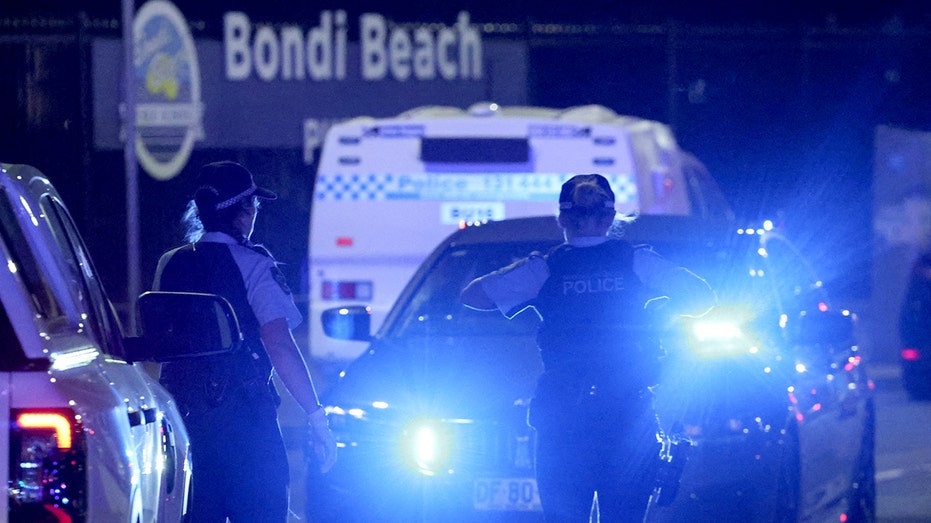
Bondi Beach Terror Attack: How One Night of Horror Exposed Deep Fault Lines in Australia and Beyond
The statements from families after the Bondi Beach terror attack read like fragments of ordinary life: a grandfather protecting his wife, a couple out for an evening walk, a young man playing football near the sea. That ordinariness is precisely what makes this attack so destabilizing. It wasn’t just a mass killing at a Jewish Hanukkah celebration in Sydney; it was a collision between global extremist currents, Australia’s self-image as a safe multicultural democracy, and the unresolved trauma of Jewish history that stretches from Siberia and Czechoslovakia to modern Australia’s beaches.
The story of these seven victims is also the story of a country that must now confront uncomfortable questions: How did an ISIS-inspired father and son turn a holiday gathering into a battlefield? Why were Jewish community leaders warning for months they felt exposed? And what happens to social cohesion when a terror attack lands squarely in the heart of a city that has long sold itself as the epitome of carefree coastal life?
A Long Shadow of History on a Modern Beach
On its surface, Bondi is about surfboards, backpackers, and brunch. But the biographies of the victims make clear that this beach has become a crossroads of some of the 20th century’s darkest chapters.
- Marika (Omi) Pogany fled Czechoslovakia in 1968, a year marked by Soviet tanks crushing the Prague Spring. Her journey from Central Europe to Australia mirrors a wider post-war migration of Jewish survivors and refugees seeking safety in distant democracies.
- Alex and Larisa Kleytman, both Holocaust survivors, embody the brutal arc from Nazi persecution to Soviet hardship in Siberia, and finally to resettlement in Australia. That Alex was killed while celebrating Hanukkah, “standing proudly as a Jew,” is a chilling echo of the violence he escaped eight decades earlier.
- Boris and Sofia Gurman, Russian-Jewish immigrants, and French-born Dan Elkayam reflect the newer wave of Jewish mobility: people who believed that Western democracies offered relative safety from the resurging antisemitism they sensed in Europe.
The Bondi attack therefore doesn’t sit in isolation. It fits into a long pattern: Jewish communities repeatedly rebuilding in new countries, only to find that violent hatred can travel as easily as they can. The presence of Holocaust survivors among the dead deepens the symbolic weight: a generation that outlived Hitler but did not outlive contemporary jihadist-inspired antisemitism.
From ISIS to Bondi: The Logic of “Soft Target” Terrorism
Authorities say the father-son attackers were inspired by ISIS, and the targeting of a Hanukkah event fits a now-familiar logic in global terrorism. Since the mid-2000s, ISIS and its predecessors have encouraged adherents not merely to strike military or political targets, but to attack “soft targets” that carry symbolic weight.
In this case, three layers of symbolism converge:
- Religious symbolism: Hanukkah celebrates Jewish resilience and the rededication of the Temple after persecution. Attacking it is a deliberate assault on the idea of Jewish persistence and identity.
- Civic symbolism: Bondi Beach is an iconic Australian public space. Violence there is not just an attack on individuals, but on the country’s image of openness and safety.
- Ideological targeting: Family statements suggest at least one victim, Elkayam, was “murdered because he was Jewish.” That squares with an ISIS-inspired worldview in which Jews are not incidental victims but central enemies.
ISIS propaganda has, for years, framed attacks on Jews and on Western civilians in public spaces as interchangeable fronts in a single war. What we see in Bondi is that convergence made real: an attack that is simultaneously antisemitic, anti-Western, and designed for maximum psychological effect.
Warnings, Blind Spots, and the Security Gap
In the immediate aftermath, a Jewish community leader’s claim—“we warned them”—points to a key issue: the gap between threat perception inside targeted communities and the risk calculus of state security services.
Several trends matter here:
- Rising antisemitic incidents: In many Western democracies, including Australia, Jewish organizations have reported sharp increases in harassment and threats over the last decade, intensifying with each Middle East flare-up. Data from similar countries show double- or triple-digit percentage increases in reported antisemitic incidents during certain periods.
- Event-based risk spikes: Religious festivals, especially Jewish high holidays and Hanukkah, are known periods of elevated risk. In Europe, synagogues often receive additional police protection during these times.
- Under-resourced community security: While major institutions sometimes get protection, smaller or outdoor events can fall through the cracks, relying on volunteer stewards and thin police presence.
What makes the Bondi case so fraught is that it occurred in a highly public, dispersed outdoor setting—a worst-case scenario from a policing standpoint. Securing a single building is feasible; securing an open beach, where passers-by and targeted community members mix freely, is far more complex. That complexity, however, does not absolve authorities from reassessing how they interpret “credible threats” and where they place resources when communities say they feel exposed.
Heroism, Agency, and the Narrative of Victimhood
Amid the horror, several details complicate the simplistic narrative of Jews as passive victims. Boris and Sofia Gurman reportedly confronted and briefly disarmed one of the gunmen; Alex Kleytman died protecting his wife. These acts of resistance matter psychologically and politically.
Historically, images of Jewish vulnerability—from the ghettos to the camps—have often overshadowed stories of resistance. Here, on an Australian beach, we see a very different picture: older immigrants, with modest working lives, physically intervening against armed attackers.
This challenges both extremist propaganda—which thrives on projecting Jewish weakness—and, paradoxically, some well-meaning portrayals that inadvertently cast Jewish communities only as perpetual victims. The families’ statements insist on something else: agency, courage, and the carrying forward of the victims’ “light,” whether through community service, music, or simple human kindness.
Australia’s Multicultural Compact Under Strain
Australia has long promoted itself as a successful multicultural society. But terror attacks with explicit religious or ethnic dimensions stress-test that claim. When one community is targeted, two dangerous dynamics can follow:
- Communal fear and withdrawal: Jewish families may start to avoid public religious displays—outdoor menorah lightings, visible symbols, or large gatherings—eroding their sense of belonging in public space.
- Backlash and stigmatization: Suspicion may fall on Muslim communities, particularly those already marginalized, even though the vast majority reject ISIS ideology. This can feed into a cycle where alienation and discrimination actually make extremist recruitment easier.
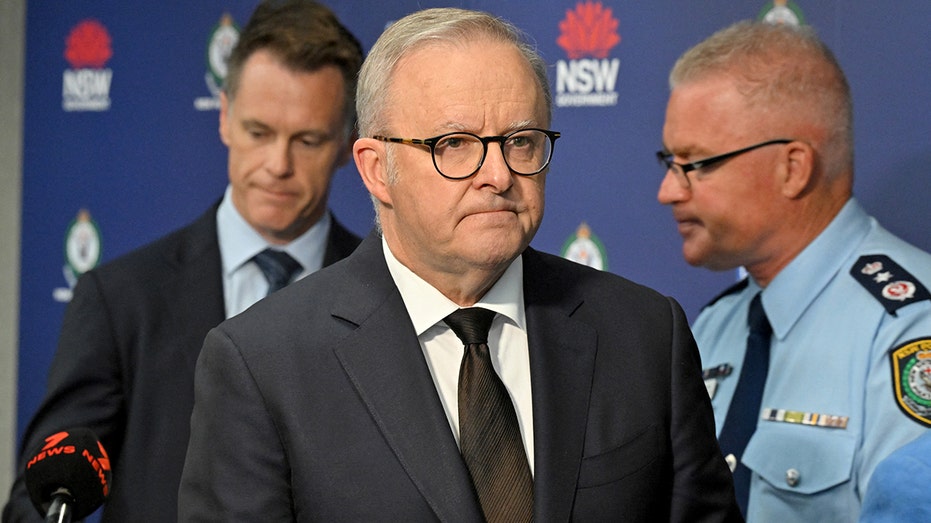
The Australian state will be judged not just on how it prosecutes the surviving attacker, but on whether it can simultaneously:
- provide tangible security to Jewish institutions and events, and
- avoid sliding into collective blame or policies that stigmatize entire communities.
How this balance is struck will shape trust in institutions for years to come.
Digital Radicalization and the Family Dimension
The involvement of a father-son pair is a particularly disturbing element. It suggests that radicalization, once primarily understood as an individual or peer-group phenomenon, can embed itself within family structures, making it harder to detect and intervene.
International research on ISIS-inspired attacks has highlighted several patterns:
- Online echo chambers: Many attackers consume a steady diet of extremist content online, often in encrypted or semi-closed channels that reinforce a worldview of cosmic struggle and dehumanization of enemies.
- Intergenerational transmission: In some cases, older family members legitimize or even encourage extremist ideology, accelerating the radicalization of younger relatives.
- Hybrid motives: Personal grievance, mental health issues, and identity crises often interact with ideological messaging.
Without speculating on confidential case details, the Bondi attack will likely spur Australian authorities to broaden their concept of “at-risk” environments from youth-only contexts to family networks. That raises thorny questions: What does early intervention look like when radicalization is happening around the dinner table, not just in chat rooms?
Grief, Memory, and the Politics of Public Space
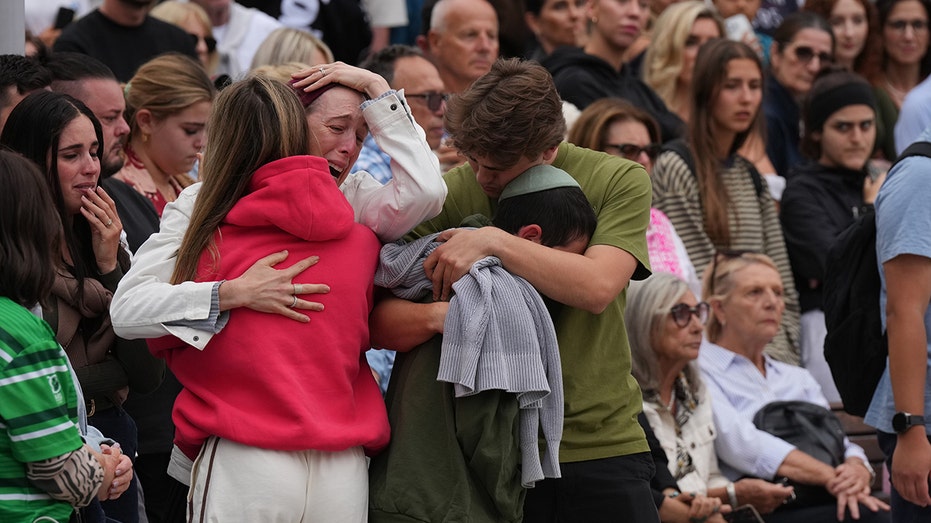
The makeshift memorial at Bondi—flowers, candles, and photographs along the seafront—will not simply be a site of mourning. It will become a contested space of narrative and memory.
Several competing impulses are already visible in the families’ statements:
- Insistence that victims were targeted “because [they] were Jewish,” highlighting the antisemitic nature of the violence.
- A call to respond with “kindness, compassion, and joy” in the name of victims like Elkayam, who “wanted to do good in the world.”
- Appeals to the broader community’s support, as in the Gurman family’s gratitude for public solidarity.
These impulses can pull in different directions. Some will demand a tough security and legal response; others will emphasize inter-community solidarity and resilience. How political leaders speak at memorials, which aspects they elevate—the Jewishness of the victims, the ISIS inspiration, the Australian setting—will help shape whether this attack becomes a wedge issue or a catalyst for a more honest conversation about security and coexistence.
What Changes Now? Policy and Social Implications
Based on patterns from other Western democracies after major attacks, several likely developments are on the horizon for Australia:
- Security upgrades for Jewish sites: Expect increased funding for security at synagogues, schools, and community centers, and more visible police presence during Jewish holidays and major public events.
- Expanded counterterrorism powers: Legislators may push for broader surveillance authorities, especially online, and lower thresholds for intervention when individuals show signs of jihadist alignment.
- Community-partnership models: Authorities will likely court Jewish leaders for security cooperation while also engaging Muslim and other community leaders to counter extremist narratives without fueling collective blame.
- Debate over public religious expression: There may be pressure—subtle or explicit—to move Jewish celebrations into more heavily secured spaces. That raises a deeper democratic question: Is the answer to terror to retreat from public space, or to insist, with adequate protection, that minorities have a right to be visible?
Each of these decisions will carry trade-offs between civil liberties, perceived safety, and the character of Australia’s public life.
What Most Coverage Misses
Mainstream reporting has rightly focused on the human tragedy and the criminal investigation. But several important angles risk being overlooked:
- The continuity of trauma: For Holocaust survivors and their descendants, this is not just another terror attack. It taps into intergenerational fears that persecution is never truly over, just relocated.
- The quiet heroism of immigrant lives: Victims like the Gurmans and Kleytman are often described in terms of their deaths. Yet their long, “honest, hardworking lives” and acts of courage tell a counter-story to extremist narratives that dismiss diaspora Jews as decadent or weak.
- The mental health dimension of entire communities: Repeated exposure to global antisemitic incidents—Pittsburgh, Halle, Paris, and now Bondi—creates a cumulative psychological load for Jewish communities worldwide. Bondi will likely deepen that burden in Australia.
- The risk of securitized multiculturalism: A society that responds to each attack by layering more security around minorities may, in the long term, normalize the idea that some communities can only be present in public life behind barricades and guards.
Looking Ahead: What to Watch
Over the coming months, several developments will signal where Australia is headed after Bondi:
- Legal proceedings against the surviving attacker: The framing of charges, particularly any terrorism and hate-crime dimensions, will set a precedent.
- Inquiries into prior warnings: If Jewish leaders can document specific appeals for protection, public pressure may grow for a formal inquiry into why those warnings didn’t translate into stronger safeguards.
- Policy on online extremism: Expect renewed calls to pressure tech platforms and expand monitoring of ISIS-related content, raising privacy debates.
- Inter-community initiatives: Grassroots efforts—joint vigils, dialogues, and educational programs—will be crucial signals of whether social bonds are strengthening or fraying.
The Bottom Line
The Bondi Beach terror attack is not just a story of one night’s violence. It is a collision point between global jihadist ideology, resurgent antisemitism, the long shadow of the Holocaust, and the vulnerabilities of a proudly multicultural society. The victims’ lives, stretching from Siberia, Ukraine, Russia, France, and Czechoslovakia to an Australian beach, tell a story of people who believed they had found safety. Whether Australia can now prove them right for future generations will depend on choices made in the aftermath—about security, solidarity, and who gets to feel fully at home in public space.
Topics
Editor's Comments
One of the starkest features of the Bondi attack is how it collapses vast distances—historical, geographic, and psychological—into a single violent moment. Survivors of Nazi persecution, refugees from Soviet repression, and younger migrants who left Europe amid rising antisemitism all converged on a Sydney beach for a religious celebration. The fact that they were targeted there, in what many would have considered the far edge of the democratic world, challenges a comforting assumption: that distance from old centers of conflict equates to safety. It doesn’t. In an era of digital radicalization and globalized ideologies, the idea of ‘elsewhere’ as refuge is increasingly fragile. This should force policymakers to rethink not only physical security, but also how they address the intangible sense of safety that minority communities rely on when they build new lives. If people who once fled to Australia now feel they must retreat again—this time indoors, behind security perimeters—the country’s multicultural promise risks becoming more slogan than reality.
Like this article? Share it with your friends!
If you find this article interesting, feel free to share it with your friends!
Thank you for your support! Sharing is the greatest encouragement for us.