
Beyond the Raids: How Sydney’s Latest Anti-Terror Operation Exposes Australia’s Security Crossroads

Sarah Johnson
December 18, 2025
Brief
Australia’s latest Sydney anti-terror raids, amid grief over the Bondi Beach Hanukkah attack, reveal deeper tensions in its preventive security model, civil liberties, and social cohesion—and may shape the next phase of its counterterror laws.
Australia’s Post-Bondi Security Crossroads: What the Latest Sydney Anti-Terror Raids Really Signal
Australia’s detention of seven men in Sydney during anti-terror raids, just as the country buries the youngest victim of the Bondi Beach Hanukkah attack, is not just another policing story. It’s a stress test of Australia’s entire counterterrorism model: how far a liberal democracy will go to prevent violence, what “preemption” now means in practice, and whether the security response will deepen social fractures or help heal them.
A country still shaped by past attacks
The Sydney operation sits on two powerful historical fault lines: Australia’s terrorism history and its evolving national-security laws.
Modern Australian counterterrorism was forged in the early 2000s. The 2002 Bali bombings, which killed 88 Australians, shattered the assumption that terrorism was a distant problem. Subsequent incidents — the 2014 Lindt Café siege in Sydney, the murder of police worker Curtis Cheng in 2015, the Melbourne CBD car attack in 2017, and multiple foiled plots — pushed lawmakers toward a highly preventive posture.
Over two decades, Australia has passed more than 90 pieces of counterterrorism and national-security legislation. These laws expanded police powers to conduct control orders, preventative detention, and warrantless metadata access, and made it easier to prosecute “preparatory” conduct long before an attack occurs. In effect, Australia moved from punishing terrorists to trying to intercept them at the earliest hint of planning.
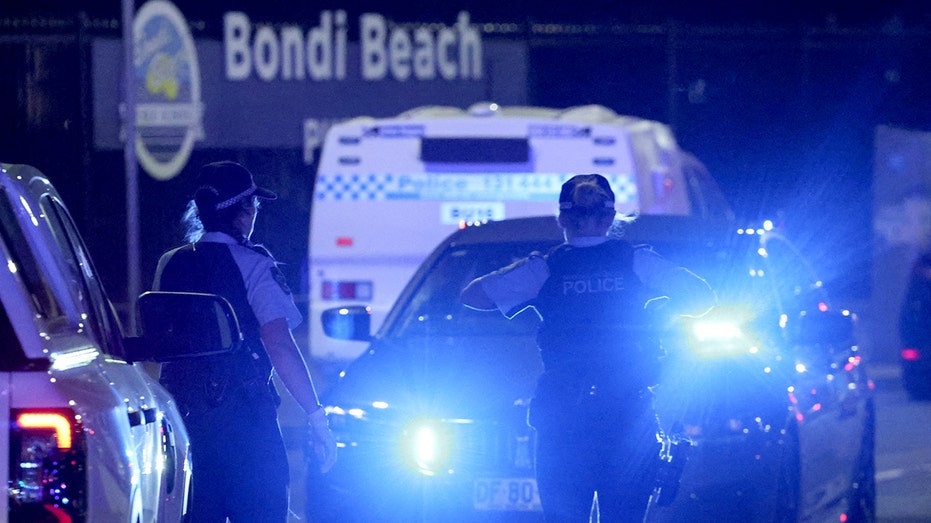
The latest Sydney raids fit that pattern: tactical operations officers reportedly acted on information that a violent act was “possibly” being planned, intercepted vehicles, and detained seven men who are “assisting police with inquiries.” No charges have yet been announced. This is classic preventive policing — moving on intelligence before a defined plot is publicly visible.
Layered over this is a newer landscape: the global surge in both antisemitic and Islamophobic incidents during periods of Middle East tension, and the increasing fragmentation of extremist threats. The Bondi Beach Hanukkah attack will likely be etched into Australia’s memory much as the Lindt Café siege was a decade earlier: as a moment when the country’s sense of safety in everyday public spaces was abruptly shattered.
Why the timing and framing matter
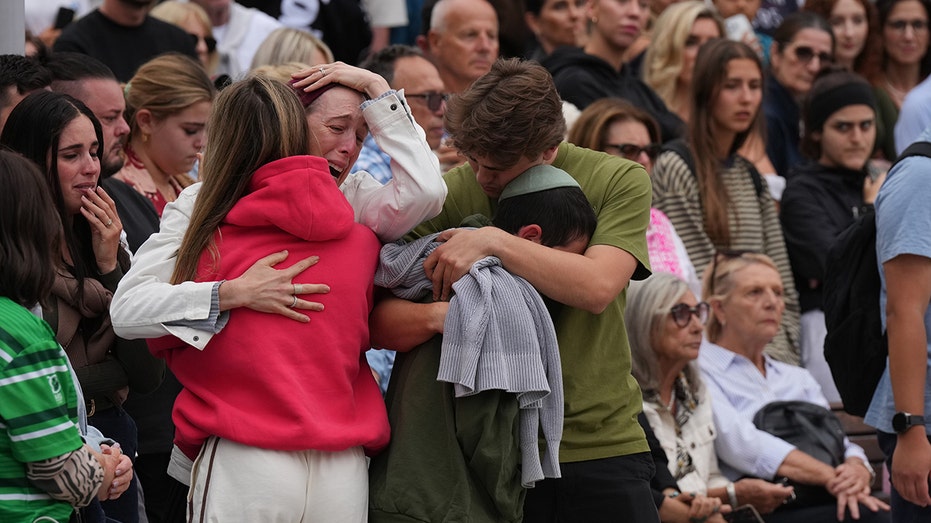
The raids occurred as the youngest victim of the Bondi Beach attack was being laid to rest — a moment of national grief and heightened sensitivity. Even though police have stressed there is no known connection between the detentions and the Bondi attack, the public will inevitably link the two in their minds. That linkage shapes fear, politics, and policy.
Authorities’ decision to publicly emphasize that there is “no known connection” is not a minor detail. It reflects a conscious attempt to:
- Prevent panic about an ongoing coordinated campaign
- Avoid fueling conspiracy theories and communal blame
- Preserve the integrity of the Bondi investigation while demonstrating broader vigilance
But the optics remain delicate: heavily armed police, a vague warning of a “possibly” planned violent act, multiple detentions without charges (so far), and a community still traumatized by a highly symbolic attack on a Jewish celebration in a public, iconic space.
The deeper question: how far should preemptive power go?
The case highlights a long-running tension in Australian security policy: the shift from reacting to clear plots to acting on early, often incomplete intelligence. That shift saves lives — Australia has disrupted numerous planned attacks. The Australian Security Intelligence Organisation (ASIO) has repeatedly noted that its work has helped foil plots involving mass casualties.
But there are trade-offs:
- Legal ambiguity: Acting before a plot is fully formed can mean detaining people based on intent, association, or online activity that falls short of traditional criminal thresholds.
- Community trust: If raids are perceived as overbroad or poorly targeted, they can erode trust in law enforcement, especially among minority communities already feeling under suspicion.
- Normalization of emergency powers: What began as exceptional post-9/11 measures risk becoming a permanent baseline.
Australians have historically accepted robust security laws when framed as necessary and proportionate. The question now is whether a fresh wave of attacks or plots — or even the fear of them — will push the country into yet another round of legislative hardening, or whether the focus will shift to oversight, accountability, and prevention upstream (through social and mental-health interventions).
Expert perspectives: security, civil liberties, and social cohesion
Counterterrorism specialists emphasize that operations like the one in Sydney are now a core part of how Western democracies function.
Security analyst Dr. Lydia Khalil has previously noted that Australia has moved into a “low-volume, high-intensity” threat environment: fewer large, organized plots, but more lone actors and small networks, often radicalized online and acting quickly. That dynamic forces police to move faster and more proactively — sometimes before the public sees any obvious threat.
Civil liberties advocates, meanwhile, warn about the cumulative effect. The Australian Human Rights Commission has repeatedly raised concerns that extensive counterterrorism powers, particularly when combined with secrecy and limited judicial oversight, can undermine rights to privacy, liberty, and fair trial. When raids end without charges or result in minor offences, communities can perceive them as fishing expeditions.
From a social cohesion perspective, Australian sociologists point out that intense policing in certain suburbs — often lower-income and more ethnically diverse — can reinforce feelings of marginalization. If residents feel they are being treated as suspects first and citizens second, that’s not just a moral failure; it risks becoming a security failure, too, by weakening cooperation with authorities.
What’s being overlooked: mental health, online ecosystems, and the politics of fear
Most immediate coverage focuses on the raids, the number of detainees, and the link (or lack of link) to Bondi. Three critical dimensions tend to receive less attention:
1. The mental health element
Many recent attacks globally — including in Australia — have involved individuals with complex mental-health histories alongside ideological motivations. Yet the policy response still leans heavily on policing and surveillance rather than integrative systems that bring mental health, social services, and community organizations into early-warning frameworks.
Without those, police are too often the last line of defense, asked to respond when radicalization is advanced rather than prevent it at its roots.
2. Online radicalization and acceleration
The speed at which individuals can radicalize online has outpaced traditional investigative cycles. Closed messaging apps, algorithm-driven echo chambers, and transnational propaganda networks mean that a person can move from passive consumption to active plotting in days or weeks, not months.
That accelerates the timeline for law enforcement and increases the pressure to act on partial intelligence. It also blurs ideological lines: contemporary threats can blend jihadist, far-right, antisemitic, anti-government, or personal grievance narratives in ways that don’t fit old categories. That complexity may be playing out in the Sydney case, even if details aren’t yet public.
3. The politics of fear
Major attacks tend to trigger a predictable political cycle: calls for tougher laws, quick legislative fixes, and framing the issue as a binary choice between safety and liberty. In Australia, this has historically produced bipartisan support for expansive security powers.
The risk is that policymaking in a climate of fresh trauma — as after the Bondi attack — sidelines more nuanced debates: Are existing powers being used effectively? Are they properly scrutinized? How do they interact with discrimination laws, hate-speech regulations, and integration policies?
Data points: a shifting but persistent threat
Several trends help explain why authorities are so quick to act on potential threats:
- ASIO’s threat level for terrorism has fluctuated but remained elevated for much of the past decade. Although the level has been reduced at times, officials stress that the threat is “enduring.”
- Approximately half of recent terrorism-related cases in Australia involve individuals under 25, underscoring both the vulnerability of young people and the importance of online ecosystems.
- Since 2014, dozens of alleged plots have been disrupted across major cities, often in their early phases. Many never reached full public visibility, reinforcing the notion of “invisible successes” that rely on early intervention.
These numbers support the rationale for proactive operations. But they also make democratic oversight harder. The public is asked to trust that unseen threats justify visible intrusions, a trust that depends heavily on transparency after the fact — including whether detainees are charged and on what basis.
What this means for Jewish, Muslim, and broader communities
The Bondi Beach attack targeted a Jewish religious celebration at an iconic, public site. That combination — religious, communal, and symbolic — intensifies feelings of vulnerability among Jewish Australians, who have already seen rising antisemitic incidents in recent years.
Simultaneously, Muslim communities often experience a spike in suspicion and scrutiny following attacks framed as Islamist or linked to Middle East tensions. Even when authorities explicitly say there is no connection, policing actions clustered in certain suburbs can reinforce a sense of collective blame.
The critical question is whether the Australian state can do two things at once:
- Strongly and visibly protect vulnerable communities, including Jewish targets, from further attacks
- Ensure that counterterrorism practices do not stigmatize whole communities or feed into narratives of persecution that extremists seek to exploit
That delicate balance — and whether authorities communicate it clearly — will shape social cohesion more than any single raid.
Looking ahead: indicators to watch
Several developments over the coming days and weeks will reveal whether the Sydney detentions become a footnote or a turning point:
- Charging decisions: If the seven men are charged with serious terrorism offences, that suggests authorities disrupted a concrete plot. If they are released or charged with lesser offences, questions will rise about proportionality and intelligence quality.
- Legislative proposals: Watch for calls to expand surveillance, adjust bail laws, or broaden “advocating terrorism” offences. The political appetite for new powers will show how deeply the Bondi attack has shaken the system.
- Community engagement: Police and political leaders’ outreach to Jewish, Muslim, and broader communities — or lack thereof — will significantly affect public trust.
- Transparency and review: Whether any independent oversight body reviews the operation, and what it reports, will signal how seriously Australia takes balancing security with rights.
The bottom line
The Sydney anti-terror raids underscore that Australia is still navigating the painful space between “never again” and “not at any cost.” The country’s preventive model has likely saved lives, but it also concentrates immense discretionary power in the hands of security agencies at moments of high public fear.
How this particular operation unfolds — what is revealed, how communities are treated, and whether the political response leans toward reflection or escalation — will tell us whether Australia’s post-Bondi trajectory moves toward a more mature, balanced security framework or deeper into a permanent state of emergency.
Topics
Editor's Comments
What stands out in this episode is not simply the use of preemptive police powers, but how routine they have become. Two decades ago, sweeping anti-terror raids would have dominated national debate about civil liberties; now, they are often absorbed into a familiar security narrative. That normalization is what should worry us. When powers designed for exceptional threat moments become everyday tools, political incentives shift: it is far easier for governments to keep expanding what ‘prevention’ entails than to roll anything back. The absence of a clear link between these detentions and the Bondi attack also highlights how trauma can set the mood music for policy without being directly connected to each case. A critical test in the weeks ahead will be whether lawmakers respond to public fear with yet another round of ‘tough on terror’ symbolism, or whether they invest political capital in scrutiny, oversight, and addressing the social and psychological dynamics that make young men susceptible to violent ideologies in the first place.
Like this article? Share it with your friends!
If you find this article interesting, feel free to share it with your friends!
Thank you for your support! Sharing is the greatest encouragement for us.